
The modern job market is undergoing a profound transformation, placing unprecedented emphasis on the cultivation of diverse, equitable, and inclusive (DEI) workplaces. Beyond mere compliance, organizations are increasingly recognizing that diversity is a strategic imperative, fostering innovation, enhancing problem-solving capabilities, and ultimately driving superior financial performance. This paradigm shift necessitates a proactive approach to talent acquisition and retention, moving beyond traditional hiring practices to embrace methodologies that actively mitigate bias and promote fairness. In response to this urgent need, a sophisticated ecosystem of diversity tools has emerged, offering technological solutions to embed DEI principles across the entire employee lifecycle, from initial job postings to long-term career development. This article explores a selection of these pivotal tools, examining their functionalities, their impact on fostering inclusive hiring practices, and their broader implications for organizational culture and the future of work.
The Imperative of Diversity and Inclusion in Today’s Workforce
The call for diversity and inclusion in the workplace has intensified significantly over the past decade, driven by a confluence of social, economic, and ethical factors. Contemporary research consistently underscores the tangible benefits of diverse teams. A 2019 McKinsey report, "Diversity Wins: How Inclusion Matters," found that companies in the top quartile for gender diversity on executive teams were 25% more likely to have above-average profitability than companies in the fourth quartile. For ethnic and cultural diversity, this figure rose to 36%. Similarly, a study by Deloitte revealed that diverse teams outperform homogeneous ones by 80% in team-based assessments. Such statistics reinforce that DEI is not merely a moral obligation but a robust business strategy, contributing to enhanced creativity, improved decision-making, and stronger employee engagement.
Despite these recognized advantages, systemic biases continue to permeate hiring processes. Unconscious biases, deeply ingrained mental shortcuts, can inadvertently lead to discrimination based on gender, race, age, disability, and other characteristics, narrowing talent pools and perpetuating homogeneous workforces. For example, research published in the Harvard Business Review demonstrated that simply removing gendered language from job descriptions could significantly increase applications from underrepresented groups. The evolving legal landscape, with increasingly stringent anti-discrimination laws (such as the Equal Employment Opportunity Commission guidelines in the U.S. or the Equality Act in the UK) and heightened public scrutiny, further compels organizations to adopt robust DEI strategies. Consequently, the development and adoption of specialized diversity tools have become critical for organizations striving to build truly equitable and high-performing teams, moving beyond aspirational statements to actionable technological interventions.
Technological Solutions for Equitable Hiring: A Comprehensive Overview
The market has responded with a rich array of technological solutions designed to address various facets of diversity and inclusion. These tools broadly fall into categories ranging from bias detection in written communication to comprehensive DEI analytics and management platforms. Their emergence marks a significant shift in HR technology, moving from simple automation to intelligent, bias-aware systems.
1. Bias Detection and Job Description Optimization
The initial point of contact between a company and a potential candidate is often the job description. Bias embedded in this crucial document can deter diverse applicants from even applying. Tools in this category are designed to identify and rectify such linguistic biases, ensuring a welcoming and inclusive tone.
-
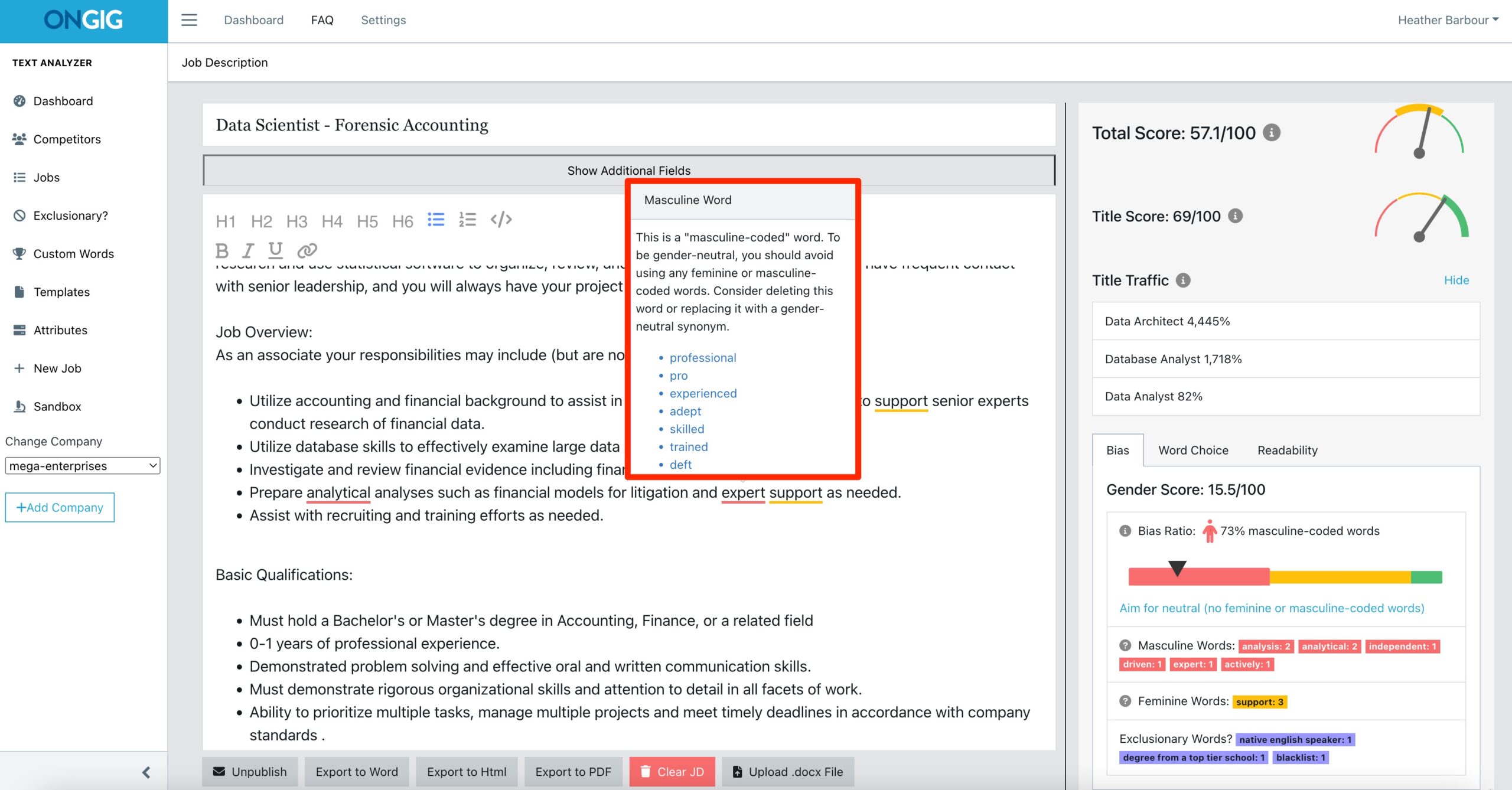
Text Analyzer by Ongig: Launched in 2017 with an initial focus on gender bias, Ongig’s Text Analyzer has evolved into a comprehensive bias detection software. It scrutinizes job descriptions for gender-coded words (e.g., "rockstar" or "ninja" often carry masculine connotations), ageist terms, disability-related biases, and phrases that could inadvertently exclude individuals based on race or ethnicity (e.g., "brown bag sessions" which can carry unintended cultural implications). The platform provides a "Total Score" and "Gender Bias Score," offering actionable recommendations for improvement with inclusive replacements. Its "Section Finder" also identifies missing crucial information, such as salary ranges, benefits, or diversity statements, which candidates increasingly seek, thereby improving transparency and candidate attraction. This holistic approach ensures not only unbiased language but also a complete and attractive candidate experience.
-
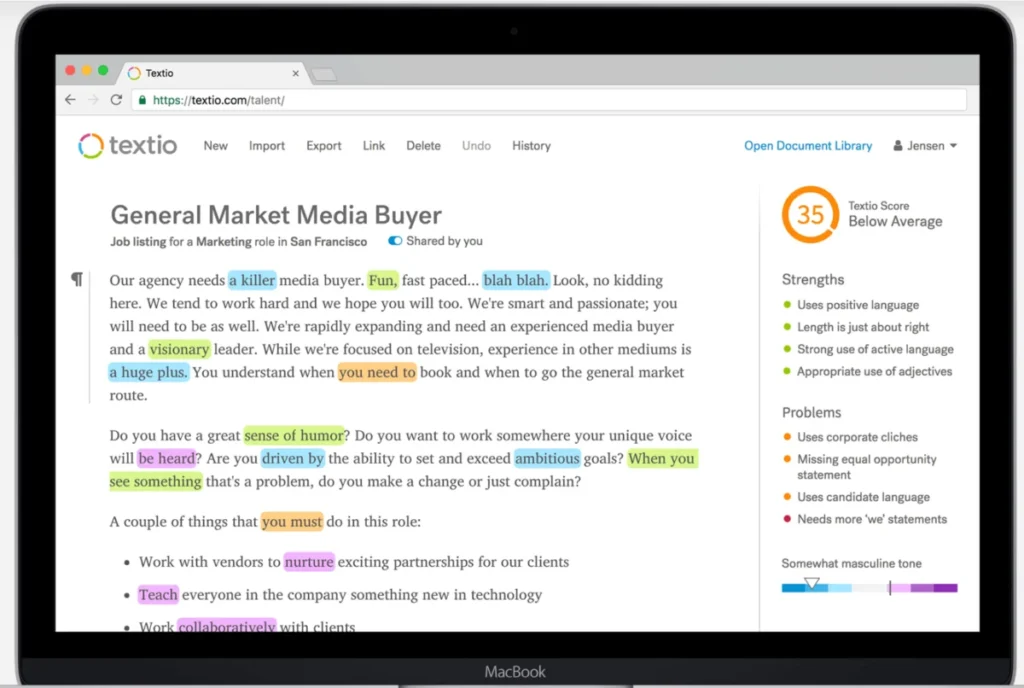
Textio: A pioneer in augmented writing for talent acquisition, Textio analyzes job posting outcomes from past openings to predict the performance of new job descriptions. It provides real-time feedback, highlighting words and phrases that might deter certain demographic groups. Textio’s strength lies in its predictive analytics, informing users how changes in language can impact applicant diversity and overall hiring success. Its color-coded suggestions for "masculine" or "feminine" toned words empower recruiters to refine their language for broader appeal, often citing data on which phrases lead to more diverse applicant pools.
-
Gender Decoder: Developed by Kat Matfield, Gender Decoder offers a free, straightforward solution primarily focused on gender writing analysis. Based on psychological studies of how specific words appeal differently to men and women, it flags masculine and feminine coded terms in job advertisements. While simpler than comprehensive platforms, it serves as an accessible entry point for small businesses or individuals looking to quickly identify basic gender biases in their communications without significant investment.
-
Clovers (formerly Talvista): This online platform guides hiring teams through a more efficient and inclusive hiring process, with an integrated job description builder that reviews text for word choice, tone, and gender coding. Clovers uses a visual system, often flagging feminine words in green and masculine words in red, to provide immediate feedback. Its user-friendly interface supports a structured approach to creating equitable job descriptions and enhancing interview processes, ensuring consistency and fairness.
-
The Polite Type: While not exclusively for job descriptions, The Polite Type is a free open-source tool that automatically rewrites potentially offensive or hurtful words into more inclusive alternatives (e.g., "kike" to "Jewish person," "negro" to "Black person"). This software, co-created with diverse teenagers and in partnership with The Children and Youth Foundation in Finland, underscores the importance of sensitive language across all organizational communications, promoting a culture of respect and awareness beyond just gender bias.
2. Broader DEI Management and Analytics Platforms
Beyond initial job postings, fostering diversity and inclusion requires ongoing commitment and systemic changes across an organization. These tools offer broader functionalities to manage and measure DEI initiatives, integrating them into the fabric of daily operations.
-
Allie: As a dependable chatbot companion, Allie integrates with communication platforms like Slack to facilitate D&I surveys, gather employee feedback on inclusion, and disseminate relevant diversity-related news. Allie’s feedback feature allows employees to proactively propose enhancements to diversity and inclusion efforts, thereby actively involving the workforce in DEI improvement. Its capacity for delivering diversity training sessions directly within daily workflows makes it a dynamic tool for continuous learning and engagement, helping to combat stereotypes and ensure inclusivity.
-
Blendoor: This diversity analytics and hiring software champions unbiased hiring through blind recruitment and diverse candidate sourcing. Blendoor provides organizations with a comprehensive diversity, equity, and inclusion score by leveraging government and marketplace data, allowing companies to benchmark their performance against peers. Its assessment tools offer insights for improving hiring processes and tracking diversity metrics over time, acting as a "personal coach" for DEI progress. Bl This approach helps tackle unconscious bias in the hiring process by focusing on skills and qualifications.
-
DBSquared (DBDescriptions, DBCompensation): DBSquared offers specialized tools like DBDescriptions for crafting fair and compliant job postings (e.g., ADA and FLSA compliance) and DBCompensation for identifying and rectifying pay disparities. By analyzing factors such as experience, race, and gender, DBCompensation generates charts highlighting discrepancies, such as a Latino supervisor earning less than a white supervisor with comparable experience. Their CompBldr software further simplifies job description creation, comparative analysis, and fair pay structures, ensuring equity across the compensation spectrum.
-
Diversio: Diversio provides a comprehensive suite of DEI tools. Its "Bias Corrector" flags cultural insensitivity and unconscious bias in internal communications (e.g., Slack, email). The "Social Media Barometer" monitors public perception of a company’s D&I record, enabling timely responses to concerns and proactive reputation management. Crucially, its "Recommendation Engine" uses algorithms to suggest optimal courses of action for addressing specific DEI challenges, providing data-driven strategies for improvement.
3. AI-Powered Job Description Generators
The advent of artificial intelligence has revolutionized content creation, extending to the generation of inclusive job descriptions at scale. These tools integrate bias-awareness into their core functionality.
-
Recruitment SMART (SniperAI): This AI-driven platform automatically creates optimized and equitable job advertisements based on company hiring goals. It aims for impactful, engaging promotions to secure qualified talent, reporting significant time reductions (up to 80% in JD posting) and increased content consistency (up to 70%). Its built-in equitable hiring tool offers diversity analytics, anonymous hiring processes (removing identifiers like name, age, and location), and a bias checker for objective candidate data scoring in their job fits.
-
Manatal: An advanced recruitment automation system, Manatal offers an intuitive interface for generating inclusive job descriptions at scale. Users input company details, role, location, and target recipient, and its AI assistant generates JDs based on provided details. With features like 200 JD generations per month and a prompt refinement tool, Manatal streamlines the creation of high-quality, inclusive ads, primarily in English.
-
Jasper Chat: Leveraging natural language processing (NLP), Jasper Chat allows users to generate structured job descriptions in minutes through a conversational interface. Recruiters can simply chat with the AI, inputting vacancy details, and Jasper Chat interprets the information to produce comprehensive and inclusive JDs. This chatbot offers scalable JD creation with features like keyword optimization, brand voice alignment, and adherence to inclusive language principles.
-
Skima AI: Skima AI is designed to empower hiring teams to generate quality JDs by inputting job titles, key skills, and other details like perks and benefits. Its expert algorithm analyzes trending analytics from top-performing JDs to create similarly impactful descriptions. Skima AI allows for convenient editing, removal, or regeneration of JD sections and continuously learns from user best practices, ensuring compliance with the latest industry requirements and efficient candidate matching.
Beyond Job Descriptions: A Holistic Approach to DEI
While inclusive job descriptions are a critical starting point, diversity tools contribute to a much broader transformation within an organization’s culture. By effectively leveraging these technologies, companies can significantly enhance their work environments and talent strategies.
- Expanding Talent Pools: By actively removing biased language and promoting an inclusive employer brand, diversity tools help companies reach a wider, more diverse array of candidates, including those from historically underrepresented groups. This not only broadens the talent pipeline but also introduces fresh perspectives and innovative ideas that are crucial for competitive advantage in a globalized economy.
- Mitigating Unconscious Bias Across the Lifecycle: The impact extends beyond initial attraction. Tools that flag bias in internal communications, performance reviews, or compensation analyses help mitigate unconscious bias throughout the employee journey. This creates a fairer environment where individuals are evaluated based on merit and contribution, not irrelevant demographic factors.
- Improving Overall Workplace Culture: A visible commitment to diversity, reinforced by the use of these tools, signals to both current and prospective employees that the organization values equity and inclusion. This fosters a sense of belonging, increases employee engagement, and boosts morale, leading to a more positive and productive work environment where everyone feels respected and empowered to thrive.
- Driving Positive Societal Change: Companies adopting robust DEI strategies, supported by these tools, contribute to a larger societal movement towards equity. By setting examples within their industries, they help dismantle systemic inequalities and promote a more just and inclusive society. As many HR professionals attest, "These tools aren’t just about compliance; they’re about building a workplace where everyone has a fair shot, and that’s a win for society as a whole."
Measuring Progress and Driving Accountability
The efficacy of diversity initiatives cannot be assumed; it must be rigorously measured and continuously tracked. This data-driven approach is fundamental to understanding what is working, identifying areas for improvement, and holding organizations accountable for their DEI commitments.
HR leaders emphasize that "what gets measured gets managed." By tracking key metrics such as diversity representation at all levels, applicant pool demographics, employee engagement scores related to inclusion, and retention rates across diverse groups, companies gain invaluable insights. Diversity tools, particularly those with analytics capabilities like Blendoor or the detailed data outputs from Ongig’s Text Analyzer, facilitate this process. They use artificial intelligence to crunch vast amounts of data, identifying trends and patterns that might otherwise remain hidden. This allows organizations to move beyond anecdotal evidence and make informed, strategic decisions. For example, if data reveals a disproportionate attrition rate among a specific demographic, the organization can investigate root causes and implement targeted interventions. Setting clear benchmarks and measurable goals, such as increasing representation of women in leadership by X% within Y years, provides a roadmap for progress and fosters a culture of continuous improvement. This continuous feedback loop ensures that DEI efforts remain dynamic and responsive to evolving organizational needs.
Leadership’s Pivotal Role in Cultivating Inclusive Environments
While technology provides powerful enablers, the ultimate success of diversity and inclusion initiatives rests firmly with leadership. HR leaders and business executives are the architects of organizational culture, and their visible, unwavering commitment to DEI is indispensable.
Leaders set the strategic direction and tone for the entire organization. When executives visibly champion diversity and inclusion, integrating it into the core business strategy and communicating its importance consistently, it cascades throughout every level. This translates into tangible actions, such as developing and enforcing inclusive policies—from equitable recruitment processes and fair performance evaluations to robust anti-discrimination guidelines. Furthermore, effective leaders foster environments where "courageous conversations" about bias, privilege, and discrimination can occur safely and constructively. They lead by example, actively seeking diverse perspectives, mentoring underrepresented talent, and holding themselves and others accountable for inclusive behaviors and outcomes. As a leading DEI consultant recently noted, "Technology can provide the data and the framework, but it’s leadership that ignites the cultural shift needed for true inclusion to flourish." This top-down commitment ensures that DEI is not merely a program but an ingrained value, driving meaningful and sustainable change.
Implications for the Future of Work
The proliferation and increasing sophistication of diversity tools carry significant implications for the future of work. For organizations, embracing these technologies is rapidly transitioning from an option to a necessity for maintaining competitive advantage. Companies that genuinely commit to DEI, supported by these tools, will be better positioned to attract top talent in a diverse global workforce, foster innovation, enhance employee satisfaction, and strengthen their brand reputation. Conversely, those that lag risk talent shortages, reputational damage, and decreased market relevance in an increasingly socially conscious marketplace.
From an ethical standpoint, these tools represent a crucial step towards democratizing access to opportunities, challenging long-standing biases, and creating more equitable societies. However, their development also necessitates ongoing scrutiny to ensure they do not inadvertently introduce new forms of algorithmic bias or perpetuate existing inequalities through biased training data. The future will likely see even more integrated DEI platforms, leveraging advanced AI and machine learning to provide hyper-personalized insights and recommendations, making inclusion an even more seamless and intrinsic part of organizational operations, ultimately shaping a workforce that is truly representative and equitable.
Conclusion
The journey towards truly diverse, equitable, and inclusive workplaces is complex and ongoing, but the emergence of sophisticated diversity tools offers a powerful accelerator. From bias detection in job descriptions to comprehensive DEI analytics and management, these technologies empower organizations to dismantle systemic barriers, expand talent pools, and foster cultures of belonging. Coupled with strong leadership commitment and a data-driven approach, these tools are not just augmenting human resource functions; they are fundamentally reshaping the landscape of talent acquisition and organizational development, paving the way for a more equitable and prosperous future of work for all.






