Employee recognition software for mid-sized companies in North America has officially come of age, transforming from a peripheral HR tool into a strategic cornerstone for organizational success. In an era defined by dynamic hybrid work models, increasingly tighter labor markets, and a workforce that demands more than perfunctory annual acknowledgments, the imperative for robust and scalable recognition programs has never been clearer. Informal, inconsistent recognition efforts, often managed through rudimentary spreadsheets, are proving woefully inadequate for fast-scaling organizations grappling with complex operational realities. The stakes are profoundly high; research from the Achievers Workforce Institute (AWI) unequivocally demonstrates that employees receiving meaningful monthly recognition are 12 times more likely to perceive their work as purposeful and 17 times more likely to feel connected to their colleagues. This data positions sophisticated employee recognition as a powerful, competitive advantage for mid-sized enterprises navigating sustained growth, organizational change, and the fierce battle for top talent.
The Evolving Landscape of Employee Recognition
Historically, employee recognition largely consisted of annual bonuses, service awards, or sporadic "great job" emails. While well-intentioned, these traditional methods often lacked the immediacy, personalization, and systemic integration required to foster a deeply engaged workforce. The turn of the millennium brought a gradual shift, with companies recognizing the psychological benefits of appreciation. However, it was the seismic shifts of the past decade—particularly the rapid acceleration of remote and hybrid work models catalyzed by the global pandemic—that propelled employee recognition software to the forefront of HR strategy. Mid-sized companies, often defined as those with 200 to 2,000 employees, occupy a unique and critical space in this evolution. They are past the initial startup phase where culture is inherently organic and communication is informal, yet they haven’t reached the scale of large enterprises with vast HR resources and established systems. This transitional phase presents both immense opportunities to solidify culture and significant risks of fragmentation if not managed strategically.
For these organizations, the challenge extends beyond simply acknowledging good work; it’s about embedding a culture of appreciation that scales seamlessly across diverse teams, time zones, and communication channels. As companies grow from 300 to 800 employees, the "hallway conversations" and spontaneous nods of appreciation that once sustained morale become insufficient. Without a structured approach, recognition can become inconsistent, dependent on individual managers, and potentially alienating for remote or frontline staff. This is where modern recognition software steps in, not as a replacement for human connection, but as an enabler, supporting positive habits and ensuring that appreciation remains a consistent, visible thread throughout the organizational fabric.

Understanding the Core Pillars of Effective Recognition Software for Mid-Market
Selecting the right recognition software for a mid-sized company requires a deep understanding of features that directly address their specific challenges and growth trajectories. It’s not about an exhaustive list of functionalities, but rather a pragmatic checklist focused on real-world impact.
-
Peer-to-Peer Recognition: The Engine of Collaborative Culture
In mid-sized organizations, structures tend to be flatter and more collaborative than in large enterprises. Peers are often the first to witness exceptional work, innovative problem-solving, or outstanding teamwork. A robust peer-to-peer recognition system empowers employees to acknowledge each other instantly, publicly, and without bureaucratic hurdles. Consider a cross-functional team successfully launching a major client project. Marketing, sales, and product development all contributed significantly. Peer recognition allows team members to laud each other’s specific contributions in real-time, fostering camaraderie and reinforcing collaborative values. This decentralized approach boosts morale, builds stronger team bonds, and distributes the responsibility of appreciation throughout the organization, rather than solely relying on management. -
Manager-Led Recognition: Setting the Tone and Aligning Performance
While peer recognition builds horizontal connections, manager-led recognition remains crucial for reinforcing progress, aligning individual efforts with strategic priorities, and providing formal acknowledgment. Managers are often stretched, juggling performance reviews, project deadlines, and team development. Without easy-to-use tools, recognition can fall to the bottom of their priority list. Effective software enables managers to deliver consistent, meaningful recognition, whether for hitting a sales target, demonstrating a core value, or going above and beyond on a complex task. For hybrid teams spread across various locations and schedules, such software ensures that no contribution goes unnoticed due to physical distance or differing work patterns. It transforms recognition from an administrative burden into an integrated aspect of effective leadership. -
Rewards Catalog Flexibility: Catering to Diverse Motivations
Today’s diverse workforce expects choice and personalization. What motivates one employee may be entirely irrelevant to another. A frontline worker might appreciate a digital gift card for immediate use, while a remote professional might value experiential rewards or contributions to a charitable cause. A comprehensive rewards catalog should offer a wide array of options, including gift cards, merchandise, experiences, and even custom company-branded items. Furthermore, global companies require catalogs that support multiple currencies, local preferences, and compliance regulations. The ability to redeem points for a meaningful reward significantly enhances the perceived value of recognition, ensuring that appreciation translates into tangible satisfaction for every employee.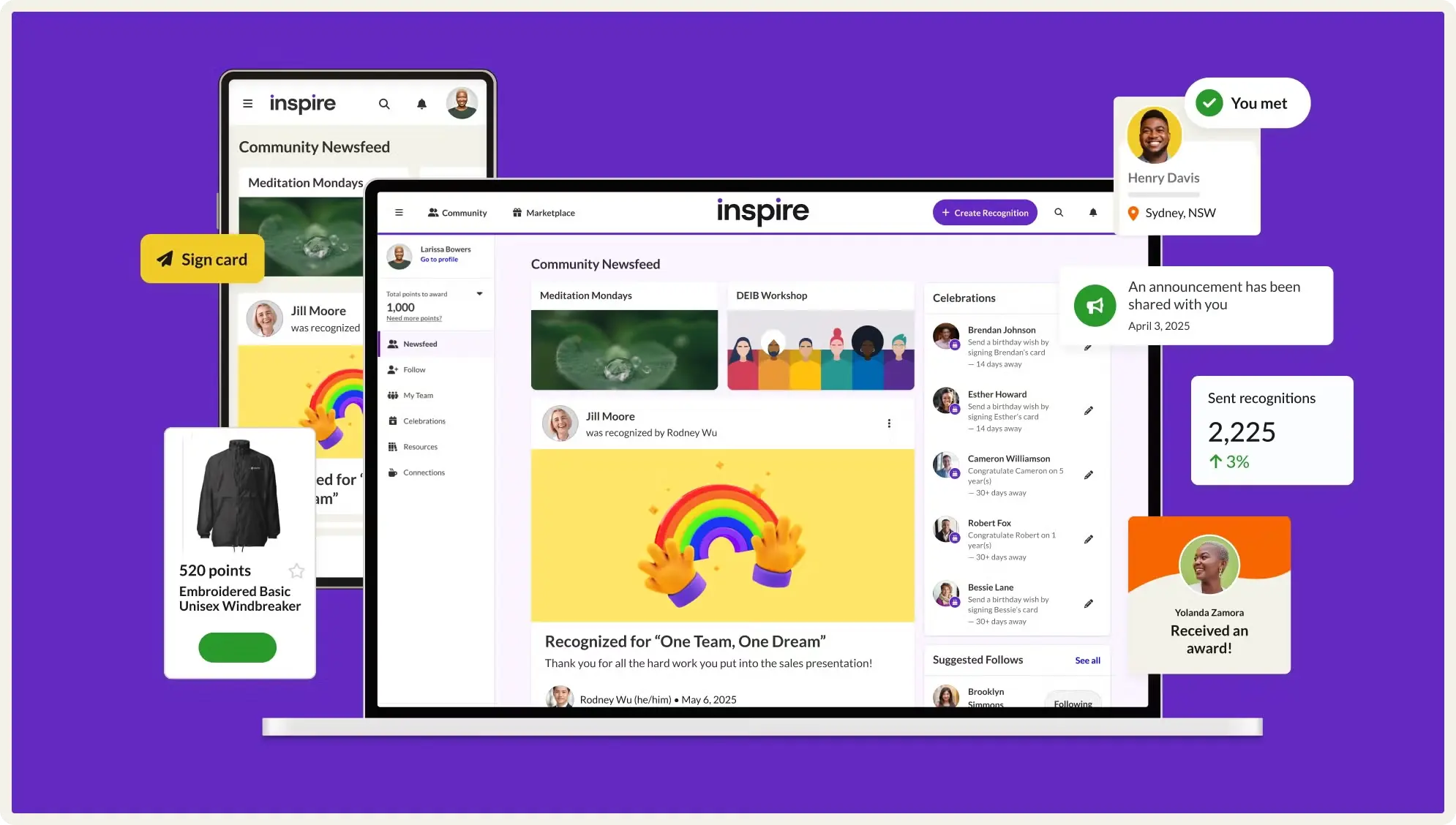
-
Real-time, In-the-Flow Recognition: Seamless Integration for High Adoption
The most sophisticated software is useless if employees don’t use it. Recognition must seamlessly integrate into daily workflows to achieve high adoption rates. If employees have to navigate to a separate platform or remember to log in later, participation inevitably drops. The best solutions offer integrations with popular collaboration tools like Slack, Microsoft Teams, and even HRIS systems. When a colleague can send a quick recognition message and points directly within the communication platform they use all day, it feels natural, immediate, and impactful. This "in-the-flow" approach reduces friction, encourages spontaneity, and embeds recognition into the very fabric of daily work life. -
Values-Based Recognition: Reinforcing Culture and Purpose
As mid-sized companies grow, there’s a natural concern that core values and company culture might dilute. Values-based recognition directly addresses this by linking specific employee behaviors and actions to the organization’s stated values. For example, recognizing an employee not just for completing a project, but for demonstrating "innovative problem-solving" or "customer-centricity," reinforces desired behaviors. This keeps expectations clear and visible, even as new teams form and managers come onboard. It transforms recognition from a simple reward mechanism into a powerful cultural amplifier, ensuring that employees understand not just what they should do, but how they should do it in alignment with the company’s ethos.
Mapping Features to Mid-Sized Company Challenges
The true value of recognition software emerges when its features directly address the unique challenges of a growing mid-sized company.
- Scaling Growth (e.g., from 300 to 800 employees): What worked through informal means becomes unsustainable. Software provides the necessary structure to maintain authenticity and consistency as the workforce expands. It ensures that every new hire, every new team, and every new manager understands and participates in the recognition culture, preventing it from becoming a siloed activity.
- Supporting Diverse Workforces (Remote, Frontline, Hybrid): Recognition must be equitable and visible to all employees, regardless of their location, role, or work schedule. Platforms designed for inclusion ensure that frontline workers without regular email access, remote teams across time zones, and hybrid employees rotating between office and home all receive the same level of appreciation and visibility for their contributions.
- Ensuring Consistency Across Departments: Without a unified tool, recognition can become fragmented, with some departments excelling at appreciation while others lag. Software establishes clear guardrails and a consistent framework, ensuring that recognition feels fair, frequent, and aligned with company goals across all teams and reporting structures.
Assessing Flexibility and Scalability for Future Growth
Mid-sized companies are inherently dynamic, and their recognition software must be equally adaptable.
- Configurable Programs: Avoid rigid platforms. The best solutions offer configurable rules, budgets, and experiences that can evolve as the organization’s needs change. This adaptability is crucial for adjusting to new strategic priorities, departmental budgets, or even shifts in company culture.
- Modular Design: Opt for platforms that allow you to start with core features and gradually expand. An "all-or-nothing" suite can be overwhelming and costly if you’re not ready for every functionality. A modular approach allows for phased implementation and growth.
- Future-Proofing: A critical question for any mid-sized company is: "Will this solution still work when we’re significantly larger, more distributed, or more complex?" Look for platforms that can support global operations, integrate with new technologies, and handle increased user volumes without performance degradation.
A Strategic Approach to Software Evaluation
Evaluating recognition software needs to be a structured, deliberate process, grounded in the realities of a mid-sized organization.
- Prioritize Usability and Adoption: "Shelfware"—software purchased but rarely used—is a costly failure. Adoption hinges on an intuitive user interface, minimal training requirements, and seamless integration into existing workflows. If recognition feels like "one more system to log into," participation will plummet. A mobile-friendly experience is also non-negotiable for today’s workforce.
- Look for Robust Integrations: Recognition shouldn’t exist in a vacuum. The platform should integrate effortlessly with your Human Resources Information System (HRIS) for employee data, payroll systems for reward disbursement, and collaboration tools like Slack or Microsoft Teams. Single Sign-On (SSO) capabilities are also vital for user convenience and security. Bonus points for platforms that automatically roll up recognition data into broader HR analytics dashboards, eliminating manual data export and spreadsheet manipulation.
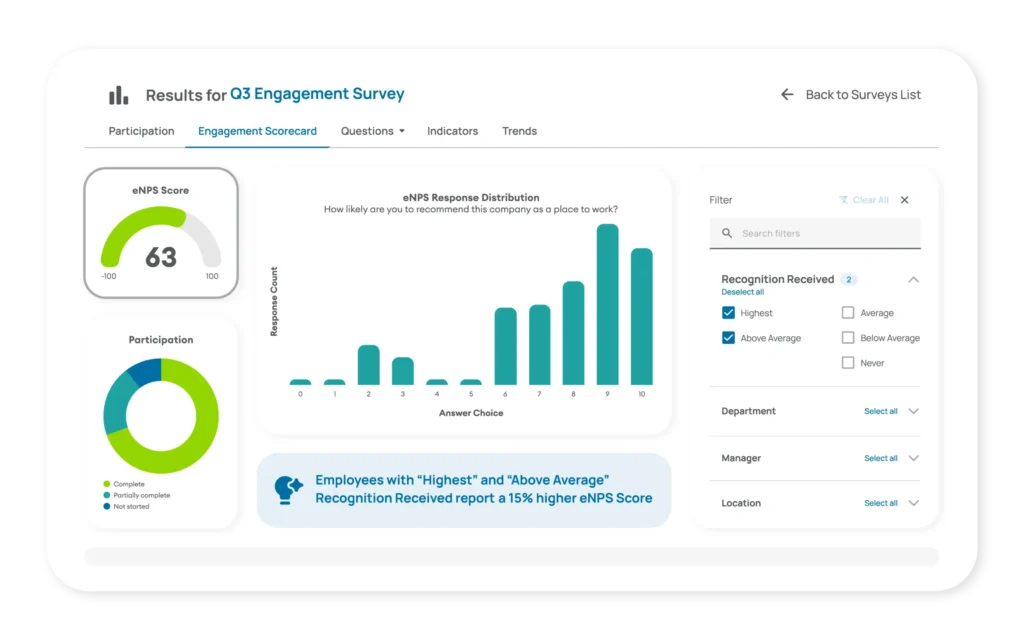
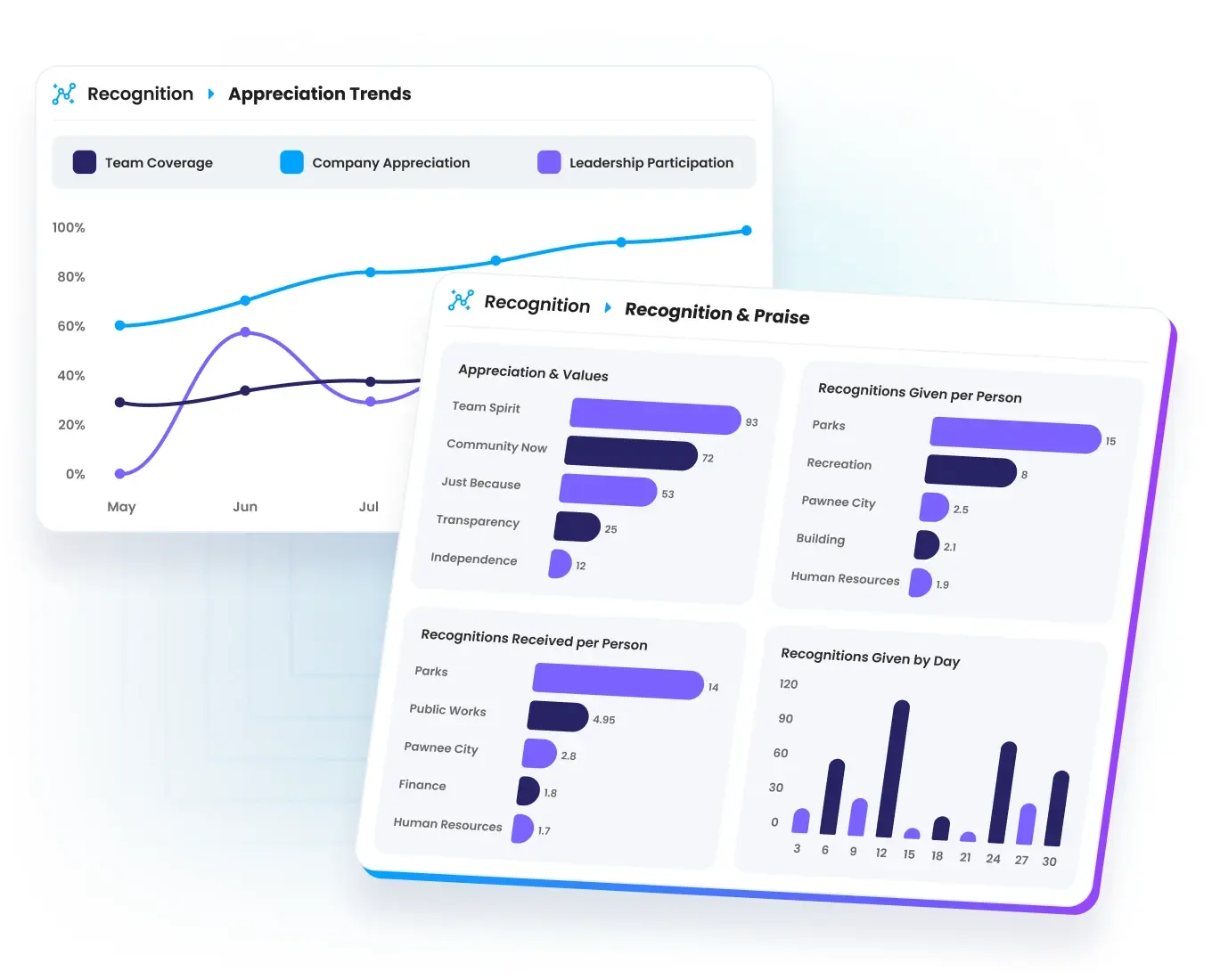
- Prioritize Insight, Not Just Activity: The goal isn’t just to send more recognition; it’s to understand its impact. Look for reporting features that provide actionable insights. Can you identify which teams are most engaged? Are recognition efforts aligned with company values? Are there correlations between recognition frequency and employee retention in specific departments? Deep analytics can help HR teams and leaders understand behavioral patterns, identify cultural strengths and weaknesses, and demonstrate the ROI of their recognition programs.
- Align Stakeholders Early: Recognition impacts more than just HR. Involve key stakeholders from the outset: IT for integration and security, finance for budget allocation and reward management, and department heads for program buy-in and effective rollout. Early alignment prevents rework and fosters a sense of shared ownership, making adoption smoother.
Leading Recognition Software for Mid-Sized Companies: A Comparative Overview
The market offers several compelling options, each with unique strengths suited to different mid-sized organizational profiles.
-
Achievers:
- G2 Rating: 4.6/5
- Strengths: Achievers is purpose-built as an employee recognition and rewards system designed for both mid-sized and enterprise organizations. Its strength lies in treating recognition not as a sporadic event but as an integrated, continuous process. It facilitates frequent, values-based recognition within the flow of work, backed by a global rewards marketplace and seamless integrations. A key differentiator is its robust analytics, which provide deep, real-world data on engagement, alignment, and performance, moving beyond mere activity metrics to actionable insights.
- Best for: Mid-sized companies committed to scaling their culture, driving measurable impact, and supporting complex hybrid workforces without added administrative burden.
- Limitations: Its comprehensive nature and depth of insight might be more robust than needed for very small teams or early-stage startups with extremely limited budgets.
- Review: "I have worked with many vendors and I have never received the level of service that I have from everyone at Achievers, especially our Client Success Manager… I have never had such a responsive internal team." – Heather Markle, Manager Rewards & Recognition, AutoTrader Group.
-
Guusto:
- G2 Rating: 4.9/5
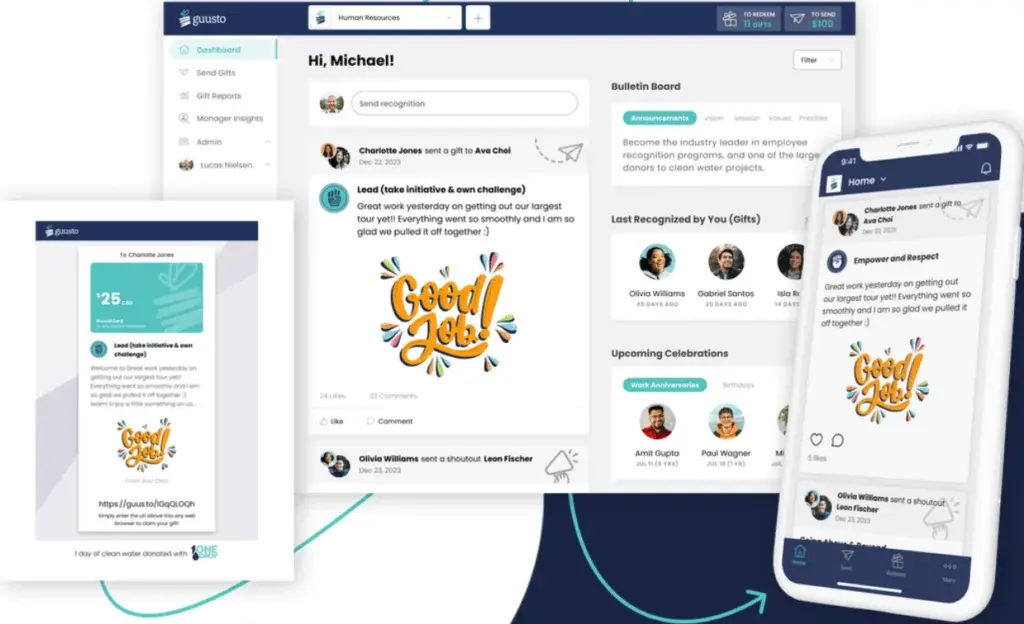
- Strengths: Guusto excels in simplicity and ease of reward delivery, particularly for frontline and deskless employees. It offers a low-friction way to send digital gift cards and recognition via multiple channels (SMS, QR codes, email, print), making it highly accessible for workforces without consistent access to traditional workplace tools.
- Best for: Mid-sized organizations with significant frontline or hourly workforces seeking a straightforward solution for reward distribution and basic recognition, prioritizing reach and ease of access.
- Limitations: Its analytics and reporting capabilities are more limited, offering less strategic insight into behavioral patterns, culture, and long-term performance outcomes compared to more comprehensive platforms.
- Review: "What I like most about Guusto is how easy it makes recognizing people in a genuine way. Instead of dealing with complicated points or systems, you can just send a real gift right away, which feels a lot more personal." – Pooja G., Insurance Advisor, via G2.
-
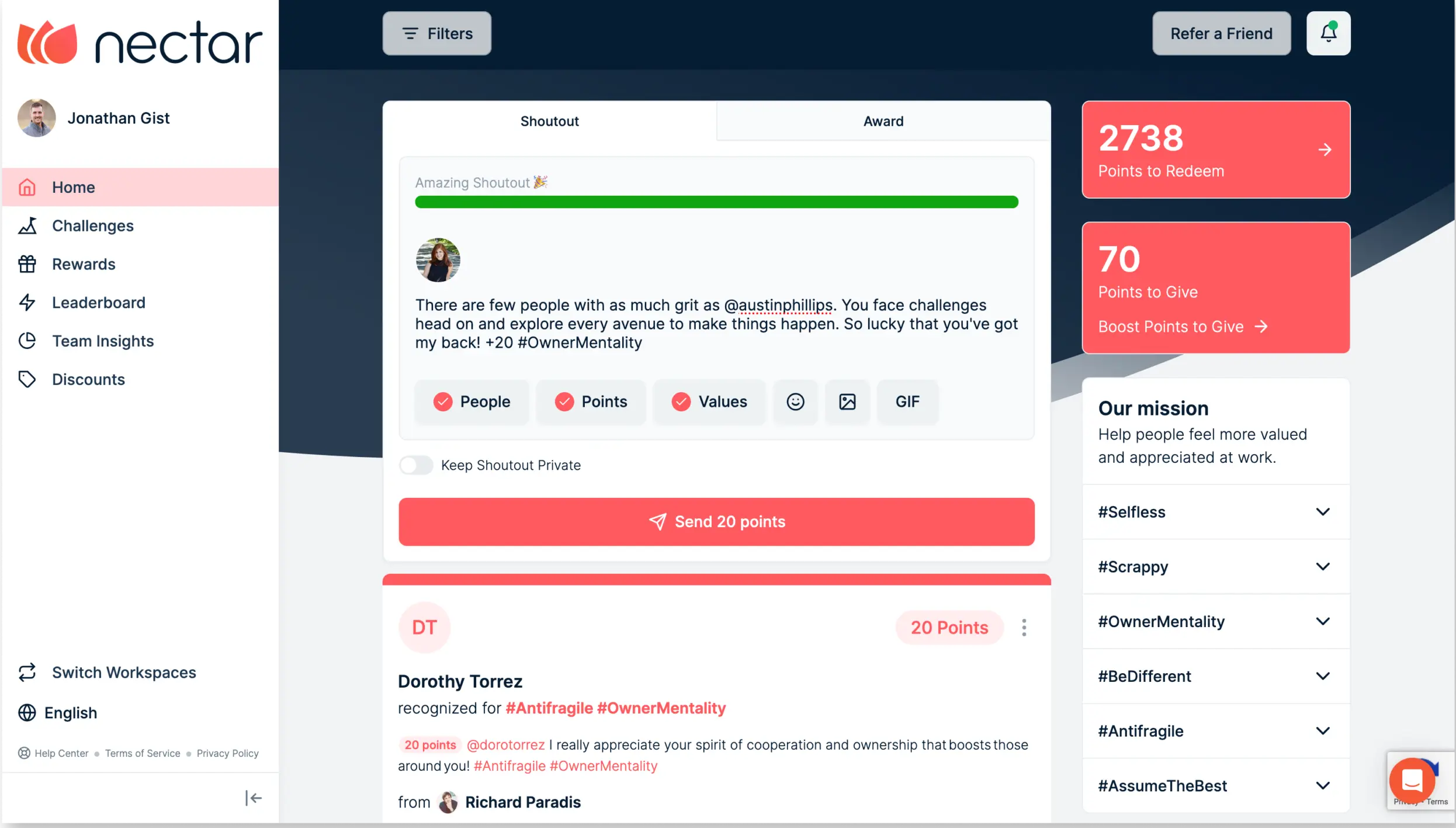
Nectar:
- G2 Rating: 4.7/5
- Strengths: Nectar focuses on making everyday appreciation visible, social, and easy to sustain. It combines peer-to-peer recognition, points-based rewards, milestones, and challenges into a user-friendly experience, integrating well with Slack and Microsoft Teams for in-workflow recognition. It’s often praised for its intuitive setup and budget-friendly approach.
- Best for: Mid-sized companies looking for a simple, cost-effective platform to boost peer recognition and social appreciation across teams, particularly those with a strong collaborative culture.
- Limitations: Nectar’s reporting and program configurability are less robust than enterprise-grade solutions, potentially limiting the ability of growing organizations to deeply connect recognition activity to long-term culture, performance, and retention analytics.
- Review: "When we first started using Nectar, it was so intuitive, that we were able to jump right in to using it. Nectar is very easy to use. I can navigate smoothly between redeeming my own rewards and giving out rewards to others." – Jennifer R., Curriculum and Instruction Specialist, via G2.
-
Motivosity:
- G2 Rating: 4.7/5
- Strengths: Motivosity is designed to foster strong social connection and community. It integrates peer-to-peer recognition, manager awards, and bonuses within a social feed experience, emphasizing visibility and frequent interaction. Features like employee profiles and org charts further encourage interaction and community building.
- Best for: Mid-sized organizations that prioritize a socially driven platform to enhance visibility, foster connection, and drive high participation rates through a community-centric approach.
- Limitations: While strong on participation, Motivosity’s recognition data and reporting tend to focus more on activity rather than deeper behavioral or performance insights, which might limit strategic analysis as organizations seek clearer links between recognition and critical business outcomes like retention.
- Review: "I loved using Motivosity. Being a new employee it was such a fun way to get to know my coworkers. It always performed well and the user experience was easy to get into. Also loved the personality quiz. I don’t know what the price is for our team to use, but to me money well spent and great for employee retention." – Jenna B., Account Manager, via G2.
-
Terryberry:
- G2 Rating: 4.6/5
- Strengths: Terryberry has a long-standing reputation in service awards and milestone recognition. Its platform combines peer-to-peer and manager-led recognition with a strong focus on service anniversaries and symbolic awards, offering a global rewards marketplace for both digital and physical items. It appeals to organizations valuing traditional, formalized recognition alongside modern tools.
- Best for: Mid-sized organizations that prioritize service awards, milestone celebrations, and a blend of traditional and modern recognition programs, particularly those with a strong emphasis on longevity and loyalty.
- Limitations: Terryberry’s analytics and everyday recognition experience are often more oriented toward program administration rather than real-time, behavior-driven insights, potentially limiting visibility into daily recognition patterns as companies modernize their approach.
- Review: "I like how easy the Terryberry platform is to use. I also value the new birthdays collection, the reporting features, and the rewards platform a lot. These features are important to me and I use all of them frequently. Switching to Terryberry from our homegrown platform was a positive change because Terryberry is user-friendly." – Elizabeth C., Mid-market, via G2.
Implications and The Path Forward
The journey for mid-sized companies in North America to select and implement employee recognition software is a strategic one, with far-reaching implications for talent management, cultural integrity, and overall business performance. The right platform transcends mere transactional rewards; it becomes an integral system for shaping desired behaviors, reinforcing core values, and fostering a truly human-centric workplace. As the competitive landscape for talent intensifies and employee expectations continue to evolve, investing in a robust, scalable recognition solution is no longer a luxury but a fundamental requirement for sustainable growth. It transforms everyday moments of appreciation into measurable gains in engagement, productivity, and retention, ensuring that a company’s culture scales positively alongside its operations. The future of work demands recognition that feels authentic, performs like a well-oiled system, and continuously moves the business forward.