
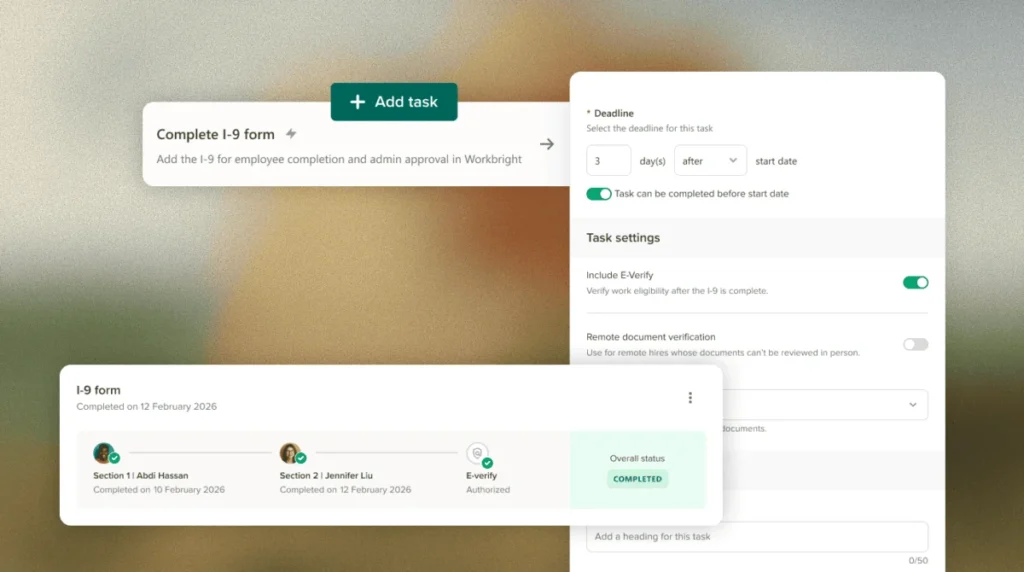
In a significant development for human resources technology, Workable, a prominent global recruiting software, has unveiled a new, fully integrated workflow designed to simplify and ensure compliance for Form I-9 and E-Verify processes for its U.S. customers. This innovative solution directly addresses long-standing challenges associated with manual paperwork, duplicate data entry, and the fragmented use of multiple tools, aiming to provide a seamless and compliant method for verifying employee work eligibility from within the Workable platform. The announcement marks a pivotal step in Workable’s commitment to enhancing the efficiency and regulatory adherence of its clients’ onboarding procedures, particularly in an era characterized by evolving federal guidelines and increasing scrutiny of employment verification practices.
Understanding the Federal Mandate: Form I-9 and E-Verify
The verification of an employee’s identity and eligibility to work in the United States is a cornerstone of federal immigration law, primarily governed by the Immigration Reform and Control Act (IRCA) of 1986. This landmark legislation introduced Form I-9, Employment Eligibility Verification, as a mandatory document for all U.S. employers, regardless of size or industry. The purpose of Form I-9 is straightforward: to prevent the employment of unauthorized individuals and to ensure a legal workforce.
Form I-9 is divided into three sections. Section 1 is completed by the employee on their first day of employment, attesting to their eligibility to work and providing personal information. Section 2 is completed by the employer (or an authorized representative) within three business days of the employee’s first day of employment, after physically examining documents presented by the employee that establish both identity and employment authorization. Section 3 is used for reverification or rehires. The meticulous completion and retention of Form I-9s are critical, as errors or omissions can lead to substantial civil and even criminal penalties for employers. According to data from U.S. Immigration and Customs Enforcement (ICE), civil penalties for substantive violations and uncorrected technical violations can range from hundreds to thousands of dollars per form, making compliance a significant financial and legal imperative for businesses.
Building upon the foundation of Form I-9, the E-Verify program was established as an internet-based system operated by the Department of Homeland Security (DHS) in partnership with the Social Security Administration (SSA). E-Verify allows participating employers to electronically confirm the employment eligibility of newly hired employees by comparing the information provided on Form I-9 with records available to the DHS and SSA. While E-Verify is voluntary for most employers, it is mandatory for federal contractors and subcontractors holding certain contracts and is required by law in several states and localities. The program significantly enhances the accuracy and efficiency of employment verification, reducing instances of identity fraud and unauthorized employment. However, its implementation requires strict adherence to specific procedures, including timely submission of data and accurate resolution of Tentative Non-Confirmations (TNCs), which can add layers of complexity for HR teams.
A Chronology of Compliance Challenges and Technological Solutions
The journey toward streamlined employment verification has been marked by continuous adaptation to regulatory changes and technological advancements.
- 1986: The Immigration Reform and Control Act (IRCA) is passed, making it illegal to knowingly hire or recruit unauthorized immigrants and establishing the Form I-9 requirement. This marked the beginning of formal employment eligibility verification.
- 1996: Pilot programs for electronic employment verification are initiated by the Immigration and Naturalization Service (INS), laying the groundwork for what would eventually become E-Verify. These early systems aimed to test the feasibility of digital checks against government databases.
- 2007: E-Verify becomes more widely available and promoted by the DHS, seeing increased adoption, particularly after executive orders mandated its use for federal contractors. This period saw a growing awareness among employers of the benefits and challenges of electronic verification.
- 2010s: The rise of cloud-based HR and applicant tracking systems (ATS) begins to offer partial solutions for digitalizing aspects of onboarding, but Form I-9 and E-Verify often remained separate, requiring manual data transfer or integration with third-party providers. This often led to fragmented workflows and increased potential for errors.
- 2020-2023: The COVID-19 pandemic significantly disrupted traditional in-person document verification processes. In response, DHS introduced temporary flexibilities, allowing remote inspection of I-9 documents. This period highlighted the urgent need for robust digital solutions capable of handling remote onboarding compliantly.
- July 2023: DHS announces a permanent optional alternative to the physical document examination requirement for E-Verify employers. Effective August 1, 2023, employers who use E-Verify and are in good standing can remotely examine documents via live video interaction, provided they meet specific criteria. This regulatory shift underscored the growing acceptance and necessity of digital verification methods.
- Present Day (Workable’s Release): Workable introduces its fully integrated I-9 and E-Verify workflow, directly responding to the demands for efficiency, compliance, and adaptation to the new remote verification guidelines. This solution aims to bring all aspects of the process into a single, unified platform, eliminating the historical pain points.
The evolution from paper-based forms to sophisticated digital platforms reflects a broader trend in HR towards automation and compliance technology. However, many organizations still grapple with legacy systems or manual processes that introduce inefficiencies and heighten the risk of non-compliance.
Workable’s Integrated Solution: A Paradigm Shift for HR
Workable’s new I-9 and E-Verify workflow represents a comprehensive approach to tackling these deeply entrenched challenges. By embedding the entire process directly into its existing onboarding setup, Workable is offering U.S. customers an unprecedented level of integration and control.
- Digital Section 1 Completion: New hires can now complete Section 1 of the I-9 form digitally through Workable. This feature eliminates the need for downloading, printing, and manually filling out PDFs, which often led to illegible handwriting, incomplete fields, and delays. The digital interface guides employees through the required information, reducing common errors and ensuring data accuracy from the outset. This improves the candidate experience by making the initial paperwork less cumbersome and more accessible, especially for remote hires.
- Streamlined HR Document Review and Section 2 Completion: Once an employee submits Section 1, HR teams gain immediate access within Workable. They can then review the employee’s identity and work authorization documents. Critically, for E-Verify participants, Workable’s system is designed to facilitate both traditional in-person document examination and the new remote inspection alternative. HR professionals can complete Section 2 digitally, directly within the platform, linking it seamlessly with the employee’s submitted Section 1 data. This eliminates duplicate data entry, a notorious source of errors and inefficiency when transferring information between separate systems or from paper forms.
- Automated E-Verify Submission: For organizations that have opted into E-Verify, Workable’s system automates the submission process. Once Section 2 is completed and the necessary document information is recorded, the data is automatically transmitted to the E-Verify system. This automation significantly reduces the risk of manual data entry errors into the E-Verify portal and ensures timely submission, which is a critical E-Verify requirement. The system is designed to provide real-time status updates, allowing HR teams to monitor the verification process and promptly address any Tentative Non-Confirmations (TNCs) that may arise, further enhancing compliance.
- Centralized Record-Keeping and Audit Trails: By consolidating the entire I-9 and E-Verify process within Workable, organizations benefit from centralized record-keeping. All submitted forms, document details, and E-Verify responses are stored securely within the platform, creating a robust audit trail. This is invaluable during an ICE audit, where employers must produce accurate and complete I-9 forms and related documentation. Digital storage also mitigates the risks associated with physical document management, such as loss, damage, or unauthorized access.
Supporting Data and the Cost of Non-Compliance
The imperative for such an integrated solution is underscored by compelling data on I-9 compliance challenges. Studies consistently reveal that a high percentage of employers struggle with I-9 compliance. A common finding from audits and analyses is that between 50% to 75% of I-9 forms contain at least one error. These errors can range from minor technical omissions, like missing dates or signatures, to substantive violations, such as accepting invalid documents or failing to complete sections within the prescribed timeframe.
The financial repercussions of non-compliance are substantial. According to official USCIS guidelines, civil penalties for Form I-9 paperwork violations can range from $272 to $2,701 per form for first offenses, with higher penalties for repeat offenders. Substantive violations, which include knowingly hiring or continuing to employ unauthorized workers, carry even steeper fines, ranging from $676 to $5,409 per unauthorized employee for a first offense. These penalties can quickly escalate for organizations with a large workforce or systemic issues, potentially leading to millions of dollars in fines, not to mention the reputational damage and potential legal challenges.
Beyond direct penalties, the administrative burden of managing I-9 and E-Verify manually is considerable. HR professionals spend countless hours on data entry, document verification, follow-ups, and maintaining physical or disparate digital records. The average cost of processing a new hire, including paperwork and onboarding, can range from hundreds to thousands of dollars. Streamlining these processes through automation, as Workable’s solution offers, translates directly into significant cost savings in terms of HR staff time and reduced risk of costly errors.
Implications for U.S. Organizations: Why This Matters
Workable’s new offering carries profound implications for U.S. organizations seeking to navigate the complex landscape of employment eligibility verification.
- Enhanced Regulatory Compliance: The most immediate benefit is a significant uplift in compliance posture. By automating checks and guiding users through the correct process, Workable minimizes the potential for human error, ensuring that I-9 forms are completed accurately and E-Verify submissions are made promptly. This substantially reduces exposure to federal penalties and legal liabilities.
- Unprecedented Operational Efficiency: HR teams are often burdened with administrative tasks. This solution liberates them from manual data entry, paper shuffling, and jumping between disparate systems. The time saved can be reallocated to more strategic HR initiatives, such as talent development, employee engagement, or workforce planning. This operational efficiency translates into faster onboarding cycles and a more productive HR department.
- Superior Candidate and Employee Experience: For new hires, the onboarding process often sets the tone for their entire employment experience. A convoluted, paper-heavy I-9 process can be frustrating. Workable’s digital, seamless workflow provides a modern, intuitive experience, reflecting positively on the employer’s professionalism and efficiency.
- Scalability for Growth: As organizations grow, managing I-9 and E-Verify for an increasing number of new hires becomes exponentially more challenging with manual systems. An integrated digital solution like Workable’s scales effortlessly, allowing companies to expand their workforce without proportionally increasing the administrative burden on HR.
- Adaptation to Modern Work Models: The permanent remote I-9 inspection flexibility for E-Verify participants, enacted by DHS, acknowledges the prevalence of remote and hybrid work. Workable’s integrated solution is perfectly positioned to support these modern work models, enabling compliant remote onboarding without the logistical nightmares of physical document inspection for geographically dispersed teams.
- Data Security and Integrity: Housing sensitive employee data and compliance records within a secure, dedicated platform enhances data security. Workable’s commitment to data protection ensures that confidential information is handled in accordance with industry best practices and privacy regulations, safeguarding both the employer and the employee.
Statements and Industry Reactions (Inferred)
"Our mission at Workable has always been to simplify complex HR processes, empowering organizations to focus on what truly matters: their people," stated a Workable spokesperson, emphasizing the strategic importance of the new feature. "This integrated I-9 and E-Verify workflow is a direct response to the critical need for compliant, efficient, and user-friendly solutions in today’s dynamic employment landscape. We understand the significant burden federal compliance places on HR teams, and we are committed to providing tools that not only meet but exceed those requirements with unparalleled ease."
Industry experts are also likely to welcome such advancements. "The integration of I-9 and E-Verify directly into a talent acquisition platform like Workable is a game-changer for HR professionals," noted a hypothetical HR compliance consultant. "Fragmented systems are a leading cause of compliance failures. By unifying these critical processes, Workable is not only improving efficiency but also drastically reducing legal risks for employers, especially given the complexities introduced by remote work and evolving DHS guidelines."
An HR manager at a rapidly growing tech company, hypothetically utilizing Workable, might express, "Before this, we were juggling PDFs, external E-Verify portals, and manual document checks. It was time-consuming, prone to errors, and frankly, a source of constant anxiety. Workable’s new workflow simplifies everything. Our new hires have a smoother onboarding experience, and our HR team can breathe a sigh of relief knowing we’re compliant without the administrative headache. It’s truly transformative."
Broader Industry Impact and Future Outlook
Workable’s move reflects a broader trend within the HR technology sector towards comprehensive, all-in-one platforms that address the entire employee lifecycle, from recruitment to onboarding, and beyond. As regulatory environments become increasingly intricate and the demand for efficient, secure digital solutions grows, integrated compliance tools are becoming indispensable. This development solidifies Workable’s position as a leading innovator in the HR tech space, demonstrating its responsiveness to market needs and its commitment to delivering tangible value to its customers.
Looking ahead, the emphasis on artificial intelligence and automation within HR tech is expected to deepen, potentially offering even more predictive analytics for compliance risks, smarter document verification, and personalized onboarding experiences. Workable’s integrated I-9 and E-Verify solution is a foundational step in this evolution, setting a new standard for how organizations can manage federal employment verification with confidence and efficiency. As the U.S. workforce continues to adapt to new paradigms, such as increased remote work and a diverse talent pool, technological solutions that ensure fairness, legality, and operational excellence will remain at the forefront of HR innovation.






