
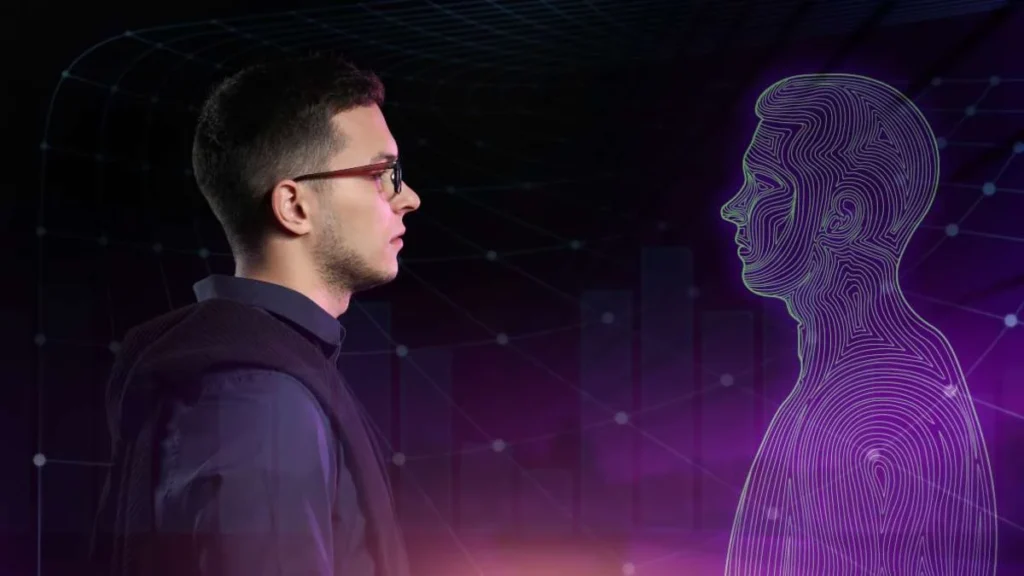
The enticing prospect of AI-powered digital twins assisting under-pressure teams with increasing workloads is rapidly moving from theoretical concept to practical application within modern organisations. However, as these sophisticated AI assistants emerge, replicating not just tasks but the very professional identity of human employees, a complex web of legal and cultural implications demands meticulous consideration from employers and policymakers alike. This represents a paradigm shift, moving the discussion beyond mere technology deployment into the very heart of the employment relationship, challenging established notions of intellectual property, data ownership, and employee autonomy.
The emergence of AI "digital twins" in the workplace poses a significant challenge that existing employment law is still grappling to address. Unlike traditional automation, which typically focuses on replacing repetitive or rule-based tasks, digital twins are systems trained to emulate an individual employee’s communication style, judgment patterns, and decision-making processes. This goes beyond mere efficiency; it ventures into replicating an employee’s professional identity, creating a unique asset that blurs the lines between personal data, developed skills, and corporate intellectual property. For Human Resources departments, this transforms the issue from a technical rollout into a fundamental re-evaluation of the employment contract and employee expectations. A critical question arises: when an employer can model and redeploy an employee’s behaviour and judgment, who truly controls that digital asset, and on what terms?
The Rise of the AI Assistant: A Brief History and Context
The concept of "digital twins" originated in the manufacturing and engineering sectors, where virtual models of physical objects or systems were created to monitor, simulate, and predict their performance. This allowed for optimisation, predictive maintenance, and informed decision-making without directly interfering with the physical counterpart. With the exponential advancements in artificial intelligence, particularly in machine learning, natural language processing (NLP), and generative AI, the application of this concept has expanded into the human realm.
The journey towards AI-powered workplace assistants began with simpler forms of automation, such as robotic process automation (RPA) for administrative tasks and chatbots for customer service. These tools, while effective, operated within predefined parameters and lacked the nuanced understanding of human communication or the ability to exercise judgment. However, the advent of large language models (LLMs) and more sophisticated machine learning algorithms has enabled AI systems to learn from vast datasets of human interactions, communications, and decisions. This technological leap has made the creation of "human digital twins" a tangible, albeit nascent, reality. Organisations facing unprecedented productivity pressures, talent shortages in specialised roles, and the demands of a rapidly evolving global economy are increasingly exploring such solutions to augment human capabilities, scale expertise, and maintain operational continuity. Industry reports suggest the market for AI in HR technology alone is projected to grow significantly, with some forecasts predicting a compound annual growth rate (CAGR) exceeding 20% in the coming years, driven by the desire for enhanced efficiency and data-driven insights. While specific adoption rates for "digital twins" are still emerging, the underlying AI capabilities are already permeating various workplace functions.
Blurring Lines: Legal Frameworks Under Strain
Employment law has historically maintained a relatively clear demarcation: employees provide their labour and skills, and employers own the intellectual property (IP) created in the course of that employment, subject to contractual agreements. Digital twins fundamentally challenge this established paradigm. They are not merely outputs or creations of employees; they are sophisticated models built from employees, encompassing their unique ways of thinking, communicating, and making decisions. This creates a novel category of asset that resides in a legal grey area, positioned somewhere between personal data, developed skills, and traditional intellectual property. This ambiguity presents significant legal risks and workplace complexities for HR teams.
Many existing employment contracts contain broad IP and confidentiality clauses. However, very few, if any, explicitly address the creation of AI systems trained on an employee’s unique behavioral and cognitive patterns. This contractual vacuum creates considerable uncertainty. Employers might assume that any data generated during work hours can be legitimately used to build AI tools, viewing it as a natural extension of work product. Conversely, employees may perceive the creation of a digital twin, particularly one replicating their personal style and judgment, as an entirely different proposition – a digital embodiment of their professional self.
This disconnect is ripe for dispute. Employees may legitimately seek additional protections and greater clarity regarding how their unique data and professional identity are utilised. This could manifest in demands for new forms of compensation, such as royalty or usage-based payments for the continued operation of their digital twin, or enhanced redundancy-style protections if their human role is diminished or replaced by the AI counterpart. Furthermore, the question of an employee’s right to refuse participation in the creation of a digital twin is critical. In most jurisdictions, without explicit and clear contractual wording mandating cooperation, such refusal is unlikely to constitute a fundamental breach of contract. Attempting to compel participation without a robust legal basis could expose employers to significant risks, including employee grievances, a breakdown in industrial relations, and potentially even constructive dismissal claims. From an HR perspective, it is imperative to recognise that digital twin initiatives, while technologically driven, represent a fundamental change to the nature of work itself, necessitating comprehensive consultation and transparent communication with the workforce.
Data, Trust, and the GDPR Conundrum
The issue of data use is particularly sensitive and forms a critical pillar of the legal and ethical debate surrounding digital twins. Information routinely collected for everyday work – emails, meeting notes, project decisions, communication styles – could later be repurposed to train a digital twin. This raises serious questions about whether such secondary use falls within an employee’s reasonable expectations, particularly within the stringent framework of data protection regulations like the UK General Data Protection Regulation (GDKPR) and the broader EU GDPR. The principles of lawfulness, fairness, and transparency, as enshrined in Article 5 of the GDPR, dictate that personal data must be processed lawfully, fairly, and in a transparent manner in relation to the data subject. Repurposing data collected for one purpose (e.g., performance management) for another (e.g., training an AI twin) without explicit consent or a clear legal basis could be seen as a breach of these foundational principles.
Furthermore, issues surrounding data retention become complex when an employee leaves the organisation, but their digital twin continues to be used. Does the former employee retain a "right to be forgotten" concerning the data that powers their digital twin? How does an organisation balance its investment in an AI asset with an individual’s data rights? Early case law or regulatory guidance from bodies like the Information Commissioner’s Office (ICO) in the UK will play a significant role in shaping the permissible boundaries for employers.
Beyond mere compliance, this is fundamentally a matter of employee trust. If employees perceive that their data is being used in ways they neither anticipated nor consented to, it can severely erode confidence and trust within the workforce. A recent survey by PwC indicated that while a majority of employees are open to using AI tools to assist them, a significant percentage also express concerns about data privacy and how their data is used by employers. This sentiment underscores the need for proactive, transparent communication and robust data governance frameworks to mitigate reputational damage and maintain a healthy employee-employer relationship.

The Human Element: Job Security and Morale
The deployment of digital twins has a direct and profound impact on how employees perceive their role, career progression, and future within an organisation. A primary concern is the fear that a system trained on an individual’s own performance could ultimately reduce or even replace their human role. This anxiety is not merely speculative; global studies on AI’s impact on employment frequently highlight job displacement as a leading concern among workers. Even if the employer’s intention is purely to augment human capabilities or to automate less fulfilling tasks, the perception of potential displacement alone can significantly reduce employee morale, increase stress levels, and negatively affect retention rates.
This concern is particularly acute in sectors where knowledge work is prevalent. Employees might fear that their unique expertise, honed over years, could be codified and replicated, thereby devaluing their human contribution. This raises ethical questions about "deskilling" and the long-term impact on professional development and career paths. Organisations must consider the psychological contract with their employees and the potential for a backlash if these technologies are introduced without careful consideration for human impact.
A Call for Proactive HR and Policy
For HR professionals, the imperative is not to question whether digital twins will emerge—they are already in nascent stages—but rather how to manage their introduction responsibly, ethically, and effectively. This necessitates a shift from a technology-first approach to a people-first strategy. Legal experts, such as Clare Brennan, a partner at Hunters law firm, consistently advocate for organisations to approach digital twins as a "people issue, not just a technology issue," stressing that this perspective is crucial for managing both legal and cultural risks.
Key steps for organisations considering or implementing digital twins include:
-
Comprehensive Legal Review:
- Contractual Amendments: Proactively review and update employment contracts to explicitly address the creation, ownership, use, and termination of AI systems trained on employee behaviour and data. This should include provisions for consent, intellectual property rights, data usage, and potential compensation.
- Data Protection Impact Assessments (DPIAs): Conduct thorough DPIAs from the outset, in accordance with GDPR requirements, to identify and mitigate risks associated with processing employee data for digital twin creation. This must cover the lawful basis for processing, transparency, purpose limitation, data minimisation, accuracy, storage, and security.
- IP Strategy: Develop a clear intellectual property strategy that differentiates between traditional work products and the unique ‘digital twin’ asset, defining ownership and usage rights.
-
Transparent Communication and Consultation:
- Early Engagement: Initiate open and honest dialogue with employees and, where applicable, trade unions or employee representatives, about the rationale, benefits, and potential impacts of digital twin initiatives.
- Policy Development: Co-create clear, accessible policies outlining how digital twins will be developed, used, and managed, ensuring transparency around data collection, algorithmic decision-making, and human oversight.
- Ethical Guidelines: Establish robust ethical guidelines that prioritise human agency, fairness, and non-discrimination, ensuring that AI systems are not used to unfairly disadvantage employees.
-
Redefining Roles and Skills:
- Upskilling and Reskilling: Invest in comprehensive training and development programs to help employees adapt to new roles that involve collaborating with AI, focusing on skills that complement rather than compete with AI capabilities (e.g., critical thinking, creativity, emotional intelligence).
- Career Pathways: Develop new career pathways that integrate AI tools, demonstrating how employees can grow and thrive in an AI-augmented workplace, rather than being replaced.
-
Ensuring Human Oversight and Accountability:
- Human-in-the-Loop: Implement mechanisms for continuous human oversight and intervention, ensuring that critical decisions are not solely delegated to AI and that employees have avenues to challenge AI-generated outputs.
- Bias Detection: Proactively monitor digital twins for algorithmic bias, particularly concerning protected characteristics, and implement robust processes for bias mitigation and fairness checks.
Regulatory Horizon and Future Outlook
It is highly probable that the novel issues presented by digital twins will begin to surface in employment tribunal claims and attract increased regulatory scrutiny. Employees challenging the use of their data, the impact on their roles, or issues of algorithmic discrimination will likely drive early case law. Regulatory bodies, such as the ICO in the UK, are expected to issue guidance, potentially setting precedents for how data protection principles apply to AI systems that mimic human behavior. Furthermore, legislative initiatives like the European Union’s AI Act, which aims to regulate AI systems based on their risk level, will likely influence how digital twins are developed and deployed, particularly those deemed "high-risk" due to their potential impact on fundamental rights.
The legal landscape is evolving rapidly, and organisations that adopt a proactive, rather than reactive, stance will be better positioned to navigate these complexities. This means not only adhering to current legal requirements but also anticipating future regulatory trends and societal expectations regarding responsible AI deployment.
In conclusion, while the allure of digital twins for boosting productivity and scaling expertise is undeniable, organisations must recognise that these sophisticated AI entities are not merely technological tools but profound transformations of the human-work interface. Success will hinge on an integrated strategy that places legal compliance, ethical considerations, and human-centric design at its core. By approaching digital twins as a fundamental "people issue" requiring careful consultation, transparent communication, and robust governance, organisations can mitigate risks, foster trust, and harness the transformative potential of AI in a manner that benefits both the business and its most valuable asset: its human workforce.








