The United States labor market, which for the past year has shown resilience with employment slowdowns primarily attributed to cost-cutting measures and broader economic uncertainty rather than explicit job displacement by artificial intelligence, is now signaling a significant transformation. As the nation heads into 2026, new data indicates a noticeable uptick in the unemployment rate, with a particularly stark divergence emerging between recent college graduates and more experienced professionals. This trend, underscored by rising unemployment figures and a subtle but growing influence of AI, suggests a recalibration of the job market, impacting career trajectories and demanding new approaches from both workers and employers.
Rising Unemployment and Economic Headwinds
The Bureau of Labor Statistics (BLS) reported the US unemployment rate at 4.6% as of late 2025, a notable increase from 4.2% a year prior, representing a 9.5% surge. More significantly, this figure is a stark 24.7% jump from the 3.7% unemployment rate recorded in November 2023, and a considerable rise from the 3.6% observed in November 2022. These statistics paint a picture of an economy that is decelerating after a period of robust post-pandemic recovery, often characterized by what was termed "revenge buying" in 2021 and 2022. Factors such as persistent US tariffs, ongoing inflation, and relatively high interest rates continue to contribute to this economic slowdown.
While these macro-economic factors provide a foundational context, a deeper dive into the employment data reveals a more nuanced situation, particularly when segmenting the workforce. Analysis of unemployment figures, broken down by age and experience, highlights a growing disparity.
The Divergent Paths of New Graduates and Seasoned Professionals
When examining the unemployment rate through the lens of two distinct groups – new college graduates (aged 24 and younger) and more established workers (aged 25-35) – a clear divergence becomes apparent. Data visualized in recent economic analyses shows that while tenured college graduates, characterized by their accumulated skills, judgment, and professional maturity, have maintained a steady unemployment rate below the national average, the outlook for new graduates is considerably more challenging.
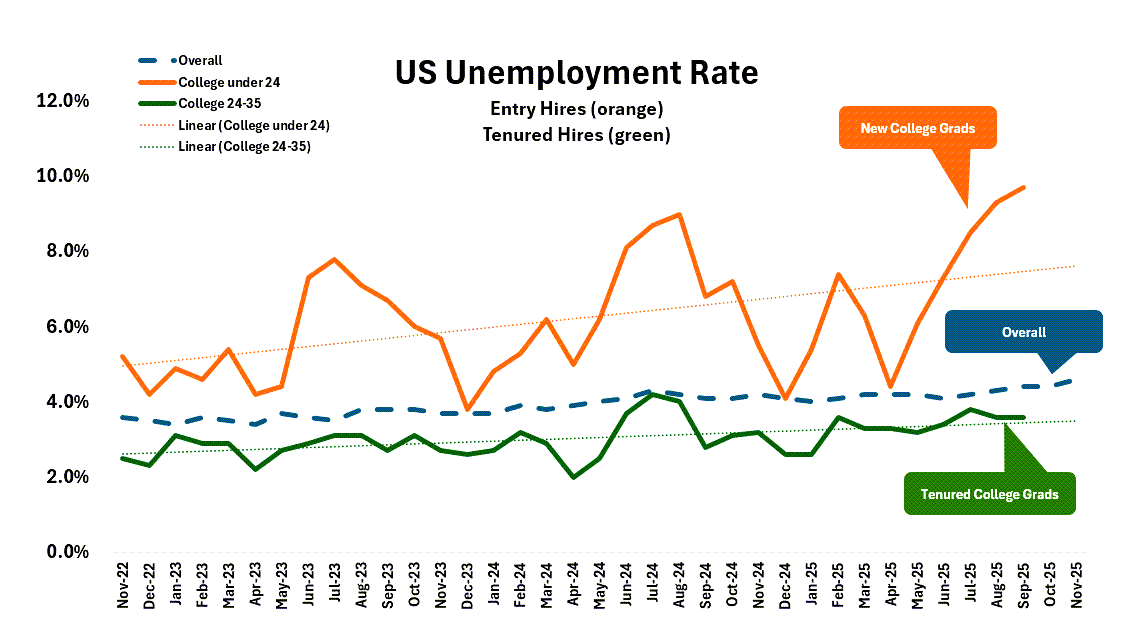
The unemployment rate for recent college graduates has been on a steady upward trajectory. As of late 2025, this rate is approaching 10%, a level not seen since the peak of the pandemic recovery in July 2021. This surge in youth unemployment echoes historical patterns, with the St. Louis Federal Reserve noting that the only comparable period of elevated unemployment for young college graduates occurred in 2011, during the recovery from the 2008 Great Recession. This historical parallel suggests that new entrants to the workforce are disproportionately bearing the brunt of current labor market shifts.
Further complicating this picture is the evolving nature of job requirements. Data indicates a substantial portion of the workforce, approximately 82% (an increase from 79% five years ago), does not require a college degree for employment. This trend, coupled with the rising unemployment among recent graduates, suggests a dual impact: not only is AI potentially slowing the pace of new graduate hiring, but it may also be contributing to a reduction in the overall number of jobs that necessitate a four-year degree.
AI’s Nascent but Growing Influence
While broader economic forces have dominated discussions about job market slowdowns, the impact of Artificial Intelligence is beginning to assert itself, particularly in its influence on the types of jobs being created and the skills deemed most valuable. Early indicators suggest that AI is not yet a direct, large-scale job replacement technology for most roles. However, its integration into various industries is beginning to reshape hiring priorities and the demand for specific skill sets.
A key aspect of this transformation lies in how AI is perceived and integrated into the workplace. Research on "Trust in AI’s Value" rather than simply "trust in the AI platform" reveals a critical underlying dynamic. When employees lack confidence in the practical application and benefits of AI, or when leadership communication around AI adoption is unclear, it can foster apprehension and resistance. This "AI anxiety" can manifest as reduced economic productivity, as employees may hesitate to embrace new technologies or voice concerns about their future job security.
The Societal and Technological Implications of AI
AI is increasingly understood not just as a technological advancement but as a "socio-technological innovation," carrying significant societal and sociological impacts. The current economic climate, marked by a sense of insecurity regarding jobs, careers, and future earnings, is exacerbated by the uncertainty surrounding AI’s long-term effects. This anxiety, if unaddressed, can create a drag on overall economic output.

The integration of AI into daily work life is becoming more pervasive. This includes interactions with conversational AI, personalized email communications, avatar-based job interviews, AI-driven career counseling, and AI-informed performance reviews. Looking ahead to 2026 and beyond, the landscape is expected to further evolve with the introduction of digital twins, robotics, and more sophisticated AI-driven simulations of human work processes. Platforms like Galileo Learn, which utilize AI agents for coaching and skill development, exemplify this trend.
Navigating the Future: Advice for Workers and Employers
The evolving job market necessitates strategic adaptation from all stakeholders. For individuals, particularly those entering the workforce or seeking new opportunities, embracing AI is becoming crucial. Younger workers, having grown up with digital technologies, are often more adept at adopting and innovating with AI tools. They may possess a mindset that is more inclined to question existing processes and explore novel applications of AI, potentially driving significant reinvention within organizations.
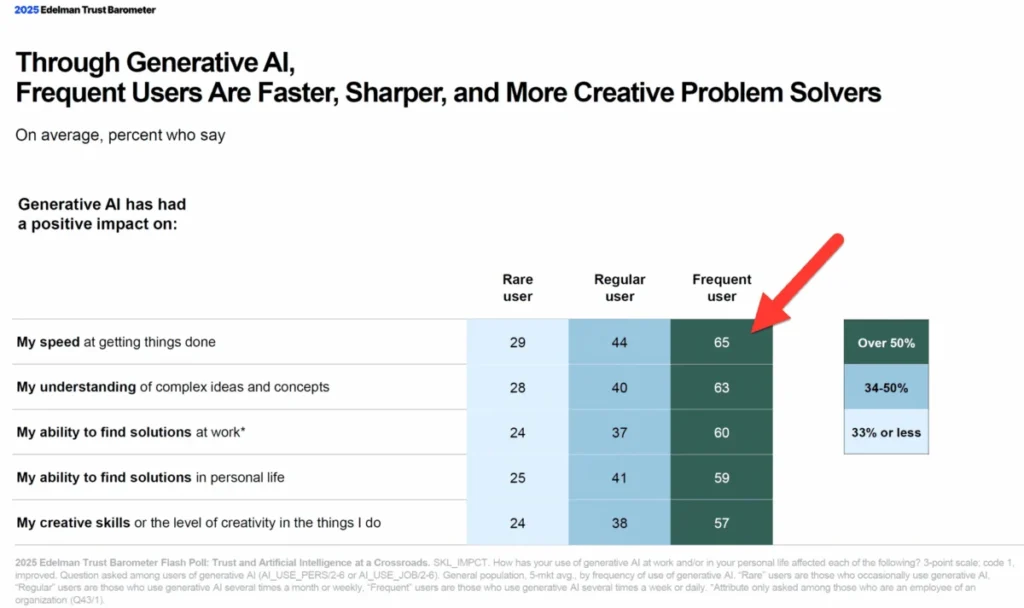
The concept of the "superworker" is emerging, where individuals leverage AI to enhance their capabilities and accelerate their expertise. AI provides unprecedented access to information and research, allowing individuals to rapidly transition from an "apprentice" role to that of a "newly minted expert." For job seekers, this means meticulously researching companies and roles, becoming deeply knowledgeable before engaging with recruiters. Similarly, seasoned professionals cannot solely rely on their experience; they too must actively engage with new technologies and advancements to remain competitive. Data indicates that frequent AI users are significantly more likely to report finding solutions at work and completing tasks more efficiently, underscoring the practical benefits of AI adoption.
Employers’ Strategic Imperatives in the Age of AI
For employers and hiring managers, understanding these shifts is paramount. The "tenure trap," where loyalty and experience are prioritized over adaptability, could lead to overlooking promising young talent who are quick to leverage AI. While senior employees possess invaluable institutional knowledge, their approach to AI might be focused on optimizing existing processes rather than fundamentally rethinking workflows. Conversely, younger candidates, even with less direct experience, may quickly become "AI-Gurus" capable of driving innovation.
HR leaders and recruiters are advised to consider the long-term productivity gains offered by fast-learning AI adopters. These individuals may represent the "Superworkers" of the future, capable of rapid skill acquisition and contribution. Their potential for accelerated learning and improved output, coupled with potentially lower initial compensation compared to highly experienced professionals, makes them an attractive prospect for forward-thinking organizations.
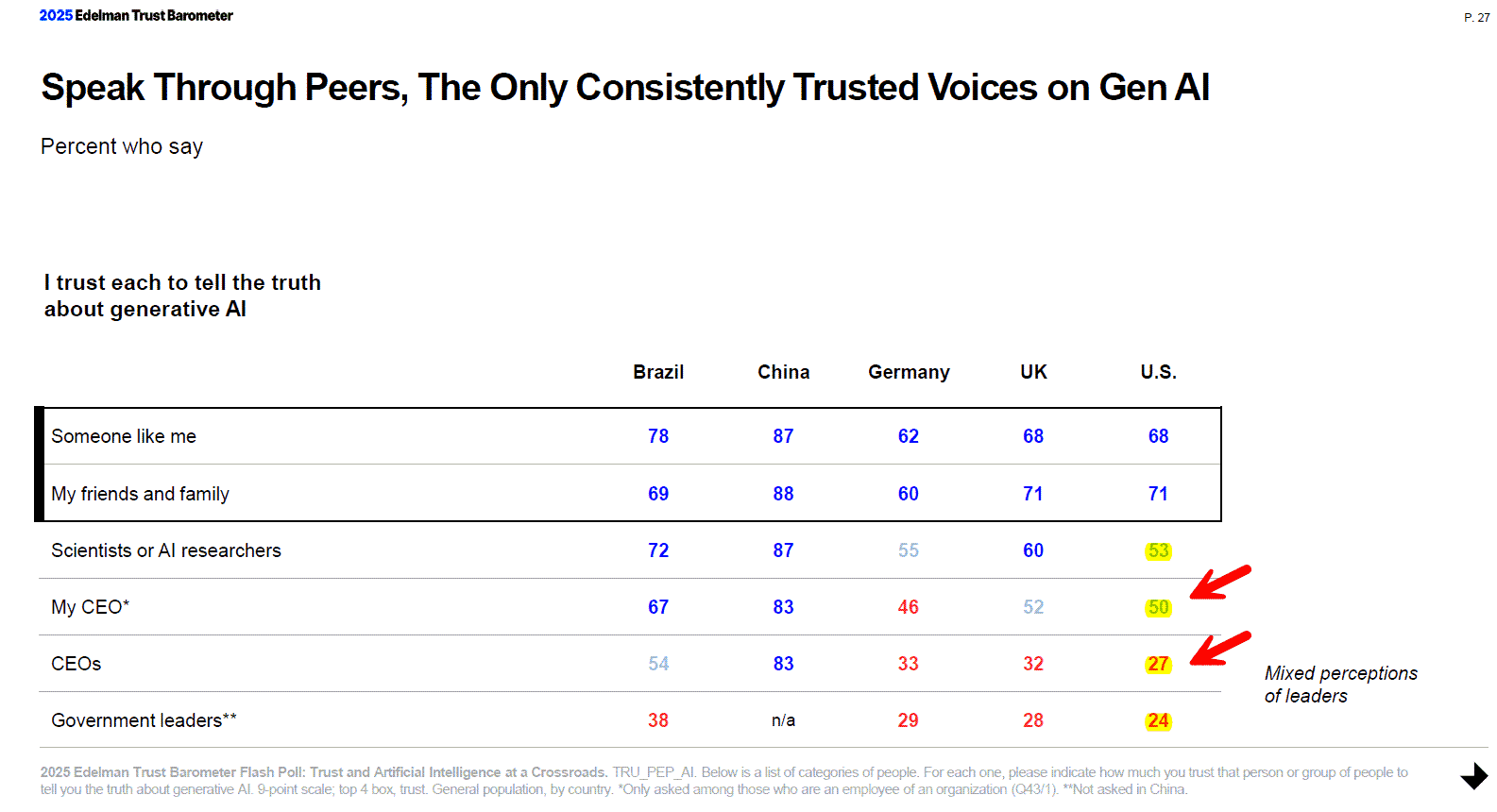
CEOs and senior executives are urged to foster transparency and honesty regarding AI implementation plans. Research consistently points to AI as a "scaling technology" rather than a pure "job eliminator." Open communication and supportive strategies for employee adaptation can accelerate the integration of AI and ensure companies remain competitive. Acknowledging the human element of AI adoption, including addressing employee concerns about job security and the need for reskilling, is critical for successful integration and sustained organizational growth.
The Broader Impact on Learning and Development
The rise of AI is also precipitating a significant shift in the landscape of online learning and professional development. As AI tools become more sophisticated and accessible, the traditional models of acquiring and disseminating knowledge are being disrupted and reborn. Organizations are increasingly looking for agile learning solutions that can equip their workforce with the skills needed to thrive in an AI-augmented environment. This includes fostering a culture of continuous learning, where employees are encouraged to experiment with AI tools and develop new competencies. The convergence of AI, digital twins, and immersive learning technologies is poised to redefine how professional development is approached, creating new opportunities for individuals to enhance their expertise and adapt to the evolving demands of the modern workplace.