For decades, employee service awards have been a staple in corporate recognition, often characterized by the predictable presentation of a gold watch, a firm handshake, and polite applause. This traditional approach, while well-intentioned, is increasingly failing to resonate with today’s workforce, which seeks deeper validation and a genuine sense of appreciation. Data from the Achievers Workforce Institute (AWI) reveals a significant disconnect: only one in four employees feel appreciated at work, and more than half are contemplating leaving their current employers. This alarming trend highlights not merely a retention issue, but a fundamental recognition deficit. When executed effectively, employee service awards transcend the celebration of tenure; they become potent catalysts for engagement, loyalty, and the cultivation of a positive company culture.
Understanding the Modern Employee Service Award
An employee service award, at its core, is a formal acknowledgment of an employee’s time and commitment to an organization, typically tied to significant anniversary milestones such as one, five, ten, or twenty-five years of service. However, the contemporary workplace demands a more nuanced approach. Today, these awards represent more than just a date on a calendar; they are opportunities to celebrate not only longevity but also the tangible impact an employee has made and how their contributions align with the overarching purpose of the organization.
The definition of a service award has evolved significantly. Modern employee expectations have shifted, and milestone moments are no longer solely about the passage of time. Instead, they are about crafting a recognition experience that is timely, personal, and imbued with genuine meaning. Forward-thinking organizations are reimagining service awards as an integral component of a comprehensive recognition strategy. This strategy aims to reinforce organizational culture, strengthen employee connections, and celebrate the individual behind the milestone. The emphasis has moved away from generic gestures towards designing memorable experiences that employees will genuinely recall and discuss.
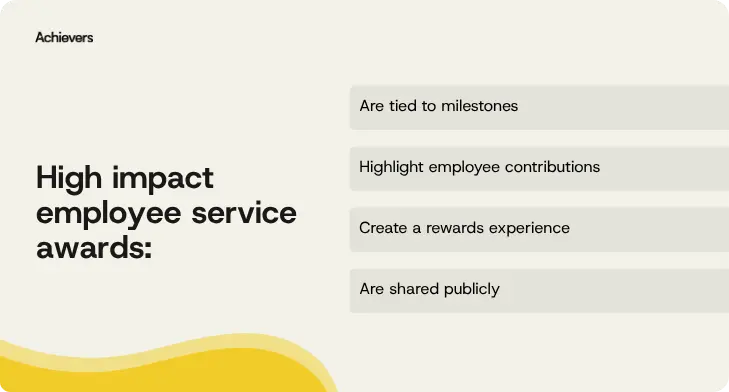
High-impact employee service award programs typically encompass several key elements. These include timely recognition that acknowledges milestones as they occur, personalization that tailors the award to individual preferences and contributions, and alignment with company values to reinforce desired behaviors and cultural tenets. Furthermore, meaningful rewards that offer genuine value, whether tangible or experiential, are crucial. Finally, visibility ensures that the recognition is acknowledged not only by the individual but also by their peers and leadership, amplifying its impact. When these components coalesce, service awards transform from perfunctory gestures into profound moments of connection. It is these moments, where employees feel truly seen and valued, that drive sustained engagement and retention.
The Crucial Role of Service Awards in Retention and Engagement
Employee service awards play a distinct and vital role within a modern recognition framework. While day-to-day recognition reinforces immediate behaviors and contributions, service awards create pivotal milestone moments. These occasions provide opportunities to pause, reflect, and help employees reconnect with the cumulative impact of their work over time. In a workforce where feelings of appreciation and engagement are demonstrably declining, these milestone moments hold amplified significance.
Service awards contribute to building organizational continuity and enhancing the overall employee experience. They signal that recognition is not arbitrary or reactive but is an intentional, consistent, and deeply embedded aspect of the company culture. At their zenith, service awards do more than simply mark the duration of an employee’s tenure; they actively contribute to:
- Reinforcing Commitment: By celebrating long-term service, organizations visibly demonstrate their appreciation for loyalty and dedication.
- Strengthening Bonds: These awards serve as tangible reminders of an employee’s journey and their connection to the company’s mission and values.
- Boosting Morale: Acknowledging significant milestones can significantly uplift employee spirits and foster a sense of pride.
- Inspiring Others: Publicly celebrating long-serving employees can motivate others to strive for similar dedication and achievement.
Enhancing the Employee Experience Through Service Awards
Recognition stands out as one of the most consistent and impactful drivers of employee engagement. However, not all forms of recognition carry equal weight. The critical differentiators are timing, meaning, and visibility. Data from the Achievers Workforce Institute (AWI) consistently shows that when employees feel genuinely appreciated, the positive repercussions extend far beyond the immediate moment. These impacts include increased job satisfaction, heightened motivation, and a stronger sense of belonging.
Service awards add a unique dimension to this. They anchor recognition to meaningful milestones, creating moments that feel earned, memorable, and truly worth celebrating. Rather than blending into the fabric of everyday appreciation, they stand out as definitive proof that the organization values long-term contribution and commitment.
High-impact service awards contribute to creating:
- A Sense of Belonging: Recognizing tenure reinforces an employee’s place within the organizational community.
- Increased Loyalty: Employees who feel valued for their long-term contributions are more likely to remain with the company.
- Enhanced Productivity: Appreciated employees often exhibit higher levels of motivation and a greater willingness to go the extra mile.
- Positive Brand Advocacy: Satisfied and recognized employees are more likely to become advocates for the company, both internally and externally.
Crucially, recognition is not merely a feel-good initiative; it directly influences behavior. AWI research indicates that a significant 85% of employees report they are likely to repeat an action when they have been recognized for it. This underscores the power of service awards as an opportunity to reinforce the specific values, behaviors, and contributions that an organization wishes to see more of.
The Impact on Retention and Engagement Metrics
To truly grasp the value of service awards, it is essential to consider the broader context of today’s employee experience. Across various industries, organizations are grappling with escalating disengagement, evolving employee expectations, and increased turnover risks. A primary contributing factor to these challenges is whether employees feel genuinely appreciated.
When recognition is inconsistent, delayed, or entirely absent, employees begin to disengage. This disconnection manifests rapidly in retention and engagement metrics. The current workforce is sending a clear message:
- A substantial percentage of employees report feeling unappreciated, leading to a higher likelihood of seeking opportunities elsewhere.
- The absence of consistent recognition erodes loyalty, making employees more susceptible to external recruitment efforts.
- A lack of acknowledgment can diminish motivation and reduce overall job satisfaction, impacting performance.
This situation transcends mere turnover risk; it signifies a breakdown in connection, purpose, and appreciation. Recognition emerges as one of the most effective strategies for bridging this gap. Employees who feel appreciated are demonstrably more likely to envision a long-term future with their organization – a 17-fold increase according to some studies. This powerful shift directly influences retention, engagement, and overall performance metrics.
Frequency also plays a critical role. Research from AWI indicates that employees who receive regular recognition are:
- Significantly more likely to be engaged in their work.
- More satisfied with their job and the organization.
- Less likely to actively seek new employment opportunities.
While service awards alone cannot shoulder the entire burden of continuous recognition, they can amplify its impact. When integrated into a comprehensive recognition strategy, service awards act as vital milestone anchors, reinforcing appreciation at key junctures while ongoing recognition sustains it throughout the year. Together, they foster a culture where employees feel valued not just on special occasions, but consistently over time. The overarching takeaway is that recognition is not a discretionary perk; it is a measurable driver of retention and engagement, and service awards represent one of the most potent avenues for making this recognition visible, meaningful, and enduring.
Key Elements of an Effective Service Award Program
The development of a truly impactful service award program is a deliberate process, guided by intention, data, and a keen focus on the employee experience. Several core elements must be prioritized:
Service Milestones and Recognition Timing
Traditional service award programs often feature lengthy gaps between milestones, with jumps from five to ten, and then to twenty years. This considerable waiting period for meaningful recognition is increasingly untenable in today’s fast-paced work environment. Modern programs aim to bridge these gaps, acknowledging that early and frequent milestones are critical for building engagement and retaining talent.
Modern programs should celebrate:
- Early Milestones: Recognizing one, two, or three years of service is crucial for reinforcing early engagement.
- Consistent Anniversaries: Celebrating every year, not just the large numerical jumps, demonstrates continuous appreciation.
- Progressive Rewards: As tenure increases, the value and significance of the award can also grow.
The most effective programs celebrate every year in between major milestones. This approach recognizes that retention is valuable at every stage of an employee’s journey. Two years of service are as important as one, five, or even ten years.
Why it matters: Recognition gaps can significantly erode employee engagement. Studies indicate that more than half of employees report being recognized only a few times a year or less, leading to feelings of being overlooked.
Best practice: Implement a system that tracks and celebrates every employee anniversary, regardless of the number of years. Utilize a recognition platform that automates notifications and facilitates timely acknowledgments.
Personalization and Alignment with Company Values
A one-size-fits-all approach to service awards is no longer sufficient to meet contemporary employee expectations. Today’s workforce seeks recognition that is relevant, authentic, and directly connected to their daily work. Generic plaques fail to build culture; meaning does. To resonate effectively, recognition must reflect both the individual employee and the organization’s overarching purpose.
Employees desire recognition that reflects:

- Individual Preferences: Allowing employees to choose their reward or acknowledge specific achievements.
- Impactful Contributions: Highlighting how their work has made a difference to the team or company.
- Alignment with Values: Connecting their long-term service to the company’s core principles and mission.
Despite this, many programs fall short. A small proportion of employees regularly receive recognition that feels truly meaningful.
What high-impact programs do differently:
- Offer Choice: Provide a catalog of reward options, allowing employees to select something they genuinely value.
- Incorporate Peer Recognition: Enable colleagues and managers to contribute to the recognition narrative, adding personal testimonials.
- Storytelling: Share stories of the employee’s journey and contributions, making the award more impactful.
When recognition feels authentic, employees are more likely to connect their work to a larger purpose and remain with the organization for longer periods.
Modern vs. Traditional Employee Service Awards
The evolution of employee expectations has also reshaped the landscape of service awards. What once might have been considered meaningful, such as a standard plaque or pin, can now feel impersonal if it lacks relevance or choice. The traditional "trophy case" approach is largely outdated. Today’s employees seek recognition that mirrors how they work, what they value, and how they prefer to be celebrated.
Traditional Awards:
- Generic Gifts: Standardized items like plaques, pens, or clocks.
- One-Size-Fits-All: Little to no personalization or choice.
- Infrequent Milestones: Celebrations concentrated on very long tenure (e.g., 10, 20, 25 years).
- Top-Down Delivery: Primarily initiated and controlled by HR or management.
Modern Awards:
- Personalized Choices: A wide array of options, including experiences, gift cards, professional development, or charitable donations.
- Meaningful Rewards: Tied to individual interests and preferences.
- Frequent Celebrations: Recognizing annual milestones and shorter tenure periods.
- Multi-faceted Approach: Incorporating peer-to-peer recognition, manager appreciation, and social acknowledgment.
- Technology Integration: Utilizing recognition platforms for seamless delivery and tracking.
The difference is not merely aesthetic; it is rooted in impact. Employees today value experiences, flexibility, and choice. Programs that reflect these preferences drive stronger engagement and higher participation rates.
Quick Checklist: Is Your Service Award Program Working?
To audit your current approach and identify areas for improvement, consider the following questions:
- Are your service award milestones too far apart?
- Do employees have a choice in their recognition rewards?
- Is the recognition personalized to the individual and their contributions?
- Are service awards aligned with your company’s values and culture?
- Is the recognition timely and delivered consistently?
- Do employees understand the purpose and value of the service award program?
- Does the program generate positive feedback and excitement among employees?
If you answered "no" to more than one of these questions, it may be an opportune time to refresh your service award program.
Creative Employee Service Award Ideas and Examples
To infuse new life and meaning into service awards, consider innovative approaches that resonate with contemporary employees.
Award Ideas by Years of Service
5 Years:
- Professional Development Stipend: Funding for a conference, workshop, or online course relevant to their career growth.
- Experience Voucher: Tickets to a sporting event, concert, or a weekend getaway.
- Tech Upgrade: A new laptop, tablet, or high-quality headphones.
- Personalized Gift Basket: Curated with items reflecting their known interests (e.g., gourmet coffee, artisanal snacks, books).
10 Years:
- Sabbatical Opportunity: A paid leave of absence for personal rejuvenation or travel.
- Significant Bonus or Stock Options: A substantial financial reward acknowledging their long-term commitment.
- Charitable Donation: A generous contribution made in their name to a cause they support.
- Customized Experience: A tailored adventure, such as a hot air balloon ride, a cooking class with a renowned chef, or a guided hiking tour.
25 Years:
- Significant Financial Award: A substantial bonus, a contribution to their retirement fund, or a home improvement stipend.
- Legacy Project: The opportunity to lead a special project or initiative that will have a lasting impact on the company.
- Personalized Artwork: Commissioning a piece of art that represents their career journey or contributions.
- Extended Paid Leave: A longer sabbatical or an additional week of vacation time added to their annual entitlement.
The overarching goal is to match the reward to the milestone and the individual employee, ensuring it feels significant and personally relevant.
Example Recognition Moments
- Public Announcement and Celebration: A company-wide announcement during a town hall meeting or via internal communications, highlighting their achievements and tenure.
- Personalized Video Message: A compilation of video messages from colleagues, managers, and even senior leadership sharing their appreciation and memories.
- Team Lunch or Dinner: A celebratory meal with their immediate team to acknowledge their contribution.
- "Day of Choice": Allowing the employee to dictate their schedule for the day, within reason, to pursue personal interests or relaxation.
These moments matter. Employees who are recognized meaningfully are more likely to feel connected, productive, and committed to their organization.
How to Choose an Employee Service Award Vendor
Even the most creative service award ideas require robust infrastructure to be brought to life effectively. The vendor chosen plays a pivotal role in shaping the entire recognition experience, influencing how it is perceived and how seamlessly it is delivered. When a recognition system functions flawlessly, employees notice the appreciation. Conversely, when friction exists, they notice the inefficiencies.
Selecting the right partner begins with understanding what will create a consistent and meaningful experience at scale. Look for vendors that offer flexibility and simplify the delivery of personalization without adding undue complexity for your internal team.
Strong vendors typically provide:
- Comprehensive Award Catalog: A diverse range of redemption options to cater to various preferences.
- Customization Capabilities: The ability to tailor rewards and recognition messages to your company’s branding and values.
- User-Friendly Platform: An intuitive interface for administrators and employees to manage recognition easily.
- Reporting and Analytics: Tools to track program engagement, measure ROI, and identify trends.
- Integration Options: Compatibility with existing HRIS or other relevant systems.
- Dedicated Support: Responsive customer service to address any queries or issues promptly.
Behind the scenes, simplicity is paramount. If a platform is difficult to manage or confusing for employees to navigate, this friction will inevitably detract from the employee experience. The easier it is to deliver recognition, the more consistently and effectively it will occur.
Implementation Tips for Lasting Impact
Selecting the right vendor is only the initial step; the success of your service award program hinges on its implementation and ongoing management. A strong launch can build awareness and excitement, but it is consistency over time that yields tangible results.
To set your program up for enduring success:
Do:
- Communicate Clearly and Frequently: Announce the program, its objectives, and how employees can participate and benefit.
- Train Managers and Employees: Ensure everyone understands how to use the platform and the importance of recognition.
- Integrate with Company Culture: Weave recognition into everyday conversations and company rituals.
- Gather Feedback: Regularly solicit input from employees and make adjustments as needed.
- Showcase Success Stories: Highlight exemplary recognition moments and their impact.
- Allocate a Sufficient Budget: Ensure adequate resources are available to support meaningful rewards.
Don’t:
- Overcomplicate the Process: Keep the nomination and redemption steps straightforward.
- Delay Recognition: Act promptly to acknowledge milestones and achievements.
- Treat it as a "Set It and Forget It" Initiative: Continuously review and refine the program.
- Underfund the Program: Insufficient budgets lead to less meaningful rewards.
- Make it Solely an HR Initiative: Encourage widespread participation from all levels of the organization.
Ultimately, service awards are most effective when they are part of a continuous recognition culture. When appreciation is a regular occurrence, not confined to specific milestones, employees feel consistently seen, heard, and valued.
Make Service Awards a Driver of Retention, Not a Checkbox
Employee service awards represent a strategic opportunity to transform recognition into tangible business results. In an era characterized by low engagement and persistent retention pressures, organizations that distinguish themselves are those that make appreciation consistent, meaningful, and highly visible. With the right approach, employee service awards evolve beyond mere milestones; they become powerful moments that connect individuals to purpose, reinforce culture, and cultivate long-term commitment. By embracing modern strategies and prioritizing the employee experience, organizations can leverage service awards to build a more engaged, loyal, and ultimately, more successful workforce.