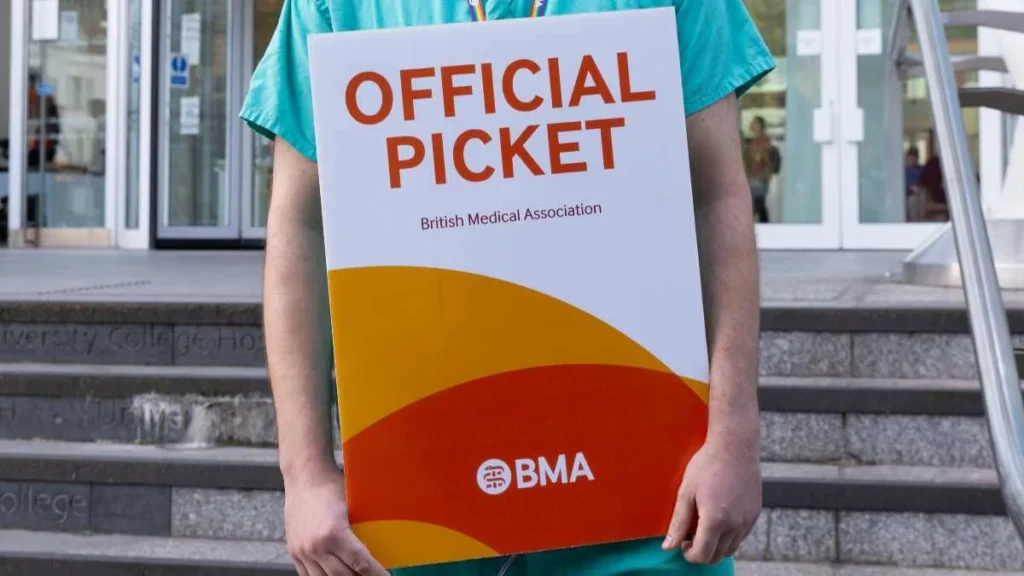
Resident doctors in England are set to embark on a four-day strike in June, marking their 16th walkout over pay and working conditions since March 2023, intensifying a long-running dispute that continues to strain the National Health Service (NHS). The industrial action is scheduled to commence at 7 am on Monday, June 15, and conclude at 6:59 am on Friday, June 19. This latest stoppage underscores the deep divisions between the British Medical Association (BMA), representing the doctors, and the government, led by the newly appointed Health Secretary, James Murray. At the heart of the disagreement is the BMA’s assertion that resident doctors, formerly known as junior doctors, have experienced a real-terms pay cut of a fifth since 2008, a figure they argue has been exacerbated by persistent high inflation and a lack of meaningful pay restoration. The government, conversely, maintains that its offers have been substantial and that further demands are financially untenable.
The Escalating Industrial Action and Its Context
The planned June strike is not an isolated incident but rather the latest chapter in an escalating series of industrial actions that have plagued the NHS for over a year. Since March 2023, resident doctors have engaged in numerous strikes, each contributing to significant disruption across hospitals and clinics, leading to the cancellation and rescheduling of hundreds of thousands of patient appointments and procedures. These repeated stoppages highlight a fundamental disagreement over the valuation of medical labour and the future sustainability of the NHS workforce.
The BMA contends that resident doctors are vital to the functioning of the health service, performing the vast majority of day-to-day medical care, yet their remuneration has failed to keep pace with the cost of living and their increasing responsibilities. They point to 2008 as a crucial benchmark, arguing that austerity measures and subsequent pay freezes have eroded their earning power significantly. Adjusted for inflation, a doctor earning a certain salary in 2008 would need a considerably higher nominal salary today to maintain the same purchasing power. The BMA’s calculation suggests a substantial real-terms reduction, making it increasingly difficult for doctors to justify remaining in the NHS when better opportunities, both domestically and internationally, exist. This argument forms the bedrock of their demand for "pay restoration."
The government, however, presents a different narrative. Health Secretary James Murray has stated unequivocally that the government will not increase the offer already on the table. He points to pay rises worth 33% over the past four years as evidence of the government’s commitment, asserting that this represents the highest pay increase across the public sector. For the 2025-26 financial year, the average package for resident doctors is projected to include an increase of 4% plus a £750 consolidated payment, bringing the average full-time basic pay to approximately £54,300. The government argues that these figures demonstrate a tangible effort to improve doctors’ remuneration within the constraints of public finances.
A Chronology of Disruption and Failed Negotiations
The path to the upcoming June strike has been paved with numerous rounds of negotiations, offers, and rejections, creating a volatile environment within the NHS.
- March 2023: The initial wave of resident doctor strikes began, signaling the start of a protracted dispute focused primarily on pay.
- Throughout 2023: Multiple periods of industrial action occurred, varying in length and scope, consistently disrupting patient services and placing immense pressure on non-striking staff. Each strike saw further cancellations of elective care and outpatient appointments.
- March 2024: Following extensive discussions, ministers put forward a comprehensive deal to the BMA. This offer included not only a pay component but also significant commitments regarding more training jobs, faster career progression pathways, and the covering of out-of-pocket expenses such as examination fees. These non-pay elements were designed to address broader concerns about career development and the financial burden on young doctors.
- April 2024: Despite the March offer, the BMA rejected the terms and proceeded with its first strike of the year. This decision had immediate repercussions, with the government reportedly reneging on the offer of training places, citing the BMA’s failure to call off the strike as the reason. This move further strained an already fragile relationship and highlighted the punitive measures the government was willing to take.
- June 2024: The newly announced four-day strike, the 16th in the series, underscores the continued impasse. The BMA has also issued a stark warning that its members are prepared to mount a further stoppage in July unless tangible progress towards meeting their demands is made in the interim. This threat maintains constant pressure on the government to find a resolution.
This timeline illustrates a cycle of proposals and rejections, punctuated by industrial action, which has prevented any lasting settlement. The cumulative effect of these strikes has been significant, contributing to a substantial backlog of patient care and exacerbating existing pressures on the NHS.
The BMA’s Stance: Disappointment with New Leadership and Unmet Demands
Dr. Jack Fletcher, chair of the resident doctor committee at the BMA, articulated the union’s profound disappointment with the lack of progress, particularly following the change in leadership at the Department of Health and Social Care. "We had hoped that a change in leadership at the Department of Health and Social Care would lead to a change in approach," Dr. Fletcher stated, expressing an initial optimism that the arrival of James Murray might usher in a fresh perspective. However, this hope appears to have been dashed. "Sadly, we have run up against the same unwillingness to move we encountered under Mr. Streeting," he added, a pointed reference to Wes Streeting, the Labour Shadow Health Secretary, implying a bipartisan inflexibility on the issue. This comparison suggests the BMA perceives a consistent governmental reluctance to engage constructively with their core demands, irrespective of the political party or individual holding the health portfolio.
Dr. Fletcher further elaborated on the BMA’s position, explaining, "We were prepared to give Mr. Murray time to settle into his role before completing the work his predecessor left unfinished – to both make a fair and meaningful pay offer and make concrete commitments to end the jobs bottleneck throttling the careers of our colleagues." He emphasized that the new Health Secretary had a "genuine opportunity to break this logjam with fresh energy and ambition," an opportunity that the BMA believes has been squandered.
The core of the BMA’s frustration lies in what they describe as the government offering the "same tired line" with "no further money on the table" and a lack of firm pledges for new training places. The "jobs bottleneck" is a critical concern for resident doctors, referring to the scarcity of specialist training posts and permanent consultant positions, which can leave qualified doctors in limbo, struggling to progress their careers within the NHS. This not only causes personal frustration but also contributes to the wider issue of staff retention.
"We cannot be asked to negotiate in good faith for weeks, only to be told there is nothing left to negotiate about on pay and no further details at this stage on jobs," Dr. Fletcher asserted, highlighting a perceived lack of sincerity in the negotiation process. He reiterated the dire consequences of this impasse: "Thousands of doctors continue to leave the NHS, and take-home pay remains a fifth lower in real terms than it was in 2008. If Mr. Murray wishes to make a success of his new role, he must confront this issue before any other." This statement underscores the BMA’s belief that addressing the grievances of resident doctors is paramount to stemming the exodus of talent and ensuring the long-term viability of the NHS.

Government and NHS Leadership Responses: Unrealistic Demands and Patient Impact
In response to the BMA’s announcement, Health Secretary James Murray expressed his profound disappointment. "I’m disappointed that the BMA have refused to consider further discussions about how to strengthen the deal on the table and have instead rushed once again to unnecessary and unreasonable strike action," Murray stated. His comments reflect a belief that the BMA is unwilling to engage in further constructive dialogue and is too quick to resort to industrial action.
Murray reiterated the government’s financial position, emphasizing the significant pay increases already implemented. "I was clear with the BMA that after a 33.4% pay rise for resident doctors over the last four years – the highest anywhere across the public sector – the BMA’s demands for further substantial pay increases this year are unrealistic, unaffordable and unsustainable." This stance highlights the government’s view that the BMA’s demands are not only economically unfeasible but also disproportionate when compared to pay settlements in other public sector professions. The government has consistently argued that meeting the BMA’s full demands would necessitate reallocating funds from other critical NHS services or lead to unacceptable tax increases.
Adding to the government’s concerns, Matthew Hopkins, interim acute and ambulance network director at the NHS Alliance, issued a strong condemnation of the planned strike. "This decision to strike yet again is rash and wholly irresponsible and will leave patients paying the price," Hopkins declared. His statement underscores the severe operational challenges and patient impact that such widespread industrial action creates. He pointed out that this latest round of action, the 16th stoppage in the last three years, jeopardizes the "hard-won progress the health service has made in recent months in bringing down waiting lists and driving up productivity."
The NHS has been battling unprecedented waiting lists, exacerbated by the COVID-19 pandemic and years of underfunding. Each strike day derails efforts to reduce these backlogs, leading to thousands of appointments and operations being rescheduled, causing anxiety and potential health deterioration for patients. Hopkins voiced the deep concern felt by health leaders across the country: "Health leaders and their teams will be deeply concerned about the threat of this fresh walkout by resident doctors, given the additional pressure it would place on already stretched clinical and administrative colleagues." The cumulative stress on the remaining staff, who must cover for striking colleagues, is immense, contributing to burnout and morale issues within the wider NHS workforce.
Hopkins reassured the public that "every effort will be made to minimise disruption," but acknowledged the inevitable consequence: "thousands of people still face having appointments and operations rescheduled." He found the timing particularly disheartening, given that "practical steps are being taken to improve resident doctors’ working conditions through the 10 Point Plan." This plan, initiated by the government, aims to address non-pay aspects of doctors’ welfare, such as improving rotas, addressing bullying and harassment, and enhancing access to rest facilities. However, the BMA clearly views these measures as insufficient in the absence of a satisfactory pay settlement.
In a plea for resolution, Hopkins concluded, "It’s high time this dispute is brought to an end. If this deadlock cannot be broken, then surely the time has come to bring in an intermediary to arbitrate to resolve this damaging dispute once and for all." The call for arbitration suggests a recognition within NHS leadership that the current negotiation dynamic is exhausted and an external, impartial mediator may be necessary to find a way forward.
Broader Implications: Patient Care, Workforce Exodus, and Political Fallout
The ongoing dispute and the continuous cycle of strikes carry profound implications for various facets of the UK’s healthcare system and wider society.
Impact on Patient Care: The most immediate and visible consequence is the disruption to patient care. Each strike day results in the cancellation of thousands of elective procedures, outpatient appointments, and diagnostic tests. The cumulative effect of 16 walkouts has been staggering, with estimates suggesting well over a million appointments having been affected across the NHS since the strikes began. This not only causes distress and inconvenience for patients but can also lead to delays in diagnosis and treatment, potentially worsening health outcomes for those with serious conditions. Emergency services are typically maintained, but even these face increased pressure due to diverted resources and the strain on non-striking staff. The long-term impact on public health and the burden on an already stretched system are considerable.
Workforce Morale and Retention: The dispute is a symptom of deeper systemic issues within the NHS, including chronic understaffing, intense workload pressures, and a perception among healthcare professionals that their contributions are undervalued. Dr. Fletcher’s point about "thousands of doctors continue to leave the NHS" is a critical concern. Many resident doctors, facing stagnant real-terms pay and limited career progression opportunities, are actively considering moving to countries like Australia, New Zealand, or Canada, where pay and working conditions are often perceived as more favourable. This "brain drain" threatens to exacerbate existing staffing shortages and weaken the future capacity of the NHS, making it even harder to deliver quality care. The ongoing industrial action also creates divisions and resentment among the workforce, particularly between striking and non-striking staff, further impacting morale.
Economic Cost: The strikes incur significant financial costs, both direct and indirect. The NHS incurs costs related to covering shifts with expensive locum staff, rescheduling appointments, and managing the logistical complexities of strike days. Furthermore, there is an economic cost to the country from lost productivity due to patient illness and delayed return to work. While specific figures are hard to pin down, the cumulative financial burden of over a year of strikes is undoubtedly substantial, diverting resources that could otherwise be invested in patient care or system improvements.
Political Fallout: For the government, particularly the new Health Secretary James Murray, resolving this dispute is a critical test. The prolonged nature of the strikes, coupled with public concern over the state of the NHS, poses a significant political challenge, especially with a general election on the horizon. The government needs to demonstrate that it is capable of effectively managing public services and ensuring the stability of the healthcare system. Failure to resolve the dispute risks further eroding public trust and could become a significant electoral liability. Conversely, the BMA also faces pressure to balance its advocacy for its members with public perception, as prolonged disruption can sometimes lead to waning public support for strike action.
The call for arbitration by NHS Alliance’s Matthew Hopkins signifies a growing recognition that conventional negotiation tactics have reached an impasse. An independent mediator could potentially offer a fresh perspective, facilitate compromise, and help both parties navigate the complex issues of pay, working conditions, and the future of the NHS workforce. Until such a breakthrough occurs, the specter of further strikes and continued disruption will loom large over England’s healthcare system.