
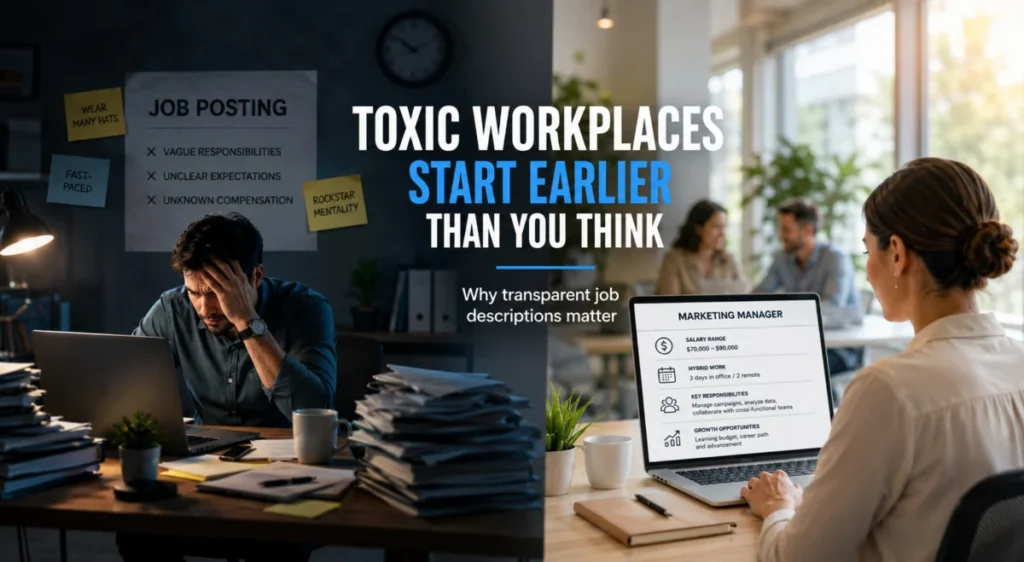
A staggering 71% of workers reported staying in a job they knew was toxic, according to Monster’s recent 2026 State of Workplace Mental Health Report, a finding that underscores a profound and pervasive crisis in contemporary employment. While traditional narratives often center on management behavior as the primary culprit, emerging data and expert analysis suggest that the genesis of workplace toxicity frequently precedes the first day of employment, rooted in the very documents designed to introduce a role: the job description. The content—or lack thereof—in these initial communications is increasingly recognized as setting a critical, often misleading, tone for the entire employment experience, contributing to a cycle of disillusionment and poor retention.
The Silent Crisis: Unpacking Workplace Toxicity
Workplace toxicity extends far beyond occasional interpersonal conflicts; it represents a pervasive environment characterized by a lack of psychological safety, burnout, high turnover rates, poor communication, and unrealistic demands. Monster’s 2026 report serves as a stark warning, indicating that a significant majority of the workforce feels trapped in detrimental professional settings. This reluctance to leave, despite recognizing the toxicity, is often driven by a complex interplay of factors including financial insecurity, limited alternative employment opportunities, fear of career repercussions, or even a lingering hope that conditions might improve. The ramifications of such environments are profound, impacting not only individual mental and physical health but also incurring substantial societal and economic costs through increased healthcare expenditures, diminished productivity, and stifled innovation.
Further exacerbating this silent crisis, Monster’s findings highlighted systemic issues that demand immediate employer attention. The report revealed that 44% of workers did not believe leadership was held accountable for toxic behavior, creating an environment where misconduct can flourish unchecked. Moreover, 35% of employees reported experiencing negative consequences for speaking up about workplace issues, a statistic that paints a grim picture of compromised psychological safety and a pervasive culture of fear. These figures are not mere worker complaints; they represent an urgent wake-up call for organizations to reassess their foundational practices, starting with how they define and present job roles to prospective employees.
The Foundation of Disillusionment: Misleading Job Descriptions
A significant body of research now traces many reported workplace stressors back to the initial recruitment phase, specifically the job description. The disconnect between advertised roles and on-the-ground reality is a critical contributor to early employee dissatisfaction and turnover. CareerPlug’s 2024 Candidate Experience Report illuminated this issue, with 26% of candidates citing "the role and responsibilities were different from what I expected" as a primary reason for declining a job offer. This substantial percentage indicates that a quarter of potential hires are identifying fundamental misalignments before even stepping through the door, signaling a systemic flaw in recruitment transparency.
Misleading job descriptions manifest in various forms, but the underlying pattern remains consistent: candidates and new hires encounter a role that deviates significantly from what was initially advertised. Common pitfalls include:
- Vague and Ambiguous Language: Job descriptions often employ generic terms like "fast-paced environment" or "dynamic team player" without providing concrete examples of daily tasks, project types, or specific challenges. This lack of specificity leaves candidates to fill in the blanks, often with optimistic, but ultimately inaccurate, assumptions.
- Exaggerated Responsibilities and Upselling the Role: Employers might inflate the importance or scope of a position to attract a wider talent pool, or to make a mundane role seem more exciting. A "strategic advisor" might, in reality, be primarily focused on administrative tasks, leading to profound disappointment once the reality sets in.
- Omission of Critical Information: Key aspects of a role, such as a highly demanding workload, frequent travel, specific difficult clients, a challenging team dynamic, or the true nature of specific tools and technologies used, are often omitted. Similarly, companies might gloss over potential downsides, creating an unrealistic expectation of the work-life balance or internal culture.
- "Purple Squirrel" Syndrome: Job descriptions frequently list an exhaustive and often unrealistic combination of skills, experience, and qualifications, effectively seeking a "purple squirrel" – a candidate that likely doesn’t exist. This not only discourages qualified applicants but also sets an impossible standard for those who are hired, contributing to feelings of inadequacy and stress.
- Inaccurate Culture Portrayals: While a company might advertise a "collaborative and supportive culture," the reality might be highly competitive, individualistic, or even rife with internal politics. Such discrepancies erode trust from day one.
The consequences of these misleading descriptions are not trivial. Employ’s 2025 Job Seeker Nation Report found that a significant 36% of respondents left a job within the first 90 days due to a profound disconnect between what they were told during the interview process and the reality of the role once they commenced employment. This alarming statistic highlights the immediate and costly impact of a lack of transparency, demonstrating that the damage begins long before an employee’s first day and often culminates in rapid, expensive attrition.
The Business Case for Transparency: Beyond Compliance
While the ethical imperative for transparent hiring is clear, the business case is equally compelling. Companies often create misleading job descriptions, sometimes inadvertently, due to a desire to attract a large pool of candidates, to "sell" a role, a lack of internal clarity about the position, or even a misguided fear of scaring off potential applicants by being too honest. However, this approach proves to be counterproductive and costly in the long run.
The negative business impact of misleading job descriptions is multifaceted:
- High Turnover Costs: Rapid employee turnover incurs significant expenses related to recruitment, onboarding, training, and lost productivity. Each departure represents a substantial drain on resources that could otherwise be invested in growth and innovation.
- Damage to Employer Brand and Reputation: In an increasingly connected world, negative employee experiences, particularly those stemming from misrepresentation, quickly propagate through online reviews (e.g., Glassdoor, LinkedIn) and word-of-mouth. A damaged employer brand can severely hinder future talent acquisition efforts.
- Decreased Employee Morale and Engagement: When new hires discover the reality of their role differs from expectations, morale plummets. This leads to disengagement, reduced productivity, and a general sense of betrayal, impacting not only the individual but also the broader team dynamic.
- Legal and Ethical Risks: Deliberate misrepresentation in job descriptions can expose companies to legal challenges, particularly in jurisdictions with robust consumer protection or employment advertising laws. Beyond legal risks, there is a clear ethical obligation to be truthful in professional engagements.
- Difficulty Attracting Top Talent: Discerning candidates, particularly high-performers, are increasingly wary of vague or overly optimistic job postings. They prioritize authenticity and transparency, often leveraging their networks and online research to vet potential employers. Companies known for misleading practices will struggle to attract and retain the best.
Pioneering Transparency: A Path to Psychological Safety
A truly transparent job description transcends a mere listing of duties; it serves as a comprehensive, realistic portrayal of the daily realities of a role, empowering candidates to make informed decisions about their suitability and interest. This shift towards radical candor in recruitment is not just good practice; it is a foundational element for fostering healthier workplaces and cultivating psychological safety from the outset.
Transparency in job posts involves several key elements:
- Detailed Responsibilities and Key Performance Indicators (KPIs): Beyond generic statements, a transparent JD provides specific examples of daily tasks, types of projects, and expected outcomes. Including KPIs helps candidates understand how their performance will be measured, aligning expectations from day one and minimizing future misunderstandings about job priorities. For instance, instead of "Manage client relationships," a transparent description might state: "Proactively engage with 10-15 key clients monthly to identify needs, resulting in an average 15% increase in client satisfaction scores and a 5% upsell rate quarterly."
- Realistic Culture Snapshot: This goes beyond boilerplate mission statements. A transparent JD might describe the team’s communication style (e.g., "highly collaborative with daily stand-ups," or "independent work with weekly check-ins"), the leadership approach, common challenges, and specific opportunities for growth. It could even address the work-life balance realistically, acknowledging periods of higher intensity if applicable.
- Compensation Clarity: A growing number of candidates, especially given market trends, expect to learn about compensation before applying or within the job post itself. Transparent JDs include a specific salary range, not just vague terms like "competitive salary." This practice not only builds trust but also promotes equity by reducing negotiation gaps based on gender or race and streamlines the hiring process by self-selecting candidates whose expectations align.
- Career Pathing and Development: Be honest about the actual growth opportunities, training programs, and mentorship available. If a role is primarily an individual contributor position with limited upward mobility, state that clearly, while highlighting other forms of professional development if applicable.
- Challenges and Trade-offs: Acknowledge difficult aspects of the role or the company. For example, "This role involves managing a high volume of inbound inquiries and can be demanding during peak seasons," or "While our team is collaborative, we are currently navigating a significant system migration, which may present initial workflow challenges." This manages expectations and attracts resilient candidates.
- Values and Accountability Mechanisms: Clearly articulate the company’s core values and, crucially, explain how these values are upheld in practice. Mentioning reporting structures for concerns or avenues for feedback signals that the company takes accountability seriously and is committed to a respectful workplace.
- Inclusion and Diversity Statements: Move beyond generic statements to describe concrete actions the company is taking to foster an inclusive environment. This could include details about employee resource groups, diversity training, or mentorship programs for underrepresented groups.
Industry Reactions and Emerging Best Practices
The insights from Monster, Employ, and CareerPlug are resonating deeply within the HR and recruitment industry. HR professionals and industry analysts are increasingly advocating for "radical transparency" in hiring as a critical strategy for sustainable talent acquisition and retention. The consensus is that while it may initially seem counterintuitive to highlight potential downsides, honesty ultimately attracts more suitable and committed candidates.
Recruitment technology providers are also stepping up to address this challenge. Tools like Ongig’s Text Analyzer are designed to help organizations ensure their job descriptions are clear, balanced, and bias-free before publication. These platforms use AI and natural language processing to identify vague language, gender-coded words, and areas where more specific information could be provided, helping companies craft JDs that are both appealing and truthful. This technological assistance is becoming indispensable for companies committed to building a culture of transparency from the ground up.
A Chronology of Awareness
The journey towards recognizing the critical role of job descriptions in workplace toxicity can be traced through a growing body of research and evolving employee expectations:
- Early 2020s: Initial focus on diversity, equity, and inclusion (DEI), alongside a greater emphasis on work-life balance, begins to shift the paradigm of employee expectations. The pandemic accelerates discussions around mental health and employer responsibility.
- Mid-2020s (Post-Pandemic): The "Great Resignation" or "Great Reshuffle" era highlights unprecedented employee power and a demand for more meaningful, supportive, and transparent work environments. Reports such as CareerPlug’s 2024 Candidate Experience Report begin to quantify the impact of misaligned expectations.
- 2025: Employ’s Job Seeker Nation Report provides concrete data on early job exits due to discrepancies between advertised and actual roles, solidifying the link between recruitment practices and retention challenges.
- 2026: Monster’s State of Workplace Mental Health Report serves as a culmination of these trends, definitively linking high rates of staying in toxic jobs to broader issues of accountability and, by extension, the foundational honesty of the recruitment process. This report acts as a pivotal moment, urging a deeper examination of systemic issues.
This chronology illustrates a maturing understanding that workplace well-being is not solely a post-hire concern but is deeply intertwined with the very first touchpoints an employer has with a potential employee.
Implications for the Future of Work
The implications of these findings for the future of work are profound and far-reaching:
- Candidate Empowerment: Candidates are increasingly discerning, leveraging online resources and peer networks to vet potential employers. They expect authenticity and are less likely to tolerate vague or misleading information. This shifts the power dynamic in the hiring process, forcing employers to be more proactive in their transparency.
- Elevated Employer Branding: Employer branding will move beyond marketing slogans to reflect genuine workplace realities. Companies that commit to transparency will build stronger, more resilient employer brands, attracting candidates who are aligned with their true culture and values.
- Evolving Legal and Ethical Considerations: The legal and ethical landscape surrounding truthful advertising in employment is likely to evolve, potentially leading to more stringent regulations or greater scrutiny of job postings. Companies that proactively adopt transparent practices will be better positioned for future compliance.
- Sustainable Talent Acquisition: Ultimately, prioritizing transparency leads to more sustainable talent acquisition. By building trust from the outset, companies can reduce turnover, improve employee engagement, and cultivate a more stable, productive workforce. A clear job description is one of the earliest trust signals a company sends, and trust is the indispensable foundation of psychological safety and a healthy, thriving workplace.
In conclusion, the prevalence of toxic workplaces and the alarming number of employees enduring them are symptoms of a deeper systemic issue, with misleading job descriptions playing a surprisingly central role. Fixing this crisis demands a fundamental re-evaluation of how companies present themselves and their roles to the world. The job description is not merely an administrative document; it is one of the first, and most crucial, conversations a company has with a potential hire. Making it honest, specific, and realistic is not just a matter of good recruiting practice; it is the essential foundation of a healthier workplace, happier employees, and ultimately, a more robust and ethical employment ecosystem.






