The effectiveness of a recruitment strategy hinges significantly on the quality and efficiency of its job description (JD) processes, yet many organizations continue to grapple with outdated, manual, and fragmented approaches to JD creation and management. These inefficiencies not only impede the attraction of qualified candidates but also introduce substantial operational and compliance risks. In response to these pervasive challenges, Ongig, a leading innovator in HR technology, has developed a comprehensive software solution designed to centralize, automate, and optimize every facet of the job description lifecycle, transforming what was once a chaotic process into a streamlined, strategic advantage.
The Evolving Landscape of Talent Acquisition and the JD Imperative
For decades, job descriptions were often viewed as mere administrative necessities, drafted manually in word processors, stored in disparate shared drives, or buried in email threads. This decentralized approach fostered a host of problems: inconsistency in language, difficulty in collaboration, lack of version control, and significant delays in the hiring process. In today’s competitive talent market, however, a well-crafted job description is far more than a list of duties; it is a critical employer branding tool, a legal document, and the first touchpoint in a candidate’s journey.
The modern recruitment landscape demands precision. Companies are under increasing pressure to ensure their JDs are not only accurate and engaging but also inclusive, compliant with ever-evolving anti-discrimination laws, and optimized for search engines. Ambiguous language can deter diverse talent, while non-compliant descriptions can lead to costly legal repercussions and reputational damage. Industry studies consistently show that organizations with standardized, bias-free job descriptions report higher quality applicants, faster time-to-hire, and improved diversity metrics. For instance, research indicates that removing gender-biased language can increase applications from women by as much as 42%, underscoring the strategic importance of linguistic precision.
Ongig’s Holistic Approach: Centralizing and Automating the JD Lifecycle
Ongig addresses these multifaceted challenges by offering an integrated platform that centralizes the entire job description process, from initial draft to final publication and archival. This eliminates the common pitfalls associated with manual workflows, such as lost documents, conflicting edits, and prolonged approval cycles. The software’s core functionalities encompass automated creation, language optimization, structured approval workflows, a centralized library, seamless collaboration tools, robust version control, comprehensive standardization, and enhanced compliance checks.
Automated Creation and Content Optimization: Redefining Efficiency
One of the most significant advancements offered by Ongig is its automated job description creator. Traditional manual methods, often relying on general writing tools like Google Docs or Microsoft Word, provide minimal guidance beyond basic grammar, leaving HR professionals to spend countless hours refining content. This often results in JDs that, despite effort, fail to attract the right talent, or worse, inadvertently deter qualified candidates due to suboptimal phrasing.
Ongig’s AI-powered Text Analyzer fundamentally alters this process. Users can initiate JD drafts with unprecedented speed, leveraging artificial intelligence to generate initial content based on job titles and key requirements. Following the AI-generated draft, the platform’s optimization features come into play. Recruiters can click "Optimize Content" to receive intelligent recommendations aimed at minimizing bias across gender, race, age, and other protected characteristics. Furthermore, the tool provides suggestions to improve readability, such as shortening complex sentences, simplifying difficult vocabulary, and recommending more universally understood job titles. This iterative process not only significantly reduces creation time but also progressively improves the JD’s quality score, ensuring it resonates with a broader, more diverse talent pool. This transformative capability aligns with the growing demand for data-driven recruitment, allowing companies to craft JDs that are both effective and equitable.
Ensuring Effective and Inclusive Language: A Strategic Imperative
The language used in a job description is paramount to its success. Phrases like "rockstar software engineer" or "hits the ground running," while seemingly innocuous, can create ambiguity or inadvertently alienate potential candidates. Effective JD language must be clear, concise, and inclusive, allowing candidates to easily understand the required experience and qualifications. Ongig’s software meticulously analyzes JD content for tone, sentiment, clarity, and the presence of jargon or potentially biased terms. It guides users in employing active voice, maintaining a professional tone, and using inclusive language that broadens appeal. By removing guesswork, Ongig empowers organizations to craft JDs that enhance the candidate experience and attract a more diverse applicant pool, thereby strengthening their employer brand.
Streamlined Approval Workflows: Eliminating Bottlenecks
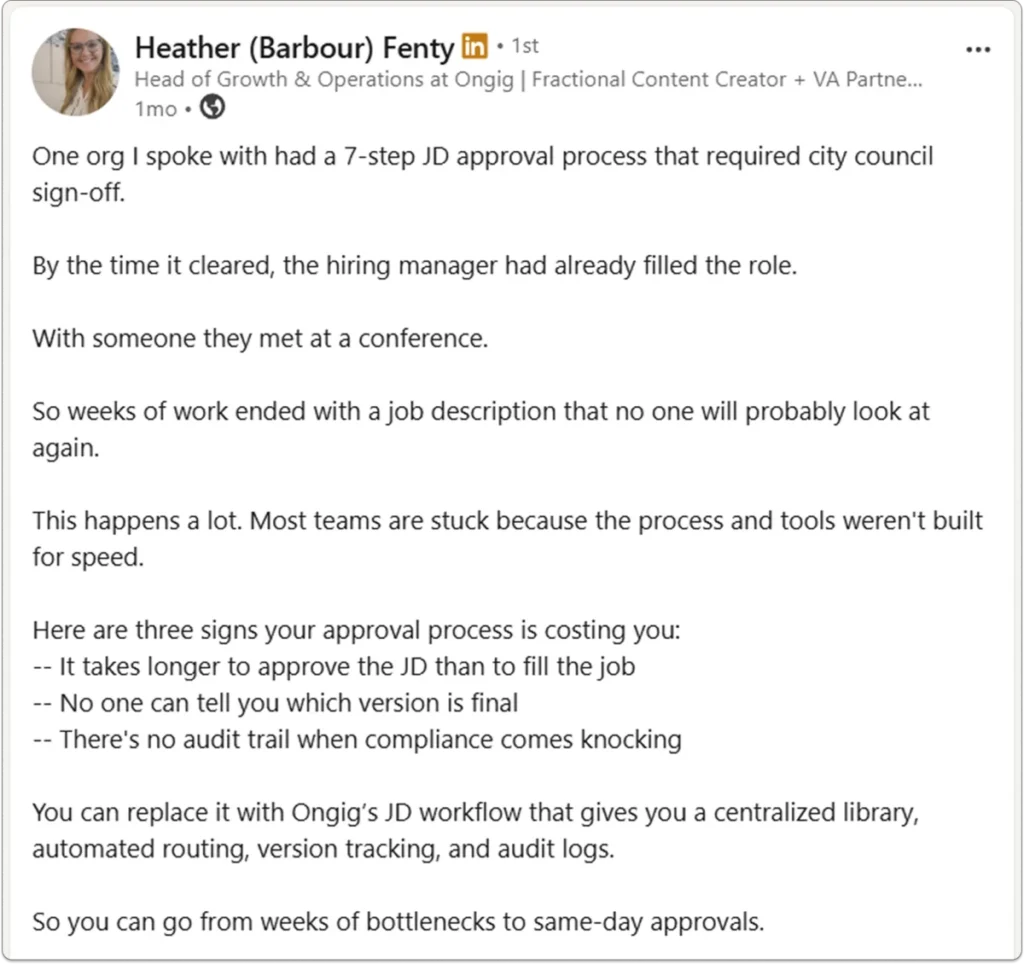
The JD approval process, often involving multiple stakeholders—including recruiters, DEI teams, compliance officers, hiring managers, and department leads—is notoriously complex. Manual workflows frequently suffer from a lack of visibility, leading to confusion over who is responsible for what, delayed feedback, and extended time-to-publish. This disorganization results in significant time wastage and can impact recruitment timelines.
Ongig addresses this by creating a controlled, transparent approval process. The platform allows organizations to define custom approval workflows, assigning specific roles and responsibilities to each stakeholder. Recruiters can track the status of JDs in real-time, identifying bottlenecks and ensuring accountability. This structured approach reduces delays, minimizes miscommunication, and provides an auditable trail of all reviews and approvals, a crucial component for compliance and internal governance.
The Power of a Centralized, Searchable JD Library
Scattered job descriptions across various documents and drives represent a major source of inefficiency and risk. This fragmented storage leads to duplication, the use of outdated versions, difficulty in locating specific JDs, and a general lack of institutional knowledge. A centralized JD library, by contrast, acts as a single source of truth, ensuring consistency and accessibility.
Ongig’s cloud-based JD library provides a secure, searchable repository for all job descriptions. This central hub eliminates the need for manual searching through multiple platforms. Users can quickly access, review, and manage JDs, applying standardized templates and ensuring all documentation is current. The library also facilitates bulk updates, allowing organizations to apply new policies or branding elements across numerous JDs simultaneously, saving considerable time and effort. This centralized system not only boosts operational efficiency but also safeguards against the use of non-compliant or outdated materials, reinforcing legal defensibility.
Fostering Seamless Collaboration: A Unified Approach
Job description creation is inherently a collaborative effort, requiring input from various departments. However, traditional collaboration methods—often relying on endless email chains, conflicting document versions, and fragmented feedback—can be incredibly frustrating. Questions like "Who’s working on this draft now?" or "Where is the latest feedback?" become common, leading to inefficiencies and errors.
Ongig eradicates these issues by embedding collaboration directly within the platform. Stakeholders can comment, suggest edits, and review JDs in real-time within a single, unified interface. This eliminates the need for external communication channels, ensuring all feedback and changes are captured and tracked in one place. The system’s notification features keep all parties informed of progress and required actions, fostering a more efficient, transparent, and cohesive team environment.
Robust Version Control for Accuracy and Accountability
Effective version control is a cornerstone of any document management system, and job descriptions are no exception. Without it, organizations risk publishing inaccurate or outdated requirements, leading to candidate confusion, legal vulnerabilities, and wasted resources. The absence of clear version history makes it difficult to ascertain who made specific changes, when they were made, or to revert to previous iterations.
Ongig simplifies version control by automatically tracking every change made to a job description. The platform maintains a complete history of revisions, allowing users to easily view previous versions, identify the author of each change, and, if necessary, revert to an earlier draft. This robust audit trail not only ensures accuracy and consistency but also provides critical documentation for compliance purposes, offering a layer of legal protection.
Achieving Job Description Standardization: Consistency as a Competitive Edge
Inconsistency in job descriptions can lead to a host of problems, including a fragmented employer brand, unclear candidate expectations, and difficulties in fair candidate evaluation. Standardization is crucial for ensuring clarity, professionalism, and equity across all hiring initiatives.
Ongig supports JD standardization through customizable templates and integrated style guides. Organizations can establish universal formats, language preferences, and mandatory sections, ensuring that all job descriptions adhere to corporate branding and legal requirements. This consistent approach not only streamlines the creation process but also projects a professional image, enhances the candidate experience, and mitigates risks associated with disparate descriptions.
Enhancing Creation of Compliant Job Descriptions: Mitigating Legal Risks
The lack of a centralized, automated JD process is a significant vulnerability when it comes to compliance. Manual creation and review processes often allow compliance risks to slip through, leading to issues such as discriminatory language, non-adherence to pay transparency laws, or violations of accessibility standards. Such non-compliant JDs can result in hefty fines, legal challenges, and severe damage to an organization’s reputation.
Ongig proactively addresses compliance by integrating robust checks throughout the JD creation process. Its Text Analyzer identifies and flags potentially discriminatory language (e.g., ageist terms, gender-specific pronouns where generic alternatives exist). The platform can also be configured to align with specific regional and industry-specific legal requirements, such as including salary ranges where mandated by law or ensuring accessibility for candidates with disabilities. By embedding compliance at every step, Ongig helps organizations avoid legal pitfalls, foster a more inclusive hiring environment, and maintain a strong ethical standing.
Broader Implications for Talent Acquisition and Organizational Efficiency
The cumulative effect of Ongig’s integrated features extends far beyond mere operational improvements. By centralizing and automating job description management, organizations can expect:
- Improved Candidate Quality: Clear, bias-free, and engaging JDs attract a higher caliber of applicants.
- Faster Time-to-Hire: Streamlined creation and approval processes significantly reduce the recruitment cycle.
- Cost Savings: Reduced manual effort, fewer bad hires, and mitigated legal risks translate into substantial financial benefits.
- Enhanced Diversity, Equity, and Inclusion (DEI): The proactive removal of biased language fosters a more inclusive application environment, broadening talent pools.
- Stronger Employer Brand: Consistent, professional, and compliant JDs reinforce a positive perception of the organization.
- Increased HR Productivity: Automation frees HR teams from administrative burdens, allowing them to focus on strategic initiatives.
- Legal Defensibility: Comprehensive audit trails and compliance checks provide robust protection against legal challenges.
HR leaders increasingly recognize that effective job description management is not an isolated task but a foundational element of a successful talent strategy. As industry analysis suggests, investing in sophisticated JD software can yield tangible returns, transforming a traditional administrative headache into a strategic asset. Ongig’s ability to integrate with major Applicant Tracking Systems (ATS) further ensures a seamless workflow, allowing JDs to flow effortlessly from creation and approval within Ongig directly into existing recruitment ecosystems. This level of integration, coupled with the ability to bulk update and apply standardized templates, positions Ongig as a critical tool for modern HR departments seeking to optimize their talent acquisition efforts at scale.
In conclusion, the era of inefficient, fragmented job description processes is rapidly drawing to a close. Solutions like Ongig represent a paradigm shift, empowering organizations to create compelling, compliant, and consistently high-quality job descriptions. This not only streamlines recruitment but also reinforces an organization’s commitment to fairness, diversity, and operational excellence, ultimately shaping a more effective and equitable future for talent acquisition.