
The landscape of professional networking and business-to-business (B2B) marketing has undergone a fundamental transformation, visible to anyone logging into platforms like LinkedIn. The digital feed, once dominated by text-based updates and static images, is now saturated with high-production podcast clips featuring CEOs, founders, and Chief Marketing Officers. This shift represents more than a mere trend in content consumption; it marks a strategic pivot in how authority is established and how high-stakes business decisions are influenced in an era of information saturation.
The Credibility Machine: Moving Beyond Visibility
In the contemporary B2B marketplace, visibility is no longer the primary currency of success. While traditional advertising can put a brand in front of a thousand eyes, it rarely secures the level of trust required for enterprise-level partnerships. Industry experts now identify podcasts as a "credibility machine," a medium that allows leaders to bypass the skepticism associated with traditional sales pitches.
Decision-makers today are increasingly conditioned to ignore display ads and scroll past generic, AI-generated, or heavily templated content. The "noise" of the digital marketplace has reached a crescendo, leading to a phenomenon known as "ad blindness." In response, B2B leaders are investing heavily in podcast guesting as a core growth strategy. The rationale is grounded in human psychology: buyers pay attention when they hear authentic, unscripted conversations between individuals who demonstrate a deep understanding of real-world problems and provide nuanced, experience-based solutions.
The Data Behind the Audio Revolution
The efficacy of podcasting in the professional sphere is supported by significant industry data. According to analysis from Edison Research, more than 80% of senior executives report listening to podcasts on a weekly basis. This demographic is notoriously difficult to reach through traditional digital marketing channels, as they often utilize ad-blockers or delegate email management to assistants. However, podcasts offer a unique "in-ear" intimacy that reaches these executives during their commutes, workouts, or dedicated learning time during the workday.
Further reinforcing this trend, the Demand Gen Report found that 64% of B2B buyers engage with podcasts during the early stages of the buying process. This suggests that podcasts serve as a critical discovery tool. Buyers are not necessarily looking for a product in these moments; they are exploring ideas, seeking to understand complex solutions, and vetting the intellectual caliber of the people behind the companies they might eventually hire.
A Chronological Shift: From Content to Conversation
To understand the current dominance of podcasts, one must look at the evolution of B2B communication over the last decade.
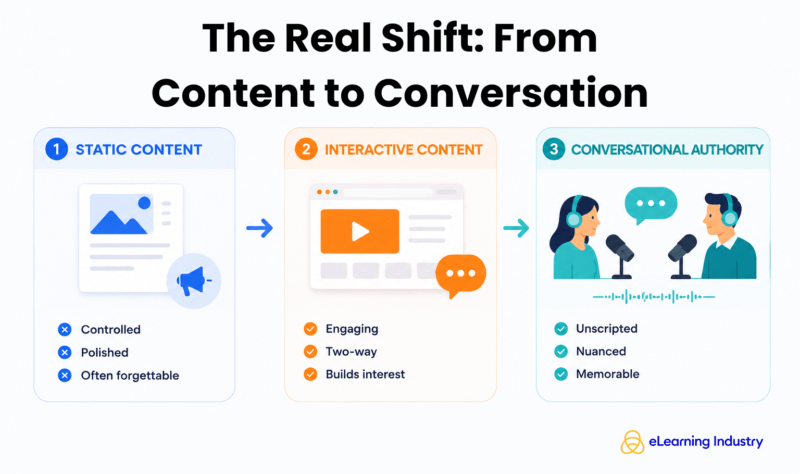
- The Era of Information Scarcity (Pre-2010): Marketing was defined by brochures, trade shows, and direct mail. Authority was granted to those with the largest advertising budgets.
- The Content Marketing Explosion (2010–2020): The rise of SEO and blogging led to a "more is better" philosophy. Companies flooded the internet with white papers and "how-to" guides. Eventually, this led to content fatigue as the quality of written material became diluted by volume.
- The Era of Conversational Authority (2020–Present): In a post-pandemic world, the value of human connection has skyrocketed. Decision-makers now prioritize "voice-driven" authority. They want to hear the tone, the hesitation, the passion, and the reasoning of a leader.
This transition from static content to dynamic conversation allows leaders to explain how they think, rather than just what they sell. This is the cornerstone of thought leadership marketing: positioning oneself as the "go-to" voice in a specific niche by sharing insights in a trusted, conversational format.
The Strategic Advantage of Being a Podcast Guest
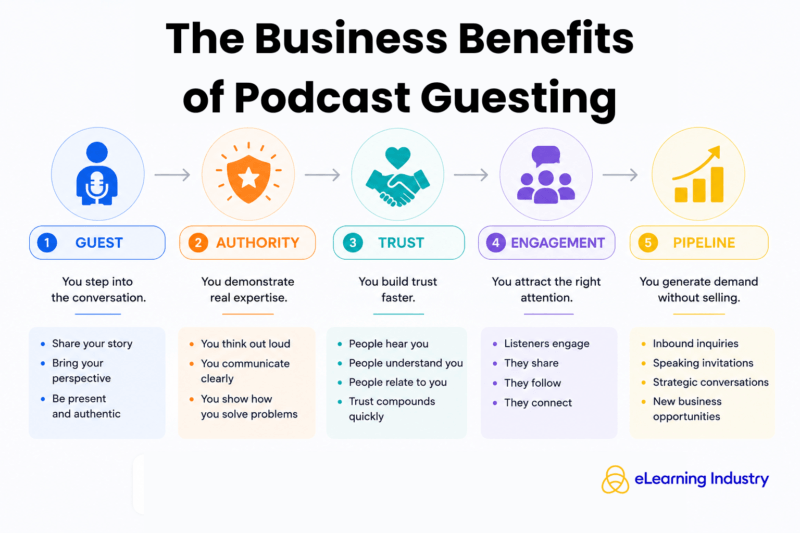
While many companies consider starting their own shows, the strategic value of being a guest on established podcasts is often overlooked. Guesting offers immediate access to a "warm" audience—a community that already trusts the host and is primed to listen.
Authority in Action
When an executive appears as a podcast guest, they are demonstrating expertise in real-time. Unlike a polished slide deck or a scripted video, a podcast requires the guest to communicate under pressure and think on their feet. Decision-makers judge clarity of thought and the ability to simplify complex topics. This "live" demonstration of competence builds authority faster than almost any other medium.
Precision Visibility
Podcasts do not aim for the broad, often diluted reach of television or general social media. Instead, they offer precision. An industry-specific podcast might only have 1,000 listeners, but if those listeners are all Chief Information Security Officers (CISOs) in the healthcare sector, the ROI of that 30-minute appearance far exceeds a viral post seen by a million people with no buying power.
Trust That Compounds
A single podcast episode can have a long shelf life. Unlike a social media post that disappears from the feed in 24 hours, podcasts are archived and searchable. A well-delivered interview continues to build trust months or even years after it was recorded. Furthermore, the trust established in audio often "compounds" when the listener sees the guest’s name again in a different context, such as a proposal or a conference keynote.
Integrating Podcasting into the Full-Funnel Strategy
For high-growth companies, podcasting is not a standalone tactic but a vital component of a full-funnel marketing ecosystem. It serves as an "authority multiplier" that strengthens other channels.
- Content Repurposing: A 45-minute podcast interview can be sliced into a dozen LinkedIn video clips, three detailed blog posts, several newsletter segments, and a series of quote graphics. This ensures that the leader’s voice remains consistent across all touchpoints.
- Enhancing Social Presence: Video snippets from podcasts perform exceptionally well on social algorithms because they are native video content that feels human and educational rather than promotional.
- Supporting Sales Cycles: B2B sales cycles are often long and involve multiple stakeholders. A salesperson can send a relevant podcast episode to a prospect, allowing the prospect to "meet" the company’s leadership and hear their philosophy before a formal meeting even takes place.
The ROI of Industry-Specific Niche Shows
A common mistake in B2B podcasting is chasing "vanity metrics"—trying to get on the largest possible shows regardless of the audience profile. However, industry analysis suggests that the highest ROI comes from niche, sector-specific podcasts.
Generic business podcasts provide broad reach but often result in "leaky" funnels where the listeners are not the ideal customer profile (ICP). Conversely, industry-focused shows attract high-intent listeners who are actively looking for solutions to specific professional challenges. In these environments, every minute of airtime is spent talking directly to the target market.
Analysis: The Future of the "Voice-First" Executive
As AI-generated text continues to flood the internet, the value of a "verified human voice" will only increase. We are entering a period where the ability to speak clearly and persuasively will be a core requirement for C-suite executives.
Industry analysts suggest that by 2026, "audio presence" will be a standard KPI for marketing departments. The companies that will win are those that move from a "vendor" mindset to an "expert" mindset. By participating in the podcast ecosystem, leaders are not just marketing a product; they are participating in the global conversation of their industry.
Broader Impact and Implications
The rise of B2B podcasting is also democratizing influence. Smaller, more agile companies can now compete with industry giants by out-thinking them in the public square. A founder with a revolutionary idea and a clear way of expressing it can gain the same level of credibility as an executive at a Fortune 500 company, provided they show up in the right conversations.
Furthermore, this shift is changing the nature of professional development. Executives are increasingly using podcasts as their primary source of "on-the-go" education, meaning that the ideas shared on these shows are literally shaping the future of business operations, HR tech, and enterprise software.
Conclusion: The Imperative for Action
The window for "early adopter" advantage in B2B podcasting is narrowing, but the opportunity remains significant. For CEOs and marketing teams, the message is clear: if you are not part of the conversation, you are effectively invisible to a large segment of your target audience.
Building authority through dialogue requires a shift away from corporate jargon and toward human clarity. It requires a willingness to be authentic and a commitment to providing value without an immediate "hard sell." In the high-trust world of B2B decision-making, the voice that speaks the most clearly—not the loudest—is the one that ultimately wins the contract.
Frequently Asked Questions
Are podcasts actually effective for B2B lead generation?
Yes. While they often act as a top-of-funnel awareness tool, they generate high-quality leads by establishing authority. Listeners who move from a podcast to a company website are typically "warmer" and more informed than those coming from cold ads.
How is the ROI of a podcast appearance measured?
ROI is typically tracked through branded search growth, increases in referral traffic from podcast show notes, and qualitative feedback from sales teams who report prospects mentioning the episode during discovery calls.
What makes a "high-impact" podcast guest?
The most effective guests avoid promotional scripts. They focus on sharing practical insights, "war stories" from the field, and clear, sometimes contrarian opinions that help listeners think differently about their own challenges.
Should a company host its own show or focus on guesting?
A balanced strategy is often best. Hosting builds long-term brand equity and a proprietary platform, while guesting provides immediate access to new audiences and requires significantly less logistical overhead.