
Diversity, Equity, and Inclusion (DEI) initiatives across corporate America have encountered unprecedented challenges and significant recalibrations throughout 2025 and into 2026, marking a pivotal period for workplace diversity programs. Major corporations are actively adjusting their approaches in response to a complex interplay of shifting legal interpretations, heightened political pressures, and evolving financial considerations, largely spurred by policy directives from President Trump’s administration. While some organizations are doubling down on their long-standing DEI commitments, others are scaling back or fundamentally restructuring initiatives. The broader ramifications, particularly concerning corporate branding, talent acquisition, and consumer confidence, remain under intense scrutiny, with stakeholders questioning the foundational belief in these policies.
This article delves into the dynamic landscape of DEI rollbacks, examining the profound influence of the Trump administration’s policies, the varied responses from key stakeholders, and the overarching implications for the future of corporate America.
The Evolving Landscape of Corporate DEI Initiatives
The period spanning 2025 and 2026 has seen a dramatic shift in how Diversity, Equity, and Inclusion are approached within the corporate sphere. What began as a broad movement towards fostering more inclusive workplaces has become a battleground of legal challenges and political mandates. The initial wave of DEI programs, often encompassing everything from unconscious bias training to supplier diversity and employee resource groups (ERGs), gained significant traction in the preceding decade. However, the political and legal climate began to sour for these initiatives, culminating in the significant changes observed in the mid-2020s.
The seeds of this shift were sown earlier, notably with the U.S. Supreme Court’s landmark decisions in June 2023, which effectively ended affirmative action in college admissions. These rulings, challenging the use of race as a factor in higher education, created a ripple effect, signaling a potential legal vulnerability for similar considerations in corporate settings. This judicial precedent laid the groundwork for subsequent executive actions and legal challenges aimed at corporate DEI practices.
The Trump Administration’s Influence on Corporate Policy
The return of President Donald Trump to the White House ushered in a new era of aggressive policy-making targeting DEI. Throughout 2025, his administration issued multiple directives designed to restrict DEI training within federal agencies, eliminate federal funding for diversity programs, and challenge their legality. A key turning point was the issuance of what has been broadly termed the "DEI ban" – a series of executive orders and policy changes that sought to redefine the parameters of acceptable diversity initiatives.
A significant directive was an executive order banning certain DEI-related policies among federal contractors. This order, often referencing Executive Order 14151 or similar subsequent mandates, exerted immense pressure on companies reliant on government contracts and grants. Corporations like John Deere and NYU Langone, deeply integrated into federal supply chains or receiving significant federal funding, found themselves compelled to re-evaluate their DEI commitments to align with the new federal guidelines, fearing loss of lucrative contracts or legal repercussions.
By March 26, 2026, the administration further intensified its focus on the private sector with a new executive order specifically addressing DEI issues with federal contractors and subcontractors. This "DEI EO" (referring to a hypothetical, specific executive order) went beyond previous directives by clearly outlining activities deemed "racially discriminatory DEI activities" and establishing explicit consequences for non-compliance. It mandated federal partners to incorporate contractual language prohibiting such activities and outlined specific instructions and criteria for enforcement. This move was widely interpreted as a direct challenge to traditional DEI structures, extending its reach to cover a broad range of organizational functions including promotion criteria, hiring and recruitment standards, and resource allocation for ERGs and other community-specific initiatives.
Corporate Responses: A Diverging Path
In the face of these escalating pressures, corporate America has adopted varied strategies, leading to a stark divergence in approaches to DEI.
Companies Scaling Back DEI Initiatives
Several prominent corporations have significantly reduced or restructured their DEI efforts, citing policy shifts, legal challenges, and changing attitudes.
Meta: The parent company of Facebook and Instagram, Meta, notably eliminated several DEI-related activities in early 2025, including supplier diversity programs and aspects of its internal DEI function. An internal memo from Meta leadership cited the "changing legal and policy landscape surrounding diversity, equity and inclusion efforts in the United States." The company had faced pressure from conservative groups alleging that DEI training created unfair advantages. Critics argued that such removals would diminish efforts to level the playing field, potentially reverting institutions to majority biases. This move by a tech giant sent a clear signal across the industry about the perceived risks of maintaining traditional DEI structures.
Amazon: Amazon has also significantly scaled back its DEI commitments through 2025, phasing out various inclusion initiatives. This included leadership training programs designed to advance underrepresented employees and reducing funding for employee resource groups (ERGs). The company also curtailed its supplier diversity program and shifted its recruitment focus from explicit diversity hiring goals towards a "merit-based" approach. This reorientation sparked widespread debate on its potential impact on the representation of women, Black women, and other historically marginalized groups. Consumer advocacy groups and employees expressed deep concerns, with internal reports indicating growing uncertainty among staff about career advancement and team dynamics.
McDonald’s: The fast-food giant announced a rollback of key inclusion programs, particularly those related to supplier diversity and diverse workforce recruitment. This decision followed lawsuits claiming that certain DEI efforts led to unfair advantages for specific demographic groups. McDonald’s annual reports began emphasizing general workplace culture over specific DEI training. Company leaders justified these changes as necessary to attract top talent while avoiding legal action, explicitly referencing executive orders like "Ending Radical And Wasteful Government DEI Programs And Preferencing."
Target: Target concluded its Racial Equity Action and Change (REACH) initiative in 2025, stating it had completed its "three-year DEI roadmap." However, many employees and consumers viewed this as a strategic retreat rather than a successful conclusion. The retailer also faced significant backlash from advocacy groups, particularly concerning its stance on LGBTQ+ inclusion and gender-affirming care policies for employees, which were increasingly scrutinized under new White House executive orders influencing sexual orientation protections. This situation highlighted the delicate balance companies must strike between corporate values and political pressures.
Other companies, while not explicitly named in the original text, are understood to have followed similar paths, gradually phasing out diversity initiatives or taking more immediate actions to dismantle long-standing inclusion programs in response to the evolving climate.
Companies Maintaining or Enhancing DEI Commitments
Conversely, some leading corporations have reinforced or strategically evolved their commitments to workplace diversity and inclusion.
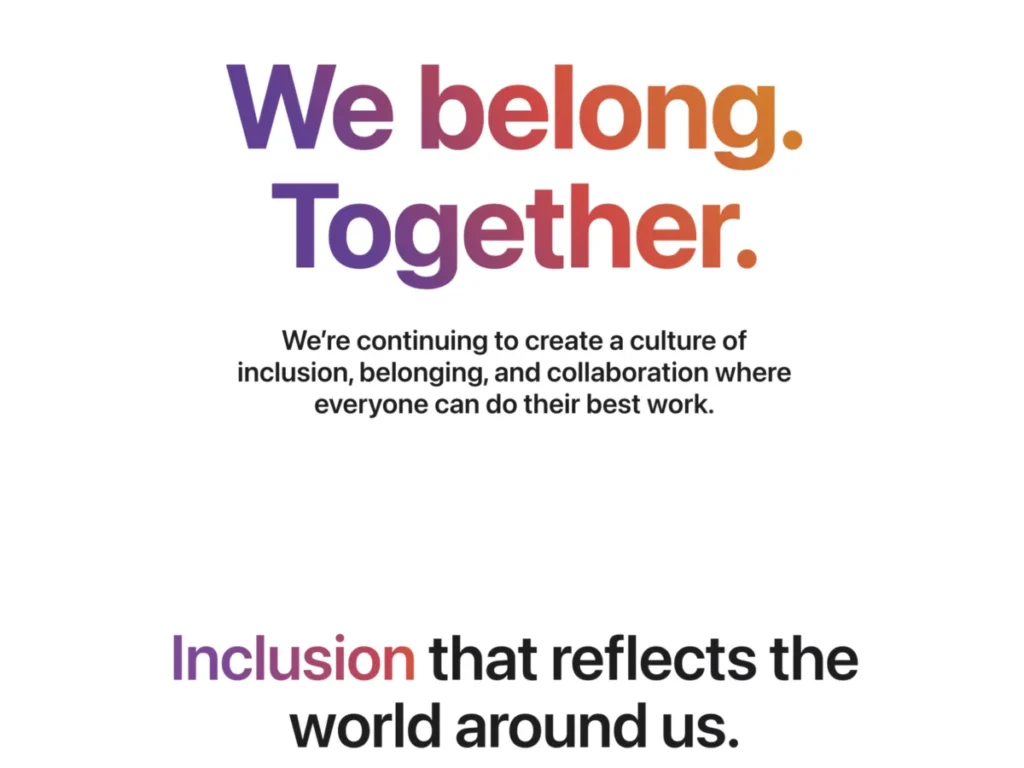
Apple: Apple CEO Tim Cook publicly reaffirmed the company’s stance on inclusion, stating that diversity programs are integral to Apple’s business strategy. In February 2025, Apple shareholders overwhelmingly rejected a proposal to eliminate DEI training, demonstrating strong investor support. Apple’s robust supplier diversity program remains a cornerstone of its operations, and its 2020 partnership with Historically Black Colleges and Universities continues. The company’s board has committed to monitoring global diversity efforts, underscoring its belief that diversity fuels innovation and market reach.
Costco: Costco has staunchly defended its DEI policies despite rising political debates, asserting that inclusion programs are vital to its business practices, a view largely supported by its shareholders. This resilience has often translated into positive customer sentiment, bolstering its brand reputation. However, the company faced direct pressure, with 19 state attorneys general urging it to cease what they termed "unlawful discrimination imposed… through diversity, equity and inclusion (DEI) policies." Costco’s response to this specific legal challenge remained a focal point of observation.
Cisco: Cisco CEO Chuck Robbins defended the company’s DEI initiatives in January 2025, post-executive orders, emphasizing the "too much business value" derived from diversity. Robbins acknowledged the pendulum swing in public discourse but maintained that "a diverse workforce is better," advocating for finding equilibrium amidst the political noise. His stance highlighted the belief that DEI is not merely a social good but a strategic business imperative.

JPMorgan Chase: CEO Jamie Dimon positioned JPMorgan Chase as a leader in maintaining DEI commitments amidst scrutiny, emphasizing the company’s independence in shaping its policies. While Dimon affirmed continued outreach to diverse communities (Black, Hispanic, LGBT, veterans) in January 2025, the company later evolved its approach. Its diversity program was renamed "DOI" (Diversity, Opportunity, and Inclusion), some training was reduced, and certain programs were relocated to other departments, such as HR. HR Dive reported these changes aligned with legal advice for companies navigating the new landscape, suggesting a strategic adaptation rather than an outright abandonment.
Disney: Disney announced updates to its LGBTQ+ support programs, reaffirming its commitment to inclusion despite political pushback, including upholding gender-affirming care for employees. While these commitments garnered shareholder and consumer support, they also triggered an FCC investigation by Chairman Brendan Carr in March 2025. Carr aimed to "ensure that Disney and ABC have not been violating FCC equal employment opportunity regulations by promoting invidious forms of DEI discrimination." Disney had also subtly shifted its internal performance metric from "Diversity & Inclusion" to a "Talent Strategy," emphasizing business outcomes, a move seen by some as an attempt to "toe the line."
Lego Group: The Lego Group, a long-time supporter of DEIB, made a notable policy change in 2024, removing all explicit diversity terms like "people of color" and "LGBTQ+" from its annual sustainability report. This included removing three instances of "diversity and inclusion" from its 2023 mission statement. The world’s largest toy maker also adopted objective terms like "appointments based on merit," aligning with language used by the U.S. government. This example illustrated the far-reaching impact of the U.S. government’s DEI crackdown, even influencing companies headquartered on the European continent.
Stakeholder Reactions and Broader Market Impact
The widespread recalibration of DEI initiatives has elicited diverse and often conflicting reactions from key stakeholders, with significant implications for corporate operations, brand reputation, and market dynamics.
Employee Sentiment and Workforce Impact
Employees represent one of the most directly affected groups, with many expressing deep apprehension about the rollbacks. Concerns are widespread that reduced inclusion programs will lead to less equitable workplaces, widen existing disparities in leadership representation, and hinder career advancement for underrepresented individuals. A 2025 report from MyPerfectResume highlighted this sentiment, revealing that a substantial percentage of employees feared these changes would decrease morale, increase feelings of exclusion, and potentially lead them to seek opportunities elsewhere.
Specifically, the report indicated that 48% of employees believed DEI rollbacks would make their workplace less inclusive, 42% worried about a decline in equal opportunities, and 37% felt it would negatively impact their sense of belonging. Furthermore, 31% reported that such changes would make them consider leaving their current employer. These findings underscore the critical link between inclusive workplaces and employee satisfaction, innovation, and retention.
Research from the Human Rights Campaign Foundation (HRCF) in 2026 corroborated these anxieties, reporting that 39.1% of U.S. workers experienced a rollback in DEI practices. Among LGBT workers in companies that scaled back DEI, 54.2% reported increased stigma, compared to 24.9% in organizations that adapted their policies to the new climate. These statistics point to tangible workplace consequences, including risks of labor churn and reduced productivity, which could compromise overall industry output. Companies that retract DEI efforts risk losing valuable talent to competitors that continue to prioritize an inclusive environment.
Consumer Response and Brand Reputation
Consumer reactions have been notably mixed, with some groups applauding the changes and others expressing strong disapproval. Businesses reducing or eliminating DEI initiatives risk alienating a growing and influential customer base that prioritizes corporate social responsibility. Market research consistently shows that diverse consumers – including Black, Hispanic, LGBTQ+, and women-led households – collectively wield trillions of dollars in annual purchasing power. Companies that neglect these demographics may face long-term brand erosion and diminished customer loyalty.
A salient example is Target’s exclusion from the Twin Cities Pride Festival in 2025 due to its scaled-back DEI policies. This incident exemplified a broader trend where advocacy groups and consumers are actively holding companies accountable for their DEI commitments. Conversely, brands like Costco and Apple, which have maintained or reinforced inclusive efforts, have often seen robust consumer support, reinforcing the business value of engaging with diverse communities.
Furthermore, research indicates that younger generations, particularly Gen Z and Millennials, are increasingly making purchasing decisions based on a company’s values, including its commitment to diversity and inclusion. Companies that scale back DEI programs risk losing significant market share among these demographics, who view representation and inclusion as integral to brand authenticity. The long-term growth prospects for businesses failing to cater to a diverse consumer base appear increasingly challenged.
Investor Scrutiny and ESG Considerations
Major investors, including Wall Street banks and ESG (Environmental, Social, Governance)-focused funds, have also voiced concerns over DEI rollbacks. Some investors argue that reducing diversity programs constitutes an ESG risk, potentially negatively impacting long-term financial performance. The overwhelming rejection of anti-DEI proposals by Apple shareholders in 2025 serves as a clear indicator of continued investor interest in inclusive corporate strategies.
However, the investor landscape is not monolithic. In light of the shifting legal and political environment, prominent investors such as State Street, BlackRock, and Vanguard have adjusted their stances on traditional board diversity requirements. For instance, State Street reportedly removed its criteria for 30% women directors, signaling a cautious adaptation to the new climate.
State investment bodies are also playing a crucial role. Several state pension funds and government investment programs have taken active, often conflicting, stances. States like California and New York continue to advocate for DEI metrics in their investment portfolios, using financial leverage to influence boardroom decisions. Conversely, other states have sought to divest from companies actively promoting diversity programs. These divergent approaches highlight the ongoing debate within the investment community regarding whether DEI efforts are essential for long-term financial success or represent an unnecessary expenditure. Investors are closely monitoring how these shifts impact corporate strategies, particularly for companies dependent on government partnerships and infrastructure projects.
Legal Landscape and Compliance Challenges
The increasing stringency of executive orders, particularly the 2026 DEI EO, has created a complex legal environment for federal contractors and subcontractors. These organizations are now mandated to comply with specific contractual clauses requiring thorough reviews of existing employment practices, data use, and subcontractor oversight. This legal framework introduces a new layer of compliance, demanding meticulous adherence to a "merit-based framework" and explicit avoidance of "racially discriminatory DEI activities."
The broad scope of the DEI EO, extending to promotion criteria, hiring/recruitment standards, and resource allocation for ERGs, effectively impacts traditional DEI structures across numerous organizational functions. This necessitates a fundamental realignment of organizational practices to mitigate legal risks. Employers are increasingly compelled to adopt de-risking strategies that prioritize skills-based hiring. AI-driven reliability in skills-based hiring is emerging as a critical tool, enabling companies to fulfill federal mandates without inadvertently overlooking top-tier talent. By leveraging data-driven solutions, decision-makers can strategically transition from identity-focused talent strategies to outcome-validated frameworks, which are increasingly seen as the hallmark of an inclusive and productive culture in this new era.
Broader Implications for Corporate America
The events of 2025 and 2026 signal a profound and lasting transformation for corporate America. The rapid shift in the DEI landscape compels businesses to critically reassess their brand identity, workforce strategy, and consumer trust. Companies that reduce or eliminate DEI efforts face the tangible risks of alienating top talent, diminishing workplace morale, and weakening their overall employer brand, particularly among younger, values-driven demographics.
The emphasis on legal compliance and merit-based systems, while framed by some as a return to objectivity, has generated significant anxiety about the potential for regression in workplace equity. The challenge for companies now lies in navigating this complex terrain: how to foster an inclusive environment that attracts and retains diverse talent, ensures equitable opportunities, and enhances business value, all while adhering to evolving legal mandates and mitigating political backlash.
Tools that ensure inclusive language in job descriptions and internal communications, such as AI-powered text analyzers, are becoming indispensable. These technologies can help businesses maintain a commitment to diversity by identifying potential biases, even in the face of external pressures and evolving legal interpretations. As corporate leaders like Cisco’s CEO suggest, the future of workplace inclusion will depend on thoughtful, data-driven strategies that prioritize business value and foster genuinely inclusive hiring processes, rather than simply fulfilling superficial quotas. The next few years will undoubtedly shape the long-term trajectory of diversity, equity, and inclusion within the American corporate landscape, demanding agility, strategic foresight, and a renewed commitment to ethical business practices.






