Workday, a long-standing pioneer in cloud-based financial and human capital management (HCM) solutions, has officially launched a comprehensive strategy to navigate the rapidly evolving landscape of artificial intelligence. The announcement, made during a recent company summit, signals a significant pivot for the enterprise software giant, leveraging nearly $3 billion in strategic acquisitions, a revitalized management team, and a bold repositioning of its role in the emerging world of AI agents. This strategic overhaul aims to transform Workday from a "system of record" into a robust "platform for agents," ensuring its continued relevance and leadership in an AI-first era.
The Genesis of a Reinvention: Aneel Bhusri’s Strategic Vision
The impetus for this significant transformation can be traced back to a period of introspection for Workday, as acknowledged by co-founder and Executive Chairman Aneel Bhusri. In 2008, Workday disrupted the enterprise software market with its innovative, cloud-native architecture, fundamentally altering how businesses managed their core financial and HR operations. At a time when on-premise client/server systems dominated, Workday’s Software-as-a-Service (SaaS) model offered a breakthrough: an object-oriented database, an integrated security and business rules engine, and a novel user interface that promised scalability, flexibility, and a unified "Power of One" platform for all HR and financial needs.
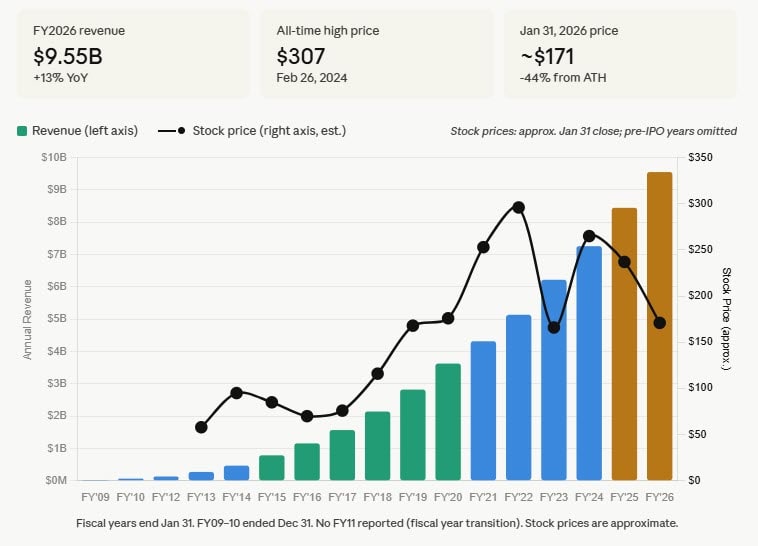
This pioneering approach fueled rapid growth, enabling Workday to capture over 30% of the Fortune Global 2000 market, amassing more than 11,500 customers and serving over 75 million end-users. The company cultivated a strong employee-first culture, attracting top talent and investor confidence. Aneel Bhusri served as CEO until early 2024, when he transitioned the role to Carl Eschenbach. However, observing a perceived dilution of its startup culture and a lack of a clear AI strategy over the preceding two years, Bhusri returned as CEO, initiating a deliberate and comprehensive reinvention of the company.
Redefining Workday’s Role: From System of Record to Platform for Agents

The core challenge facing Workday, and indeed many established enterprise software providers, is defining their value proposition in an age where readily available AI agents can perform a multitude of tasks. The question arises: what role does a traditional "system of record" play when AI agents can ostensibly extract and process data independently?
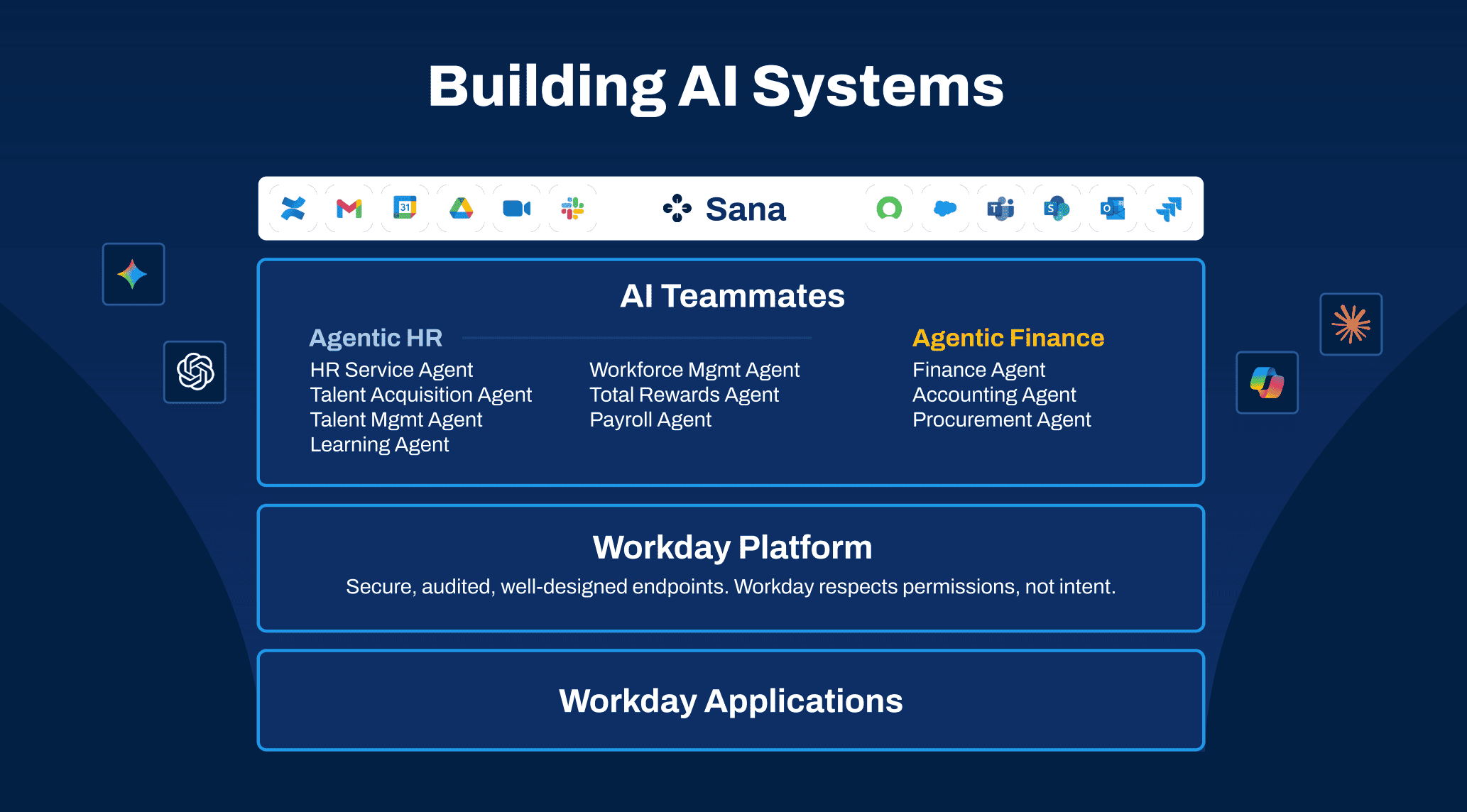
Workday’s answer is to evolve its fundamental role. The company is transforming its robust systems of record into a dynamic "platform for agents." By unlocking and making accessible the deep data, stringent security protocols, and intricate business rules embedded within its platform, Workday aims to enable the creation and deployment of AI agents with inherent scalability, security, and speed. Workday’s existing framework, which incorporates company-wide rules, policies, security models, and compliance mandates, provides the essential "rails" upon which these agents can operate securely and at scale. The company argues that attempting to replicate this foundational infrastructure outside of Workday would be prohibitively expensive, time-consuming, and fraught with risk.
The Five Pillars of Workday’s Reinvention Strategy
Workday’s new strategy is built upon five key pillars, each designed to solidify its position in the AI-driven future of enterprise operations.
Pillar 1: AI Complements, Not Replaces, Enterprise Software
Workday contends that while AI excels at probabilistic reasoning, core enterprise functions like payroll processing, financial closing, employee onboarding, and segregation of duties require deterministic rules, established approval chains, and decades of data model development. Workday’s approach, therefore, is to fuse probabilistic AI reasoning with deterministic execution. This means that standalone AI agents operating on extracted enterprise data are inherently incomplete. For instance, just as autonomous vehicles require established infrastructure like roads, traffic signals, and speed limits, AI agents need the foundational structure provided by enterprise software. Workday’s strategy is not about protecting its existing customer base but about unleashing new waves of innovation by providing a secure and scalable infrastructure for AI development.
Pillar 2: Workday’s "Rails" as the Core of Enterprise AI
The intricate configuration and business process frameworks within Workday encode each customer’s unique policies, approval workflows, compliance requirements, and organizational structures. These rules, in essence, represent the operational DNA of a company. An AI agent operating outside of Workday may produce outputs that appear reasonable but could inadvertently violate compliance mandates due to a lack of understanding of these critical internal rules. Workday’s solution involves routing an agent’s actions through its existing configuration, effectively making the agent "lawful by default." This ensures that even as businesses build numerous AI agents, they can leverage Workday’s established coordination and rule-setting capabilities, avoiding the complexities and risks of building such governance from scratch.
Pillar 3: Productizing Governance and Agent Management
Workday recognizes that managing the proliferation of AI agents will be a critical challenge for enterprises. To address this, the company is investing in productized agent management tools, positioning them as essential infrastructure. Agents, much like human employees, will be treated as first-class citizens with unique identities, defined skill sets, scoped authorizations, and comprehensive audit trails. Key product developments in this area include the "Agent System of Record," which already has over twelve hundred customers actively registering and monitoring agents. This is complemented by a new standards-based access and privilege management system and a unified "single front door" for both internal and external agents. These offerings are designed to provide enterprise-grade trust infrastructure to manage the inevitable "agent sprawl." While this is a nascent and competitive space, with players like ServiceNow and Microsoft developing similar tools, Workday aims to offer its customers integrated, trustworthy solutions.
Pillar 4: The Sana-Powered Unified Experience
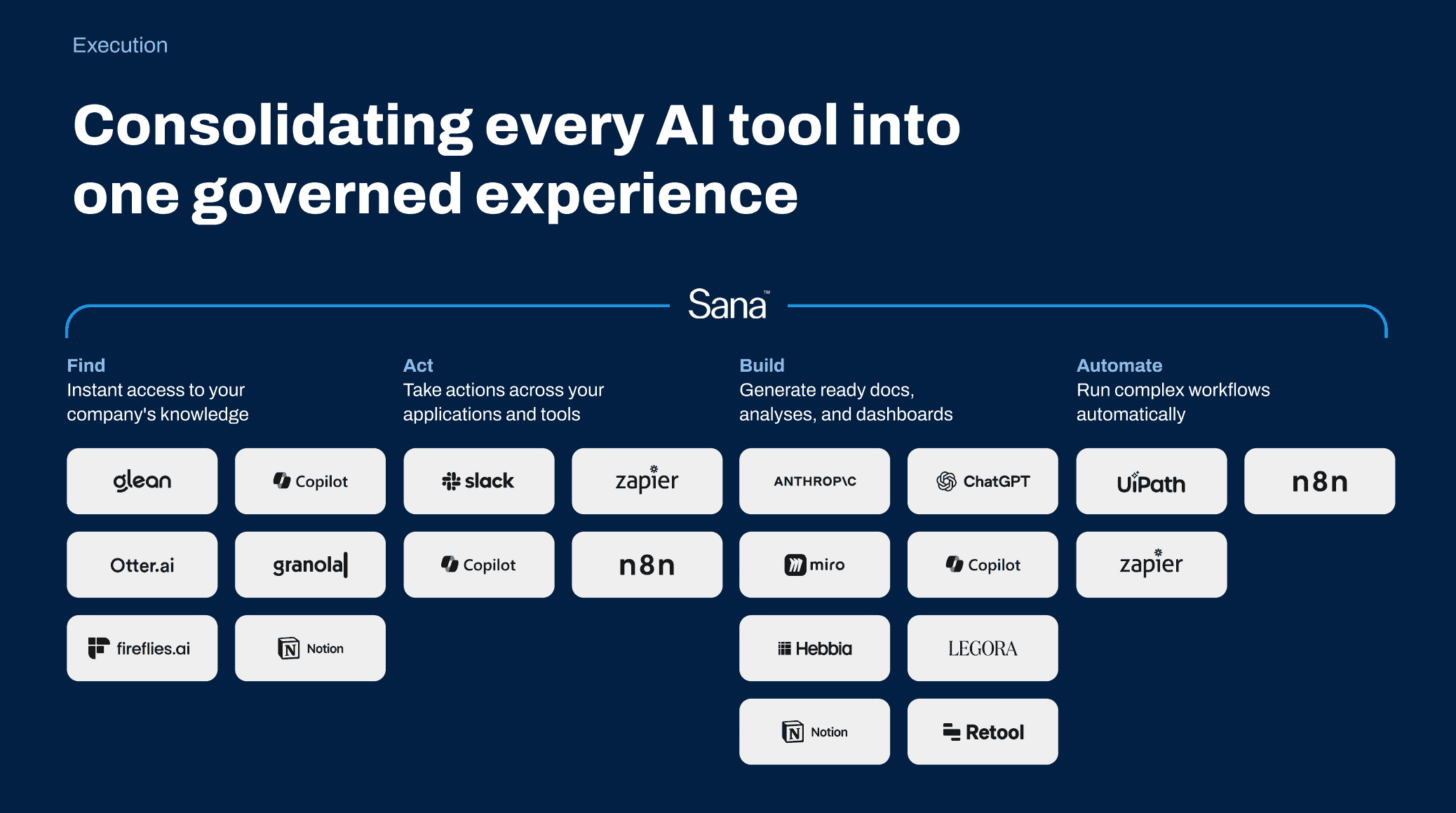
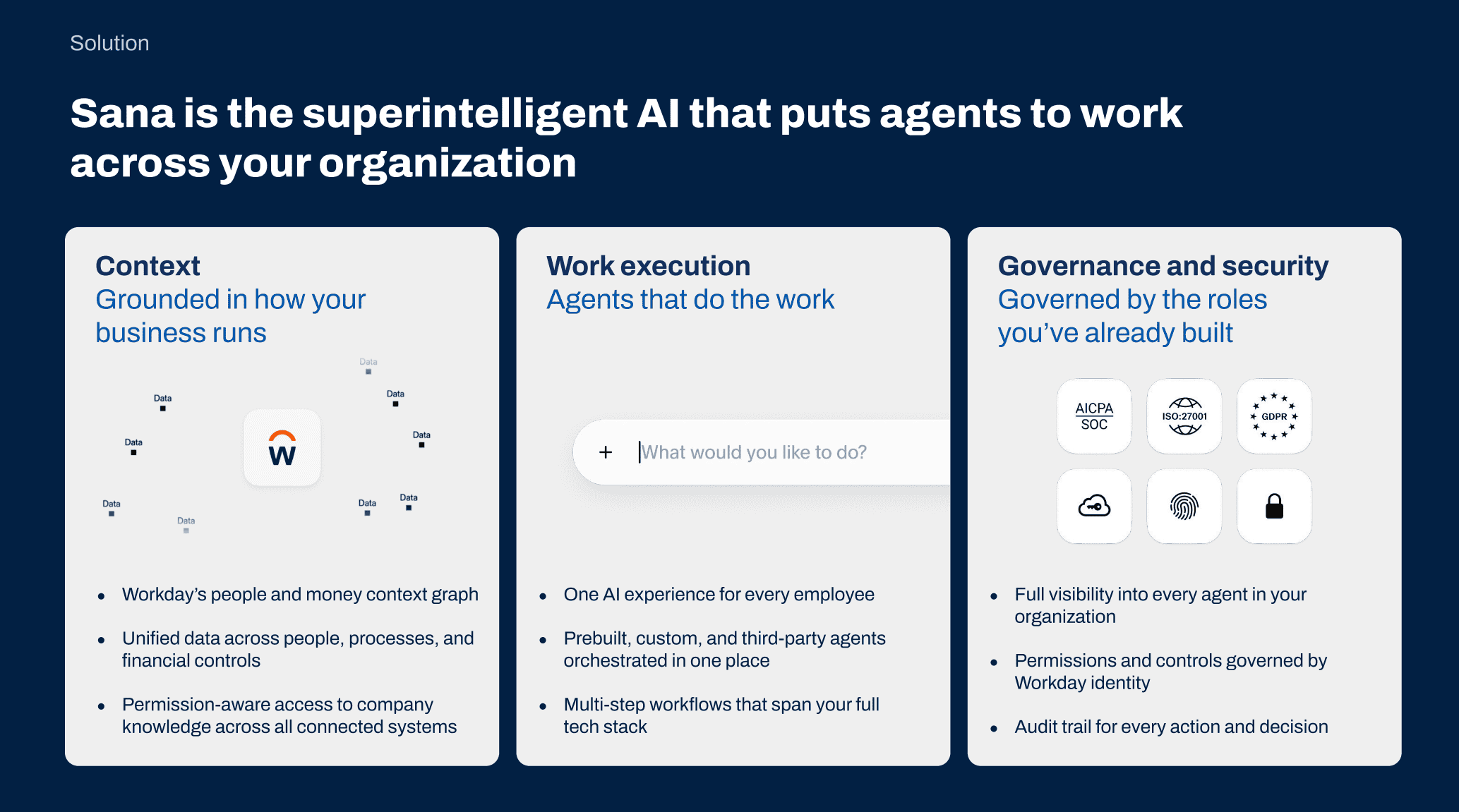
A significant element of Workday’s new strategy is the integration of Sana, a recent acquisition, as the new default user experience. "Sana for Workday" is bundled for all customers, offering an upgradeable path to extend beyond Workday’s ecosystem to platforms like Salesforce, Slack, Microsoft Teams, and SharePoint through "Sana Enterprise." This positions Sana as a direct competitor to emerging front-door agents like Microsoft Copilot. Workday describes Sana as the "last enterprise application employees will ever need to learn," likening its potential to the "DaVinci of Software." Beyond its user interface capabilities, Sana also serves as an agent development studio and a dynamic learning platform. The company believes this AI-native learning approach will drive significant improvements in employee productivity and reskilling, a potential opportunity that Workday is only beginning to fully explore.
Pillar 5: Outcome-Based Commercial Models
In a departure from traditional seat-based licensing, Workday is shifting towards a hybrid model that combines seats with consumption-based pricing, utilizing "Flex Credits" as the unit of consumption. This new commercial model aims to align Workday’s revenue more closely with customer outcomes, such as business growth, increased productivity, and enhanced management capabilities. APIs used by external platforms will also be metered per call, capturing revenue that Workday believes has been historically uncollected. This shift reflects a move towards an "Agentic Business Platform" model, where customers pay for the value and actions performed by the platform rather than solely on the number of employees utilizing it.
Addressing the "Build from Scratch" Mentality
In an era where tools like Claude Code and Cursor empower developers to imagine rebuilding complex systems from the ground up, Workday anticipates that some customers might consider extracting their data to create independent AI agent capabilities. Workday’s response to this "build from scratch" approach is a stark warning. The company argues that such endeavors would result in a "shadow ERP," costing millions to develop, lacking the unified object graph and configuration system, and ultimately remaining fragile. The agents produced would be "lawless by design," prioritizing task completion over rule enforcement, leading to significant risks and ultimately demanding the very security and workflow tools that Workday already provides.
Navigating a Multi-Agent Future
Workday acknowledges that enterprises will inevitably deploy multiple AI surfaces, including Microsoft Copilot, Anthropic Claude, Gemini Enterprise, and custom-built agents. The company’s strategy embraces this reality. External agents will access Workday through an "Agent Gateway" using open standards. These agents can either delegate tasks to Workday agents, inheriting its established "rails," or interact directly with Workday APIs. Crucially, when an agent needs to interact with regulated workflows, personnel, or financial transactions, the reasoning will hand off to Workday for execution. The company is also making it more accessible for developers to build applications within Workday through its Sana-based Agent Developer platform, aiming to streamline the creation of "Workday Extend" apps and encourage broader ecosystem participation.
Enhancing Agility: Dynamic Reconfiguration and Deployment
A long-standing criticism of cloud enterprise software has been the slow pace of product release cycles. Workday’s current biannual update schedule and interconnected product roadmaps have sometimes led to lengthy wait times for new features. To address this, Workday is implementing two significant changes.
First, the integration of Sana allows for extensions to Workday through a new user experience. By registering agents in the Agent System of Record, new applications can be built without lengthy delays. Furthermore, Workday is fostering an "Agent Partner Network" to develop industry-specific and advisory agents.
Second, and perhaps more impactful, Workday has introduced the "Deployment Agent." This dynamic system testing, configuration, and consultative deployment tool enables customers to deploy changes more rapidly. This drastically reduces implementation costs and the reliance on expensive systems integrators, allowing Workday to roll out new releases more continuously. This move is expected to significantly lower the cost of ownership for customers and disrupt the traditional Workday SI partner ecosystem, as evidenced by a reported scenario where a large organization reorganized 800,000 employees in a single week using these new capabilities.
Analysis: A Renewed Energy and Strategic Focus
The recent Workday Summit and the accompanying announcements reveal a company undergoing a significant revitalization. The return of Aneel Bhusri as CEO has injected a new level of energy and strategic clarity, reminiscent of transformative leadership seen at other tech giants.
Renewed Founder-Led Energy
As witnessed with figures like Steve Jobs at Apple and Howard Schultz at Starbucks, a pioneering company can sometimes lose its way. Aneel Bhusri, with his deep understanding of technology and the Workday market, has demonstrated the passion and vision necessary to define the company’s next chapter. The leadership changes have been accompanied by a more focused organizational structure, with "General Manager" roles assigned to key product areas, including the Agent Factory and AI APIs. This streamlined approach, evidenced by the rapid narrowing of numerous AI projects down to a manageable fifteen, signifies a return to a more agile, "startup culture." This mirrors strategic shifts seen at other major tech companies, such as Microsoft’s recent centralization of its Copilot engineering strategy.
Leading the Charge in Agentic HR and Finance
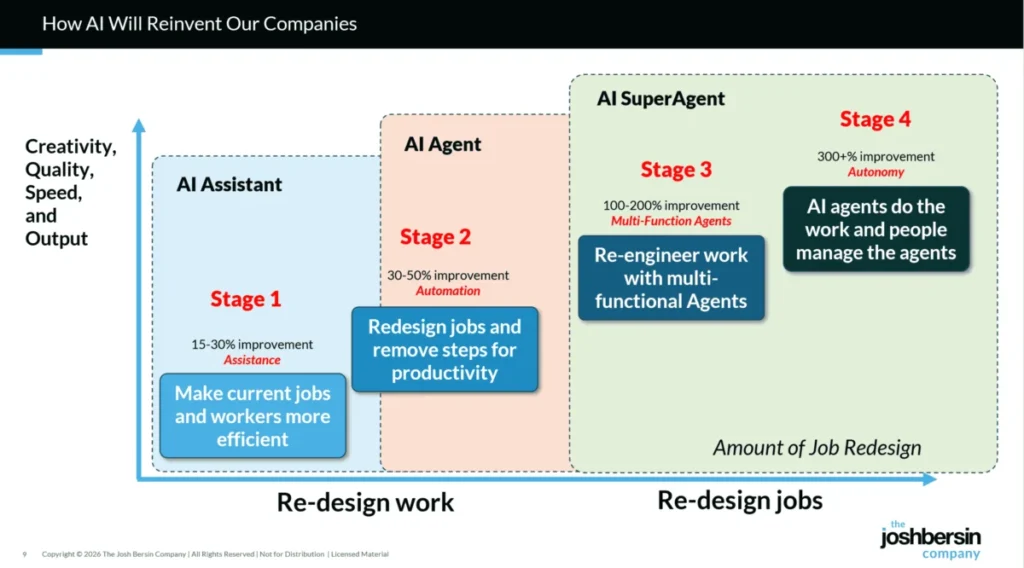
Workday is strategically positioning itself to lead the transformation in agentic HR and finance. By acquiring Paradox and Sana, companies with proven expertise in AI-driven recruitment, agents, and learning, Workday has assembled a management team well-versed in the practical applications of AI. This allows Workday to showcase transformative agent applications that leverage existing infrastructure, demonstrating a clear path for businesses to adopt AI. The company has the potential to proactively guide organizations toward the future of work by building and facilitating agents that redefine operational paradigms. Research indicates that while "agentifying" existing workflows offers incremental benefits, the true return on investment comes from "stage 3 agents" that automate entire workflows, a vision embodied by Sana and Paradox.
Sana and Paradox Drive New Leadership and Velocity
The integration of Sana and Paradox is more than just an acquisition; it represents a significant infusion of new leadership and a fundamental shift in product development velocity. Adam Godson, CEO of Paradox, now leads Workday’s talent acquisition platform, encompassing its ATS and intelligence systems. Joel Hellermark, CEO of Sana, now oversees Workday’s learning platform and AI layer. Operating as General Managers reporting to Gerrit Kazmaier, President of Product and Technology, these leaders are responsible not only for product strategy but also for revenue and customer support. This heightened accountability fosters rapid innovation and competitiveness, a stark contrast to previous, slower product development cycles. Given that talent acquisition and corporate learning are areas where AI is currently most advanced in HR, the innovations from Paradox and Sana are expected to catalyze agentic redesigns across other Workday modules. The market value of these combined entities, considering comparable acquisitions like SAP’s purchase of SmartRecruiters for $1.8 billion and Glean’s valuation of $7.2 billion, suggests a significant potential for Workday.
Defining Enterprise AI Infrastructure
Workday has a unique opportunity to define the architecture of enterprise AI. The current landscape is complex, with questions surrounding agent hierarchy, specialization (action vs. observation), inter-agent communication, and data/authority segmentation. Workday’s strategy, which acknowledges the need for a structured approach beyond the mainframe or traditional "system of record," proposes a layered architecture comprising the intelligent LLM, a semantic and rules layer, an agent code layer (orchestration, tools, workflows), and a runtime/trust layer (security, compliance, guardrails). While numerous vendors are competing in this space, Workday’s established presence in the ERP/HCM market positions it to lead the definition of enterprise AI infrastructure, raising the question of its "forward deployed engineering team."
Understanding Context and Semantic Layer Challenges
Joel Hellermark’s observation that "everyone is ignoring the big boring problem of bad context" resonates deeply. Workday’s strategic understanding of this issue is a critical indicator of its AI maturity. The company recognizes that context is the bedrock of value creation in AI and that untrustworthy content leads to untrustworthy agents. Gerrit Kazmaier highlighted that Workday’s most significant accuracy improvements stem from investments in knowledge graphs and context engineering, rather than solely from larger AI models. This mirrors findings in independent research, such as the Galileo product. Workday’s evolution of its Data Cloud to encompass not just raw data but also the "real customer semantics" – including skills models, cost centers, career paths, and certification workflows – demonstrates a sophisticated AI-centric approach, moving beyond a transactional vendor model.
Conclusion: A Pivotal Moment for Workday
The recent Workday Summit and the accompanying strategic announcements mark a definitive turning point for the company. Workday is poised to reinvent itself, pioneer innovative solutions, and empower its customers and partners to embrace the burgeoning business agent revolution. With a new leadership team, a refined AI infrastructure, and a focus on enabling near real-time system testing and reorganization for its clients, Workday appears to be on the cusp of a significant reinvention.
For financial analysts, the immediate impact of products like Sana, Paradox, and the Enterprise AI management tools is expected to drive new revenue growth. Extensive work with Paradox and Sana over the past five years has consistently demonstrated their substantial value to Workday customers. This strategic recalibration, spearheaded by Aneel Bhusri, Gerrit Kazmaier, and the entire Workday team, represents a crucial juncture, and further announcements are anticipated as the company continues to execute its ambitious AI-first vision.