In today’s hyper-connected and increasingly complex organizational landscapes, the ability of leaders to transcend traditional divides is no longer a desirable trait but a fundamental necessity for success. Organizations are characterized by intricate webs of relationships, both internal and external, demanding a paradigm shift from managers who guard their turf to leaders who actively bridge gaps. This evolution is crucial for navigating the challenges of a globalized economy, rapid technological advancements, and the persistent unpredictability that defines modern business. The leadership advantage increasingly accrues to those individuals who can foster collaboration and drive progress across a diverse array of colleagues, irrespective of their position, functional area, background, geographical location, or prior experience.
The Evolving Definition of Leadership: From Gatekeeper to Bridge-Builder
The traditional image of a leader as a solitary figure at the apex of a hierarchical structure is rapidly becoming obsolete. Instead, contemporary leadership demands a proactive engagement with the multifaceted nature of organizational life. This entails transforming from a manager focused on protecting established boundaries – be they departmental, geographical, or hierarchical – into a leader adept at spanning them. This shift is not merely about communication; it is about cultivating an environment where diverse perspectives are not only tolerated but actively sought out and integrated to achieve a collective purpose.
Understanding the Nuances of Boundary Spanning
At its core, boundary spanning refers to the critical capability of fostering collaboration and establishing a unified sense of direction, alignment, and commitment across various divides. These boundaries can manifest in numerous ways, including geographical distances, cultural differences, and layers of organizational hierarchy. The ultimate objective of this collaborative effort is to advance a shared, higher-level vision or organizational goal.
Examples of effective boundary spanning are abundant and varied. They can include a team leader acting as a vital liaison, representing their group’s interests and needs to key stakeholders. It can involve individuals actively engaging in projects that transcend departmental lines, pooling expertise from different functions to tackle complex problems. Furthermore, it extends to proactively seeking knowledge and insights from external experts, partners, or even competitors, thereby enriching internal understanding and innovation. This practice is paramount at all levels of leadership, from entry-level supervisors to C-suite executives, and is essential for the cohesive functioning of all groups, teams, and broader organizational systems.
The Tangible Benefits of Effective Boundary Spanning
Leaders who master the art of collaborating across boundaries gain a significant competitive edge. They are better equipped to tackle intricate problems, devise innovative solutions, and adapt to the ever-evolving dynamics of our interdependent world. The benefits are multi-faceted:

- Enhanced Problem-Solving: By drawing on a wider pool of knowledge and perspectives, boundary-spanning leaders can approach challenges from multiple angles, leading to more robust and effective solutions.
- Accelerated Innovation: The cross-pollination of ideas that occurs when boundaries are spanned is a fertile ground for creativity. Diverse viewpoints challenge assumptions and spark novel approaches, driving innovation.
- Increased Agility and Adaptability: Organizations with leaders who effectively navigate various boundaries are inherently more agile. They can sense shifts in the market or internal dynamics more quickly and respond with greater speed and flexibility.
- Improved Stakeholder Relationships: Proactive engagement with diverse stakeholders, both internal and external, builds trust and strengthens relationships, leading to greater buy-in and support for organizational initiatives.
- Development of a Broader Organizational Vision: By understanding the needs and perspectives of different parts of the organization and its ecosystem, leaders can develop a more holistic and strategic vision.
Empirical Evidence: Influence and Effectiveness
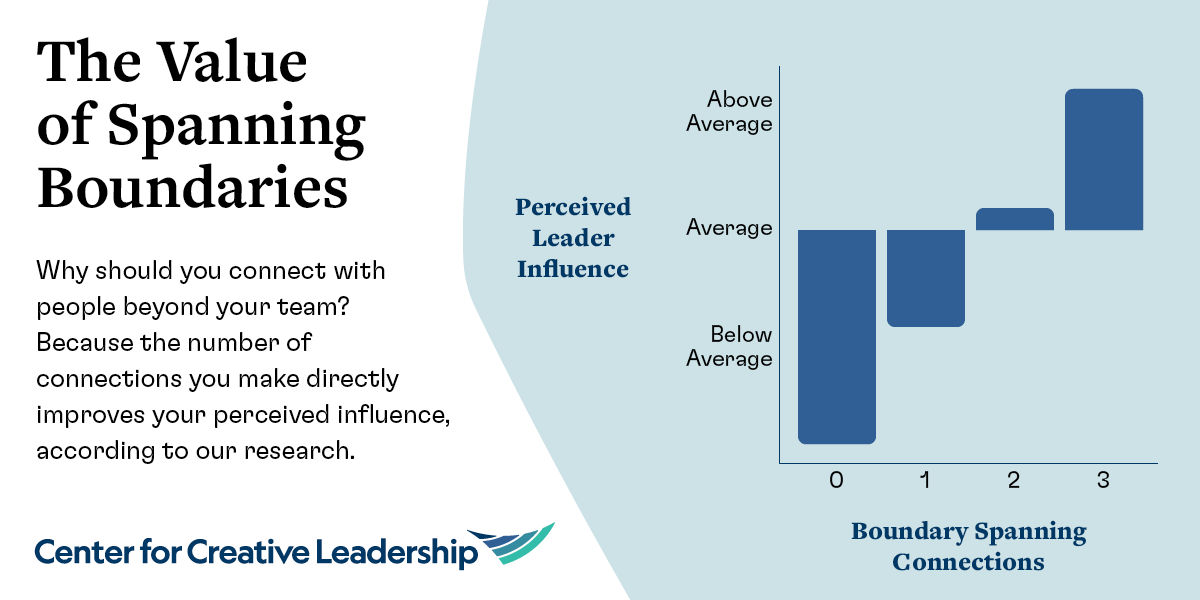
The impact of boundary spanning on leadership effectiveness is not merely theoretical. Research conducted by institutions like the Center for Creative Leadership (CCL) provides empirical backing. For instance, a study employing a proprietary conversational analytics system analyzed boundary spanning data from over 300 senior leaders participating in the Looking Glass, Inc.® simulation. The findings indicated a significant correlation: individuals who consistently engaged in boundary spanning were perceived as substantially more influential within their teams. Conversely, those who failed to forge these cross-boundary connections were seen as having considerably less influence. This underscores that influence is not solely derived from formal authority but from the ability to connect and collaborate across organizational divides.
The Executive Perspective: A Recognised Need, A Persistent Gap
Further research, including surveys of over 125 senior executives, highlights a clear recognition among top leaders of the importance of boundary spanning. An overwhelming majority, over 86%, stated that effective collaboration across boundaries is "extremely important" for their leadership roles. However, a stark reality emerges from this data: only a small fraction, approximately 7%, reported feeling "very effective" at spanning boundaries. This significant gap of 79% between perceived importance and self-reported effectiveness clearly signals that boundary spanning is a crucial skillset that many leaders aspire to but struggle to consistently master. This disparity presents a clear opportunity for targeted development and strategic intervention.
Navigating the Labyrinth: Understanding the Types of Boundaries
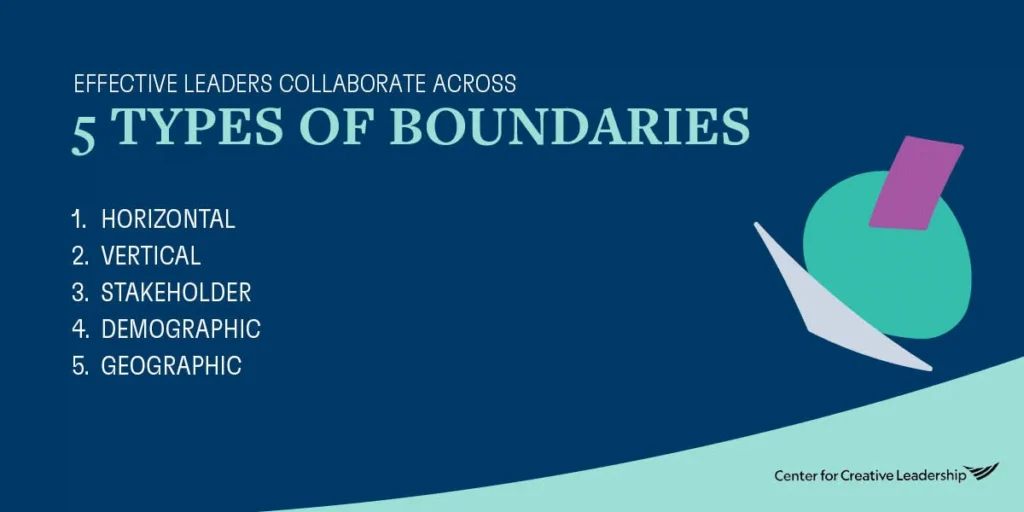
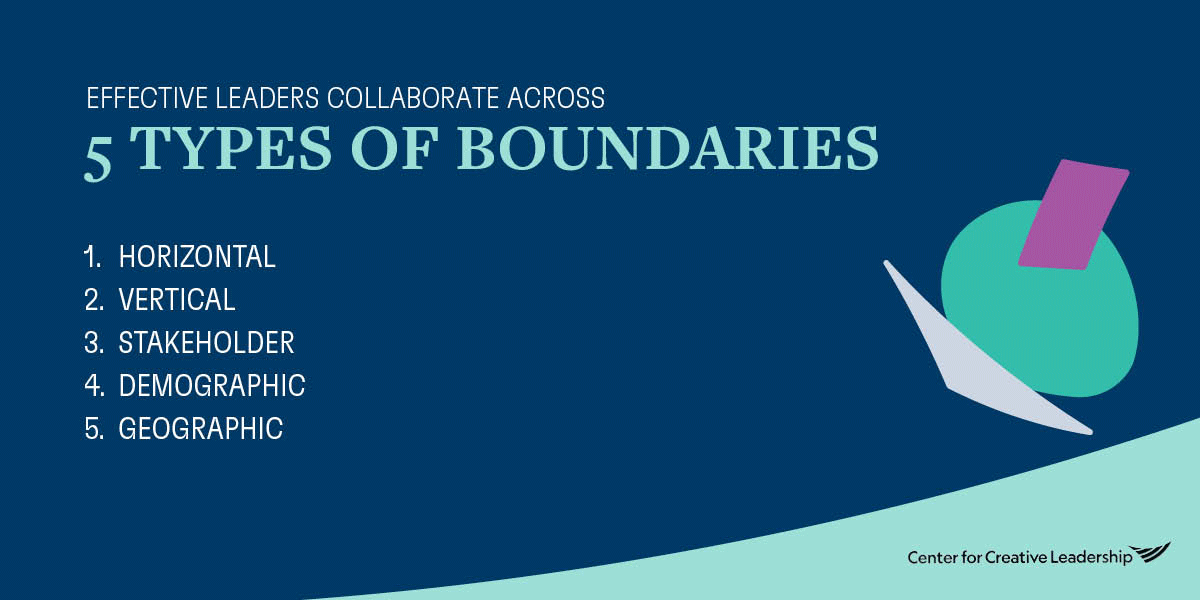
Our research with leaders globally reveals that organizations are characterized by five distinct types of boundaries that leaders must adeptly navigate:
Horizontal Boundaries
These boundaries separate organizational groups based on areas of expertise, experience, or functional specialization. While often the most valuable to span for fostering innovation and cross-functional synergy, they are also frequently the most challenging. The negative consequences of unmanaged horizontal boundaries can be severe: one function might be inadvertently prioritized over another, the success of one product line could undermine another, or departments might work at cross-purposes, leading to inefficiency and conflict.
Senior executives consistently cite challenges arising from spanning horizontal boundaries as a primary concern, outnumbering other boundary types by a significant margin. Facilitating cross-functional collaboration remains one of the most persistent issues leaders face, directly illustrating the difficulty in bridging these divides. Data from simulations, such as those conducted within CCL’s Leading for Organizational Impact program, suggests that horizontal connections are less likely to be maintained organically within organizational structures, especially when considering formal roles and reporting lines. People tend to connect more readily with senior leaders or their immediate team members than with peers in different divisions.
However, these horizontal connections are also identified as a primary conduit for novel information and ideas to enter a team or organization. The prevalence of matrixed and regional structures in many contemporary organizations, while intended to promote collaboration, can inadvertently erect barriers between groups that desperately need to work together. This has led to the common managerial practice of "silo-busting." Effectively facilitating lateral, cross-functional collaboration is a recurring theme brought to organizational leadership experts.

When considering collaboration across boundaries, leaders often first think about their immediate network and how to leverage those connections for team goals. Yet, effective boundary spanning also necessitates robust ties to external stakeholders. Research on team effectiveness indicates that a vast majority of respondents believe that strong team-to-team relationships are the primary driver of effective boundary spanning. These external relationships, in turn, are often built through the very act of boundary spanning. It is crucial, however, to complement these external efforts with strong internal team processes, including clear priority setting, defined roles and responsibilities, and the cultivation of mutual trust in expertise. Without this internal foundation, external boundary spanning efforts may not yield their full potential.
Vertical Boundaries
Vertical boundaries are defined by differences in level, rank, seniority, authority, and power. The stratification of organizations into top, middle, and entry-level tiers, each with corresponding levels of authority, is a common organizational feature. Interestingly, in earlier research, executives cited vertical boundaries as the least frequent challenge or dimension of boundary spanning. This aligns with emerging findings from simulation studies, where connections across vertical boundaries occur more frequently and are often engaged in regardless of formal authority.
While these connections may be more common and less challenging for senior leaders, it is crucial to ensure that employees feel comfortable voicing concerns and sharing information up the hierarchy. The risk associated with over-reliance on vertical boundary spanning is the potential for an organization to become siloed, with expertise confined to different pockets. Leaders and team members can become the primary conduits for information flow, but if this is the only boundary being spanned, it can lead to a lack of broad organizational awareness and innovation.
Stakeholder Boundaries
Engaging with organizational stakeholders represents another complex and varied domain of boundary spanning. Stakeholder groups can be diverse, encompassing clients, customers, shareholders, boards of directors, partners, alliances, suppliers, vendors, advocacy groups, governmental and non-governmental agencies, and local, regional, national, and global communities. While these groups are often vital to an organization’s success, leaders frequently have limited formal authority over their daily operations. Recent research on leadership ratings, for example, has shown that the perspectives of board members provide unique insights into predicting senior leaders’ effectiveness, underscoring the importance of these external relationships.
Implementing Boundary Spanning: A Practical Framework for Leaders
The most pressing business challenges of the modern era often lie at the intersection of multiple boundaries. Therefore, truly effective leadership necessitates the creation of clear direction, alignment, and commitment that transcends these critical divides. For many, leading beyond their immediate organizational chart, across diverse stakeholder interests, or beyond the confines of their division or group can be an arduous and demanding undertaking.
Despite these challenges, effective boundary spanning is achievable. Through extensive research and experience in fostering more interdependent forms of leadership, a set of three universal strategies has emerged for leaders and organizations that excel at spanning boundaries:
- Managing Boundaries: This foundational strategy focuses on establishing clarity and agreement on how individuals and groups will operate together. It involves defining protocols, expectations, and accountability structures to ensure smooth and productive interactions.
- Forging Common Ground: This strategy emphasizes building trust, fostering a shared sense of investment in collective work, and cultivating a mutual understanding of goals and values. It is about creating a cohesive unit from diverse parts.
- Discovering New Frontiers: This advanced strategy involves actively seeking out novel ideas, exploring uncharted territories, and driving transformative change through collaboration. It is about leveraging the collective intelligence of the network to innovate and adapt.
Strategic Approaches to Boundary Spanning
To effectively implement these strategies, leaders must adopt a deliberate and intentional approach. This begins with a thorough assessment of the boundaries in play.
Identifying the Boundaries
A critical first step is to understand the nature of the challenge at hand and to identify which boundaries are most prevalent or pose the greatest obstacle. This analysis is best conducted collaboratively with the team, prompting questions such as, "What are we aiming to achieve with these stakeholders?" or "Who within our network is best positioned to initiate this boundary-spanning effort?"
Selecting Effective Tactics
Once the boundaries are understood, leaders can then select the most appropriate tactics to clarify focus and drive progress. The three universal strategies provide a roadmap:
1. Managing Boundaries: Establishing the Foundation
This strategy is paramount for creating a secure base upon which collective outcomes can be built. Without a solid foundation, any subsequent efforts can be compromised. Key tactics include:
- Clarifying roles and responsibilities: Ensuring everyone understands their contribution and accountability.
- Establishing clear protocols and processes: Defining how work will be done and decisions will be made.
- Setting expectations for communication and feedback: Promoting open and honest dialogue.
- Defining decision-making authority: Clearly outlining who has the power to make specific decisions.
- Negotiating agreements and commitments: Formalizing understandings to ensure follow-through.
2. Forging Common Ground: Building Trust and Shared Purpose
With boundaries managed, the focus shifts to building strong relationships and a shared investment in the work. This strategy taps into the power of networks and builds upon initial successes. Tactics include:
- Building trust and psychological safety: Creating an environment where individuals feel safe to express ideas and concerns.
- Developing a shared vision and common goals: Ensuring everyone is working towards the same objectives.
- Promoting mutual understanding and empathy: Encouraging individuals to appreciate diverse perspectives.
- Facilitating dialogue and active listening: Creating space for meaningful conversations.
- Recognizing and celebrating shared accomplishments: Reinforcing collective effort and success.
3. Discovering New Frontiers: Driving Innovation and Transformation
This advanced strategy leverages the insights gained from managing boundaries and forging common ground to explore new opportunities and drive transformative change. Research using simulations like Looking Glass suggests that even minor gains, such as maintaining a few additional connections, can yield significant benefits over time. The sustained weaving of relationships allows the network to develop a deeper self-understanding and identify new possibilities. Tactics include:
- Encouraging experimentation and risk-taking: Creating a culture that embraces learning from both successes and failures.
- Seeking out diverse perspectives and novel ideas: Actively inviting contributions from outside conventional thinking.
- Challenging assumptions and established norms: Questioning the status quo to uncover new approaches.
- Identifying emerging trends and opportunities: Proactively scanning the environment for future possibilities.
- Co-creating solutions and driving collective innovation: Harnessing the power of the network to generate new ideas and implement them.
Concluding Thoughts: The Everyday Practice of Boundary Spanning
The strategies and tactics outlined above are not confined to formal training sessions or specific projects; they are best learned and applied within the context of everyday work. Whether in in-person or virtual meetings, off-sites, strategic planning sessions, or any situation where boundaries emerge, leaders can draw upon these principles. Effective leaders consistently generate change, co-create innovative solutions, and contribute significantly to their organizations and communities by actively spanning boundaries.
Ready to Elevate Your Leadership?
Organizations seeking to cultivate these vital leadership capabilities can leverage customized learning journeys. Utilizing research-based modules, leaders can enhance their proficiency in critical areas such as Boundary Spanning Leadership, Collaboration & Teamwork, Leading Remote & Virtual Teams, and Psychological Safety & Trust. Investing in the development of these skills is an investment in the future resilience and success of the organization.