
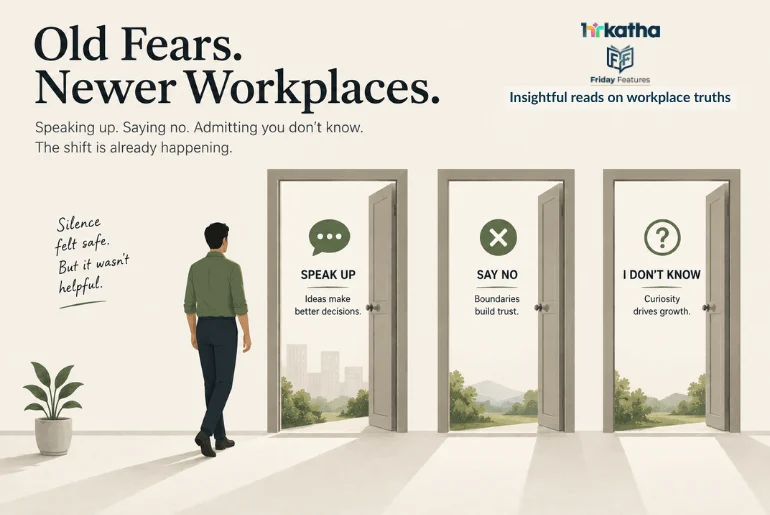
Every workplace, regardless of its industry or size, operates on a duality of regulations: the explicit, codified rules often found in employee handbooks and policy documents, and the implicit, unwritten codes of conduct that subtly dictate behavior. For decades, these unofficial rules have been accompanied by a familiar suite of anxieties for professionals worldwide. The apprehension of speaking up and being perceived as presumptuous, the fear of disagreeing with a superior and jeopardizing career progression, or the reluctance to admit ignorance lest it signal incompetence—these were once quiet burdens, carried individually, often under the mistaken assumption that colleagues were entirely immune. However, this long-held assumption is increasingly being challenged, and with it, the pervasive nature of these workplace fears is slowly but surely eroding.
The modern professional landscape is witnessing a profound transformation, driven by shifts in organizational structure, technological advancements, and a growing emphasis on psychological safety. These factors are collectively reshaping how employees interact with their roles, their colleagues, and their leadership, fostering environments where traditional anxieties are losing their stronghold. This evolution is not merely anecdotal; it is reflected in changing corporate cultures, leadership philosophies, and the very design of work itself.
The Historical Roots of Workplace Silence
To fully appreciate the current shift, it is crucial to understand the historical context that nurtured these anxieties. Traditional organizational structures were predominantly hierarchical, often resembling a pyramid with a clear chain of command. Information flowed downwards, meticulously filtered, and access to comprehensive business insights was largely reserved for senior management. Employees typically focused on siloed tasks, with little understanding of the broader organizational objectives or cross-functional dependencies. This command-and-control paradigm, prevalent from the industrial era through much of the 20th century, inadvertently cultivated a culture where deference to authority was paramount, and questioning or challenging the status quo was often seen as insubordination.
In such environments, the risk-reward calculation heavily favored silence. Speaking up could be misconstrued as overstepping, disagreeing could lead to professional ostracization, and admitting a lack of knowledge might be viewed as a weakness in a system that valued established expertise above all else. Research from the early 2000s, such as studies on organizational silence by Morrison and Milliken (2000), highlighted how employees often withheld information about problems or ideas due to fears of negative consequences, thus hindering organizational learning and adaptation. This historical backdrop created a fertile ground for the anxieties that became almost synonymous with professional life.
The Diminishing Hesitation Around Speaking Up
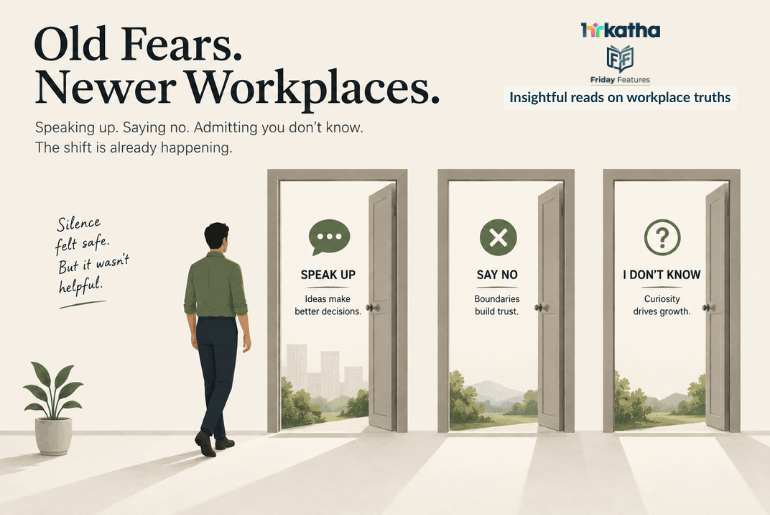
The reluctance to voice ideas or concerns, especially for junior employees in the presence of senior leaders, has long been a pervasive issue. Nitin Khindria, Group CHRO at Omega Group, traces this hesitation directly back to the rigid, hierarchical structures of the past. He notes, "Think back to the early years of almost any career. You walk into a meeting with an idea, notice three senior leaders across the table, and quietly decide the idea is probably not worth sharing. So you nod. You take notes. You agree with decisions you are not entirely convinced by."
However, this dynamic is undergoing a significant change. Today, employees are afforded far greater visibility into the intricate workings of their organizations. Digital communication tools, internal transparency initiatives, and flatter organizational structures have democratized access to information regarding customer expectations, market pressures, competitive landscapes, and the interconnectedness of various teams. This enhanced visibility, Khindria argues, cultivates a crucial sense of ownership that extends beyond the confines of a job description. "When you have a lot of information available to you," he states, "you feel that you are part of that particular project, team, vision and mission of the organisation."
This sentiment is corroborated by broader trends in employee engagement. According to Gallup’s "State of the Global Workplace" report, highly engaged teams show 21% greater profitability. Engagement is often a direct result of employees feeling valued and heard. The concept of "psychological safety," popularized by Amy Edmondson’s research at Harvard Business School and further validated by Google’s Project Aristotle, underscores the importance of an environment where individuals feel safe to take interpersonal risks—to speak up, ask questions, and admit mistakes without fear of punishment or humiliation. A psychologically safe workplace encourages a "speak-up culture," where the junior employee asking a tough question in a town hall or the engineer challenging a product feature based on customer insight are not acts of unusual confidence, but rather fundamental expressions of engagement and ownership. The logic for staying silent, once rooted in self-preservation, is becoming increasingly difficult to defend as organizations recognize the immense value of diverse perspectives and proactive input for innovation and problem-solving.
Why Saying No Still Feels Risky, But Less So
Despite the advancements in fostering open communication, the act of saying "no" to a manager or disagreeing with a decision still carries a significant emotional weight for many professionals. Ashish Sharma, a seasoned HR professional, highlights this as one of the most persistent workplace anxieties. He observes, "Most of the time, people are not able to say no to their managers, even when their managers are not right." The automatic "yes" to an overloaded schedule, an unrealistic deadline, or a flawed decision stems not from agreement, but from a deeply ingrained fear of negative repercussions.
Sharma attributes this hesitation primarily to a deficit of trust. Employees worry that disagreement might be misconstrued as defiance, that pushing back could sour relationships, derail future opportunities, or negatively impact perceptions of their commitment. This fear is not unfounded; historically, challenging authority could indeed lead to adverse career outcomes.
The consequences of this silence are far-reaching. Employees taking on more than they can realistically deliver often leads to burnout, decreased productivity, and compromised quality of work. A 2023 study by Future Forum found that 42% of knowledge workers report feeling burned out, often linked to excessive workloads and an inability to set boundaries. Furthermore, unchallenged flawed decisions can propagate through teams and projects, leading to wasted resources, missed deadlines, and suboptimal outcomes. Managers might inadvertently repeat avoidable mistakes because honest feedback is withheld.

Sharma’s advocacy is not for argumentative behavior, but for respectful, constructive dissent. Organizations function demonstrably better when employees feel empowered to express concerns, offer alternative viewpoints, and when leaders are genuinely receptive to hearing them. Building this environment requires conscious effort from leadership to cultivate trust through transparent decision-making, consistent feedback, and by actively demonstrating that respectful disagreement is valued as a catalyst for better decision-making, rather than a sign of disloyalty. When handled effectively, disagreement transforms from a perceived threat into a powerful tool for organizational improvement and resilience.
The Evolving Pressure to Always Appear Informed
Another subtle yet pervasive workplace fear is the pressure to project an image of unwavering expertise. This manifests when an unfamiliar term is used in a meeting, a new technology is referenced that seemingly everyone else understands, or a complex business concept arises that one has never encountered. The instinct, for many, is to carefully take notes and discreetly promise oneself to research it later, rather than openly asking for clarification.
Anil Mohanty, Group CHRO at Falcon Group, points to a quiet but meaningful shift in this area. He notes a growing willingness among employees to acknowledge gaps in their knowledge and to comfortably seek assistance when needed. Mohanty’s perspective is straightforward: true professional effectiveness isn’t solely about being the most informed person in the room at any given moment, but rather about possessing an insatiable curiosity and an unwavering commitment to continuous learning. In an era where industries are evolving at a pace that often outstrips traditional training programs, the ability to learn, unlearn, and relearn becomes paramount.
The emphasis on a "growth mindset," a concept popularized by psychologist Carol Dweck, highlights the power of believing that one’s abilities can be developed through dedication and hard work. In such a mindset, asking questions and admitting ignorance are not weaknesses but opportunities for growth. This is particularly crucial in the context of rapid technological advancements like AI and automation, where no single individual can possess all the necessary knowledge. A 2022 report by the World Economic Forum emphasized that critical thinking, problem-solving, and self-management are among the top skills for the future, all of which are bolstered by a willingness to ask questions and embrace learning.
Moreover, there’s a subtle but significant psychological comfort in this shift: the person who dares to ask the "basic" question often provides quiet relief to many others in the room who harbored the same query but lacked the courage to voice it. By fostering an environment where curiosity is celebrated and asking for help is normalized, organizations not only accelerate individual development but also cultivate a collective intelligence that drives innovation and reduces costly misunderstandings.
Broader Impact and Implications for Modern Organizations

The gradual erosion of these traditional workplace fears carries profound implications for organizational culture, talent management, and overall business performance.
Redefining Organizational Culture: The shift from cultures of silence to cultures of engagement necessitates a fundamental redefinition of leadership. Leaders are no longer merely commanders but facilitators, coaches, and cultivators of trust. They must actively model vulnerability, encourage dissent, and champion transparency. This fosters a more inclusive and democratic workplace where diverse voices are heard and valued, contributing to a richer, more robust organizational identity.
Transforming Talent Management: For talent acquisition and retention, the ability to foster an environment free from these anxieties is becoming a competitive differentiator. Younger generations entering the workforce, in particular, prioritize authenticity, psychological safety, and opportunities for growth and contribution. Organizations that effectively mitigate these fears are better positioned to attract top talent, enhance employee satisfaction, and reduce turnover. Furthermore, talent development programs can shift from rote skill training to nurturing critical thinking, adaptability, and emotional intelligence, which are essential for navigating ambiguity and driving innovation.
Fueling Innovation and Resilience: A workplace where employees feel safe to speak up, challenge assumptions, and admit what they don’t know is inherently more innovative and resilient. Open communication channels allow for early detection of problems, faster iteration of ideas, and more robust decision-making. When individuals are not afraid to experiment and potentially fail, it unlocks creative potential and fosters a culture of continuous improvement. This adaptability is crucial for navigating volatile markets and disruptive technological changes.
The Critical Role of Leadership: Ultimately, the transformation from fear-driven workplaces to engagement-driven ones hinges on leadership. It requires intentional effort to build psychological safety, provide platforms for constructive feedback, and demonstrate genuine openness to different perspectives. Leaders must actively listen, acknowledge contributions, and provide clear rationales for decisions, even when they differ from suggested input.
While workplace fears are unlikely to disappear entirely—moments of discomfort when speaking up, pushing back, or admitting uncertainty will always exist—the fundamental logic that once compelled silence is weakening. Increased visibility, more interconnected teams, and a growing understanding of the strategic value of employee voice have fundamentally altered how contribution is perceived. Perhaps the most significant realization underpinning this shift is that staying quiet was never as safe or beneficial as it seemed, for individuals or for the organizations they serve. The ongoing evolution points towards a future where authenticity, transparency, and courageous engagement become the new unwritten rules of professional success.








