A well-designed performance management framework is the backbone of any successful organization. Performance management is not just about evaluating past performance; it’s about setting the stage for future growth, engagement, and success. When your performance management system is aligned with your company’s goals and culture, it can transform disjointed efforts into a cohesive strategy that drives both individual and organizational achievement. This guide will help you create a performance management approach that fosters continuous improvement and drives meaningful results, whether you’re refining your existing process or building a new framework from scratch.
Understanding Performance Management Frameworks
A strong performance management framework acts as a vital organizational guide. It steers companies away from fragmented performance activities towards a cohesive, connected system that fuels employee, team, and business success. Such frameworks are designed to align efforts, foster connection, and motivate individuals to perform at their highest level. Performance management frameworks are instrumental in clarifying each individual’s role and their expected contributions to the overarching organizational vision.
Ultimately, your performance management model establishes the strategic direction for how your organization will:
- Set clear expectations: Defining objectives and key results that are measurable and aligned with strategic goals.
- Facilitate ongoing feedback: Creating channels for regular, constructive dialogue between managers and employees.
- Support employee development: Identifying skill gaps and providing opportunities for growth and learning.
- Recognize and reward performance: Acknowledging achievements and contributions that drive business success.
- Inform talent decisions: Providing data for promotions, compensation, and succession planning.
The Purpose and Importance of a Solid Framework
In today’s dynamic business landscape, the effectiveness of performance management systems is under constant scrutiny. Recent research indicates a significant disconnect between the efforts organizations are making in performance management and the perceived impact by employees. While a substantial majority of companies have reported implementing changes to their performance management processes over the past year, a concerning trend emerges: less than half of employees find these updated processes to be effective, efficient, or motivating.
This data underscores a critical challenge: managers and employees are often pressed for time, making cumbersome tools and excessive paperwork counterproductive. An effective performance management program must prioritize simplification and standardization, ensuring each step is as straightforward and accessible as possible. Beyond efficiency, a robust framework is essential for cultivating a transparent, two-way communication process where employees feel valued and heard. The direct correlation between employee engagement and performance cannot be overstated; engaged employees consistently outperform their less engaged counterparts.

The ultimate outcome of a well-structured performance management framework is the empowerment of employees to take ownership of their performance. This leads to heightened engagement, increased motivation, and greater job satisfaction. Consequently, organizations experience tangible benefits such as improved productivity, reduced employee turnover, and the cultivation of a stronger, more resilient workplace culture.
Core Components of an Effective Framework
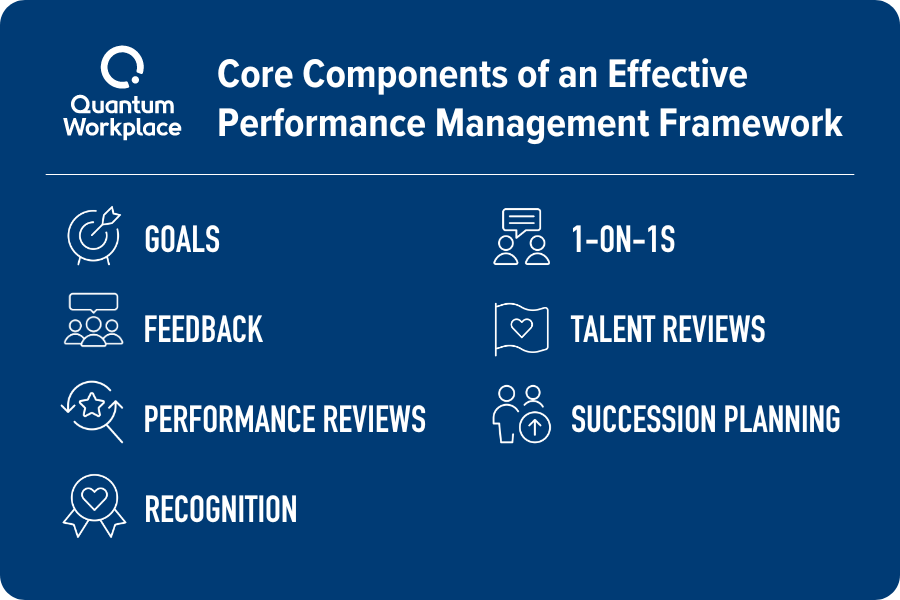
An effective performance management framework is comprised of interconnected components that work in concert throughout the performance management cycle. These critical elements ensure a holistic and integrated approach to managing and developing talent:
- Goal Setting: Establishing clear, measurable, achievable, relevant, and time-bound (SMART) goals that align with organizational objectives. This includes both individual and team goals, fostering a sense of shared purpose.
- Ongoing Feedback and Coaching: Implementing regular check-ins and feedback sessions beyond formal reviews. This fosters a culture of continuous improvement, allowing for timely course correction and recognition.
- Performance Reviews: Conducting structured evaluations to assess performance against established goals, identify strengths, and pinpoint areas for development. These reviews should be fair, objective, and developmental in nature.
- Development Planning: Creating personalized plans to address skill gaps and foster career growth. This involves identifying learning opportunities, training programs, and mentorship.
- Recognition and Rewards: Implementing systems to acknowledge and reward outstanding performance and contributions. This can range from verbal appreciation to formal recognition programs and compensation adjustments.
- Data and Analytics: Leveraging performance data to identify trends, measure program effectiveness, and inform strategic talent decisions.
Designing Your Performance Management Framework
When it comes to performance management, a "one-size-fits-all" approach is rarely effective. Forcing an organization into a rigid, pre-defined performance management system, often pushed by HR technology vendors, can lead to significant challenges and dissatisfaction. Instead, organizations must invest in building a framework that is uniquely tailored to their specific needs, culture, and operational realities.
Creating a successful performance management framework demands meticulous planning and a deep understanding of what the organization needs and wants to achieve. The process should begin with a thorough assessment of the current performance management process, identifying any existing gaps, inefficiencies, or areas requiring improvement. Crucially, this design phase must involve active participation from key stakeholders, including employees and managers at all levels. Gathering their feedback and insights is paramount to ensuring the new framework will meet their expectations and be readily adopted. This collaborative approach to design fosters a sense of ownership and readiness, paving the way for smoother implementation and greater long-term success.
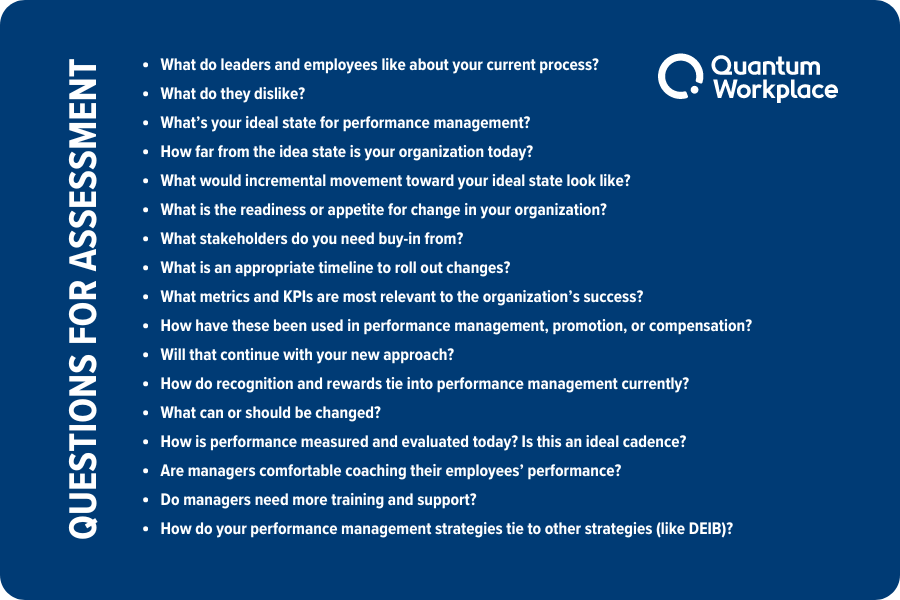
Questions for Assessment
To gain a comprehensive understanding of how well your current performance management system functions and to inform its evolution, posing a series of critical questions is essential. Honest and thorough consideration of these questions will illuminate strengths, weaknesses, and opportunities for enhancement within your performance management process:
- Alignment: To what extent are individual and team goals clearly aligned with the organization’s strategic objectives? How effectively are these alignments communicated and understood?
- Clarity of Expectations: Are performance expectations clearly defined, communicated, and understood by all employees? Do employees know what constitutes successful performance in their roles?
- Feedback Mechanisms: How frequently and effectively is performance feedback provided? Is the feedback constructive, timely, and actionable? Does it foster open dialogue?
- Development Opportunities: Are there clear pathways for employee development and career growth? Are development plans integrated into the performance management process?
- Fairness and Objectivity: Is the performance evaluation process perceived as fair and objective by employees? Are there biases that need to be addressed?
- Managerial Effectiveness: Are managers equipped with the necessary skills and resources to effectively manage performance, provide feedback, and coach their teams?
- Employee Engagement: Does the performance management process contribute positively to employee engagement and motivation? Or does it create frustration or disengagement?
- Data Utilization: How effectively is performance data being collected, analyzed, and used to inform decisions and drive improvements?
- System Efficiency: Is the current system overly bureaucratic or time-consuming? Are there opportunities to streamline processes and reduce administrative burden?
- Cultural Fit: Does the performance management system effectively reflect and reinforce the organization’s culture, values, and desired behaviors?
Connecting to Your Culture
For a performance management framework to be truly effective, it must be deeply embedded within the fabric of the organization’s unique culture. It should authentically reflect the company’s core values, fundamental beliefs, and established working practices.
For instance, if an organization’s culture champions teamwork and collaboration, its performance management framework should incorporate mechanisms for peer feedback and establish team-based objectives. Conversely, in cultures that prioritize innovation and individual initiative, the system should actively support creativity, encourage calculated risk-taking, and recognize pioneering efforts.
By harmonizing the performance management framework with the organization’s distinct cultural identity, employee performance is significantly enhanced. This integrated approach fosters a sense of belonging and inclusivity among team members, ultimately building a more cohesive and robust work environment.
Quantum Workplace’s Performance Pathways
Quantum Workplace recognizes that a standardized performance management approach often falls short because each organization possesses a unique culture, set of values, and operational methodologies. This inherent uniqueness necessitates a customized approach to performance management.
To address this, Quantum Workplace developed "Performance Pathways," a suite of adaptable performance management frameworks designed to empower organizations in creating and implementing their own tailored performance management systems. These pathways offer distinct methodologies, each designed to cater to different organizational needs and maturity levels:
Pathway #1: Performance Evaluation
This pathway standardizes performance evaluation by focusing on structured performance reviews. It involves formal review cycles initiated by HR to ensure employee performance is systematically aligned with overarching organizational goals.
Best for Organizations That:
- Are transitioning from informal to more structured performance management.
- Require a clear, standardized process for annual or semi-annual reviews.
- Need to ensure consistent evaluation criteria across the organization.
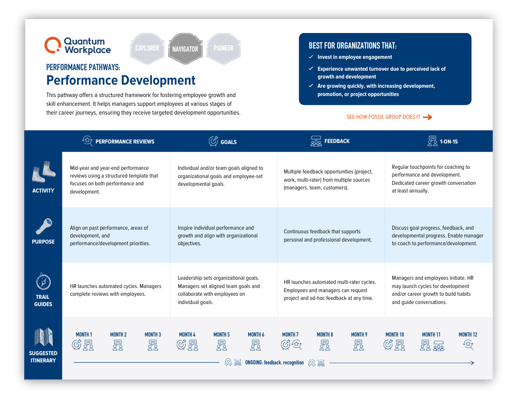
Pathway #2: Performance Development
This pathway provides a structured framework for fostering employee growth and skill enhancement. It assists managers in supporting employees through various career stages, ensuring they receive targeted development opportunities aligned with well-defined career paths.
Best for Organizations That:
- Prioritize employee growth and skill development.
- Have established career pathing initiatives.
- Aim to retain talent by investing in their professional journey.
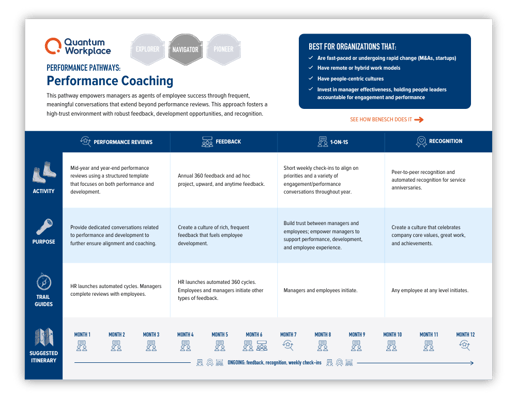
Pathway #3: Performance Coaching
This pathway empowers managers to act as catalysts for employee success through frequent, meaningful conversations that extend beyond traditional performance reviews. This approach cultivates a high-trust environment characterized by robust feedback, development opportunities, and consistent recognition.
Best for Organizations That:
- Seek to build a culture of continuous feedback and support.
- Have managers who are equipped or can be trained to coach effectively.
- Value proactive development and employee well-being.
Pathway #4: Collaborative Performance Coaching
This pathway utilizes a systematic approach to employee feedback, closely linking performance management to tangible business outcomes and career progression. This model is particularly well-suited for data-driven organizations, matrixed environments, and those with established hierarchical structures, ensuring a strong alignment between employee contributions and strategic objectives.
Best for Organizations That:
- Operate in complex or matrixed organizational structures.
- Need to demonstrate clear links between performance and business results.
- Value data-driven insights for talent management.
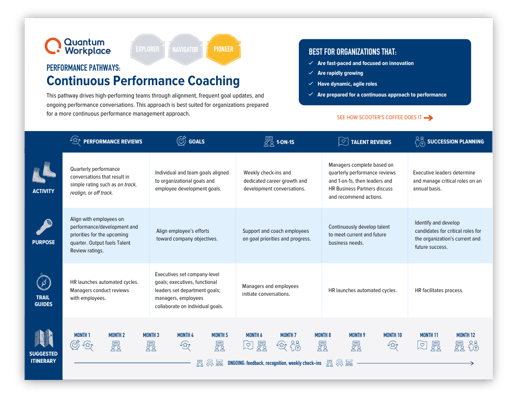
Pathway #5: Continuous Performance Coaching
This pathway is designed to cultivate high-performing teams through strategic alignment, frequent goal updates, and ongoing performance conversations. This approach is ideal for organizations that are ready to embrace a more dynamic and continuous performance management model.
Best for Organizations That:
- Are agile and adapt quickly to market changes.
- Embrace frequent goal setting and recalibration.
- Value real-time feedback and continuous improvement loops.
Best Practices for Implementing Your Performance Management Framework
Implementing a new performance management system can initially seem like a monumental task. However, success is often achieved through gradual progress and thoughtful change management rather than a complete overhaul.
Prioritize
Begin by identifying your organization’s most pressing performance management needs. Focus on addressing your top priority first. Clearly define the desired behaviors, set specific goals, and leverage platform features to establish a strong foundation.
Scale
As you achieve your initial objectives, gradually expand your efforts to incorporate more advanced capabilities. Actively solicit feedback from users to refine your strategies and solidify the desired behaviors you aim to cultivate.
Progress
If your initial priorities are being met effectively, don’t hesitate to move on to the next item on your list and repeat the process. As you integrate new features and capabilities, consider how to best utilize the wealth of data available for insightful analysis and informed decision-making.

Transparent Change Management Communication
- Define Your "Why": Ensure absolute clarity and alignment on the rationale behind any changes. Communicate the reasons for the new performance management system and its expected benefits to all stakeholders.
- Engage Stakeholders: Maintain consistent communication with all relevant parties before, during, and after the launch. Keep them informed and actively involved throughout the implementation process.
- Offer Training and Support: Partner with your chosen technology provider to offer comprehensive training and ongoing support for all users. A supportive partner can significantly smooth the transition.
- Align with Mission, Values, Culture: Continuously connect the implemented changes back to your organization’s mission, core values, culture, and strategic priorities. Reinforce how these advancements contribute to broader organizational goals.
- Encourage Flexibility: Emphasize adaptability and flexibility in your approach. Acknowledge that challenges may arise, but the ability to adjust and learn is critical for sustained success.
- Collect Feedback: Establish clear channels for collecting user feedback. Utilize this input to refine your approach and promptly address any emerging issues or concerns.
- Adapt and Evolve: Be prepared to adjust your strategy as needed. The journey toward an optimal performance management system is an ongoing process, and continuous adaptation will likely be necessary.
Evaluating and Enhancing Your Performance Management Model
Regularly assessing the effectiveness of your performance management framework is crucial for its sustained relevance and impact. The evaluation should extend beyond mere usage metrics to encompass its influence on the organization’s overall performance.
Collecting data on key performance indicators (KPIs) is essential. This includes metrics such as employee engagement scores, goal attainment rates, and outcomes from employee development initiatives. Analyzing this data will reveal trends, highlight strengths, and identify areas requiring further improvement. Employee feedback surveys and focus groups can also provide invaluable insights into their experiences with the framework.
It is vital to review these metrics consistently and look for discernible trends. Are employee engagement scores showing an upward trajectory since the framework’s implementation? Are employees achieving their goals more frequently? The answers to these questions can directly inform how to enhance the framework’s effectiveness.
Continuous performance management is an ongoing journey, not a static endpoint. Regular evaluation of your framework, active solicitation of stakeholder feedback, and a commitment to identifying areas for improvement are paramount. Furthermore, providing ongoing training and support to both managers and employees is critical. This includes offering refresher courses on effective feedback delivery and reception, conducting productive performance conversations, and developing meaningful individual development plans.
By cultivating a culture that prioritizes continuous learning and growth, organizations can ensure their performance management framework remains effective, relevant, and responsive to the evolving needs of both the business and its employees.
Integrating Performance Management Software
Selecting the appropriate performance management tool that aligns with your workplace culture is fundamental to the success of your strategy. When seeking the right technology, look for a solution that consolidates the essential elements of an effective system. Prioritize providers who offer more than just standalone systems; seek a partner that actively supports and propels organizational growth.
Move Your Teams Forward with Clear and Aligned Goals
Setting clear and aligned goals is paramount to the success of high-performing teams. Quantum Workplace empowers your teams to set, monitor, and accomplish important objectives.
- Learn more about Quantum Workplace Goals
Boost Trust and Employee Performance with Employee Feedback
Facilitating robust feedback mechanisms is crucial for building trust and driving performance improvements.
Keep Managers and Employees on the Same Page with Performance Reviews
Performance reviews remain a cornerstone of most performance management programs, but their effectiveness hinges on being more efficient, engaging, and impactful. Streamlining performance conversations ensures simplicity and effectiveness.
- Learn more about Quantum Workplace performance reviews
Celebrate Success and Help Team Members Feel Valued with Real-Time Recognition
Timely recognition acknowledges contributions and reinforces desired behaviors, fostering a positive and motivating work environment.
Increase Clarity and Connection with Performance Reviews and 1-on-1 Meetings
Regular one-on-one meetings, complemented by structured performance reviews, ensure consistent communication and alignment between managers and employees.
Identify and Develop Top Talent with Talent Reviews
Talent reviews are essential for identifying high-potential employees and creating development plans to nurture their growth within the organization.
Sustain High Performance with Succession Planning
Effective succession planning ensures organizational continuity by identifying and preparing future leaders for critical roles.
Conclusion
In conclusion, the establishment of a robust performance management system is intrinsically linked to organizational success. A comprehensive understanding of its purpose, core components, and best practices enables organizations to significantly boost employee engagement and elevate overall performance. Embarking on the journey toward improved performance management is a strategic imperative. Exploring resources like Quantum Workplace’s "Performance Pathways" can provide a structured approach to building an ideal program, leveraging flexible, intuitive, and trustworthy tools.
For organizations ready to cultivate their ideal performance management program with reliable and engaging tools, a custom demo of Quantum Workplace’s performance management software is recommended.