Reform UK’s recent proposal for a "Women and Motherhood Protection Act" has ignited a fierce political and social debate, with trade unions and opposition parties swiftly condemning it as a "shameless and deceptive" manoeuvre. Critics argue the proposed legislation is a diversionary tactic designed to mask the party’s broader agenda, which includes the controversial repeal of the Equality Act, a cornerstone of anti-discrimination law in the UK.
The announcement of the new Act by Reform UK comes at a pivotal time in British politics, ahead of a general election, and seeks to position the party as a champion of women’s and family rights. However, its reception has been largely hostile, particularly from organisations dedicated to protecting and advancing those very rights.
The Proposed ‘Women and Motherhood Protection Act’
Reform UK presented its "Women and Motherhood Protection Act" as a comprehensive legislative framework intended to consolidate existing protections for women, mothers, and families. The party claims that by bringing together "key protections currently scattered across different laws," it would create a clearer, more accessible legal structure. Specifically, the Act proposes to encompass provisions related to equal pay, sex discrimination, employment rights, unfair dismissal, and maternity leave.
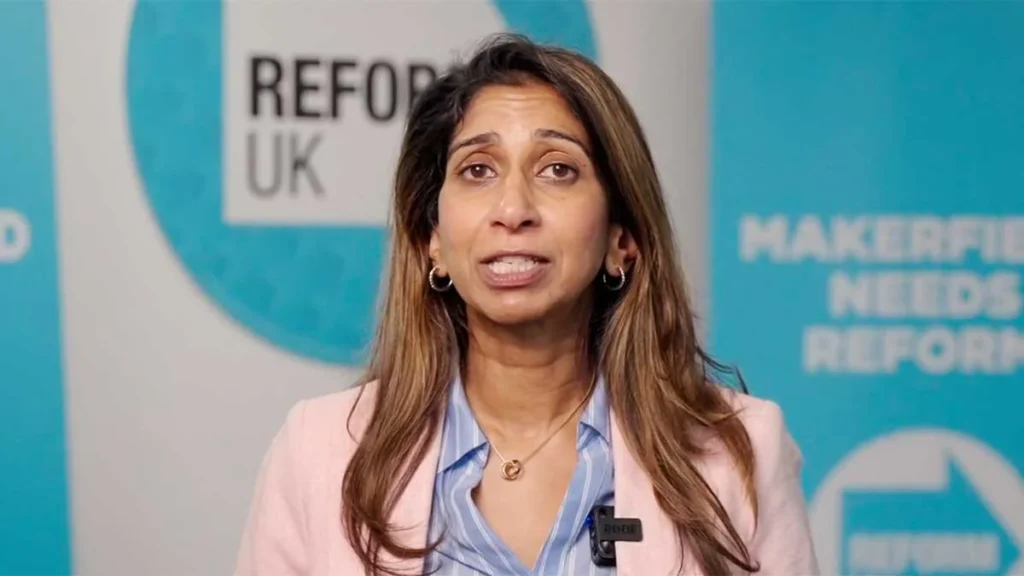
According to Reform UK, this consolidation would result in stronger legal safeguards for women, mothers, and their families. Suella Braverman, Reform’s equality spokeswoman, a former cabinet minister and working mother of two, championed the proposal. "As the first cabinet minister in British history to take maternity leave, and as a working mother of two children, I understand the challenges women face when balancing a career and family life," Braverman stated. She added, "No woman should ever feel that becoming a mother will hold her back or leave her with fewer opportunities."
Beyond consolidating existing laws, the proposed Act includes several new or enhanced protections. A significant change is the extension of the time limit for pregnancy and maternity discrimination tribunal claims, increasing it from three months to 12 months. Reform UK justified this by stating, "new mothers should be focused on their child, not paperwork and no woman should lose her legal rights because she spent the first months of motherhood being a mum."
The party also pledged to preserve equal pay principles, maintain protections against sex discrimination, strengthen safeguards against dismissal during pregnancy and maternity leave, and enhance redundancy protections for new mothers. Furthermore, the "Women and Motherhood Act" aims to introduce explicit rights for breastfeeding mothers, protections for women undergoing fertility treatment, and new leave entitlements for parents who experience miscarriage or stillbirth. Braverman concluded her remarks by asserting, "A Reform UK government will be the most pro-woman, pro-mother and pro-family government in British history."
The Elephant in the Room: Repealing the Equality Act
The unveiling of Reform UK’s ‘Women and Motherhood Protection Act’ cannot be understood in isolation from the party’s prior, highly contentious commitment. In February of this year, Reform UK explicitly announced its intention to repeal the Equality Act 2010. This previous declaration is central to the fierce backlash now facing the new proposal.
The Equality Act 2010 is a landmark piece of legislation in the United Kingdom, consolidating and strengthening various anti-discrimination laws that had been in place for decades, such as the Equal Pay Act 1970 and the Sex Discrimination Act 1975. Its primary purpose is to protect individuals from discrimination, harassment, and victimisation across nine "protected characteristics": age, disability, gender reassignment, marriage and civil partnership, pregnancy and maternity, race, religion or belief, sex, and sexual orientation. For women, in particular, the Act provides comprehensive protection against sex discrimination, ensures equal pay, and explicitly safeguards against discrimination related to pregnancy and maternity, including protection from unfair dismissal.
Critics argue that repealing such a foundational piece of legislation would dismantle decades of progress in equality law and leave significant gaps in protection. The perceived contradiction between repealing the overarching Equality Act – which already covers many of the protections Reform UK now proposes – and simultaneously introducing a narrower "Women and Motherhood Protection Act" forms the core of the "shameless and deceptive" accusations. Legal experts and women’s rights advocates have consistently highlighted the comprehensive nature of the Equality Act, noting that its provisions extend far beyond what a new, specific act might cover, particularly for women who are not mothers or who fall under other protected characteristics.
Trade Union Condemnation: "Shameless and Deceptive" Smokescreen
The Trade Union Congress (TUC) led the charge in criticising Reform UK’s proposals, describing them as a "shameless and deceptive" attempt to distract from policies that would, in their view, drastically reduce women’s rights. Paul Nowak, TUC General Secretary, minced no words, stating, "Let’s call this out for what it is – a smokescreen for slashing women’s rights and making life harder for families. It’s shameless and deceptive."

The TUC pointed out that many of the protections Reform UK promised to deliver are already enshrined in current law or are soon to be introduced. They highlighted the galling nature of asking women to be grateful for commitments to retain protections that have been in place for half a century, while simultaneously targeting two significant pieces of modern legislation: the Equality Act and the Employment Rights Act. The TUC noted that Reform UK’s pledge to repeal the Equality Act would effectively legalise various forms of discrimination. Furthermore, the party’s vow to repeal new rights introduced by the Employment Rights Act, such as protections against harassment, was also heavily criticised.
Nowak challenged Reform UK’s sincerity, arguing, "If Reform was really on the side of women, the party wouldn’t have pledged to rip up the Equality Act, effectively legalising discrimination. They wouldn’t have vowed to repeal new rights being introduced by the Employment Rights Act, like protection from harassment." He also alluded to broader concerns about the party’s stance on gender equality, mentioning that Reform UK had "shrugged off blatant misogyny from their own candidate as just laddish banter."
The TUC further criticised the underlying philosophy of the proposed Act, suggesting it narrowly defines women’s success. "Equating women’s success with motherhood is patronising, antiquated and plain wrong. All women – whether mums or not – are at risk from a Reform government that wants to turn the clock back. The party can never be trusted on women’s rights," Nowak asserted. He also raised specific questions regarding the future of the principle of "equal pay for equal value work" under a Reform UK government, given the party’s stance on broader equality legislation.
Wider Political Backlash and the "Motherhood Penalty"
Beyond the trade unions, prominent political figures from across the spectrum, including Labour and Conservative MPs, voiced strong objections to Reform UK’s proposals, often linking them to a regressive view of women’s roles in society.
Labour MP Stella Creasy, a vocal campaigner against the "motherhood penalty"—the career detriment women often face after having children—went further in her condemnation. Speaking to HuffPost UK, Creasy stated, "Reform reveal they think only women have responsibility for bringing up children." She described the proposed Act as "a charter for bringing in the Handmaid’s Tale, not equality in the home or the workplace – reinforcing the motherhood penalty and not ending it." Creasy’s reference to Margaret Atwood’s dystopian novel underscored her fear that Reform UK’s policies could lead to a society where women’s roles are strictly confined.
Creasy advocated for a more equitable approach to parental leave, urging alignment with European standards that grant rights to all parents, not just mothers. "That’s why we need to align with Europe in giving all parents rights to paid parental leave so that no parent is left holding the baby," she argued. She challenged Reform UK to support her amendment for such universal parental rights if they were truly serious about ending discrimination, highlighting the omission of any mention of fathers’ or second parents’ responsibilities in their proposal.
The Labour government’s Women and Equalities Minister, Bridget Phillipson, echoed the criticisms, focusing on the inefficiency and potential harm of dismantling existing legal frameworks. "Tearing up the Equality Act on day one just to replace it with something weaker is a complete waste of time and money," Phillipson stated. She emphasised Labour’s historical role in establishing women’s rights in law and its current commitment to safeguarding and strengthening them.
Even from the Conservative benches, the shadow equalities minister, Claire Coutinho, found fault with Reform UK’s approach. Coutinho criticised Reform for an apparent lack of understanding of the existing legal landscape, saying, "Reform care so little about women’s rights, they said they’d scrap the Equality Act without even realising that it protects pregnant women from being sacked." This highlights a significant concern among critics: that Reform UK may be proposing legislative changes without a full grasp of the implications or the protections already afforded by current laws.
Broader Implications and Context
The debate around Reform UK’s proposed Act transcends mere legislative technicalities; it touches upon fundamental questions of gender equality, societal roles, and the future direction of workers’ rights in the UK. The party’s strategy appears to be an attempt to appeal to a specific demographic, perhaps conservative family values, while simultaneously pursuing a deregulatory agenda that critics argue would undermine broader human rights protections.
The proposal comes against a backdrop of ongoing challenges for women in the workplace. Despite legislative protections, issues like the gender pay gap persist, with data from the Office for National Statistics (ONS) showing a median pay gap of 7.7% in 2023 for full-time employees. Maternity discrimination also remains a significant concern, with studies by organisations like the Equality and Human Rights Commission (EHRC) revealing that tens of thousands of women are forced out of their jobs each year due to pregnancy or maternity. While Reform UK’s proposal to extend tribunal claim limits addresses a practical barrier, critics argue that such a measure becomes moot if the foundational protections are simultaneously weakened or removed.
Moreover, the economic context, exemplified by Reform UK’s earlier announcement from Robert Jenrick regarding plans to cut employers’ national insurance contributions only for British workers, funded by a new "employers’ migrant labour levy," indicates a broader policy direction focused on domestic labour and reduced regulation. Critics might argue that such an approach, while seemingly separate, could indirectly impact women’s economic opportunities and job security, particularly those in sectors reliant on diverse workforces.
In conclusion, Reform UK’s "Women and Motherhood Protection Act" has been met with a storm of criticism, primarily because it is viewed through the lens of the party’s prior commitment to repeal the Equality Act. While Reform UK frames the Act as a progressive step towards consolidating and strengthening women’s and family rights, opponents see it as a transparent attempt to obscure a more radical agenda that could significantly roll back hard-won protections. The debate underscores the complex interplay between legislative reform, political strategy, and the enduring struggle for genuine gender equality in the United Kingdom.