The global landscape of artificial intelligence is experiencing an unprecedented surge in demand for skilled professionals, yet the talent pool is struggling to keep pace, according to a recent analysis by ICIMS, a leading talent cloud company. This critical imbalance, highlighted in their June 2026 report, reveals a significant shift in the allocation of tech talent, moving away from a concentration in large technology providers towards a broader integration across diverse economic sectors, with healthcare and manufacturing leading the charge. This dynamic presents both immense opportunities for innovation and substantial challenges for organizations striving to capitalize on the transformative power of AI.
The Unprecedented Surge in AI Demand
The report underscores a compelling paradox in the current labor market: while headlines frequently feature news of tech layoffs, these localized reductions mask a far more significant, systemic redistribution of technical expertise. Trent Cotton, head of talent insights at ICIMS, articulated this nuance, stating, “The tech layoff headlines can be jarring, yet they mask an important shift: tech talent is moving from a handful of large providers into the broader economy.” This redirection is driven by the imperative across virtually every industry to scale AI capabilities, whether for enhancing operational efficiency, driving product innovation, or gaining a competitive edge.
The data from ICIMS paints a stark picture of the growing chasm between demand and supply. In May 2026, U.S. job openings were up a robust 9% year-over-year, indicating a healthy appetite for new hires. However, actual hiring figures only managed a modest 1% increase over the same period. Compounding this challenge, the number of applications received by companies fell by 11% year-over-year, signaling a shrinking pool of active job seekers, particularly those with the specialized skills required for advanced AI roles. This combination of rising demand and dwindling applicant volume creates a bottleneck that could impede technological progress and economic growth.
Beyond Big Tech: A Strategic Reallocation of Talent
Historically, the tech sector, particularly large Silicon Valley giants, has been the primary magnet for top-tier engineering and AI talent. However, the ICIMS report illuminates a pivotal strategic reallocation of this talent across the economic spectrum. Industries traditionally not at the forefront of rapid technological adoption are now aggressively recruiting tech professionals to integrate AI into their core operations.
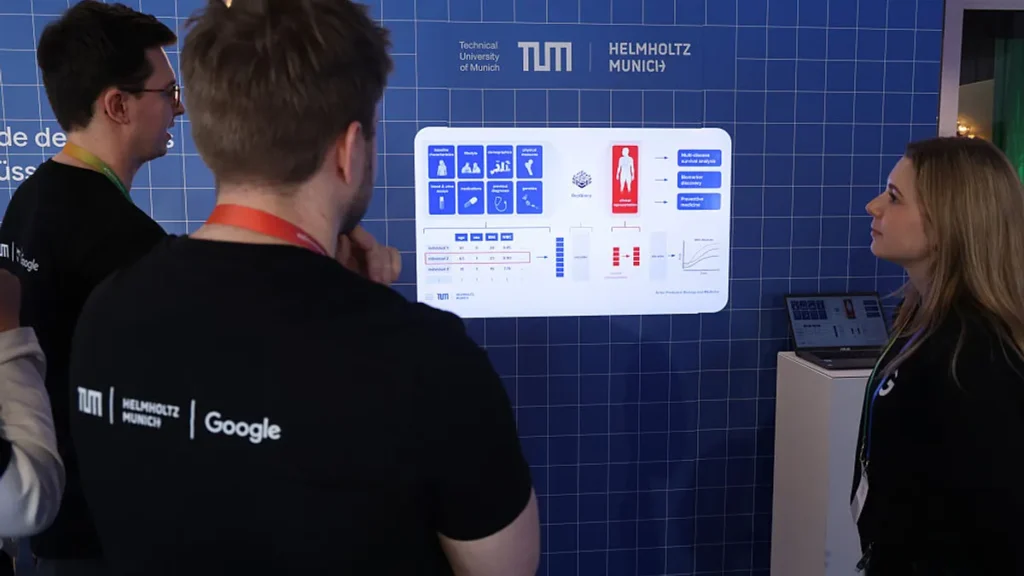
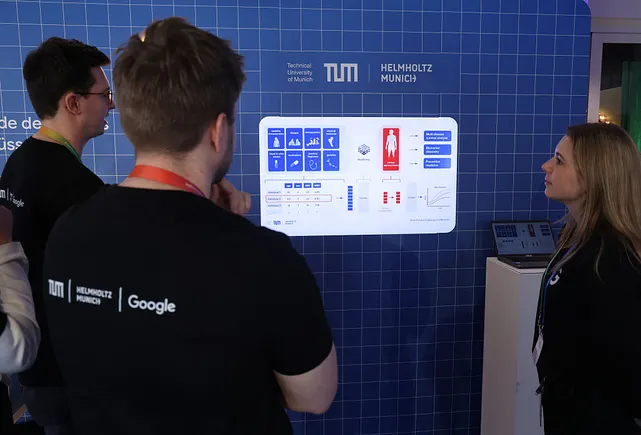
Healthcare and manufacturing stand out as prime examples of this trend. Since May 2025, tech hiring in the healthcare industry has seen an impressive 8% increase, while manufacturing has experienced a 4% rise. In healthcare, AI is revolutionizing diagnostics, drug discovery, personalized treatment plans, and operational efficiencies, necessitating a robust influx of AI engineers, data scientists, and machine learning specialists. For instance, AI-powered diagnostic tools can analyze medical images with greater accuracy and speed, while machine learning algorithms are accelerating the identification of potential drug candidates, drastically reducing research and development timelines. The image accompanying the report, depicting graduate students discussing an AI tool in a medical application in Berlin, vividly illustrates this convergence of AI and healthcare innovation.
Similarly, the manufacturing sector is leveraging AI for predictive maintenance, optimizing supply chains, enhancing quality control through computer vision, and automating complex processes. This shift transforms factories into smart, interconnected ecosystems, requiring expertise in robotics, industrial AI, and data analytics to manage and interpret vast datasets generated by connected machinery. The demand in these sectors is not merely for general IT support but for highly specialized talent capable of designing, implementing, and managing sophisticated AI systems tailored to unique industry challenges. This broad integration signals a maturation of AI technology, moving beyond theoretical applications to practical, value-generating deployments across the real economy.
A Deep Dive into the Shrinking Talent Pool
The challenges in talent acquisition extend beyond a simple mismatch of supply and demand; they reflect deeper structural issues within the labor market. The ICIMS report highlights that the overall talent pool has not expanded adequately to meet the escalating requirements for AI capabilities. This is particularly evident in the significant drop in front-line application volume, which fell 18% year-over-year, even as openings in these areas grew by 9%. Front-line roles, often entry-level positions that serve as critical pipelines for future specialized talent, are experiencing a severe shortage of candidates.
Several factors likely contribute to this decline. While a temporary boost in hiring in March might have absorbed some candidates, the more persistent issues include ongoing labor supply challenges, a significant misalignment of skill sets between job seekers and employer needs, and intensifying competition for limited qualified individuals. The rapid evolution of AI technology means that skills acquired even a few years ago may not be sufficient for current demands, creating a perpetual need for upskilling and reskilling. Furthermore, the specialized nature of AI roles means that a broad applicant pool often lacks the specific expertise required, leading to a high volume of unsuitable applications and a low conversion rate for recruiters.
The report emphasizes the gravity of this situation for organizations: “With fewer frontline candidates entering at the top of the funnel, recruiters are expected to meet ambitious hiring targets from a shrinking pool, forcing organizations to rethink how they source, attract and convert talent.” This necessitates a radical departure from traditional recruitment strategies, pushing companies to explore innovative approaches to talent identification and development.
Strategic Imperatives for Modern Talent Acquisition
In this highly competitive environment, companies must adopt more sophisticated and proactive talent acquisition strategies. Trent Cotton’s advice to "unlock more value from candidates you already know" by treating "silver medalists and near-misses as a primary pipeline and keep them warm with simple, always-on nurture" is particularly salient. This approach involves:
- Building Robust Talent Pools: Maintaining databases of previously interviewed candidates who were strong contenders but not selected for a specific role. These individuals already possess some degree of alignment with company culture and requirements.
- Proactive Engagement: Implementing automated and personalized communication strategies to keep these candidates informed about new opportunities, company developments, and relevant industry insights. This "nurturing" process ensures they remain engaged and receptive to future openings.
- Internal Mobility and Reskilling: Prioritizing internal talent development by identifying employees with adjacent skills and providing them with training and development programs to transition into AI-related roles. This not only addresses the talent gap but also boosts employee morale and retention.
- Partnerships with Educational Institutions: Collaborating with universities, colleges, and vocational schools to shape curricula that align with industry needs, offering internships, apprenticeships, and mentorship programs to cultivate a pipeline of future AI talent.
- Rethinking Job Requirements: Moving beyond rigid academic qualifications to consider candidates with demonstrable practical skills, project experience, and a strong aptitude for learning, especially in rapidly evolving fields like AI.
Further insights from related reports underscore the complexities of the modern labor market. An April report from ZipRecruiter found that 18% of recent graduates are intentionally applying for jobs they don’t plan to keep, simply to gain a foothold in the professional world. These graduates reported applying to more jobs but receiving fewer offers, indicating a disconnect between entry-level expectations and available opportunities. This trend contributes to churn and makes long-term talent planning more challenging. Concurrently, The Conference Board reported in June that 75% of CHROs surveyed plan to concentrate their hiring on specific roles or functions, with only 1 in 4 looking to make broad hires across their company. This strategic focus on specialized roles, particularly in areas like AI, further intensifies competition for a narrow band of highly skilled individuals.

The Broader Economic and Societal Context
The current AI talent gap is not an isolated phenomenon but rather a critical facet of a larger technological revolution that is reshaping industries and economies globally.
-
The Transformative Power of Artificial Intelligence: The past decade has witnessed an exponential acceleration in AI capabilities, particularly with the advent of deep learning and, more recently, generative AI models. These technologies are no longer confined to academic research but are being deployed across virtually every sector, from finance and retail to defense and entertainment. The promise of AI — enhanced productivity, personalized experiences, scientific breakthroughs, and entirely new business models — is driving this insatiable demand for expertise. Companies that fail to integrate AI risk falling behind competitors, making the acquisition of AI talent a strategic imperative for survival and growth.
-
Historical Precedents and Current Distinctions: While technological shifts have always created new demands for skills (e.g., the industrial revolution, the internet boom), the current AI revolution presents unique challenges. The pace of change is unprecedented, with new tools and techniques emerging constantly. Moreover, AI’s pervasive nature means it will impact nearly every job function to some degree, requiring not just specialized AI engineers but also a workforce capable of interacting with and leveraging AI tools. Unlike previous tech booms where talent was often concentrated in specific geographic hubs, the current AI integration is distributed across the entire economy, amplifying the demand in diverse sectors.
Addressing the Skills Mismatch: A Multi-pronged Approach
Bridging the AI talent divide requires a concerted effort from multiple stakeholders: corporations, educational institutions, and government bodies.
-
Corporate Investment in Upskilling and Reskilling: Companies must move beyond simply recruiting external talent and invest heavily in their existing workforce. Internal training programs, certifications, and partnerships with online learning platforms can help employees acquire new AI-related skills. This approach not only addresses immediate talent needs but also fosters a culture of continuous learning and employee loyalty. Large corporations like Google, Microsoft, and IBM have already launched extensive internal AI training initiatives, recognizing that building talent from within is often more sustainable than solely relying on external hires.
-
The Role of Academia and Vocational Training: Educational institutions are critical in preparing the next generation of AI professionals. Universities need to rapidly update curricula, introduce interdisciplinary programs combining computer science with domain-specific knowledge (e.g., AI in medicine, AI in manufacturing), and emphasize practical, project-based learning. Vocational schools and community colleges can play a vital role in providing hands-on training for technician-level AI roles, ensuring a broader base of skilled workers. Collaboration between academia and industry is essential to ensure that graduates possess skills directly relevant to market demands.

-
Government Initiatives and Policy Frameworks: Governments have a crucial role in fostering a robust AI talent ecosystem. This includes investing in STEM education from an early age, funding research and development in AI, and creating policies that encourage skilled immigration. Initiatives that provide grants for AI training programs, facilitate public-private partnerships, and establish national AI strategies can significantly accelerate talent development and retention. For instance, several countries are exploring "AI visas" or fast-tracking immigration for highly skilled AI professionals to attract global talent.
Implications for the Future Workforce and Global Competitiveness
The implications of the AI talent gap extend far beyond individual companies, impacting national economies and the very nature of work.
-
Evolving Job Roles and the Human-AI Synergy: The rise of AI will not necessarily lead to mass unemployment but rather a transformation of job roles. Many routine tasks will be automated, freeing human workers to focus on more complex, creative, and strategic activities that require uniquely human skills like critical thinking, emotional intelligence, and ethical reasoning. The future workforce will need to develop strong "AI literacy" – the ability to effectively collaborate with AI tools, interpret their outputs, and understand their limitations. This necessitates a paradigm shift in how we prepare individuals for careers, focusing on adaptability and lifelong learning.
-
Economic Growth and Innovation Hurdles: An unaddressed AI talent gap poses a significant threat to economic growth and innovation. Countries and companies unable to recruit or develop sufficient AI expertise risk falling behind in global competitiveness. Delayed AI adoption can lead to lower productivity, missed market opportunities, and a decline in overall economic output. Conversely, nations that successfully cultivate a strong AI talent base stand to gain a substantial advantage, attracting investment and fostering a thriving innovation ecosystem.
-
Ethical AI Development and Diversity in Talent: Beyond technical proficiency, the development of ethical and responsible AI systems requires a diverse talent pool. A lack of diversity in AI development teams can lead to biased algorithms and systems that perpetuate societal inequalities. Ensuring a broad representation of backgrounds, perspectives, and experiences in the AI workforce is crucial for building AI that benefits all of humanity and avoids unintended negative consequences. This includes addressing gender and racial disparities in STEM fields and promoting inclusive recruitment practices.
Navigating the Future: Bridging the AI Talent Divide
The insights from ICIMS and other reports paint a clear picture: the demand for AI talent is surging across a broad spectrum of industries, outstripping the current supply. This challenge is not merely a temporary market fluctuation but a fundamental shift driven by the transformative power of artificial intelligence. To navigate this complex landscape, organizations must embrace innovative talent acquisition strategies, prioritize internal development, and forge strong partnerships with educational institutions. Governments, in turn, must create supportive policy environments that foster a robust and diverse AI talent pipeline. The future of innovation, economic prosperity, and societal advancement hinges on our collective ability to bridge this critical AI talent divide, ensuring that the promise of artificial intelligence is realized responsibly and inclusively.