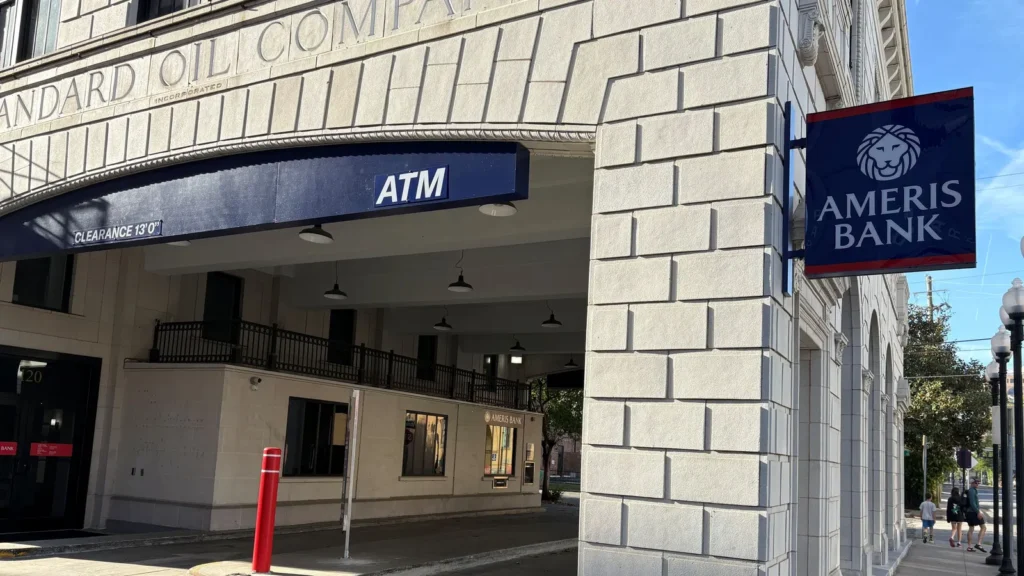
Atlanta-based Ameris Bank is grappling with the significant fallout of an $80 million jury verdict rendered against it in favor of Peter Byrne, the former CEO of its equipment finance division. The bank, headquartered in Atlanta, Georgia, has swiftly announced its intention to appeal the verdict, issued on June 12, 2026, and has cautioned investors that the final resolution of this complex legal matter "could have a material adverse effect" on its financial condition, operational results, and liquidity. This pronouncement underscores the gravity of the judgment and the potential strain it could place on the regional banking institution.
The core of the dispute traces back to Ameris Bank’s $187 million acquisition of Balboa Capital, an online lender specializing in small and medium-sized business equipment finance, in December 2021. Peter Byrne, who co-founded and served as CEO of Costa Mesa, California-based Balboa Capital, transitioned into a leadership role within Ameris Bank, becoming the CEO of its newly formed equipment finance division. His tenure, however, was marked by escalating disagreements over performance-based compensation, ultimately leading to his termination and the subsequent legal battle.
The Genesis of the Conflict: The Balboa Capital Acquisition and Incentive Plan
The acquisition of Balboa Capital was a strategic move for Ameris Bank, aimed at expanding its footprint in the lucrative equipment finance sector. Such mergers and acquisitions often involve complex earn-out agreements or long-term cash incentive plans designed to retain key executives from the acquired company and align their performance with the acquiring entity’s financial goals. In this instance, Byrne’s compensation package included a long-term cash incentive plan, contingent on Balboa Capital’s earnings performance post-acquisition. These structures are common in M&A deals, serving as a bridge to integrate leadership and ensure continuity while rewarding successful integration and growth.
However, the collaboration quickly soured. Byrne alleged that Ameris Bank was "improperly calculating" Balboa’s earnings, a maneuver he believed was designed to avoid paying out the performance-based cash bonuses stipulated in his incentive plan. Disputes over performance metrics and financial calculations are not uncommon in earn-out scenarios, often arising from differing interpretations of accounting methodologies, deductions, or operational definitions. Byrne claimed he repeatedly voiced his concerns and corrections to the bank’s leadership regarding these alleged miscalculations.
A Detailed Chronology of the Legal Battle
The timeline of events leading to the $80 million verdict highlights a rapid escalation of tensions and reciprocal legal actions:
- December 2021: Ameris Bank acquires Balboa Capital for $187 million. Peter Byrne, Balboa’s co-founder and CEO, assumes the role of CEO of Ameris Bank’s equipment finance division. His employment with Ameris begins.
- December 2021 – June 2024: Byrne is employed by Ameris Bank. During this period, he alleges he discovered and repeatedly complained about the bank’s "improper calculation" of Balboa’s earnings, which he believed impacted his eligibility for performance-based bonuses.
- June 2024: Ameris Bank terminates Peter Byrne’s employment. Byrne contends his dismissal was a direct result of his persistent complaints about the bonus calculation discrepancies, forming the basis of his wrongful termination claim.
- September 2024: Peter Byrne files a lawsuit against Ameris Bank in the U.S. District Court for the Central District of California. His initial complaint details allegations of breach of contract (related to the incentive plan) and wrongful termination.
- September 2025: Ameris Bank states it discovered evidence of alleged misconduct by Byrne, specifically the unauthorized transfer of confidential company information.
- February 2026: Ameris Bank files a counter-suit against Byrne. The bank alleges breach of contract and misappropriation of trade secrets, claiming Byrne sent thousands of pages of confidential, proprietary, and trade secret information from his Ameris email account to his personal email account. This counter-claim sought to undermine Byrne’s credibility and potentially offset any damages awarded to him.
- June 12, 2026: After a trial, a jury delivers an $80 million verdict in favor of Peter Byrne, validating his claims against Ameris Bank.
- June 17, 2026: The news of the verdict and Ameris Bank’s response is widely reported, highlighting the significant financial and legal implications for the bank.
Allegations of Wrongful Termination and Trade Secret Misappropriation
Byrne’s lawsuit primarily focused on the bank’s alleged failure to honor its contractual obligations regarding his long-term cash incentive plan and his subsequent wrongful termination. His legal team from Allen Matkins asserted that Ameris "willfully and maliciously failed to pay what was owed under the [long-term cash incentive plan] and then fired Mr. Byrne when he communicated his corrections to Ameris’s leadership." This suggests a narrative of a whistleblower being penalized for raising legitimate concerns about financial impropriety within the organization.

In response, Ameris Bank’s counter-suit painted a different picture, accusing Byrne of corporate malfeasance. The bank’s claims of misappropriation of trade secrets introduced a layer of complexity, suggesting that Byrne had compromised sensitive company data. Such allegations, if proven, could significantly damage an executive’s professional reputation and carry severe legal penalties. However, the jury’s verdict in favor of Byrne indicates that they either did not find Ameris’s counter-claims compelling enough to sway their decision on the primary lawsuit, or they viewed Byrne’s actions as less egregious than the bank’s alleged conduct.
Ameris Bank’s Official Stance and Financial Outlook
Following the verdict, Ameris Bank issued a formal statement affirming its commitment to appealing the decision. The bank spokesperson did not provide a specific timeline for filing the appeal but reiterated the institution’s intent to "vigorously defend its position in this matter." The statement also acknowledged the potential financial repercussions, noting that the bank is "evaluating the potential impact of the verdict, including whether an accrual is required for financial reporting purposes and the amount thereof." This indicates that the bank is assessing how the $80 million judgment might affect its balance sheet and income statement, potentially necessitating a significant write-down or reserve allocation.
The warning of a "material adverse effect on the Company’s results of operations, financial condition and liquidity" is a standard but serious disclosure, signaling to shareholders and regulators that the outcome could have a substantial negative impact. For context, Ameris Bank reported a first-quarter net income of $110.5 million in April 2026, representing a 26% jump. While this figure demonstrates robust recent performance, an $80 million payout, if upheld, would represent a substantial portion of a single quarter’s profit, potentially affecting future earnings guidance and investor confidence. The bank, like any publicly traded entity, is obligated to inform stakeholders of significant risks, and this statement fulfills that requirement.
Byrne’s Vindication and Attorney’s Commentary

Peter Byrne expressed profound gratitude and a sense of vindication following the jury’s decision. In a press release issued by his attorneys, he stated, "I spent my career building Balboa Capital and stood up for the people who built it with me. I’m grateful the jury listened to the evidence and held Ameris accountable." This statement reflects a personal victory and reinforces the narrative of an executive fighting for his rights and the integrity of his previous company’s value. The sentiment of "standing up for the people" suggests a broader ethical dimension to his dispute, positioning him as a defender against corporate overreach.
The successful outcome for Byrne underscores the critical importance of carefully drafted M&A agreements and compensation structures, as well as the risks associated with executive dismissals, especially when performance-based incentives are at play. The verdict sends a clear message that courts are willing to scrutinize corporate actions and hold companies accountable for perceived breaches of contract or wrongful termination.
Broader Implications for Banking and Mergers & Acquisitions
The Ameris Bank case carries several broader implications for the banking sector and the landscape of mergers and acquisitions:
- Financial Impact: The $80 million verdict, even if appealed, represents a significant potential liability for Ameris Bank. Should the appeal fail, the payout could strain the bank’s capital, impact its profitability, and potentially lead to adjustments in its strategic growth plans. Investors will be closely watching how this legal challenge unfolds and its eventual financial impact.
- Reputational Risk: A high-profile jury verdict against a bank, particularly involving allegations of improper compensation calculations and wrongful termination, can significantly damage its reputation. This could affect its ability to attract top talent, particularly in competitive divisions like equipment finance, and could also influence public perception and customer trust. Future M&A targets might view Ameris with more caution, leading to tougher negotiations or a reluctance to engage.
- M&A Due Diligence and Contractual Clarity: This case serves as a stark reminder for companies engaging in M&A activities to ensure absolute clarity and precision in drafting earn-out agreements, incentive plans, and employment contracts for acquired executives. Ambiguities in performance metrics, calculation methodologies, or termination clauses can lead to costly disputes. Robust due diligence must extend beyond financial assets to include a thorough review of potential human capital liabilities.
- Corporate Governance and Executive Oversight: The case highlights the importance of strong corporate governance, particularly in handling executive compensation disputes and managing post-acquisition integration. Boards and senior management must ensure that internal processes for calculating bonuses are transparent, fair, and consistently applied, and that executive complaints are addressed through proper channels rather than leading to retaliatory actions.
- Legal Precedent and Risk Assessment: While a single jury verdict doesn’t establish binding legal precedent in the same way an appellate court ruling does, it contributes to the evolving landscape of employment law and M&A litigation. It can influence how future cases are litigated and how companies assess their own risks in similar situations. The robust nature of the damages awarded may encourage other disgruntled executives to pursue legal action.
The Road Ahead: Appeal Process and Lingering Uncertainty
The legal battle is far from over. Ameris Bank’s stated intention to appeal means the verdict will be subjected to higher court review, a process that can be lengthy and expensive, potentially stretching over several years. During an appeal, the appellate court will examine whether any legal errors were made during the trial that could have affected the jury’s decision. This could include challenges to jury instructions, admissibility of evidence, or the application of law.
The "ultimate outcome of this matter is uncertain," as the bank itself acknowledged. This uncertainty will likely hang over Ameris Bank’s financial reporting and investor relations for the foreseeable future. The company will need to balance its vigorous defense with prudent financial planning, potentially setting aside reserves to cover the judgment if the appeal is unsuccessful. The resolution of this high-stakes legal dispute will not only determine the financial fate of an $80 million judgment but also send a powerful message about executive rights and corporate accountability in the dynamic world of banking and finance.