A former flight attendant has initiated legal proceedings against Alaska Airlines and the Association of Flight Attendants-CWA, AFL-CIO, alleging her termination for posting a social media video was discriminatory, citing heightened reputational standards applied due to her sex and race. The plaintiff claims that her probationary status, cited by the airline as justification for her dismissal, was a mere pretext masking underlying discriminatory considerations related to her gender and racial identity. This lawsuit, brought to light in mid-2026, underscores the growing legal complexities surrounding employee conduct on social media, particularly within highly visible industries like commercial aviation, and raises critical questions about the consistent application of corporate policies.
The Genesis of the Dispute: A Video, a Termination, and Allegations of Bias
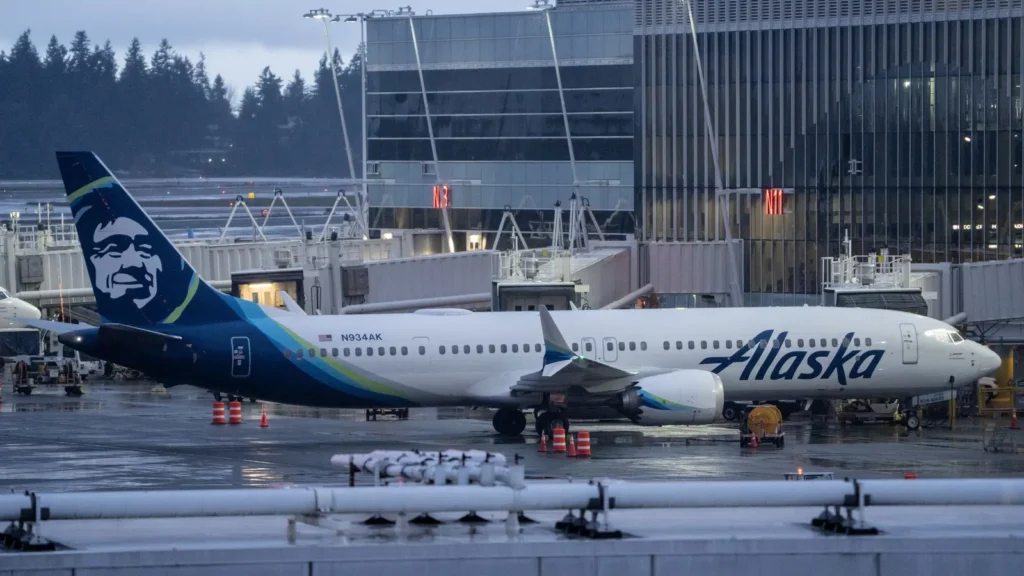
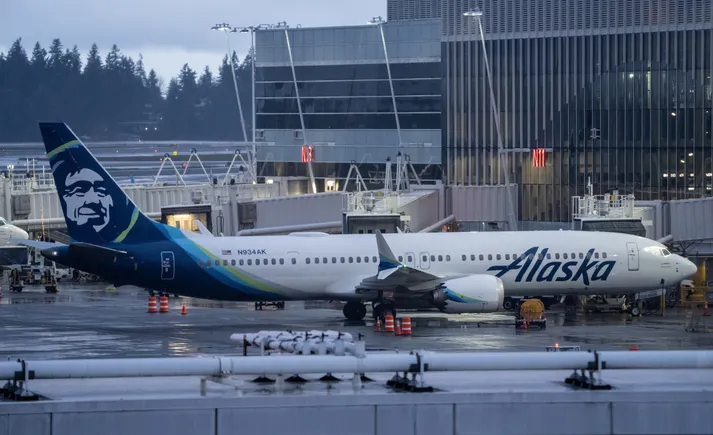
The core of the dispute revolves around a video recorded by the plaintiff, in which she is seen twerking to music, described as having "some explicit lyrics," on a grounded Alaska Airlines plane. The incident occurred at Seattle-Tacoma International Airport while the aircraft was awaiting pilots for a flight destined for Houston. According to court documents, the worker maintained that she did not use any hashtags linking her video directly to the airline, suggesting an intent to keep the content separate from her professional affiliation. Despite this, the video ultimately led to her termination, with the airline purportedly citing violations of its social media and personal conduct policies.
The plaintiff’s legal challenge hinges on the assertion that these policies, as implemented by Alaska Airlines, possess a "subjective nature" that enables their inconsistent and selective application. She argues this subjectivity disproportionately impacts employees based on protected characteristics, specifically gender and race. Her lawsuit posits that she was "held to heightened standards for reputational behavior particularly in relation to her perceived sex and race," a standard she believes was not uniformly applied to all employees. Crucially, she alleges that similar videos created by her colleagues did not result in comparable disciplinary action, forming a key component of her discrimination claim.
The Role of the Union: Allegations of Failure to Represent
Beyond her direct claims against Alaska Airlines, the former flight attendant has also included the Association of Flight Attendants-CWA, AFL-CIO, the union that represented her, in her lawsuit. She alleges that the union failed in its duty of fair representation, specifically by declining to assist her in appealing her termination. This aspect of the lawsuit highlights the critical role unions play in advocating for their members’ employment rights and the legal obligations they bear in doing so. A union’s duty of fair representation requires it to represent all members of a bargaining unit fairly, impartially, and in good faith, without discrimination. A refusal to pursue an appeal, if deemed arbitrary, discriminatory, or in bad faith, can form the basis of a separate legal claim against the union.
Neither Alaska Airlines nor the Association of Flight Attendants-CWA had provided comments on the ongoing litigation by press time, a standard practice for entities involved in active legal disputes. However, the airline’s likely defense would center on the consistent application of its employee conduct policies, the importance of maintaining its brand image and public trust, and the terms of the plaintiff’s probationary employment status. The union, if it chooses to defend its actions, would likely argue that its decision not to pursue an appeal was based on a good-faith assessment of the case’s merits and adherence to its internal grievance procedures and collective bargaining agreement, rather than any failure of representation.
Workplace Social Media Policies: A Minefield for Employers and Employees
The case illuminates the increasingly complex landscape of workplace social media policies. In an era where personal and professional lives often intersect online, companies, especially those in public-facing sectors like aviation, face a delicate balance. They must protect their brand image, uphold safety standards, and maintain public trust, while also respecting employees’ rights to personal expression and privacy.
According to various human resources studies, a significant majority of employers now have formal social media policies. These policies typically outline acceptable online conduct, prohibit disparaging the company or colleagues, and often extend to off-duty behavior if it impacts the employer’s reputation or business interests. However, the interpretation and enforcement of such policies can be highly subjective, leading to potential legal challenges. The Equal Employment Opportunity Commission (EEOC) regularly receives thousands of charges related to race and sex discrimination annually, many of which now involve scenarios where social media activity plays a role in employment decisions. Employers must navigate these waters carefully, ensuring policies are clear, consistently applied, and do not inadvertently lead to discriminatory outcomes.
For airlines, the stakes are particularly high. Flight attendants, pilots, and ground staff are often seen as direct representatives of the airline. Their public conduct, even off-duty, can be perceived as reflecting on the company’s values and professionalism. Incidents that go viral can quickly damage a brand’s reputation, making airlines particularly sensitive to employee behavior that might be deemed unprofessional or inappropriate. This pressure often translates into stringent social media guidelines, which, if not carefully drafted and implemented, can become fodder for legal challenges alleging unfair or discriminatory enforcement.

Legal Framework: Understanding Discrimination and Pretext
The plaintiff’s lawsuit will be evaluated under the framework of employment discrimination law, primarily Title VII of the Civil Rights Act of 1964, which prohibits discrimination based on race, color, religion, sex, and national origin. To succeed in a discrimination claim, the plaintiff typically needs to demonstrate a prima facie case of discrimination, meaning they must show they belong to a protected class, were qualified for their position, suffered an adverse employment action (like termination), and that the circumstances surrounding the adverse action suggest discrimination.
Once a prima facie case is established, the burden shifts to the employer to articulate a legitimate, non-discriminatory reason for the adverse action. In this case, Alaska Airlines would likely point to the alleged violation of its social media and conduct policies and the plaintiff’s probationary status. If the employer provides such a reason, the burden then shifts back to the plaintiff to prove that the employer’s stated reason is merely a "pretext" for discrimination. This is where the plaintiff’s allegations of "heightened standards" and comparable videos by other colleagues become crucial. Proving pretext often involves demonstrating that the employer’s stated reason is false, that similarly situated employees outside the protected class were treated more favorably, or that there’s a pattern of discriminatory behavior.
The concept of "subjective policies" being used as a tool for discrimination is a common argument in employment law. When policies lack clear, objective criteria for evaluation or discipline, they can be more easily manipulated or applied inconsistently, potentially allowing implicit biases to influence decision-making.
A Chronology of Events (Inferred)
While specific dates for all events are not detailed in the brief, an approximate timeline can be constructed based on the available information:

- Late 2023 / Early 2024: The plaintiff, a flight attendant on probationary status with Alaska Airlines, records and posts the video of herself twerking on a grounded plane at Seattle-Tacoma International Airport. The image accompanying the article is dated January 6, 2024, suggesting the incident occurred around or prior to this time.
- Early 2024: Alaska Airlines becomes aware of the video and subsequently terminates the plaintiff’s employment, citing violations of its social media and personal conduct policies and her probationary status.
- Mid-2024: The plaintiff attempts to appeal her termination, seeking assistance from her union, the Association of Flight Attendants-CWA. The union allegedly declines to assist in the appeal.
- Late 2024 / Early 2025: Following the union’s refusal, the plaintiff prepares and files her lawsuit against both Alaska Airlines and the union, alleging race and gender discrimination and failure of fair representation.
- June 17, 2026: The news article covering the lawsuit is published, indicating the legal proceedings are actively underway.
Broader Implications for Corporate HR and Employee Rights
This lawsuit, regardless of its outcome, carries significant implications for both corporate human resources departments and employees across various industries. For HR professionals, it serves as a stark reminder of the importance of:
- Clear and Unambiguous Policies: Social media and conduct policies must be precisely worded, outlining specific expectations and consequences to minimize subjective interpretation.
- Consistent Enforcement: Policies must be applied uniformly across all employees, regardless of their protected characteristics, tenure, or other non-job-related factors. Any perceived inconsistency can form the basis of a discrimination claim.
- Thorough Documentation: All disciplinary actions, investigations, and policy violations must be meticulously documented to provide a clear, objective record if challenged legally.
- Training and Communication: Employees must be regularly trained on company policies, and the rationale behind these policies should be clearly communicated.
For employees, especially those in public-facing roles or on probationary status, the case highlights the need for extreme caution when engaging with social media. While freedom of expression is a fundamental right, it is not absolute in the employment context. Employees must understand that their online activities, even those conducted off-duty and without direct company affiliation, can have professional repercussions if deemed to violate company policy or harm its reputation. The "probationary status" aspect is also key, as employees in this phase often have fewer protections and can be terminated more easily, though still not for discriminatory reasons.
Furthermore, the union’s alleged failure to represent underscores the ongoing challenges within labor relations. Union members rely on their representatives to protect their rights, and allegations of a breach of this duty can erode trust and potentially lead to internal disputes or further legal action.
Conclusion: A Continuing Dialogue on Fairness in the Digital Age Workplace
The lawsuit against Alaska Airlines and the Association of Flight Attendants-CWA represents more than just an individual employment dispute; it is a microcosm of the larger societal and legal debate surrounding fairness, equality, and digital conduct in the modern workplace. As social media continues to intertwine with professional life, employers will face increasing pressure to develop and implement policies that are both effective in protecting their interests and scrupulously fair in their application. For employees, understanding the boundaries of acceptable online behavior and knowing their rights under anti-discrimination laws becomes ever more crucial. The outcome of this particular case will undoubtedly contribute to the evolving jurisprudence on these complex issues, influencing how companies manage their public image and how employees navigate their professional identities in the digital age.