The current era presents a formidable challenge for leaders across all sectors. The rapid acceleration of artificial intelligence, coupled with significant shifts in global political dynamics and a marked decline in institutional trust, fundamentally redefines the very essence of leadership. What was once a relatively stable set of directives and expectations has transformed into a complex, dynamic environment demanding new approaches, skills, and philosophies. This article delves into the profound changes reshaping leadership, drawing upon extensive research and expert analysis to illuminate the path forward for contemporary leaders.
Historical Context: From Industrial Command to Adaptive Influence
Historically, leadership models have evolved significantly. Early 20th-century management theory, exemplified by figures like Frederick Taylor, focused on efficiency and scientific management, emphasizing clear hierarchies and standardized processes. The post-war era saw the rise of charismatic leaders and the "command and control" style, epitomized by figures like Jack Welch, whose tenure at General Electric was marked by aggressive growth and decisive leadership. The late 20th and early 21st centuries introduced concepts like servant leadership, championed by individuals such as Howard Schultz of Starbucks, who prioritized employee well-being and customer experience, and more recently, the "first-principles" approach of innovators like Elon Musk, who advocates for deconstructing problems to their fundamental truths to drive radical innovation.
However, the current confluence of technological disruption and societal shifts necessitates a departure from these established paradigms. The foundational principles of setting direction, defining mission, and aligning people remain crucial, but the behavioral rules and underlying dynamics have undergone a radical transformation. This shift is particularly evident in how organizations engage with their workforce and navigate complex, often unpredictable, technological advancements.
The "Voluntary Army": A Paradigm Shift in Employee Engagement
One of the most significant changes in leadership over the past five decades, as identified by extensive research in human capital and organizational behavior, is the "decoupling" of the employee from the traditional organizational structure. This phenomenon, which has been gaining momentum for years, represents a fundamental break from the industrial-age model where employees were largely bound to their employers through loyalty, limited career mobility, and a clear hierarchical structure. In that era, directives from superiors were generally followed with minimal questioning. This "boss-subordinate" dynamic, deeply ingrained in corporate culture and HR practices, is rapidly becoming obsolete.
Today’s workforce, encompassing full-time employees, contingent workers, and increasingly, AI-powered collaborators, operates under a different set of motivations and expectations. They are no longer simply employees; they are active participants who "opt in" to their roles and commitments on a daily basis. This shift transforms the organizational dynamic into what can be described as a "voluntary army." The traditional levers of power—authority, hierarchy, and economic dependency—have been supplanted by a more intangible, yet far more potent, currency: trust.
Building and maintaining this trust is paramount. It requires leaders to foster an environment of psychological safety, where individuals feel empowered to contribute their unique skills and perspectives without fear of reprisal. This involves crystalizing a clear and compelling mission that resonates with individual values, actively empowering and developing team members, and demonstrating a genuine willingness to listen to and integrate new ideas. In a world characterized by highly specialized expertise, individuals often possess knowledge and insights that can surpass those of their superiors. To ignore or suppress this talent is not only counterproductive but actively detrimental to organizational success. Leaders must therefore cultivate an environment where every voice is heard, every idea is considered, and every individual feels valued and empowered to contribute their best. This necessitates a move away from top-down directives towards a more collaborative and participatory leadership style, where leaders act as facilitators and enablers of collective intelligence.
The impact of AI is accelerating this decoupling. An individual engineer, a data scientist, or a marketing strategist with a deep understanding of emerging technologies and market trends could potentially reinvent an entire business model. This reality underscores the imperative for leaders to remain open, engaged, and inclusive, fostering an environment where such transformative contributions can emerge and be nurtured. The ability to harness the collective intelligence and proactive engagement of a diverse workforce is becoming a critical differentiator for organizational resilience and innovation.

The Imperative of Iteration: Embracing Imperfection in the AI Era
A second profound shift in leadership is the transition from a "do it well" mentality to a "do it now" imperative, driven by the rapid evolution of technologies like artificial intelligence. AI systems, characterized by their novelty, power, and often non-deterministic nature, present a unique set of challenges. Leaders are under immense pressure to adopt AI technologies to remain competitive, with the implicit understanding that failure to do so could jeopardize their organizations and their own positions. This pressure often leads to a natural inclination to meticulously "figure it out and do it right" before implementation.
However, as observed in recent engagements with leading global corporations such as IBM, Standard Chartered, and Mastercard, the pursuit of a "perfect" AI solution before deployment is a significant impediment to progress. In the industrial age, it was common practice to await the flawless launch of a 1.0 version of a product or system. This approach, however, is ill-suited to the current era of rapid technological advancement. The AI age demands a comfort level with imperfection and a willingness to embrace iterative development.
Companies like Microsoft are actively deploying AI assistants like Copilot across various functions, including HR, even as they uncover and address new use cases and potential limitations. Similarly, IBM’s swift replacement of Workday with SuccessFactors within an 18-month timeframe, despite the inherent imperfections of any large-scale system implementation, exemplifies this agile approach. The prevailing sentiment is that the luxury of "waiting until it’s done" is no longer a viable strategy.
Leaders must internalize the understanding that progress is rarely a straight line from point A to point B. Instead, it is a dynamic process characterized by a series of iterations, learning from mistakes, and continuous improvement. The role of a leader in this context is to maintain the organization’s focus on the overarching problem or customer need, while simultaneously creating a safe space for teams to experiment, innovate, and learn from both successes and failures. This requires a fundamental shift in risk management philosophy, moving from risk avoidance to intelligent risk-taking and rapid learning. The ability to pivot, adapt, and learn quickly in response to emergent challenges and opportunities is becoming a hallmark of effective leadership.
Refocusing on Values: The Resurgence of Trust, Ethics, and Inclusion
The third significant transformation in leadership is a renewed emphasis on core values, ethics, and morality. The contemporary media landscape, often amplified by the spread of misinformation, including AI-generated "alternative facts," makes discerning truth increasingly challenging. High-profile scandals and political polarization have further eroded public trust in institutions. In this environment, leaders have a critical responsibility to act as ethical anchors and truth arbiters.
This emphasis on values is not merely a matter of corporate social responsibility; it is a strategic imperative. The vast majority of individuals possess an innate ethical compass and a desire to be associated with organizations they can trust. When leaders compromise their integrity, bend rules, or treat individuals unfairly, the repercussions extend far beyond legal liabilities. Such actions inflict deep damage on the human spirit, eroding morale, stifling creativity, and ultimately undermining the very foundation of organizational effectiveness. As highlighted in research on organizational resilience and employee engagement, the "unquenchable power of the human spirit" is the most potent, yet often overlooked, asset in any business.
The Plummeting Trust in Institutions: A Leadership Void
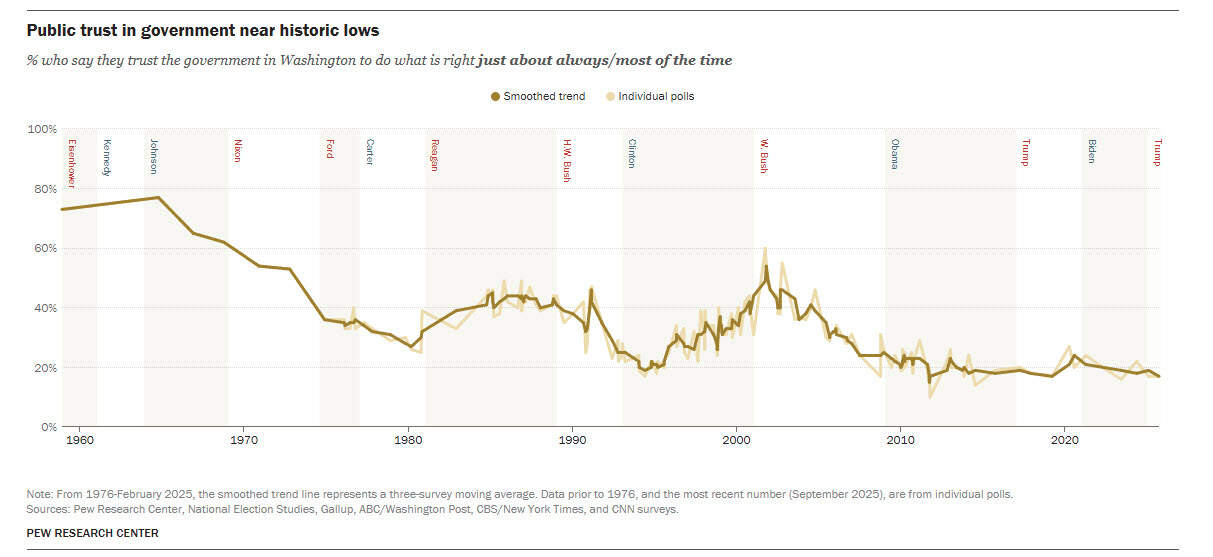
The erosion of trust in established institutions is a pervasive and deeply concerning trend. In the United States, for example, public trust in government has plummeted dramatically. From a high of approximately 80% of Americans expressing trust in their government in the 1960s, that figure has fallen to a mere 17% in recent years, according to data from leading research institutions. This precipitous decline creates a significant void, which leaders are uniquely positioned to fill.
Filling this trust deficit requires leaders to actively engage with their people, to remain steadfast in their commitment to core values, and to exercise sound judgment. It involves speaking truth to power, taking principled stands on important issues, and fostering an environment of open dialogue and active listening. While discussions around diversity, equity, and inclusion (DEI) have sometimes been politicized, the underlying principles of fairness, respect, and equal opportunity remain critical values that leaders must embrace and champion. By demonstrating authenticity, transparency, and a genuine commitment to ethical conduct, leaders can begin to rebuild the trust that has been so severely eroded.
The Strategic Importance of Developing Future Leaders
The ability of any organization to adapt, innovate, and thrive in the current volatile landscape is intrinsically linked to the quality of its leadership. Leaders who can effectively drive change, energize their teams, and consistently uphold organizational values are not merely managers; they are invaluable strategic assets.
The development of these forward-thinking leaders is more critical than ever. This necessitates a fundamental reassessment and revitalization of leadership development models. Organizations must move beyond traditional, one-size-fits-all training programs and embrace approaches that cultivate adaptability, resilience, critical thinking, and ethical decision-making.
Tools and Resources for Navigating the New Leadership Frontier
In response to these evolving demands, innovative solutions are emerging to support leaders and organizations. Research into "Supermanagers" highlights the capabilities required to effectively lead in complex, distributed environments. Platforms like Galileo, an AI-powered leadership academy, leverage extensive datasets—spanning over three decades of research, hundreds of case studies, and industry examples—to provide personalized leadership development journeys. Galileo Learn, its AI leadership academy, is designed to equip individuals and teams with the skills needed to excel in the age of AI.
Furthermore, upcoming events like the Irresistible 2026 annual research conference aim to launch new offerings designed to address the critical leadership challenges of the future. These initiatives underscore a growing recognition of the need for specialized tools and frameworks to navigate the complexities of modern leadership.
In conclusion, the landscape of leadership has undergone a profound transformation, driven by technological advancements, geopolitical shifts, and a critical decline in institutional trust. The successful leader of today and tomorrow must be agile, adaptable, ethically grounded, and deeply committed to fostering trust and empowering their teams. By embracing iteration over perfection, prioritizing values, and actively developing their leadership capabilities, organizations can navigate these tumultuous times and emerge stronger and more resilient. The future of leadership lies not in command and control, but in cultivation, collaboration, and an unwavering commitment to doing what is right.