The career site, long considered a digital brochure, has transformed into the unequivocal cornerstone of an organization’s employer brand and the critical initial touchpoint for prospective talent. In an increasingly competitive global job market, the efficacy of this digital gateway directly correlates with a company’s ability to attract, engage, and ultimately secure top-tier candidates. As we look towards 2026, the landscape of talent acquisition demands a sophisticated, candidate-centric approach, where static job boards give way to dynamic, personalized experiences that mirror the expectations set by leading consumer technology platforms.
The Evolving Landscape of Talent Acquisition: A Historical Perspective and Modern Demands
Historically, career sites served primarily as repositories for job listings and basic company information. Their design and functionality often lagged behind consumer-facing websites, reflecting an internal-first rather than candidate-first mindset. However, the seismic shifts brought about by technological advancements, evolving workforce demographics, and global events like the pandemic have fundamentally reshaped candidate expectations. The transition from a predominantly employer-driven market to one heavily influenced by candidate preferences has accelerated the need for organizations to elevate their digital recruitment presence.
The 2020s have seen a rapid democratization of information, empowering job seekers with unprecedented access to company reviews, culture insights, and comparative employment data. This transparency means that a company’s reputation, values, and employee experience are under constant scrutiny, making the career site an indispensable tool for authentic employer branding. Employ’s Job Seeker Nation Report underscores this urgency, revealing that 71% of job seekers anticipate an application process to conclude in under 30 minutes. A staggering 35% will abandon an application if it is perceived as overly lengthy or complicated, highlighting the direct impact of site usability on talent conversion rates. Consequently, clunky, difficult-to-navigate career sites are no longer merely inconvenient; they are a significant liability that actively deters highly qualified talent.
Key Pillars of a 2026-Ready Career Site: Innovation Meets Expectation
While foundational elements such as strong branding, compelling headlines, authentic storytelling, intuitive job search user experience (UX), a clear Employee Value Proposition (EVP), and attractive perks remain vital, 2026 demands further evolution. The distinguishing factors for leading career sites now include hyper-personalization driven by artificial intelligence, a truly mobile-first experience, and transparent communication regarding hybrid and remote work options.
1. Hyper-Personalization and AI Integration: Beyond the Chatbot
The modern candidate expects a recruitment journey that mirrors the highly personalized experiences delivered by platforms like Netflix or Amazon. In 2026, AI on career sites has transcended the basic chatbot function, evolving into sophisticated tools for job matching, dynamic content recommendations, and adaptive candidate journeys. This means a site that learns from a candidate’s interactions, preferences, and profile to present relevant opportunities and information, making them feel genuinely seen and valued.
Despite this clear demand, industry benchmarks reveal a significant gap. Phenom’s State of Candidate Experience: 2025 Benchmarks Report highlighted that 87% of Fortune 500 employers had not yet effectively leveraged AI and automation to hyper-personalize their career sites. This statistic underscores a widespread lag in adopting essential candidate-friendly technologies. The best career sites of 2026 are those that move beyond generic job boards to create an experience where the candidate feels the site was designed specifically for their needs. This includes features like:
- Intelligent Job Matching: AI algorithms that analyze a candidate’s resume, skills, and past applications to suggest highly relevant roles, even those they might not have considered.
- Dynamic Content Delivery: Presenting personalized company culture insights, employee testimonials, and career path stories based on a candidate’s expressed interests or inferred career stage.
- Proactive Engagement: AI-powered nudges and follow-ups that guide candidates through the application process, answer FAQs, and provide updates, reducing friction and abandonment.
- Skill-Based Recommendations: Moving beyond traditional job titles to suggest roles based on transferable skills, fostering greater inclusivity and uncovering hidden talent pools.
"The expectation for personalization in recruitment is no longer a ‘nice-to-have’ but a fundamental requirement," states Dr. Anya Sharma, a leading HR technology analyst. "Candidates are accustomed to bespoke digital experiences in their daily lives, and the recruitment process is no exception. Companies that fail to implement advanced AI for personalization risk appearing antiquated and losing out on top talent who gravitate towards more intuitive and engaging platforms." Studies suggest that AI-driven personalization can reduce time-to-hire by up to 20% and improve candidate satisfaction by over 30%, translating directly into a stronger talent pipeline and reduced recruitment costs.
2. Mobile-First Experience: Optimizing for the On-the-Go Job Seeker
In 2026, a "mobile-first" approach means far more than just a responsive website layout. Candidates expect to seamlessly search, apply, and follow up on their applications entirely from their mobile devices. The bar for an exceptional mobile experience is high: applications should take under three minutes to complete, forms should auto-fill efficiently, and there should be no jarring hand-offs to a third-party Applicant Tracking System (ATS) with a disparate user interface.
For segments like on-site retail and hourly workers, mobile is often the primary, if not exclusive, method of application. A clunky or broken mobile experience directly translates into lost applicants and a diminished talent pool. Data indicates that over 80% of job seekers use their mobile devices at some point during their job search, and mobile application rates continue to climb. Companies with poorly optimized mobile career sites face significantly higher bounce rates and application abandonment.
"Our demographic, particularly for our frontline roles, is heavily reliant on mobile technology," explains Sarah Jenkins, Head of Talent Acquisition at a prominent retail chain. "If a candidate can’t complete an application from their smartphone during a coffee break, they’re simply moving on to a competitor who offers a smoother experience. Investing in a truly mobile-optimized platform isn’t just about convenience; it’s about accessibility and ensuring we don’t inadvertently exclude qualified candidates."
3. Navigating the Flexible Work Revolution: Hybrid and Remote Work Signals
The shift towards flexible work models, significantly accelerated by recent global events, has cemented remote and hybrid work as a baseline expectation for many candidates in 2026. Career sites that fail to explicitly disclose their flexible work options risk losing candidates to competitors who are more transparent. Job seekers actively screen for these options, often filtering searches by "remote" or "hybrid" before even considering a company.
This trend is particularly pronounced among Gen Z candidates, who are not only seeking flexible arrangements but also meticulously scrutinizing company social media and career sites for authentic insights into employee feedback and company culture. Transparency about work models is interwoven with trust and a company’s commitment to work-life integration. Companies that clearly articulate their stance on remote, hybrid, or in-office requirements, alongside the rationale and support systems, gain a significant advantage.
"The modern workforce values autonomy and flexibility as much as, if not more than, traditional compensation in many cases," observes Dr. Emily Clark, a sociologist specializing in the future of work. "For organizations, being ambiguous about work arrangements on their career site is a missed opportunity to connect with a large segment of the talent pool. It’s not just about offering remote work; it’s about clearly communicating it as part of your overall EVP." Research consistently shows that companies offering flexible work arrangements experience higher employee satisfaction, lower turnover rates, and a broader talent reach.
The Imperative of Comprehensive Employer Branding and Candidate Journey
Beyond these cutting-edge features, the foundational principles of employer branding remain paramount. A great career site seamlessly integrates branding, compelling storytelling, a clear Employee Value Proposition (EVP), and attractive perks into a cohesive narrative. It’s about painting a vivid, authentic picture of what it’s truly like to work at the organization. This includes:
- Authentic Storytelling: Featuring diverse employee testimonials, videos, and day-in-the-life content that showcases real experiences.
- Clear EVP: Articulating the unique benefits, growth opportunities, and cultural aspects that differentiate the company as an employer.
- Values Alignment: Demonstrating how the company’s mission and values translate into daily work and societal impact.
- Career Path Clarity: Providing insights into potential growth trajectories and learning opportunities within the organization.
Case Studies in Excellence: Learning from Industry Leaders
While specific features vary, many leading organizations are already demonstrating best practices in these areas. Companies like Shopify and Canva are widely lauded for their ability to weave compelling narratives about innovation, culture, and impact directly into their career sites, often leveraging rich multimedia content to engage candidates visually. Their platforms likely excel in creating dynamic candidate journeys and reflecting their vibrant employer brands.
Organizations such as Babbel and L’Oréal likely stand out for their sophisticated approaches to personalization, offering tailored content and job recommendations that resonate with diverse global talent pools. Their career sites are expected to be highly intuitive, guiding candidates through a seamless exploration of opportunities across various functions and geographies.
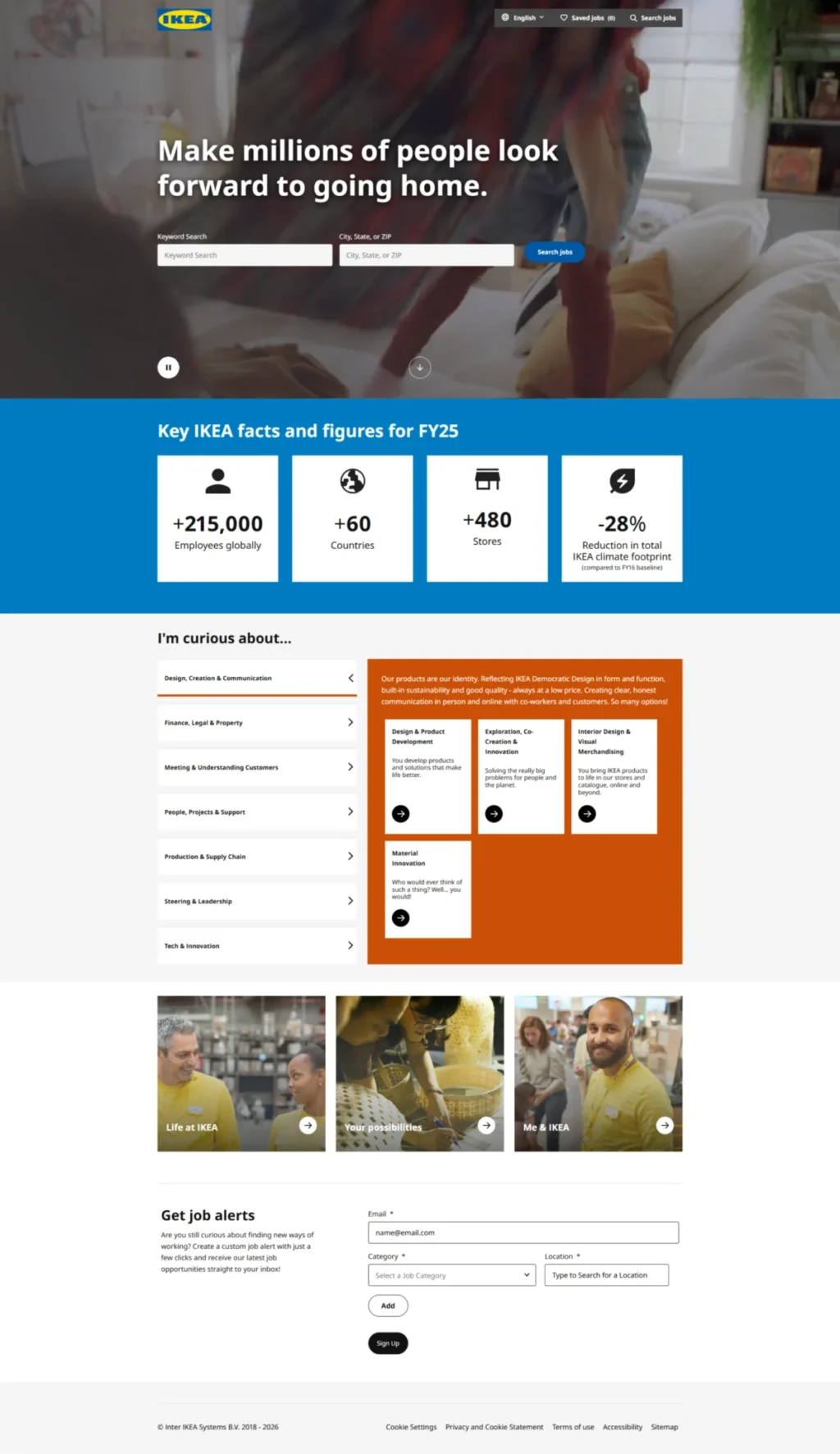
For high-volume recruitment, particularly in sectors like hospitality and retail, companies such as Frontier Airlines, Marriott, Ikea, and CVS Health are prime examples of optimizing for mobile-first experiences and clear career pathing. Their sites likely prioritize ease of application, streamlined processes, and clear communication about entry-level roles and advancement opportunities, catering to a workforce that often applies on the go.
Tech giants and innovative companies like Hubspot and Spotify are expected to lead the charge in AI integration and transparently showcasing their flexible work cultures. Their career sites likely employ advanced algorithms for job matching and present compelling content that highlights their progressive work environments and commitment to employee well-being and growth.
Strategic Implications for Talent Acquisition
For organizations that fail to adapt their career sites to these evolving standards, the implications are significant. A poor candidate experience can lead to:
- Talent Drain: Highly sought-after candidates opting for competitors with more engaging and user-friendly platforms.
- Increased Recruitment Costs: Longer time-to-hire, greater reliance on external recruiters, and higher advertising spend to compensate for an ineffective owned channel.
- Damage to Employer Brand: Negative perceptions that can deter future talent and impact consumer perception.
- Reduced Diversity: Clunky or inaccessible sites can inadvertently exclude diverse candidate pools who may rely on mobile access or benefit from personalized guidance.
Conversely, companies that proactively embrace these trends stand to gain a considerable competitive advantage. A superior career site can:
- Attract Top Talent: Position the organization as an innovative, desirable employer.
- Enhance Candidate Experience: Foster positive perceptions and increase application completion rates.
- Improve Efficiency: Reduce manual screening efforts through AI-driven matching and qualification.
- Strengthen Employer Brand: Communicate authentic culture and values effectively, leading to more aligned hires.
The Road Ahead: Continuous Evolution
The development of a cutting-edge career site is not a one-time project but an ongoing strategic imperative. As technology continues to advance and candidate expectations evolve, organizations must remain agile, continuously evaluating and refining their digital recruitment platforms. Future trends may include deeper integration of virtual reality or augmented reality for immersive office tours, advanced predictive analytics for talent forecasting, and even more sophisticated skill-based hiring features that de-emphasize traditional credentials.
Ultimately, the career site in 2026 is more than just a functional portal; it is a dynamic, intelligent, and empathetic extension of the organization itself. It is the primary vehicle for telling a compelling employer brand story, fostering genuine connections with prospective employees, and laying the groundwork for a successful and diverse workforce. Companies that invest in making their career sites truly candidate-friendly will be the ones that win the war for talent in the years to come.
This article draws insights from the 2025 Job Seeker Nation Report (by Employ) and the State of Candidate Experience: 2025 Benchmarks Report (by Phenom), reflecting current trends influencing future talent acquisition strategies. May 20, 2026, by Gem Siocon in Company Career Site.