The moment a colleague shares the devastating news of a significant loss in their life is a critical juncture for any leader. While the instinct to offer support is strong, a palpable sense of panic often follows for many managers: "What do I do now?" This common dilemma underscores a pervasive lack of preparation within organizations to address one of the most universal human experiences – bereavement. The very etymology of the word "bereaved," stemming from a term meaning "to be robbed," speaks to the profound sense of loss that cannot simply be managed away or circumvented. Yet, in many professional environments, employees are implicitly or explicitly asked to do just that.
Despite its near-universal prevalence, with nearly all working adults experiencing it, often multiple times, formal training for leaders on supporting grieving employees remains conspicuously absent. While good intentions abound, effective support often falls short, creating a significant gap identified by recent research. This gap presents a crucial opportunity for leadership development, not to transform managers into grief counselors, but to equip them with the fundamental human skills to be present, honest, and willing to sit with what they cannot fix.
The Pervasive Impact of Bereavement at Work
Bereavement in the workplace occurs when the deeply personal experience of loss through death collides with the demands and expectations of professional life. It is a phenomenon that cannot be confined by schedules or compartmentalized within professional boundaries, as grief rarely ceases at the office door. A comprehensive study, surveying managers, coworkers, and bereaved employees, offers a multi-perspective view that reveals the far-reaching implications of loss. This research highlights that the impact extends beyond the individual experiencing the grief.
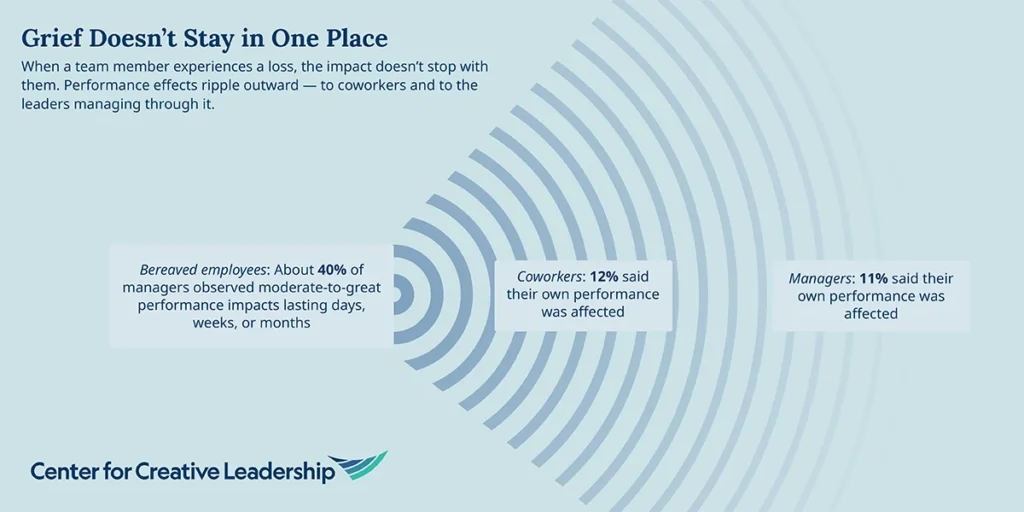
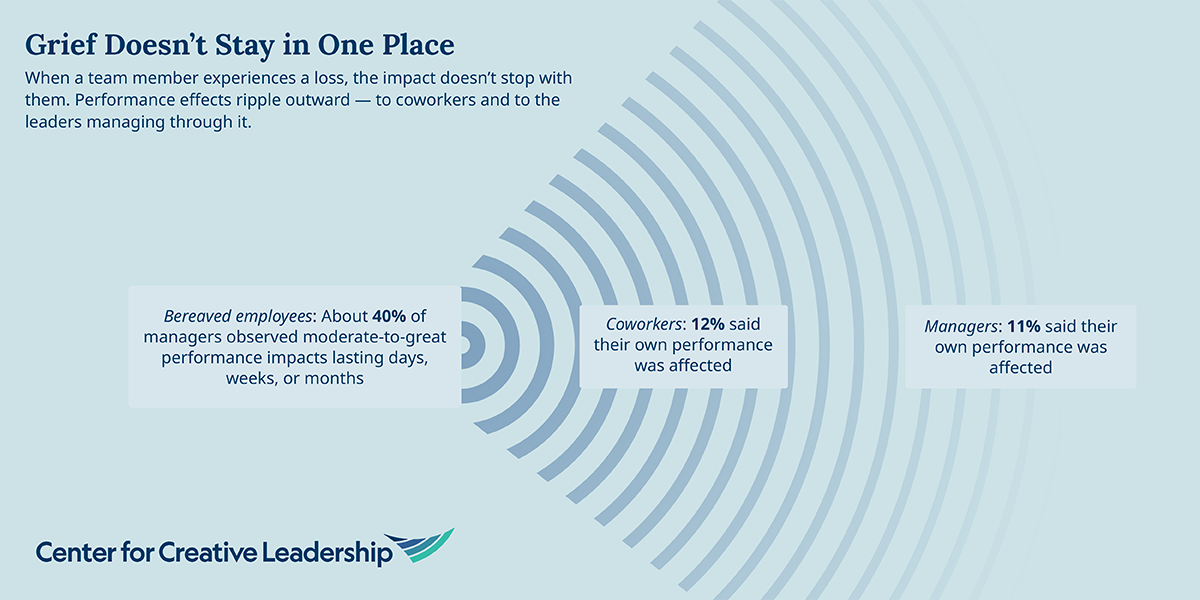
The findings are stark: an overwhelming 90% of managers reported observing some level of performance impact in a bereaved employee. Alarmingly, approximately 40% of managers witnessed moderate to significant performance declines, which could persist for days, weeks, or even months. Crucially, the ripple effect of grief was also evident in the wider team. Eleven percent of managers noted their own performance was affected, and a similar figure, 12%, reported the same for coworkers. This data underscores that bereavement is not an isolated event; it disrupts the equilibrium of teams and organizational dynamics.
The implications are further amplified by the inadequacy of existing bereavement leave policies. A significant majority, 73% of bereaved employees, indicated that their allocated time off was insufficient for grieving. This figure is even more concerning when considering that 28% of employees had no formal bereavement leave at all. Consequently, many individuals are compelled to return to work before they are emotionally or mentally prepared, attempting to navigate the arduous process of grief while simultaneously striving to meet professional obligations. This emotional burden is often compounded by the practicalities of managing funeral arrangements, supporting grieving family members, and addressing ongoing estate matters. These statistics are not merely productivity metrics; they are potent indicators of the silent burdens employees are asked to carry, often without adequate organizational support.
Bridging the Gap: When Good Intentions Fall Short
While the desire to support a grieving team member is widespread among leaders, the ability to translate that intention into effective action remains a significant challenge. Research indicates that despite 60% of bereaved employees reporting that their manager treated them with compassion to a great extent, a disheartening 20% received little to no support. This means that one in five individuals navigating one of life’s most profound challenges felt unsupported by their direct leadership.

It is crucial to clarify what is not expected of leaders in such situations. The expectation is not to possess the perfect words, to fix the grief – an impossible task – or to accelerate the healing process, which is an unreasonable ask. Leaders are not therapists. Instead, the research points to a much simpler, yet profoundly impactful, approach: showing up, paying attention, offering options, and following the employee’s lead.
Subtle Signals, Significant Impact
A critical element for leaders is the imperative to pay attention. Many managers tend to wait for overt signs of distress, such as a public breakdown or a missed deadline, before intervening. However, grief in the workplace rarely announces itself so dramatically. More often, it manifests in subtler, harder-to-read changes, such as a decrease in proactive communication, a noticeable withdrawal from social interactions, a decline in enthusiasm, or a shift in work habits. These are not immediate red flags but quiet indicators that, if missed, represent a lost opportunity to provide timely support.
Conversely, certain leader behaviors can inadvertently exacerbate the situation. These include minimizing the employee’s experience, offering unsolicited advice that dismisses their feelings, or pushing them to "move on" prematurely. Such actions, even if well-intentioned, can leave the employee feeling misunderstood and isolated. Effective checking-in does not require certainty; it demands attentiveness and a willingness to observe.
Small Gestures, Lasting Impressions
In supporting grieving employees, consistent, low-key presence often proves more impactful than grand gestures. Simple acts, such as a signed card from the team, a quietly offered cup of coffee, or a brief check-in that does not require the employee to feign normalcy, can make a significant difference. These gestures signal recognition and care without imposing further demands.
In contrast, employees recall unhelpful actions such as avoiding the topic altogether, offering platitudes that feel insincere, or making the situation about themselves. The gesture’s significance lies less in its magnitude and more in the message it conveys: "I see you as a person, not merely as a role."
One Size Does Not Fit Grief
One of the most critical findings from the research is that there is no universal response or type of support that suits every grieving employee. Some individuals may require space and quiet, while others may find solace in talking. Some may wish to immerse themselves in work as a coping mechanism, while others may need their expectations adjusted. However, many leaders default to a one-size-fits-all approach, often characterized by avoidance or excessive check-ins, rather than proactively inquiring about the employee’s needs.
The solution is remarkably straightforward and hinges on a core leadership skill: asking. Simple questions like, "How can I support you right now?" or "Would you prefer to ease back in, or jump in?" signal that the employee’s experience is valued and alleviate the guesswork that can lead to mismatched support. It is important to acknowledge that the grieving employee may not always know what they need. Providing options, allowing them time to adjust, and revisiting these conversations over time is essential.
When Leaders Get It Right
Bereaved employees vividly recall leaders who demonstrated genuine support. Some of the most impactful responses involved simple acts of flexibility, consistent presence, and a willingness to act as an advocate. Leaders who excelled in these situations typically paid attention to subtle cues and acted upon their observations. They championed requests for additional time off, maintained regular yet non-intrusive contact, allowed employees to set their own pace, and actively listened. Crucially, they acknowledged the loss, a step that research consistently shows holds more weight than many leaders realize.
Bereavement at Work: A Critical Leadership Development Opportunity
Even well-established leadership development programs often have blind spots when it comes to navigating unscripted human moments. A team member’s bereavement is precisely such a moment, and most leaders find themselves profoundly unprepared. The research indicates that a staggering 73% of managers feel they require training on how to support a bereaved employee, signifying a widespread call for basic human skills to be effectively integrated into leadership training.
The competencies required to navigate workplace bereavement are not novel; they are foundational to effective leadership. These include emotional intelligence, self-awareness, empathy, the ability to engage in difficult conversations, and coaching presence. Bereavement in the workplace serves as a high-stakes test of these skills, a test for which most leaders have never been formally prepared.
The solution lies not in the creation of isolated bereavement programs but in the seamless integration of these essential human skills into existing leadership development frameworks. Every discussion on emotional intelligence can, and should, encompass how a leader might navigate grief in the workplace. Similarly, modules on coaching skills provide a natural context for practicing the art of asking, without pressure, "How are you really doing?" and "What else do you need to be supported?" This is not about adding a new layer to leadership development but about adopting a new lens through which to view and enhance what is already in place.
The Path Forward: Readiness for the Inevitable
Bereavement is an inevitable aspect of any workplace, affecting every team and organization at some point. The critical question is whether leaders will be equipped to respond effectively when confronted with such situations. This readiness is not contingent on possessing perfect platitudes but on cultivating the skills to observe, inquire, and follow the lead of those who are grieving. It is, at its core, about embodying the principle of being "human first," as articulated by one research participant.
Organizations must critically examine their leadership development curricula. Where in their training do managers learn to sit with another’s pain? Where do leaders practice acknowledging their own limitations in knowing what to say, yet affirming their presence and support? Contemplating these questions and actively developing leaders who can show up for their people in the ways they truly need is not just a worthwhile endeavor; it is an essential one for fostering resilient and compassionate workplaces. The ongoing research in this area continues to illuminate the path toward greater understanding and more effective support, emphasizing that proactive development in these critical human skills is an investment in the well-being of both individuals and the organization as a whole.