Research published on June 25, 2026, by a leading HR analytics firm, highlights a troubling economic paradox: while nominal wages may have seen some gains, any potential increase in worker purchasing power has been decisively thwarted by soaring energy prices, a direct consequence of the escalating U.S.-Iran conflict. This geopolitical instability, coupled with a tightening labor market characterized by a new phenomenon dubbed the "forever layoff" and a relentless push for return-to-office mandates, paints a grim picture for the average American worker, eroding both their financial stability and their sense of job security.
The findings underscore a complex interplay of international relations, macroeconomic pressures, and evolving workplace dynamics that collectively diminish the individual’s economic agency. The report, drawing on extensive labor market data and employee sentiment analysis, suggests that the cumulative effect of these forces is creating an environment where workers experience reduced power and increased precarity, despite a seemingly resilient job market in certain sectors.
The Geopolitical Undercurrent: U.S.-Iran Conflict and Global Energy Markets
The hypothetical U.S.-Iran conflict, which began to escalate significantly in late 2025 and intensified through early 2026, has had a profound and immediate impact on global energy markets. The Strait of Hormuz, a critical chokepoint through which approximately one-fifth of the world’s total oil supply passes, became a flashpoint, leading to widespread disruptions in crude oil shipments. Initial skirmishes and heightened tensions in the Persian Gulf region triggered an immediate speculative surge in oil prices, with Brent crude briefly topping $120 per barrel in March 2026, a level not seen since the early 2010s.
Chronology of Escalation and Impact:
- Late 2025: Increased naval activity and diplomatic rhetoric in the Persian Gulf signal rising tensions. Minor incidents involving commercial shipping vessels are reported, prompting concerns from international maritime organizations.
- January 2026: A significant naval incident in the Strait of Hormuz leads to direct military engagement between U.S. and Iranian forces. Global oil prices jump by over 15% in a single week.
- February 2026: Both nations declare limited military operations, targeting strategic assets. Major shipping companies announce rerouting or temporary halts in transit through the Strait, further tightening global supply.
- March 2026: Oil production facilities in the region are reportedly disrupted, either directly or indirectly due to heightened security concerns and operational challenges. Global supply forecasts are downgraded by several million barrels per day. Brent crude oil futures spike, driving up wholesale gasoline and diesel prices across major consuming nations, including the United States.
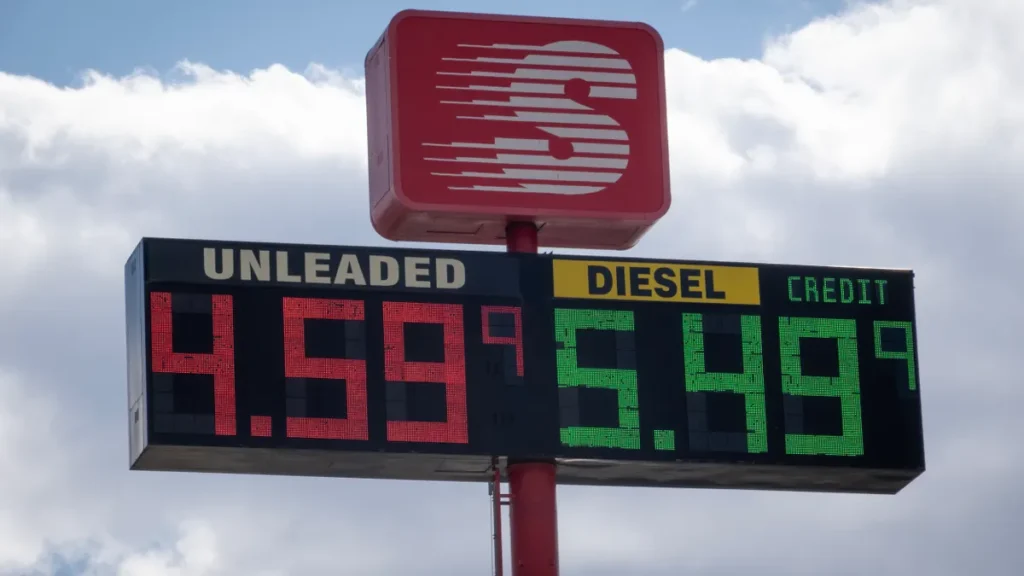
- April 2026: As evidenced by the photograph from Hampshire, Illinois, gasoline prices at the pump surge past $5.00 per gallon on average across many U.S. states, with diesel prices following suit. The ripple effect on transportation and logistics costs begins to permeate the entire supply chain.
- May-June 2026: Sustained high energy prices contribute significantly to inflationary pressures, impacting consumer spending and business operational costs. The Federal Reserve and other central banks face increased pressure to manage inflation without stifling economic growth.
The direct implication of this conflict on U.S. households has been immediate and tangible. Higher energy costs translate directly into increased expenses for transportation, heating, and the production of virtually all goods and services. This pervasive inflation effectively negates any nominal wage gains, leaving workers with less real purchasing power than before the conflict escalated. Economists at the International Monetary Fund (IMF) had initially projected a global economic growth rate of 3.2% for 2026, but revised these figures downwards to 2.5% in their April update, explicitly citing the "geopolitical premium" on energy and the resultant inflationary pressures as primary headwinds.
The Economic Fallout: Inflation and Eroding Purchasing Power
The surge in energy prices, a direct outcome of the U.S.-Iran conflict, served as a potent accelerant for inflation, already a concern in the post-pandemic recovery period. While the Federal Reserve had made strides in taming inflation through a series of interest rate hikes in 2023 and 2024, the sudden and dramatic increase in crude oil and natural gas prices in early 2026 threatened to undo much of that progress. The Bureau of Labor Statistics reported that the Consumer Price Index (CPI) for all urban consumers rose by an annualized 5.8% in Q1 2026, a significant acceleration from the 3.2% recorded in Q4 2025, with energy components alone contributing over 1.5 percentage points to this increase.
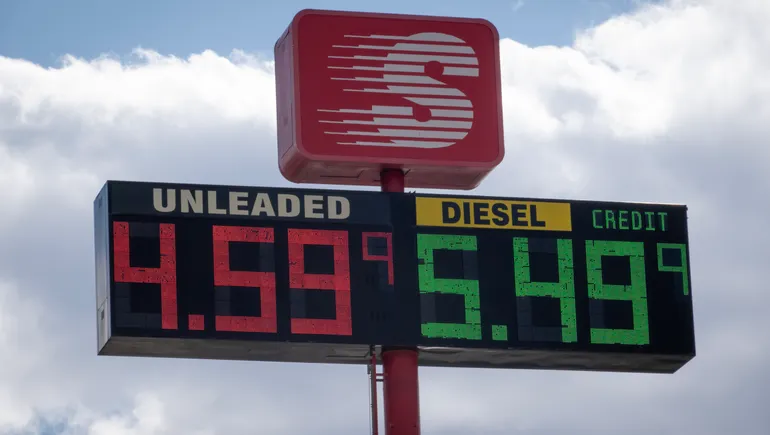
This inflationary environment has had a direct and detrimental effect on household budgets. For instance, the average cost of filling a standard 15-gallon fuel tank increased by approximately $15-$20 compared to a year prior. Beyond the pump, businesses reliant on transportation and energy-intensive manufacturing were forced to pass on increased operational costs to consumers. This led to price hikes across a wide array of goods, from groceries to electronics, further diminishing the value of a worker’s paycheck.
Glassdoor’s research highlighted that this inflation "pushed up the break-even rate for early-career wage growth," meaning that entry-level and mid-career professionals needed significantly higher raises just to maintain their existing standard of living, let alone improve it. While some sectors, particularly those less exposed to direct energy costs or with strong demand, did see nominal wage increases averaging around 4.5% year-over-year by May 2026, the real wage growth (nominal wage growth minus inflation) for many workers turned negative. This translates to an effective pay cut, forcing households to make difficult choices about discretionary spending and savings.
A Shifting Labor Landscape: Worker Power Wanes
The current economic climate has undeniably shifted the balance of power back towards employers, a stark contrast to the employee-driven market seen during the height of the "Great Resignation." The report indicates that workers overall continue to experience lesser power and stability. One key metric illustrating this shift is the job offer decline rate, which has continued to decrease. For interviews conducted between January 1 and April 15, 2026, the decline rate fell to 21.4%, representing a substantial 5.1-percentage point drop from the same period a year prior.
This decrease suggests that candidates are becoming less selective and more inclined to accept the first viable offer they receive, fearing that better opportunities may not materialize or that the current economic instability makes it risky to hold out. This trend stands in sharp contrast to the buoyant labor market of 2021-2022, where workers often juggled multiple offers and were empowered to negotiate aggressively for higher salaries, better benefits, and more flexible working conditions. The current environment, however, has instilled a sense of caution, leading to a more subdued approach to career transitions.
This diminished bargaining power also manifests in slower wage growth in real terms, as employers face their own cost pressures from inflation and geopolitical uncertainty. While companies may offer nominal increases, these often fail to keep pace with the rising cost of living, trapping workers in a cycle where their earnings struggle to maintain their purchasing power.
Anxiety Permeates the Workforce: Job Insecurity and Layoff Fears
Adding to the economic strain is a pervasive sense of job insecurity. Glassdoor coined the term "forever layoff" to describe a "pattern of a sluggish labor market, increased layoff anxiety, and the occasional mass layoff" that plagues the market. This refers not just to individual job losses, but to a persistent undercurrent of instability and the fear that layoffs, once a cyclical occurrence, are becoming a more permanent fixture of the economic landscape.
Employee sentiment data collected by Glassdoor paints a vivid picture of this anxiety. Mentions of job insecurity by current employees jumped a staggering 63% from the previous year, while mentions of layoffs climbed 29%. This surge in fearful rhetoric within internal company communications, employee reviews, and anonymous forums reflects a workforce grappling with uncertainty. This heightened anxiety can have significant repercussions for productivity, innovation, and overall employee well-being. Workers under constant threat of job loss are less likely to take risks, less engaged, and more prone to stress and burnout.

While some industries, like construction, have seen layoff levels fall below pre-pandemic levels due to continued infrastructure investment and housing demand, others, particularly the information sector (encompassing media, technology, and telecommunications), have experienced a surge in layoffs. This divergence highlights a bifurcated labor market, where certain sectors demonstrate resilience while others undergo significant restructuring, often driven by technological shifts, venture capital retrenchment, and broader economic uncertainty. Major tech firms, for example, continued their rounds of "optimization" layoffs into 2026, citing a need for greater efficiency and a recalibration after rapid pandemic-era expansion.
The Return-to-Office Imperative: Reshaping Work Models
Another significant trend shaping the contemporary labor market is the sustained push for return-to-office (RTO) mandates. Employers, citing concerns over corporate culture, collaboration, and the optimization of expensive commercial real estate, have increasingly moved away from fully remote work models. Data from the Federal Reserve Bank of St. Louis indicates a measurable decline in fully remote workers, falling to 11.1% in May 2026 from 12.5% in May 2025. This 1.4-percentage point drop, while seemingly small, represents thousands of workers transitioning from fully remote to hybrid or entirely in-office arrangements.
This shift is not without its controversies and consequences. Many employees, having grown accustomed to the flexibility and benefits of remote work, view RTO mandates as a loss of autonomy and a potential increase in personal expenses (commuting, childcare, professional attire). For some, the RTO push has even contributed to job insecurity. A recent Gallup poll of workers who had been laid off revealed that a disproportionate 25% previously held fully remote positions. This statistic suggests that remote workers, perhaps due to less direct face-time with management or a perceived easier replacement pool, may be more vulnerable during periods of corporate restructuring or layoffs.
The RTO trend also has broader implications for urban planning, real estate markets, and the future of work. While city centers might welcome the renewed foot traffic, the forced return can lead to employee dissatisfaction, higher attrition rates for companies that are too rigid, and a potential loss of talent to organizations that continue to embrace flexibility.
Official Responses and Expert Perspectives
The complex economic landscape has prompted varied responses from official bodies and generated significant debate among experts. The Federal Reserve, grappling with the dual challenge of persistent inflation fueled by energy prices and a potentially softening labor market, finds itself in a precarious position. While interest rate hikes were effective in curbing demand-driven inflation, they are less potent against supply-side shocks like those caused by geopolitical conflict. Fed Chair Jerome Powell, in testimony before Congress in April 2026, reiterated the central bank’s commitment to price stability but acknowledged the "significant external pressures" complicating their efforts. He hinted at the possibility of maintaining higher interest rates for longer if energy inflation proved stubborn.
Economists from major financial institutions have offered a range of forecasts. Dr. Eleanor Vance, Chief Economist at Global Insights Group, noted, "The confluence of geopolitical risk and entrenched labor market anxiety creates a challenging environment. We’re seeing consumers pull back on discretionary spending, and businesses are hesitant to invest, leading to a slow-burn effect on economic growth. The ‘forever layoff’ isn’t just a buzzword; it reflects a genuine shift in corporate strategy towards leaner operations in an uncertain world."
Labor unions and worker advocacy groups have voiced strong concerns. The American Federation of Labor and Congress of Industrial Organizations (AFL-CIO) called for greater government intervention to stabilize energy prices and protect workers’ rights amidst the RTO push and layoff anxieties. "Workers are being squeezed from all sides," stated AFL-CIO President Liz Shuler in a recent press conference. "Their wages aren’t keeping up with costs, their jobs feel less secure, and their flexibility is being taken away. We need policies that prioritize the well-being of the American workforce, not just corporate profits."

Broader Societal and Economic Implications
The combined forces of global conflict, energy-driven inflation, and a precarious labor market have significant broader implications for society and the economy. Consumer confidence, a critical driver of economic activity, remains fragile. Reports from the Conference Board indicate that consumer confidence dipped for the third consecutive month in May 2026, primarily due to concerns about future job prospects and the rising cost of living. This lack of confidence translates into reduced consumer spending, which can further dampen economic growth.
For businesses, the increased cost of energy and raw materials, coupled with a cautious consumer base, puts pressure on profit margins. Many companies are exploring ways to absorb costs, innovate for efficiency, or streamline operations further, often leading to more layoffs or hiring freezes. The long-term impact on innovation could also be substantial, as businesses and individuals become more risk-averse.
Government policy faces a delicate balancing act. Fiscal measures to support households through energy subsidies or tax relief could exacerbate inflation, while austerity measures could deepen an economic slowdown. Geopolitical stability, once perhaps taken for granted by many, has re-emerged as a paramount factor influencing domestic economic well-being. The current environment highlights the interconnectedness of global events and local economic realities, where a conflict thousands of miles away can directly impact the price of groceries and the security of a job in America’s heartland.
In conclusion, the research released by HR analytics firms paints a sobering picture of the U.S. economic landscape in mid-2026. The hypothetical U.S.-Iran conflict has injected significant instability into global energy markets, driving inflation and eroding the purchasing power of American households. Simultaneously, a fundamental shift in the labor market has diminished worker power, fostered widespread job insecurity, and seen a concerted effort by employers to roll back remote work flexibility. These intertwined challenges demand strategic responses from policymakers, businesses, and individuals alike, navigating an era defined by persistent economic uncertainty and evolving workplace norms. The "break-even rate for early-career wage growth" is not merely an economic statistic; it is a lived reality for millions, highlighting the urgent need for stability and equitable growth in an increasingly volatile world.