The career site job search page stands as a cornerstone of the modern candidate experience, yet many organizations inadvertently undermine its effectiveness through prevalent design and technical oversights. These common mistakes, often stemming from Applicant Tracking System (ATS) integrations, not only frustrate potential hires but also significantly diminish a company’s visibility in search engine results, ultimately hindering talent acquisition efforts. Industry analysis consistently points to a series of easily rectifiable issues that, if addressed, can dramatically improve both candidate engagement and organic traffic to crucial recruitment portals.
The Unseen Barriers to Talent Acquisition: A Deeper Dive
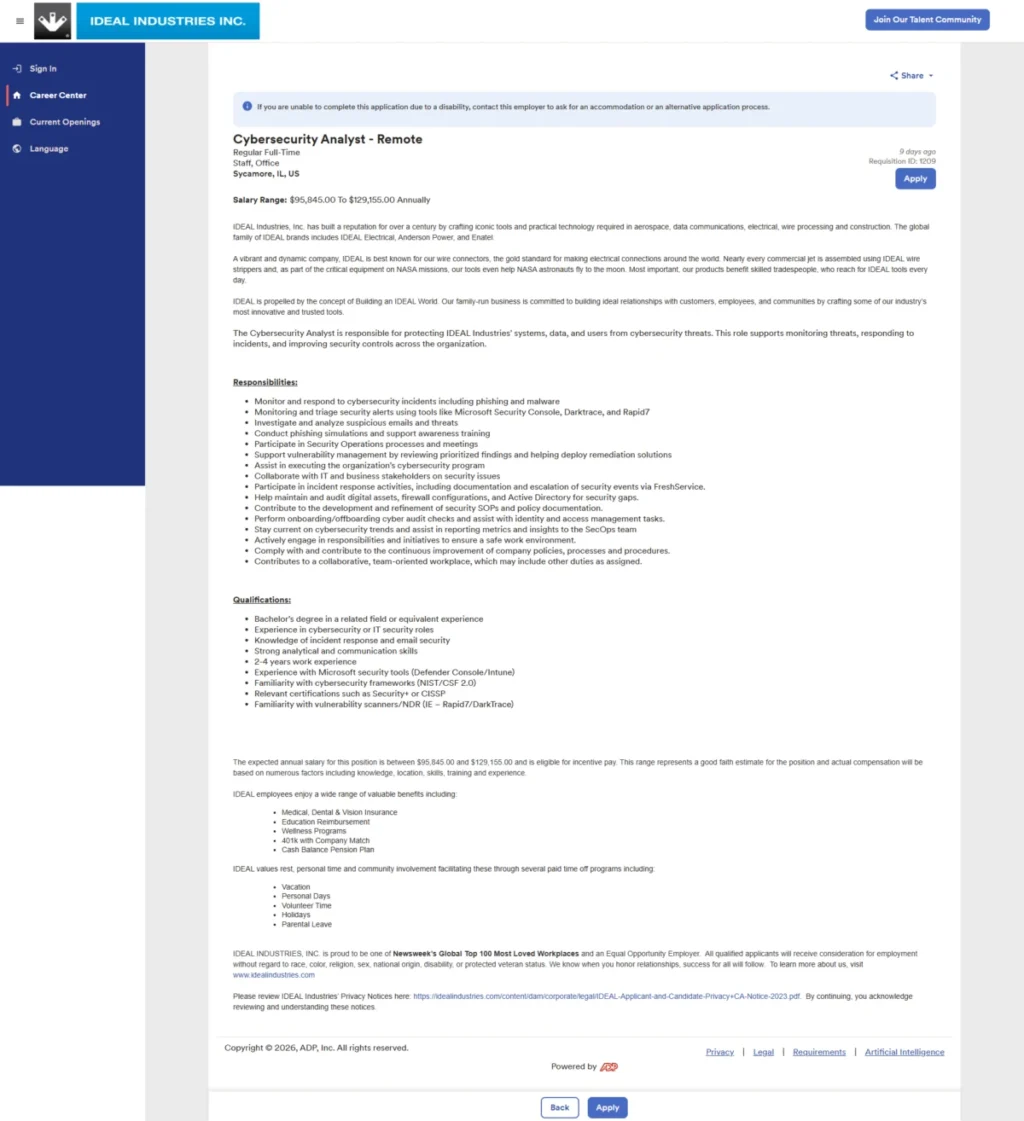
In today’s fiercely competitive talent landscape, a seamless and professional candidate journey is paramount. Companies invest heavily in employer branding and recruitment marketing, yet the critical point of conversion—the job search page—often remains an overlooked vulnerability. The integration of third-party ATS platforms, while streamlining backend operations, frequently introduces front-end compromises that erode brand consistency and stifle search engine optimization (SEO). A recent examination of an employer’s job search page, Ideal Industries, a company with a commendable 107-year history and a solid Glassdoor rating of 3.8, revealed several such opportunities for improvement. It is important to note that Ideal Industries serves as a representative example, reflecting challenges widespread across numerous otherwise reputable organizations. The complexity arises from the inherent dependency on ATS providers, necessitating a collaborative approach between internal teams and external vendors to implement necessary enhancements.
Five Critical Job Search Page Mistakes and Their Strategic Fixes
The following five issues are frequently encountered and, when left unaddressed, pose substantial barriers to attracting top talent and maximizing online visibility:
1. The ATS URL Hijack: A Silent SEO Killer
A fundamental principle of effective digital presence is consistent branding, beginning with the URL. Many companies inadvertently allow their ATS provider’s domain to appear in the job search page’s URL (e.g., jobs.atscompany.com/yourcompany) instead of their own (e.g., careers.yourcompany.com). This seemingly minor detail has profound implications for both candidate experience and search engine optimization.
-
Implications:
- SEO Credit Loss: Google and other search engines attribute SEO authority and traffic credit to the domain in the URL. When an ATS domain is displayed, all the organic search benefits generated by job seekers looking for roles at your company are diverted to the ATS provider, not your brand. This means your career site misses out on crucial rankings and visibility, effectively weakening your overall digital footprint.
- Brand Confusion and Trust: Candidates seeking employment with a specific company expect a consistent brand experience. Encountering an unfamiliar URL can create a momentary lapse in trust or confusion, raising questions about the legitimacy or directness of the application process. This friction can lead to higher bounce rates.
- Analytics Distortion: Tracking the true source of candidate traffic becomes more complex when the primary domain isn’t consistently your own, complicating efforts to optimize recruitment marketing spend and identify effective channels.
-
The Fix: URL Masking and Custom Domains. The solution involves configuring a URL mask or setting up a custom domain. This technical adjustment ensures that while the ATS powers the backend functionality, the candidate perceives a seamless transition to your company’s branded URL. Most reputable ATS platforms support this feature, often referred to as URL aliasing or vanity URLs. It requires a one-time setup, typically involving collaboration between your internal IT team and the ATS provider, to maintain brand integrity and capture full SEO value. Industry experts emphasize that this is a non-negotiable step for any organization serious about its digital recruitment strategy.
2. Brand Dilution: When Your ATS Outshines Your Company
Beyond the URL, the visual hierarchy of logos on a job search page significantly impacts brand perception. It is not uncommon to find the ATS provider’s logo displayed with equal or even greater prominence than the employer’s own corporate logo. This visual imbalance dilutes the employer brand and can inadvertently confuse candidates.
-
Implications:
- Weakened Employer Brand: The employer’s brand should be the dominant visual element on any recruitment page. When an ATS logo competes for attention, it suggests a lack of control over the candidate experience and can diminish the perceived professionalism and distinctiveness of the employer brand.
- Candidate Confusion: Job seekers are looking to connect with the company offering the role, not its software vendor. An overly prominent ATS logo can create a subconscious disconnect, making the experience feel less personal and more transactional.
- Reduced Trust and Engagement: A strong, consistent brand presence builds trust. If a candidate questions whose page they are truly on, it can subtly erode confidence and engagement, potentially leading to lower application rates.
-
The Fix: Prioritizing Your Corporate Identity. Companies must work with their ATS providers to ensure their corporate logo is the most prominent visual element on the job search page. The ATS logo, if it must be present, should be significantly smaller, relegated to a less conspicuous area (e.g., a "powered by" footer), or ideally, removed entirely if the contract allows. This adjustment reinforces the employer’s brand identity and assures candidates they are engaging directly with the company they aspire to join. HR technology analysts often recommend specifying logo placement and size requirements in ATS contracts to prevent such brand conflicts.
3. The Black Hole of Dropdowns: Lost Opportunities in Search
Interactive dropdown filters, while seemingly user-friendly for candidates already on the page, represent a significant SEO blind spot. When a candidate uses a dropdown to filter jobs by location or department, the URL typically remains unchanged, meaning no unique, indexable page is generated for that specific search query.
-
Implications:
- Zero SEO Value: Search engines cannot crawl or index content that is only accessible through dynamic dropdown selections that do not alter the URL. Consequently, if a candidate searches "IDEAL Industries jobs in Illinois" on Google, and the "Illinois" filter only exists as a dropdown, Google has no unique page to serve, and that valuable organic traffic is lost.
- Limited Organic Reach: Companies miss out on a vast pool of passive and active candidates who initiate their job search directly through search engines using specific keywords (e.g., "marketing jobs London," "engineer roles New York"). Without dedicated, crawlable pages for these filtered results, these candidates will never organically discover your relevant openings.
- Suboptimal Candidate Journey: While dropdowns are useful for refining searches on the site, they don’t cater to the initial discovery phase of the candidate journey, which often starts with a broad search query.
-
The Fix: Implementing Static, Linkable Pages. The ideal solution is to convert common filter options (like locations, job families, or departments) into static, hyperlinkable pages. Each distinct filter combination (e.g., "jobs in Sycamore, IL" or "full-time regular positions") should have its own unique, crawlable URL. For instance, a careers page could prominently display links to "Jobs in New York," "Jobs in London," "Marketing Roles," etc., similar to how Culture Amp’s careers page provides dedicated links for each office hub. This approach allows search engines to index these specific pages, enabling them to appear in relevant search results and direct candidates precisely where they need to go, significantly boosting organic traffic and reach. This often requires a more advanced configuration within the ATS or a custom front-end layer that interacts with the ATS data.
4. The Vanishing Favicon: A Subtle Erosion of Brand Consistency
A favicon, the small icon displayed in a browser tab or bookmark list, is a subtle yet powerful element of brand identity. However, many ATS portals strip out the employer’s branded favicon, replacing it with their own or a generic icon.
-
Implications:
- Inconsistent Branding: The absence of a consistent favicon breaks the visual continuity of the brand experience. If a candidate has multiple tabs open, seeing a different favicon for the job search page compared to the main company website can create a jarring and unprofessional impression.
- Reduced Brand Recall: Favicons contribute to brand recall and recognition. Losing this small visual cue means missing an opportunity to reinforce the employer’s identity across every touchpoint of the candidate journey, from the job search page to individual job descriptions.
- Perceived Lack of Polish: Attention to detail, even in small elements like favicons, signals professionalism. A missing or incorrect favicon can subtly convey a lack of care in the candidate experience.
-
The Fix: Consistent Brand Iconography. Companies should instruct their ATS provider or internal tech team to ensure the branded favicon is consistently displayed across all job search pages, including filtered results and individual job descriptions. This is typically a straightforward technical request that most ATS platforms can accommodate. Maintaining this small but significant branding element reinforces consistency and professionalism throughout the candidate’s interaction with the company’s online recruitment presence.
5. Generic Job Descriptions: Failing to Engage and Convert
The job description (JD) is often the first substantive conversation a candidate has with a potential employer. If it is generic, vague, or simply copy-pasted, it fails to engage, inform, and ultimately convert qualified candidates. While the example of Ideal Industries’ Cybersecurity Analyst posting showed positive strides (e.g., clear salary range, specific tools mentioned, clean EEO statement), it still highlighted common shortcomings.
-
Implications:
- Low-Quality Applications: Generic JDs attract a broad, often unqualified, pool of applicants. Without specific details about the role, team, culture, and career path, candidates cannot accurately self-select, leading to wasted time for both applicants and recruiters.
- Missed Opportunity for Engagement: A compelling JD is a powerful recruitment marketing tool. It should not only list requirements but also articulate the employee value proposition (EVP), the impact of the role, and the unique aspects of working at the company.
- Poor Candidate Experience: Vague JDs leave candidates guessing, leading to frustration and disengagement. A candidate might abandon an application if the role’s purpose or expectations are unclear.
- Lack of Differentiation: In a crowded job market, generic JDs fail to differentiate the company from competitors, making it harder to attract top talent.
-
The Fix: Crafting Compelling, Role-Specific Narratives. Job descriptions need to evolve from mere lists of duties to engaging narratives that resonate with target candidates.
- Role-Specific Introduction: Begin with a dynamic introduction that outlines the role’s mission, its contribution to the company, and the kind of impact the successful candidate will make. This sets the stage and immediately captures interest.
- Prioritized Responsibilities: Instead of a long, undifferentiated list, prioritize key responsibilities, highlighting the most critical and unique aspects of the role. Use action-oriented language.
- Elaborate on "Remote" (if applicable): For remote roles, clarify what "remote" truly means for your organization. Is it fully remote, hybrid, or remote with occasional travel? Describe team collaboration tools and expectations for virtual engagement.
- Highlight Culture and Team: Integrate snippets about the team, departmental culture, and opportunities for growth. This humanizes the role and provides context beyond tasks.
- Showcase EVP: Explicitly mention unique benefits, development opportunities, or company values that make the organization an attractive place to work.
These small, targeted changes can significantly improve the quality of applications and enhance the overall candidate experience, acting as a powerful filter and attraction tool.
Broader Implications for Modern Recruitment
The collective impact of these five seemingly disparate issues is a significant impediment to effective talent acquisition. A compromised job search page directly translates to:
- Increased Cost-Per-Hire: If organic traffic is diminished and qualified candidates are deterred by a poor experience, companies must rely more heavily on paid advertising, external recruiters, and other more expensive channels.
- Reduced Talent Pool Quality: Generic job descriptions and a confusing candidate journey lead to a wider, less targeted applicant pool, increasing screening time and potentially missing out on ideal candidates.
- Damaged Employer Brand: Inconsistent branding, technical glitches, and a poor user experience project an image of disorganization or indifference, negatively impacting the employer’s reputation in the market.
- Loss of Competitive Edge: In an era where candidate experience is a key differentiator, companies that fail to optimize their career sites will consistently lose out to competitors offering a smoother, more professional journey.
Industry Perspectives and Future Outlook
Recruitment software providers and HR tech specialists are increasingly recognizing these challenges. Many ATS platforms are evolving to offer more flexible customization options, better SEO capabilities, and enhanced branding controls. However, the onus remains on companies to actively engage with their providers and advocate for these crucial enhancements. The strategic imperative is clear: treat the career site job search page not merely as a functional necessity, but as a critical marketing asset and a primary gateway for top talent.
The future of talent acquisition demands a holistic approach, where technology, branding, and candidate experience converge seamlessly. By proactively addressing these five common pitfalls, organizations can transform their job search pages into powerful tools for attracting, engaging, and converting the talent essential for future success. The investment in these fixes pays dividends not only in improved recruitment metrics but also in strengthening the overall employer brand and market competitiveness.