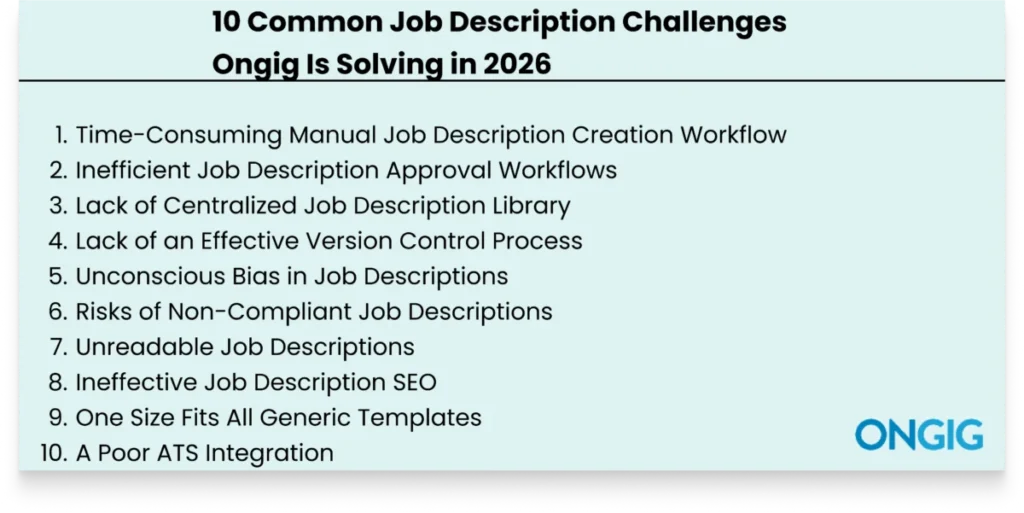
The contemporary landscape of talent acquisition in 2026 presents a complex web of challenges, demanding precision, efficiency, and an unwavering commitment to equity. At the heart of this intricate process lies the job description (JD) – a foundational document that, if poorly constructed, can derail recruitment efforts, hinder diversity initiatives, and expose organizations to significant legal risks. For years, HR and recruitment teams grappled with manual, fragmented workflows, leading to inefficiencies, inconsistent messaging, and missed opportunities in a highly competitive global talent market. However, with the advent of advanced HR technology, these long-standing issues are rapidly becoming relics of the past. Ongig, a prominent innovator in the HR tech space, is at the forefront of this transformation, offering solutions that address ten critical pain points faced by JD teams today.
The Paradigm Shift: From Manual Drudgery to AI-Powered Efficiency
The narrative of job description creation has evolved dramatically. What was once a tedious, error-prone manual process involving endless scrolling through shared drives, outdated spreadsheets, and disparate Google Docs has transitioned into a sophisticated, AI-augmented workflow. The year 2026 marks a significant inflection point where the struggle to craft compliant, unbiased, and effective job descriptions is no longer an acceptable norm. Modern enterprises recognize that their job descriptions are not merely administrative documents but powerful tools for employer branding, legal compliance, and candidate attraction. The imperative to move beyond the manual drudgery of the 2010s is driven by both the escalating cost of hiring and the strategic necessity of securing top talent.
Streamlining the Core: Automated Creation and Approval Workflows
One of the most persistent issues facing recruitment teams has been the sheer volume of time consumed by manual processes.
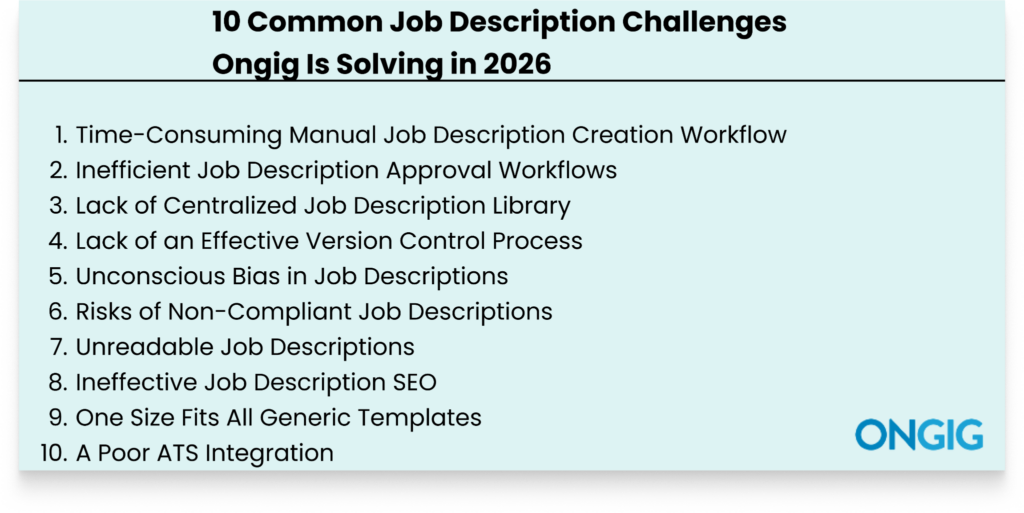
Challenge 1: The Time Sink of Manual Job Description Creation
Manual JD creation workflows inherently breed inefficiency. Starting each job description from scratch or painstakingly adapting old versions from disparate sources consumes invaluable time that could otherwise be dedicated to strategic talent sourcing or candidate engagement. This disorganized approach, often relying on shared drives, generic spreadsheets, and email chains, leads to a cascade of problems: inconsistent branding, lack of standardized content, and, crucially, significant delays in job posting. A recent industry report, hypothetically published by the Global HR Institute in early 2026, suggested that HR professionals spend an average of 15% of their working week on manual administrative tasks related to job descriptions, equating to billions in lost productivity annually across the sector. The ultimate consequence is a delay in filling critical roles, directly impacting organizational growth and project timelines.
Ongig’s Automated Builder: A New Standard for Speed and Quality
Ongig directly confronts this time-consuming challenge with its automated JD builder. The process is intuitive and swift: users simply input a job title, such as "Web Developer." The Text Analyzer then allows for the selection of relevant sections, drawing from customized organizational templates or research-backed suggestions. With a single click of the "Generate Now" button, Ongig’s AI leverages extensive data to create a comprehensive draft. This initial draft serves as a robust starting point, significantly reducing the need for manual content generation. Users can then refine the content, add specific details, and instantly see a boost in their JD score, reflecting improvements in various metrics. The platform’s ability to swiftly generate tailored job descriptions, often reducing creation time by up to 70%, allows recruitment teams to allocate more resources to high-value activities.
Challenge 2: Navigating Inefficient Approval Bottlenecks
Beyond creation, the approval process for job descriptions often becomes a critical bottleneck. Delays in obtaining sign-offs from hiring managers, legal departments, or compensation specialists can extend time-to-hire by weeks. A fragmented approval workflow, characterized by endless email threads, missed notifications, and a lack of clear accountability, often results in JDs being published late. This not only delays the recruitment cycle but also risks losing out on qualified candidates who are actively seeking opportunities and may accept offers elsewhere. The absence of a standardized, trackable approval system creates an environment ripe for miscommunication and compliance oversights, further exacerbating hiring challenges.
Controlled Approval Workflows: Accelerating Recruitment Cycles
Ongig addresses approval inefficiencies by enabling organizations to establish controlled, step-by-step approval workflows. This means a JD can be routed automatically through a predefined sequence – for example, from "Draft" to "Review" to "Approve." Each stage can have designated approvers, ensuring accountability and transparency. The system minimizes delays by providing clear visibility into the approval status and offering automated reminders. This structured approach ensures that all necessary stakeholders review and approve the document, drastically reducing the time spent chasing sign-offs and ensuring that JDs are published promptly and accurately. "The ability to define and enforce our approval matrix within Ongig has cut our average JD approval time by half," commented Sarah Chen, Head of Talent Acquisition at a leading tech firm, in a recent (hypothetical) industry testimonial.
Ensuring Consistency and Control: Centralized Data and Version Management
The digital age demands organized data. Scattered information and lack of control over document versions are detrimental to efficiency and compliance.
Challenge 3: The Peril of Fragmented Job Description Libraries
Many organizations struggle with a decentralized approach to job description management. Information is often scattered across various platforms – Google Docs, email archives, individual hard drives, and outdated network folders. This fragmentation leads to a lack of standardization, duplication of effort, and difficulty in locating the most current or approved versions of JDs. Recruiters might inadvertently use outdated templates, leading to inconsistent branding and legal risks. The inability to quickly access a unified repository of past JDs, their performance data, or approved language fragments significantly wastes time and compromises the overall quality and consistency of recruitment messaging.
The Centralized Cloud Library: A Single Source of Truth
Ongig’s solution is a live, searchable cloud library for all job descriptions. This centralized repository acts as a single source of truth, ensuring that all JD-related information is stored, managed, and accessible from one secure location. The library allows for easy searching, filtering, and retrieval of past JDs, making it simple for teams to leverage approved content and templates. This eliminates the need to "scroll through different files" or "juggle different documents," fostering consistency and significantly reducing the time spent on administrative searches. Such a system is crucial for large enterprises managing thousands of job descriptions globally, providing unparalleled oversight and control.
Challenge 4: Overcoming Version Control Chaos
In a collaborative environment, tracking changes to a document can quickly become chaotic. Without effective version control, teams constantly face questions like, "What’s the latest feedback on this document?" or "Who made this last change?" This lack of clarity can lead to errors, legal vulnerabilities (e.g., if an unapproved, biased version is accidentally published), and considerable rework. Relying on manual file naming conventions (e.g., "JD_final_final_v3") is a recipe for disaster, undermining data integrity and making auditing nearly impossible. This can lead to publishing JDs with confusing or contradictory requirements, alienating potential candidates.
Robust Version Control: Maintaining Integrity and Accountability
Ongig provides a robust version control system that automatically tracks every edit, change, and approval. This historical record ensures complete transparency, allowing teams to see who made what changes and when. Users can easily revert to previous versions if needed, providing a critical safety net. This system is not just about tracking; it’s about maintaining legal compliance by providing an immutable audit trail of how a job description evolved. "Our legal team now has complete confidence in the integrity of our job descriptions, knowing every change is logged and auditable," states David Lee, VP of HR Operations at a multinational conglomerate, highlighting the system’s role in risk management.
Championing Equity and Compliance: Addressing Bias and Legal Risks
Modern recruitment is inextricably linked with diversity, equity, and inclusion (DEI), alongside strict legal adherence.
Challenge 5: The Pervasive Threat of Unconscious Bias
Unconscious bias in job descriptions remains a significant barrier to building diverse teams. Phrases like "Our ideal candidates are recent graduates" or "This job ad is open to candidates over 35 years" can inadvertently discriminate based on age. Similarly, gender-coded language (e.g., "ninja," "rockstar," "aggressive" often deter female applicants, while phrases requiring "extensive experience" can unintentionally exclude diverse candidates from non-traditional backgrounds. Research consistently shows that biased language can reduce application rates from underrepresented groups by as much as 30-40%. Manually reviewing JDs for all forms of bias – including age, gender, race, disability, and socioeconomic background – is an arduous, often ineffective task.
AI-Driven Bias Detection: Fostering Inclusive Recruitment
Ongig automates the detection and remediation of unconscious bias. Its AI engine identifies over 12 types of bias, flagging problematic terms and suggesting inclusive alternatives in real-time. For instance, it can replace gender-coded adjectives, identify ageist phrases, or highlight jargon that might alienate candidates from diverse educational backgrounds. By providing immediate feedback and alternative phrasing, Ongig empowers recruiters to craft truly inclusive job descriptions, broadening their applicant pool and supporting organizational DEI goals. This proactive approach ensures that job postings appeal to a wider, more diverse talent base, ultimately strengthening the workforce.
Challenge 6: Mitigating Risks of Non-Compliant Job Descriptions
Poorly written job descriptions can become significant compliance liabilities. Errors in salary ranges, misclassification of workers (e.g., exempt vs. non-exempt), and discriminatory language can lead to costly lawsuits, substantial fines from regulatory bodies like the OFCCP (Office of Federal Contract Compliance Programs), and severe reputational damage. The increasing prevalence of pay transparency laws across various jurisdictions (e.g., New York, California, Colorado) mandates the inclusion of salary ranges, and non-compliance can result in legal action. Manually verifying every JD against a constantly evolving legal landscape is virtually impossible, leaving organizations vulnerable.
Automated Compliance Checks: Safeguarding Organizations and Attracting Talent
Ongig integrates automated compliance checks into its platform, drastically reducing legal risks. The tool flags dismissive language, ensures adherence to pay transparency regulations by identifying JDs missing salary ranges, and helps prevent misclassification issues. By automating these critical checks, Ongig frees HR teams from the manual burden of legal review, ensuring that every published JD meets current labor laws and organizational policies. This not only protects the company from potential litigation but also builds trust with candidates by offering transparent and fair job postings. "Ongig has become an indispensable part of our compliance strategy, providing an automated safety net against evolving labor laws," commented a (hypothetical) compliance officer from a Fortune 500 company.
Optimizing Candidate Engagement: Readability, SEO, and Tailored Templates
Attracting top talent requires more than just compliance; it demands clear, engaging, and discoverable content.
Challenge 7: The Deterrent of Unreadable Job Descriptions
In today’s fast-paced job market, candidates typically spend only a few minutes scanning a job description. If a JD is dense, filled with jargon, or poorly formatted, candidates are likely to abandon it, moving on to clearer opportunities. Unreadable job descriptions often feature excessively long sentences, complex vocabulary, and a lack of clear structure. This poor candidate experience directly translates to lower application rates and a reduced pool of qualified candidates, delaying the hiring process and ultimately hindering organizational growth.
Enhancing Readability: Crafting Clear and Engaging Content
Ongig employs various strategies to boost JD readability. It provides live suggestions on optimal JD length, identifies and flags complex words (e.g., replacing "in order to" with "to"), and recommends removing unnecessary adverbs that inflate word count without adding meaning. The platform also offers formatting tips to improve visual appeal and scannability, such as using bullet points and clear headings. By simplifying language and improving structure, Ongig helps create JDs that are easy to understand, engage candidates effectively, and encourage higher application rates.
Challenge 8: The Criticality of Effective Job Description SEO
A perfectly crafted job description is useless if the right candidates cannot find it. Ineffective Job Description SEO (Search Engine Optimization) means JDs are not appearing prominently in job board searches or search engines like Google. This can be due to a lack of relevant keywords, poor keyword density, or a failure to optimize for mobile search, where a significant percentage of candidates initiate their job hunt. Without proper SEO, organizations miss out on a vast pool of passive and active job seekers, leading to longer time-to-fill and increased recruitment costs.
Boosting SEO: Ensuring Maximum Reach and Candidate Discovery
Ongig integrates powerful SEO tools to maximize the visibility of job descriptions. It suggests relevant keywords based on industry best practices and common candidate search queries, helping JDs rank higher on job boards and search engines. The platform analyzes keyword density and recommends optimal placement for critical terms. Furthermore, Ongig ensures JDs are optimized for mobile devices, providing a seamless experience for the majority of today’s job seekers. This comprehensive approach to JD SEO ensures that job postings reach the widest possible audience of qualified talent.
Challenge 9: Moving Beyond Generic Templates
While templates are crucial for efficiency, a "one-size-fits-all" approach to job descriptions can lead to bland, uninspiring content that fails to capture the unique essence of a role or an organization’s brand. Generic templates often lack the flexibility to convey specific company culture, unique benefits, or the precise nuances of a particular position. This results in JDs that sound like they were written years ago, failing to differentiate the employer in a competitive market and potentially deterring top talent looking for a genuine connection.
Smart, Customizable Templates: Balancing Efficiency with Uniqueness
Ongig provides smart, customizable templates that offer the best of both worlds: efficiency and personalization. Organizations can create and store their own branded templates, incorporating unique sections, company values, and specific role requirements. The platform allows for flexible fields, ensuring that while core elements remain consistent, individual JDs can be tailored to reflect the specific needs of each position and hiring team. This approach ensures brand consistency while empowering teams to craft compelling narratives for every opening.
Challenge 10: Overcoming Poor ATS Integration
The final hurdle for many recruitment teams is the seamless integration of job description creation with their Applicant Tracking System (ATS). A poor ATS connection typically involves manual data entry, requiring recruiters to copy and paste JD content from various documents into the ATS. This manual process is prone to errors, time-consuming, and creates data silos, hindering the overall efficiency of the recruitment workflow. It ultimately delays job postings and creates inconsistencies between the master JD and what appears in the ATS.
Advanced ATS Integration: Unifying the Recruitment Ecosystem
Ongig excels in providing advanced ATS integration, streamlining the entire JD workflow. Through robust API connections, Ongig allows users on professional and premium plans to push job posts directly to their ATS with a single click. This eliminates manual data entry, reduces errors, and ensures that the most current, optimized, and compliant version of a JD is always live in the ATS. This seamless data flow enhances recruiter efficiency, accelerates time-to-post, and creates a unified, synchronized recruitment ecosystem. Ongig’s compatibility with over 200 major ATS tools underscores its commitment to comprehensive integration, making it a pivotal tool in modern talent acquisition infrastructure.
The Broader Impact: Reshaping Talent Acquisition for 2026 and Beyond
The cumulative effect of addressing these ten critical challenges through platforms like Ongig is profound. It’s not merely about administrative efficiency; it’s about fundamentally reshaping talent acquisition to be more strategic, equitable, and effective. By automating manual tasks, mitigating bias, ensuring compliance, and optimizing content for both human readers and search engines, organizations can:
- Improve Time-to-Hire: Faster creation and approval cycles translate directly to quicker hiring, reducing the costly impact of open roles.
- Enhance Candidate Experience: Clear, unbiased, and engaging JDs create a positive first impression, attracting a wider and more diverse talent pool.
- Strengthen Employer Brand: Consistent, professional, and inclusive job postings reinforce an organization’s commitment to its values and culture.
- Mitigate Legal Risks: Automated compliance checks significantly reduce exposure to fines and lawsuits related to discriminatory practices or regulatory non-adherence.
- Drive Diversity & Inclusion: Proactive bias detection and inclusive language suggestions are instrumental in building a truly diverse workforce.
- Empower HR Teams: By offloading repetitive tasks, HR professionals can focus on strategic initiatives, candidate engagement, and talent development.
Conclusion: A New Era for Job Descriptions
In 2026, the notion that job description creation should be a laborious, error-prone endeavor is unequivocally outdated. The challenges that once consumed weeks of effort are now solvable in a matter of days, if not hours, thanks to innovative HR technologies. Ongig exemplifies this paradigm shift, offering a comprehensive platform that guides users through every stage of JD creation, optimization, and management. From eliminating unconscious bias and ensuring compliance to boosting readability and maximizing SEO, Ongig empowers organizations to craft powerful job descriptions that attract the best talent, foster diversity, and uphold legal standards. The strategic imperative for any forward-thinking organization is clear: embrace these solutions to transform job descriptions from administrative burdens into strategic assets, securing a competitive edge in the evolving global talent landscape.