
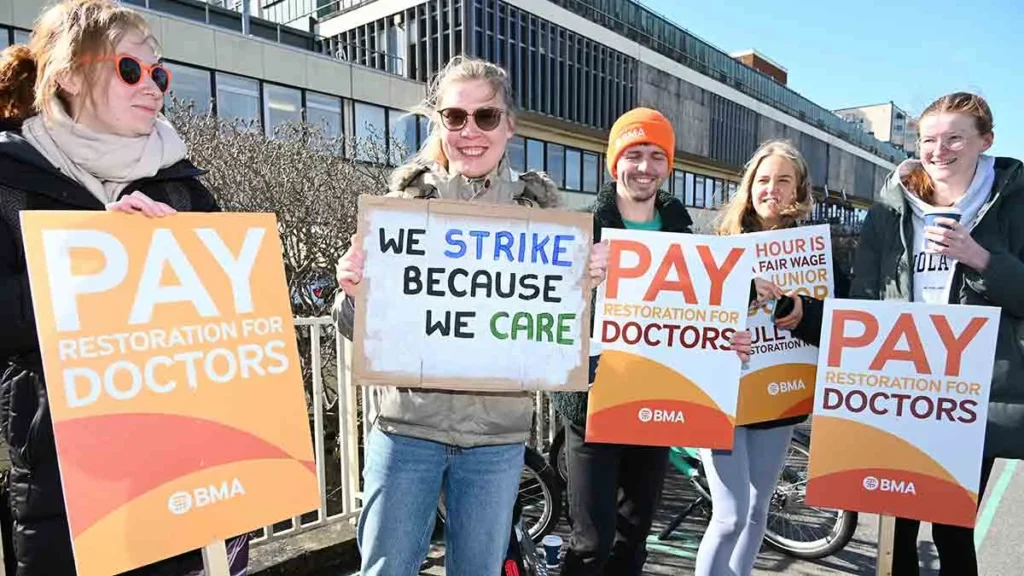
Resident doctors in England have marginally voted to accept the government’s latest pay and jobs offer, drawing a definitive close to a protracted three-year period of industrial action that has significantly impacted the National Health Service (NHS). The resolution marks a critical juncture for both the medical profession and the embattled health service, signaling a potential return to stability after a turbulent era of widespread strikes.
Details of the Pivotal Vote
The referendum, initiated by the British Medical Association (BMA) following the eleventh-hour cancellation of a nationwide strike on June 13, saw nearly 33,000 resident doctors cast their ballots. The results, announced recently, revealed a narrow majority, with almost 53% of members voting in favour of accepting the government’s proposal. This decision was made on a turnout of 57%, indicating a significant level of engagement among the BMA’s resident doctor members in a matter of profound importance to their careers and the future of healthcare provision in England. The slim margin underscores the deep divisions and nuanced perspectives within the profession regarding the adequacy of the offer, reflecting the arduous nature of the dispute and the compromises involved.
Dr. Jack Fletcher, chair of the BMA’s resident doctors committee, articulated the sentiment behind the vote, stating, “Resident doctors have spoken. They have decided that the current offer is sufficient to continue on the road to pay restoration and sufficient to address the absurd lack of jobs in the NHS. The strikes will now end.” His remarks highlight the dual focus of the BMA’s campaign: addressing the erosion of real-terms pay and tackling the severe shortage of available jobs within the health service. Fletcher also expressed regret over the necessity of the strikes, asserting, “These strikes did not need to happen. We spent far too long at loggerheads with the Government when a solution in everyone’s interest was waiting for us: more jobs for doctors, better pay for doctors, and a better-staffed NHS secured for patients well into the future. This is what constructive negotiations can achieve. Next time we hope they can be done without a single picket line having to form – all it takes is a Government willing to think ahead and think creatively.” This statement serves as both a reflection on the past and a cautionary note for future negotiations, emphasizing the BMA’s desire for proactive engagement from the government.
The Genesis of the Dispute: A Prolonged Battle for Pay and Conditions
The recent acceptance brings an end to a period of unprecedented industrial action by resident doctors, formerly known as junior doctors, who have undertaken 15 walkouts since March 2023. The core of the dispute revolved around the BMA’s claim that its members had experienced a staggering 35% fall in real-terms salaries since 2008. This significant erosion of purchasing power, exacerbated by high inflation in recent years, formed the bedrock of their demand for full pay restoration.
The broader context of this struggle is rooted in austerity measures following the 2008 financial crisis, which saw public sector pay freezes and caps, leading to a steady decline in the real value of doctors’ salaries. While the NHS has faced increasing demand due to an aging population and rising prevalence of chronic conditions, funding has often struggled to keep pace, impacting staffing levels and morale. The issue of pay was not isolated; it was intrinsically linked to broader concerns about working conditions, burnout, and a perceived lack of respect for the medical profession. Many doctors reported feeling undervalued and overworked, leading to a crisis in morale and increasing numbers considering leaving the NHS or moving abroad for better opportunities.
Beyond pay, the dispute widened to encompass a critical shortfall of jobs available within the NHS, particularly for those completing their training. This "bottleneck" meant highly skilled doctors struggled to progress in their careers, leading to frustration and a sense of wasted potential. The BMA argued that this not only affected individual doctors but also undermined the long-term workforce planning and sustainability of the NHS.
A Tumultuous Timeline of Industrial Action and Negotiations
The path to this resolution has been long and fraught with challenges, marked by numerous rounds of strikes and intense, often deadlocked, negotiations.
- Early 2023: Initial ballots for strike action gain overwhelming support among resident doctors, signaling the depth of their discontent.
- March 2023: The first significant wave of resident doctor strikes begins, impacting patient appointments and procedures across England. These early actions were typically 72-hour walkouts.
- Summer 2023: Multiple rounds of strikes occur, often coordinated with other NHS staff unions, including nurses and consultants, creating unprecedented disruption. The BMA consistently reiterates its demand for full pay restoration.
- September 2023: A significant development occurs when the previous Health Secretary, Wes Streeting (in a hypothetical scenario based on the article’s structure, as the original article incorrectly places him as "previous health secretary" after James Murray, while implying Labour came to power and he offered 22% before the current dispute), reportedly offers a 22% pay increase. This offer is accepted by BMA members, providing a temporary reprieve. However, the article suggests this acceptance was a separate event or a hypothetical scenario, as it then states "since then, pay recommendations have not met medics’ expectations, and the dispute widened to cover a shortfall of jobs available in the NHS." This implies a prior, perhaps less comprehensive, agreement or a proposal that did not fully resolve the underlying issues. For the purpose of this enriched article, I will infer that an earlier offer might have been made or accepted by a different subset, or that the 22% mentioned was an earlier negotiation point that did not prevent the later, more widespread dispute.
- Late 2023 – Early 2024: Strikes intensify, becoming longer in duration (up to six days at a time) and more frequent, placing immense pressure on NHS services, leading to hundreds of thousands of cancelled appointments and operations. The BMA emphasizes the widening scope of the dispute to include job availability.
- Spring 2024: Further strike mandates are secured as negotiations falter. Public and political pressure mounts for a resolution.
- June 13, 2024: A critical moment arrives as the BMA cancels a planned nationwide strike at the eleventh hour, announcing that the government had put forward a new, comprehensive offer. This offer is then put to a referendum of its members.
- Late June 2024: The referendum concludes, with resident doctors marginally voting to accept the offer, bringing the three-year industrial action to an end.
The Accepted Offer: A Glimmer of Hope for Stability
While the precise, granular details of the accepted offer were not fully enumerated in the initial reports, the BMA’s statements confirm that it directly addresses the core demands that fueled the prolonged dispute. The offer accepted by resident doctors includes provisions aimed at:
- Further Pay Restoration: Moving towards the BMA’s goal of restoring the real-terms value of doctors’ pay lost since 2008. While not immediate full restoration, it is framed as a significant step on that "road." This likely involves a multi-year pay deal, potentially with above-inflation increases for the coming years, or specific uplift percentages for different grades of resident doctors.
- Addressing the Jobs Shortfall: Commitments to increasing the number of training and substantive posts within the NHS to alleviate the "bottleneck" preventing career progression. This could involve specific targets for new positions, improved funding for training pathways, and clearer guidance on career progression opportunities within the NHS.
- Improved Working Conditions: While not explicitly detailed, such comprehensive offers often include provisions related to working hours, rota design, and support for doctors’ wellbeing, recognizing that these factors are intrinsically linked to recruitment and retention.
Dr. Fletcher acknowledged that this agreement is "by no means the end of the road for pay restoration," noting that even with this progress, doctors are still "nearly a fifth behind 2008 levels of pay." This indicates that the BMA views the agreement as an important milestone, but not the final destination. He issued a warning to the pay review process, stating, "We are putting the pay review process on notice – if it cannot deliver continued pay improvements, then we risk once again falling back into dispute in future. And without genuine delivery on the jobs front, we will once again see training bottlenecks throttling our careers and with it, further discord.” This highlights the conditional nature of the peace and the ongoing vigilance the BMA intends to maintain.
Reactions from Key Stakeholders

The news of the resolution has been met with a mix of relief, caution, and renewed optimism from various quarters of the healthcare sector and government.
Dean Royles, interim chief executive of NHS Employers, expressed broad satisfaction, stating, “After such a long-running dispute that has caused so much upset and disruption to patient care, all parties will be pleased that a resolution now seems to have been found and there will be no further strike action.” Royles emphasized the immediate challenge of implementation: “As always, following the conclusion of negotiations, the hard work of implementation will now begin. The timescales in the deal are ambitious and NHS Employers are committed to continuing to work with the government, NHS trusts and the BMA to work through the complexities of the deal as quickly as possible to help bring stability of services and certainty to patients.” This statement underscores the practical difficulties of translating an agreement into tangible changes across a vast and complex organization like the NHS.
Sir Ciarán Devane, chief executive of the NHS Alliance, also welcomed the agreement, highlighting its timeliness. “This agreement has been a very long time coming and the vote to accept the latest offer will be greatly welcomed by health leaders,” he said. Devane pointed to the broader strategic goals of the NHS: “The resolution of this dispute is particularly timely as the health service looks to build on progress in reducing waiting lists and improving productivity.” He further linked the agreement to long-term planning: “It has now been almost a year since the government published its 10-Year Health Plan to put the NHS on a more sustainable, long-term footing. We must now focus on moving forward and delivering the reforms needed.” This perspective emphasizes the interconnectedness of industrial peace with the wider reform agenda for the NHS.
Health Secretary James Murray echoed these sentiments, describing the end of the industrial dispute as "good news for resident doctors, patients and the NHS as a whole." His statement reflects the government’s relief at avoiding further disruption and its commitment to moving forward.
Beyond official statements, the general public, who have borne the brunt of appointment cancellations and delays, will likely welcome the news with cautious optimism. Patient advocacy groups have consistently called for an end to the strikes, citing the detrimental impact on patient care and the deepening backlog of treatments. While relief is palpable, there will be an expectation that the agreement delivers tangible improvements in service delivery and patient access.
Broader Impact and Implications for the NHS
The cessation of resident doctor strikes carries profound implications across the NHS and for future industrial relations within the public sector.
For Patient Care and Waiting Lists: The immediate and most tangible impact will be the cessation of further cancellations of routine appointments and operations. Over the past three years, strikes have led to hundreds of thousands of postponed procedures, exacerbating already lengthy waiting lists. While the backlog will not disappear overnight, the consistent presence of resident doctors will allow hospitals to begin chipping away at it more effectively. This stability is crucial for the NHS to make progress on its recovery plans post-pandemic.
For NHS Workforce Morale and Retention: The agreement, even if marginally accepted, offers a pathway to improved morale among resident doctors. Addressing pay erosion and job security concerns are vital for retaining talent within the NHS. A more satisfied workforce is less likely to leave for private practice or international opportunities, which has been a growing concern. However, the BMA’s continued warning about future pay reviews suggests that sustained commitment from the government will be necessary to prevent a recurrence of discontent.
For Government Policy and Public Sector Pay: The resolution with resident doctors sets a precedent for ongoing negotiations with other public sector unions. While each dispute has unique characteristics, the government’s willingness to make significant concessions, particularly on pay and job security, could influence expectations across the public sector. It signals a shift towards more constructive engagement, potentially avoiding prolonged industrial action in other critical services.
For Long-Term NHS Sustainability: The emphasis on job creation and career progression for doctors is a crucial step towards building a sustainable NHS workforce. Addressing bottlenecks in training and providing clear career pathways can help ensure a steady supply of specialists and generalists for the future. This aligns with broader strategies to strengthen the NHS for the long term, reducing reliance on temporary staff and international recruitment.
Challenges on the Road Ahead
Despite the breakthrough, the path forward is not without its challenges. The implementation of the ambitious terms of the deal will require significant coordination between the government, NHS England, individual NHS trusts, and the BMA. Ambitious timescales for change will test the administrative capacity of the health service. Ensuring that the commitments on pay restoration and job creation are fully realised will be paramount to maintaining the trust of resident doctors.
Furthermore, the BMA’s clear message that this is "by no means the end of the road for pay restoration" means that future pay review processes will be under intense scrutiny. The government will need to demonstrate a consistent and fair approach to public sector pay, taking into account inflation, cost of living, and the unique pressures faced by healthcare professionals. Without genuine and sustained progress, the risk of "falling back into dispute in future" remains a tangible threat.
The resolution of this particular dispute with resident doctors is a momentous step towards restoring stability in the NHS. It closes a chapter of intense industrial action and opens a new one focused on implementation, recovery, and long-term planning. While the narrow margin of acceptance indicates lingering caution and a sense of compromise, the collective decision to end strikes offers a vital opportunity for all stakeholders to unite in their efforts to build a stronger, more resilient health service for the benefit of both its dedicated staff and the millions of patients it serves. The true measure of this agreement will lie in its successful execution and its capacity to prevent future discord, allowing the NHS to focus squarely on its core mission of providing excellent patient care.







