
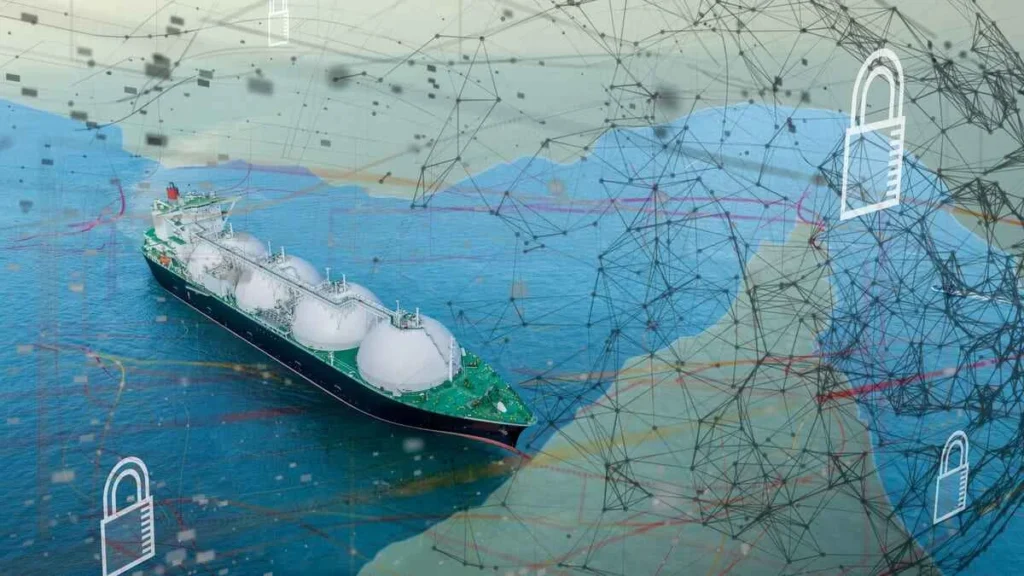
The strategic Strait of Hormuz has once again become a flashpoint, with shipping coming under renewed fire from the Islamic Revolutionary Guards Corps (IRGC) amidst heightened US-Iran tensions. This volatile environment has not only jeopardized global trade but has also placed the lives and livelihoods of thousands of civilian seafarers in dire peril, exposing critical vulnerabilities in international maritime labour protection frameworks. As crew members from a cargo vessel initiate legal proceedings against their employer, the unfolding crisis underscores the urgent need for a more robust international response to safeguard seafarers caught in conflicts that show little sign of abating, with profound implications for the global economy.
Background to a Perilous Passage
The Strait of Hormuz, a narrow waterway connecting the Persian Gulf to the Arabian Sea, is arguably the world’s most critical oil transit chokepoint. Approximately one-fifth of global oil consumption, alongside significant volumes of liquefied natural gas and other goods, passes through this 21-mile-wide channel daily. Its strategic importance makes it a perennial nexus of geopolitical tension, particularly between the United States and Iran. Following the U.S. withdrawal from the Joint Comprehensive Plan of Action (JCPOA) in 2018 and the subsequent re-imposition of sanctions, tensions in the region have steadily escalated, leading to a series of maritime incidents. These incidents have ranged from vessel seizures and drone attacks to direct assaults on commercial shipping, often attributed to the IRGC. The current "Hormuz crisis" refers to a recent intensification of these aggressions, creating an acutely dangerous operating environment for merchant vessels.
A Chronology of Rising Risks
The period leading up to and during the current crisis has been marked by a discernible escalation. While the precise start date of the "conflict" referenced in the original report is not specified, it aligns with a pattern of increased maritime insecurity observed since late 2023 and into early 2024. Prior to this, several notable incidents had already demonstrated the region’s volatility:
- 2019 Tanker Attacks: A series of limpet mine attacks on oil tankers in the Gulf of Oman and near the Strait of Hormuz in May and June 2019, widely blamed on Iran, significantly heightened global alarm.
- Stena Impero Seizure (2019): The seizure of the British-flagged oil tanker Stena Impero by the IRGC in July 2019, in apparent retaliation for the seizure of an Iranian tanker off Gibraltar, underscored the direct threat to international shipping.
- Ongoing Harassment: Subsequent years have seen numerous reports of IRGC forces harassing, boarding, and occasionally seizing commercial vessels, often under various pretexts related to alleged environmental violations or legal disputes.
- Late 2023/Early 2024 Intensification: The "four months on from the start of the conflict" suggests a concentrated period of heightened insecurity. This phase has reportedly seen "large-scale US attacks on Iran… stepped up," implying a broader military or geopolitical context of confrontation, alongside IRGC actions targeting shipping. This dual pressure has created an environment where commercial vessels are increasingly caught in the crossfire or used as pawns in a wider geopolitical struggle.
- Specific Incident: The attack on the Thai bulk carrier Mayuree Naree serves as a stark illustration of these dangers, directly leading to the current legal challenge.
This chronology paints a picture of a region where the line between geopolitical maneuvering and direct threats to commercial shipping has blurred, transforming routine voyages into hazardous expeditions.
The Human Cost: A Legal Battle Unfolds
The grave human cost of this escalating crisis is now being laid bare in legal proceedings. Three former crew members of the Thai bulk carrier Mayuree Naree have launched a landmark lawsuit against their employer, Precious Shipping Company, an affiliated firm, and the ship’s captain. The core of their claim asserts that the company negligently exposed them to unacceptable danger by continuing to operate through the Strait of Hormuz despite a rapidly deteriorating security situation. They further allege wrongful dismissal before their contracts expired and, most disturbingly, that they now suffer from severe post-traumatic stress disorder (PTSD), rendering them unable to return to sea.
The respondents, Precious Shipping Company, dispute these allegations. They contend that the Mayuree Naree‘s voyage adhered strictly to the prevailing security guidance at the time, arguing there was no official advice recommending vessels avoid the Strait. This legal battle highlights the complex interplay between employer obligations, international maritime law, and the realities of operating in a conflict zone. Regardless of the verdict, the case underscores a critical point: the consequences of such crises extend far beyond immediate physical damage or financial loss. For many seafarers, the experience entails prolonged exposure to uncertainty, fear, and profound psychological trauma, a human toll that employment law is now being asked to address. Mental health support for seafarers remains a significant challenge, with studies by organizations like ISWAN (International Seafarers’ Welfare and Assistance Network) consistently highlighting high rates of stress, anxiety, and depression among maritime workers, exacerbated by periods of conflict or prolonged isolation.
Systemic Failures in Seafarer Protection: A Recurring Nightmare
The Mayuree Naree case is not an isolated incident but rather a symptom of deeper, systemic weaknesses within the international framework designed to protect seafarers. As maritime expert Ashley Oro points out, protecting seafarers during a global crisis is less about drafting better regulations and more about the enforceability of existing ones when governments, employers, and commercial interests face immense pressure.
The Regulatory Gap and the Illusion of Progress: The International Maritime Organization (IMO) and the International Labour Organization (ILO) have developed comprehensive frameworks, notably the Maritime Labour Convention (MLC) 2006. The MLC provides extensive protections covering working hours, rest, repatriation, medical care, welfare, and contractual rights. These provisions are robust and entirely appropriate for normal commercial operations. However, the Hormuz crisis, much like the COVID-19 pandemic before it, has exposed a critical flaw: these protections become theoretical when the assumptions underpinning them—safe port access, crew mobility, operational stability—break down.

During the COVID-19 pandemic, the world witnessed an unprecedented crew change crisis, trapping hundreds of thousands of seafarers aboard ships for months beyond their contract expiry due to travel restrictions. While the initial response was slow, governments, the IMO, ILO, airlines, and port authorities eventually coalesced to create an international framework recognizing seafarers as "key workers" and establishing practical mechanisms for crew changes. This was widely hailed as a lesson learned. Yet, just four months into the Hormuz crisis, many of the same structural weaknesses have reappeared, albeit in a different guise. This time, the obstacle isn’t a pandemic but active warfare.
The United Nations’ attempt to establish a humanitarian maritime corridor in the Persian Gulf ultimately demonstrated the limitations of the existing system in an actively contested operating environment. Such initiatives rely on voluntary cooperation, security guarantees from military actors, and commercial willingness to participate. When these assumptions falter, as they did, evacuation efforts stall. This highlights a fundamental challenge: when a vessel cannot safely enter port, when relief crews cannot reach the ship, when insurers refuse to cover operations, when airlines avoid conflict zones, when governments cannot guarantee safe passage, and when employers face operational constraints, seafarers’ legal rights rapidly become unenforceable. The MLC is not deliberately suspended; it simply becomes impossible to comply with.
The Efficiency Paradox of Modern Shipping: Modern shipping has evolved into an extraordinarily efficient global industry. Crewing agencies recruit globally, employment contracts are often structured around temporary assignments, and companies minimize retained manpower to reduce costs during normal operations. This lean, optimized model functions exceptionally well during peacetime, driving global trade with unparalleled efficiency. However, it functions remarkably poorly during systemic crises. The industry has, in effect, streamlined itself into a paradox: the very structures designed to maximize efficiency leave almost no resilience when crew mobility collapses.
Companies cannot easily replace crews because they often lack sufficient reserve personnel. Agencies cannot rapidly mobilize replacements because travel itself becomes impossible. Governments cannot compel movement because transport infrastructure and security conditions lie outside their control. The result is that the burden falls almost entirely on the individual seafarer, who, despite being essential to global trade, often finds themselves with the fewest practical options available. This dynamic underscores a significant imbalance of power and responsibility.
Economic and Geopolitical Implications
The ongoing crisis in the Strait of Hormuz carries immense economic and geopolitical implications. Beyond the immediate threat to seafarers, the instability directly impacts global energy markets, supply chain reliability, and insurance costs.
- Global Energy Markets: As a major chokepoint for oil and gas, any disruption in Hormuz sends ripples through global energy prices. Higher insurance premiums for transiting vessels, rerouting decisions, or even perceived threats can drive up crude oil prices, impacting economies worldwide. The potential for prolonged disruption could lead to significant economic downturns.
- Supply Chain Resilience: The globalized economy relies heavily on just-in-time supply chains. Delays, diversions, or increased risks in a critical maritime artery like Hormuz expose the fragility of these systems. Manufacturers and retailers face increased costs and uncertainty, potentially leading to inflation and product shortages.
- Insurance Market Volatility: War risk premiums for vessels operating in the Persian Gulf have surged during periods of heightened tension. These costs are ultimately passed down through the supply chain, increasing the price of goods. Insurers may also impose exclusion zones, limiting coverage and further complicating shipping operations.
- Challenges to International Law: The repeated targeting of commercial shipping challenges the principle of freedom of navigation, a cornerstone of international maritime law. The inability of the international community to consistently ensure safe passage for civilian vessels in such a vital waterway erodes confidence in the existing legal and security architecture.
Calls for Reform and Accountability
The repeated failures to protect seafarers during crises like COVID-19 and the Hormuz conflict highlight not merely a humanitarian issue, but a profound accountability problem. While numerous reports followed the pandemic, identifying lessons learned and updating protocols, the Hormuz crisis has revealed that the critical weakness was never the wording of the standards themselves, but the absence of meaningful enforcement mechanisms in extraordinary circumstances.
International maritime law largely depends on flag states enforcing obligations against shipowners. Employment protections rely on states exercising oversight over companies and recognizing that contractual obligations persist even during emergencies. In practice, these mechanisms become fragmented precisely when they are most needed. Commercial realities often override legal theory: shipping companies face insurance restrictions, flag states have limited practical reach, crewing agencies lose operational flexibility, and governments prioritize national security over labour mobility. The legal obligations remain, but the ability to enforce them steadily disappears.
This creates an uncomfortable moral hazard. If the international system cannot effectively hold organizations accountable during the two largest maritime employment crises in recent history – a global pandemic and a regional war – then what incentive exists for structural reform? The lack of consequences for systemic failures perpetuates a cycle where seafarers bear the brunt of geopolitical and operational breakdowns. International bodies like the IMO and ILO, alongside national governments, must move beyond mere declarations and develop concrete, enforceable mechanisms that ensure seafarer welfare and rights are upheld, even in conflict zones. This could involve establishing dedicated international emergency response funds, creating truly protected humanitarian corridors backed by multilateral naval escorts, or implementing stricter penalties for companies that fail to meet their obligations during crises.
The Path Forward: From Aspiration to Guarantee
Once the headlines fade, vessels resume trading, insurance markets stabilize, and supply chains recover, history suggests attention moves elsewhere. But the seafarers remain. Many return home after months of prolonged uncertainty, isolation, and psychological strain. Some will require long-term support. Most will quietly return to sea, for global trade still depends upon them. The system resets, awaiting the next crisis.
Perhaps this is the true lesson from the Hormuz crisis. COVID-19 taught the world that seafarers are essential workers. The Hormuz crisis has now unequivocally demonstrated that the international community has not yet built an employment system capable of protecting them when being essential becomes dangerous. The standards themselves are not the failure; the failure lies in the belief that standards alone are sufficient. Without practical mechanisms capable of functioning during genuine international crises, seafarers’ employment rights will remain aspirations rather than guarantees. If a global pandemic and an active regional conflict with immense ramifications for the global economy and security are insufficient to expose this fundamental weakness, it is difficult to imagine what future event finally will compel the necessary, overdue structural reforms. The time for proactive measures, beyond mere rhetoric, to safeguard the backbone of global trade is now.








