
The landscape of Human Resources technology has evolved dramatically, offering a comprehensive suite of tools designed to foster employee engagement, streamline performance management, facilitate recognition, and guide development. Companies often find themselves with a seemingly robust HR tech stack, encompassing everything from sophisticated engagement survey platforms and performance review systems to robust recognition programs and personalized development plans, all underpinned by a central HRIS. On paper, every critical function appears to be covered. However, a critical, often overlooked challenge emerges not from the individual tools themselves, but from the gaps between them. This fragmentation of data creates a silent drain on organizational resources and strategic effectiveness, leading to significant financial losses and missed opportunities.
This pervasive issue, termed the "disconnected data problem," is more than just an IT inconvenience; it directly impacts an organization’s ability to respond proactively to critical workforce dynamics. It hinders HR leaders’ confidence in answering executive queries, delays the identification of flight risks, and consumes valuable time in the laborious process of compiling reports, diverting focus from actionable insights. The good news is that the solution doesn’t lie in acquiring more data or overhauling existing, functional systems. Instead, the imperative is to ensure these disparate systems can communicate and share information seamlessly, transforming scattered signals into a coherent narrative about the workforce.
Understanding the Anatomy of Disconnected People Data
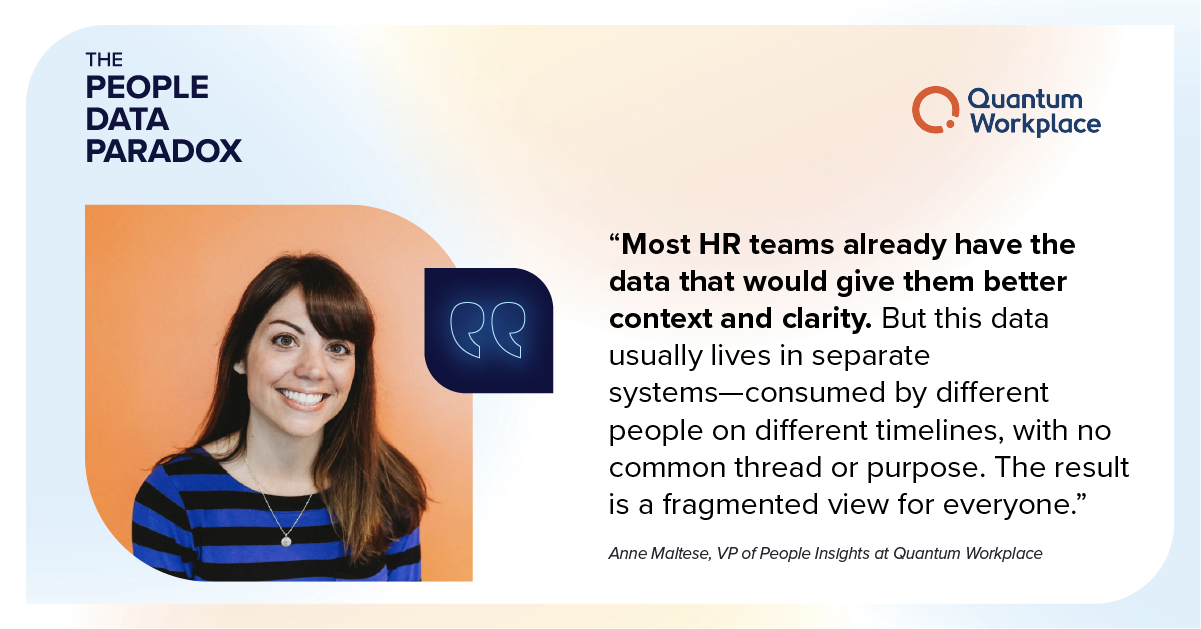
Disconnected people data arises when essential HR functions—engagement surveys, performance reviews, recognition activities, development plans, and HRIS records—reside in separate, often proprietary, systems that were not designed for interoperability. While each system captures a vital piece of the employee experience puzzle, no single platform offers a holistic view. Consequently, HR professionals are left to manually stitch together fragmented snapshots, a time-consuming and error-prone endeavor that often dilutes the clarity and immediacy of actionable insights.
The implications of this data siloing are profound. Without integrated data, crucial signals can go unnoticed. For instance, a subtle decline in employee engagement, as captured by a survey, might never reach the manager responsible for conducting one-on-one meetings. Similarly, consistent high performance, acknowledged through recognition programs, may not be effectively linked to the underlying retention risks that are quietly accumulating. These missed connections mean that critical information, essential for strategic workforce management, remains isolated, rendering it less impactful.
The Tangible Costs of Fragmented People Data
The financial toll of disconnected people data is substantial, manifesting in lost productivity, preventable employee turnover, and the underutilization of top talent. For a mid-sized company with 2,500 employees, the annual financial impact can approach an alarming $4 million, primarily driven by underequipped managers and the failure to retain high-performing individuals. This significant figure underscores the critical need for a unified approach to people data.
The daily reality for many HR professionals is the tedious task of extracting data from multiple systems to answer a single executive question. While the answer may exist within the organization’s data repositories, accessing it cleanly, quickly, and with the requisite confidence for strategic decision-making becomes an insurmountable hurdle. This challenge is not a reflection of individual competency or a technological flaw; rather, it’s a systemic issue rooted in the very architecture of HR technology deployment. Research consistently indicates that HR leaders typically utilize between two and four HR solutions from different vendors, yet a mere 39% report that these systems are effectively integrated. This disparity leads to an accumulation of data without a corresponding increase in organizational clarity.

Key Areas Where Fragmented Data Exposes Vulnerabilities
The consequences of fragmented data are most acutely felt in several critical areas of human capital management:
The Cost of Underequipped Managers
Managers serve as the primary conduit for employee engagement and performance. Their effectiveness directly influences the productivity and morale of their teams. When managers struggle, their challenges often cascade throughout their direct reports. The root cause of this struggle is rarely a lack of inherent talent; more often, it stems from a deficiency in the necessary resources and support. On average, managers are burdened with approximately 51% more responsibility than they can realistically manage, and a significant portion, 39%, have never received formal leadership training.
This managerial deficit has a direct and measurable impact on business outcomes. Studies reveal that managers operating at the highest levels of leadership effectiveness generate twice the net revenue of their less effective counterparts. This substantial performance gap between the most and least effective managers is not merely a developmental concern; it represents a palpable performance deficit that exists within organizations today, often silently eroding potential.
The Cost of Overlooking High-Potential Talent
High performers are not just valuable contributors; they are disproportionately so, delivering output ranging from 400% to 800% greater than that of an average employee. Despite this critical insight, a concerning 57% of organizations lack a formal process for identifying these invaluable individuals. Without connected data, the identification of high-potential employees often relies on subjective factors such as visibility and advocacy, leading to situations where those who generate the most significant impact are not necessarily recognized or advanced. Each quarter that these individuals go unrecognized represents a lost opportunity for the organization to fully leverage their exceptional contributions.
The Cost of Missing Retention Risks
The decision for a high-performing employee to resign is rarely sudden. It is typically the culmination of months of underlying issues, often signaled by subtle shifts in engagement survey sentiment, a cessation of development discussions, or a decline in recognition. Individually, these signals might not trigger an alarm. However, when viewed collectively through connected data, they paint a clear and often urgent picture of potential attrition.
The financial implications of employee turnover are substantial, with the cost of replacing an employee ranging from 50% to 200% of their annual salary. Moreover, research indicates that as many as one in three departing employees believe their exit could have been prevented. These crucial warning signs are often present within an organization’s existing data, but their isolation across disconnected systems renders them invisible until it is too late.
The Cumulative Financial Impact of Data Fragmentation
To illustrate the aggregate cost, consider an organization with 2,500 employees and 250 managers. If 50 of these managers are inadequately supported, and this leads to a 10% disengagement rate among their direct reports, the annual loss in productivity could reach $1.7 million.
Compounding this, if 10 high performers depart due to a lack of recognition or perceived value, and their replacement costs twice their salary, an additional $2 million is incurred. This brings the total financial drain directly attributable to disconnected data to nearly $4 million, and this figure does not even encompass the broader economic impact of teams operating without optimal conditions, such as misdirected effort, slow skill development, or unrecognized potential.
The Transformative Power of Connected Data
For years, the aspiration of connecting disparate data signals was hampered by the significant time and resources required, often proving to be an insurmountable challenge for many HR departments. However, the advent of advanced technologies, particularly artificial intelligence, is revolutionizing this landscape. AI can now continuously analyze data across engagement, performance, development, and recognition, cross-referencing it against industry benchmarks and uncovering patterns that were previously invisible.
This paradigm shift is not about accumulating more data; it is about finally deciphering the rich insights that existing data has been attempting to convey. When these critical signals are connected, organizations can begin to proactively address the complex questions that keep HR and executive leadership awake at night:
- Identifying Flight Risks Proactively: By analyzing trends in engagement scores, development plan progress, and recognition frequency, organizations can predict potential attrition months in advance, enabling targeted interventions to retain valuable employees.
- Understanding the Root Causes of Disengagement: Connecting engagement survey data with performance metrics and manager feedback can reveal the underlying drivers of low morale, allowing for precise and effective solutions.
- Optimizing Talent Development: Linking performance reviews, skill assessments, and career aspirations can create personalized development pathways that align with both individual potential and organizational needs, fostering growth and retention.
- Recognizing and Rewarding True Impact: Integrating recognition data with performance outcomes ensures that high performers are consistently identified and appropriately acknowledged, bolstering motivation and loyalty.
- Empowering Managers with Actionable Insights: Providing managers with a consolidated view of their team’s engagement, performance, and development needs equips them with the information necessary to foster a thriving work environment.
Transforming Fragmented Data into Strategic Talent Insights
The ultimate value of data lies not in its collection but in its application. Quantum Workplace is at the forefront of this transformation, bridging the gap between fragmented systems and unified talent insights. Their platform seamlessly integrates data from engagement, performance, development, and recognition, creating a single, comprehensive view of workforce dynamics. This integrated approach empowers leaders to move beyond piecing together disparate information and instead gain a clear understanding of what is truly happening within their teams.
AI-powered insights illuminate hidden patterns within the data, and each finding is accompanied by clear, prioritized next steps. These recommendations are contextualized by the organization’s specific priorities and benchmarks, delivered directly to leaders within their workflow. This ensures that insights are not only understood but also acted upon.
The benefits of connected data through platforms like Quantum Workplace are manifold for HR teams:
- Enhanced Strategic Decision-Making: With a holistic view of people data, HR can provide more accurate forecasts, identify emerging trends, and make data-driven recommendations to executive leadership.
- Improved Employee Experience: By understanding the interconnectedness of various employee touchpoints, HR can design more effective programs and interventions that enhance engagement, development, and overall satisfaction.
- Reduced Turnover Costs: Proactive identification of retention risks and targeted interventions lead to a significant decrease in costly employee attrition.
- Optimized Talent Management: Connected data facilitates the accurate identification of high-potential employees, enabling targeted development and succession planning to build a robust talent pipeline.
- Increased Manager Effectiveness: Equipping managers with actionable insights empowers them to lead their teams more effectively, fostering a culture of high performance and engagement.
- Streamlined HR Operations: Automating data integration and analysis frees up HR professionals from manual reporting tasks, allowing them to focus on strategic initiatives and value-added activities.
In conclusion, the era of siloed HR data is drawing to a close. The financial and operational costs associated with disconnected systems are no longer sustainable. By embracing integrated people data solutions, organizations can unlock a wealth of insights, foster a more engaged and productive workforce, and ultimately drive significant business success. The transition from fragmented snapshots to connected talent intelligence is not just an operational upgrade; it is a strategic imperative for navigating the complexities of the modern workplace.