
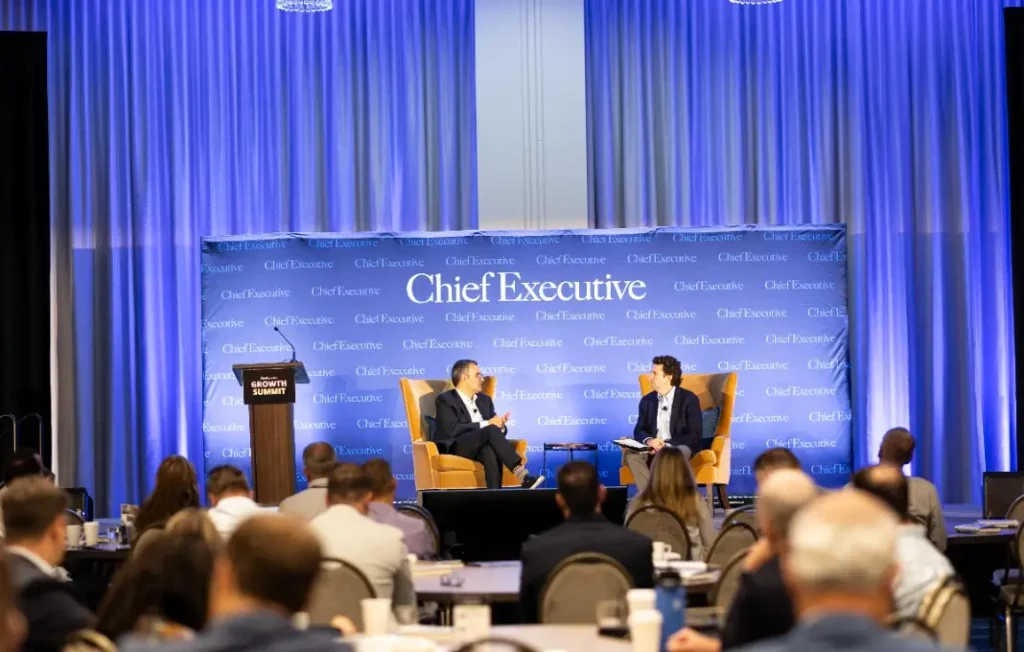
The Chief Executive Group has concluded a remarkably active spring, spanning four months and encompassing a comprehensive series of events across nine major cities. This extensive engagement, comprising 14 distinct live and virtual gatherings, facilitated hundreds of crucial conversations among leaders from the CEO, CFO, CHRO, and public company director communities. Now, with a moment to reflect on this dynamic period, several profound insights and actionable ideas have emerged, continuing to resonate among participants and offering valuable guidance for the future of business leadership.
The Evolving Landscape of Work: Embracing "Hand and Heart" in the Age of AI
One of the most striking distillations of the spring’s discussions came not from a keynote speaker but from a member of the CEO100 community during a private forum for mid-market chief executives. Addressing the transformative impact of Artificial Intelligence (AI), this executive articulated a vision that succinctly captured the nuanced challenges and opportunities ahead: "AI will eliminate a lot of work except for hand work and heart work."
This observation highlights a fundamental shift in the nature of value creation within organizations. "Hand work" clearly refers to the tangible, manual tasks that are inherently resistant to automation. This includes skilled trades, physical execution of complex procedures, and any role requiring direct physical interaction with the environment. While AI can assist in planning and diagnostics, the actual physical execution remains firmly within the human domain. For instance, while AI can design a building, a human architect and construction crew will still be needed to realize it. Similarly, AI can optimize supply chains, but human hands will load and unload goods.
The concept of "heart work," however, delves into a more profound and increasingly critical aspect of leadership and business operations. This encompasses the intangible, yet vital, elements of human connection, authenticity, empathy, and genuine care. In an era where AI can process vast amounts of data and automate routine interactions, the ability to foster deep relationships, build trust, inspire loyalty, and navigate complex human dynamics becomes paramount. This includes active listening, understanding emotional intelligence, providing genuine support, and cultivating a culture of psychological safety.
The implication for businesses is a strategic imperative to identify and invest in these uniquely human capabilities. As AI becomes more integrated into operational workflows, organizations must consciously prioritize and develop their workforce’s capacity for "heart work." This could involve enhanced training in communication and interpersonal skills, leadership development focused on empathy and emotional intelligence, and fostering environments that encourage authentic human interaction. The challenge lies in determining where and how to allocate resources and strategic focus to capitalize on these human-centric strengths, ensuring that as technology advances, the human element remains at the core of successful enterprise. This requires a deliberate shift in talent management, organizational design, and leadership philosophy.
Growth by Design: Shifting Focus from Product to Customer Engagement
A recurring theme throughout the spring’s events, particularly at the Growth Summit held in Nashville, was the critical distinction between designing products and designing customer engagements. Lior Arussy, a renowned writer and speaker, posed this pivotal question to attendees, prompting a reevaluation of growth strategies.
Arussy’s framework emphasizes that while product design can lead to immediate sales and top-line growth, it is the meticulous design of customer engagements that cultivates enduring loyalty and sustainable bottom-line growth. He provided compelling examples from industry leaders. Delta Air Lines, for instance, derives approximately 70 percent of its profits not directly from ticket sales, but from loyalty programs and associated credit card fees, a testament to the power of sustained customer engagement. Similarly, Best Buy generates a significant 40 percent of its profit from extended warranties and service plans, which are essentially mechanisms designed to foster long-term customer relationships and provide ongoing value beyond the initial product purchase.
"They fly airplanes or sell electronics," Arussy explained, "but their growth by design is achieved from planning for loyalty, not for product consumption. It is a completely different approach." This perspective challenges traditional business models that might solely focus on product innovation and market penetration. Instead, it advocates for a strategic shift towards understanding the entire customer journey, identifying touchpoints where meaningful engagement can occur, and building systems that reward and nurture customer loyalty over time.
The implications of this "growth by design" philosophy are far-reaching. It necessitates a deeper understanding of customer psychology, the development of sophisticated customer relationship management (CRM) strategies, and the creation of value propositions that extend beyond the core product or service. Companies that embrace this model are likely to experience greater resilience, reduced customer acquisition costs, and a more predictable revenue stream, as loyal customers become brand advocates and recurring patrons. Arussy’s recent article, "Why Your Company’s Customer Experience Isn’t Working Anymore," published in May, further elaborates on these strategies, offering practical insights for leaders seeking to implement this paradigm shift.
Navigating the Financial Maze: Owning Healthcare Data for Cost Control
In the realm of corporate finance, the escalating cost of employee healthcare continues to be a significant concern for businesses across all sectors. A consistent and urgent message emerging from the CFO Leadership Conference in Boston was the critical need for companies to proactively manage and own their healthcare data. Sandra Clarke, former CFO of Blue Shield of California, underscored this point, stating, "You are budgeting blind if you don’t own that claims data or at least own access to it."
This sentiment echoes Warren Buffett’s oft-cited description of healthcare costs as "the tapeworm of the American economy," highlighting its insidious and persistent drain on corporate resources. Many companies and their leadership teams remain in a disadvantaged position due to a lack of access to granular data regarding their healthcare expenditures. Without this crucial information, it becomes exceedingly difficult to identify inefficiencies, negotiate effectively with insurers, or implement targeted cost-containment strategies.
Clarke’s advice emphasizes that obtaining this vital data is not only possible but essential. It often requires a proactive and assertive approach, demanding access from insurance providers. This data includes detailed claims information, utilization patterns, and cost breakdowns, which can reveal trends in employee health, the effectiveness of wellness programs, and the true drivers of rising premiums.
The implications of failing to secure this data are substantial. Companies that operate without a clear understanding of their healthcare spending are susceptible to unchecked cost increases, impacting profitability and potentially necessitating difficult decisions regarding benefit offerings. Conversely, organizations that gain ownership of their healthcare data can leverage it to:
- Negotiate better rates: Armed with precise utilization and cost data, CFOs can engage in more informed negotiations with insurance carriers, potentially securing more favorable terms.
- Implement targeted wellness programs: Identifying specific health trends among employees can inform the development of more effective and cost-efficient wellness and preventative care initiatives.
- Optimize benefit design: Understanding where healthcare dollars are being spent allows for the strategic design of benefits packages that offer value to employees while managing overall costs.
- Detect and prevent fraud and abuse: Detailed claims data can help identify patterns indicative of fraudulent activity or unnecessary procedures.
The push for greater data transparency in healthcare benefits is a critical step for CFOs seeking to regain control over a significant and often unpredictable expense.
Navigating Life’s Transitions: Embracing "Cliffs and Fog" with Mindful Resilience
The spring events also provided a platform for profound philosophical discussions, notably through the insights shared from Jim Collins’ latest book, What to Make of a Life. Released in April, the book, which explores themes of personal growth, life’s pivotal moments, and navigating change, was introduced to Chief Executive Group communities as part of exclusive early engagements. Collins’ extensive original research delves into how individuals mature, find their paths, and confront the inevitable shifts that punctuate a lifetime.
A particularly resonant concept presented by Collins is that of "cliffs." These are the significant, often abrupt, life transitions or challenges that individuals encounter. However, Collins emphasizes that these "cliffs" are not merely singular events. They are invariably followed by a period he terms "fog"—a phase of disorientation and uncertainty. Crucially, Collins posits that this period of fog is not only inevitable but must be navigated with mindful intention.
This idea offers a powerful framework for understanding and responding to life’s inevitable disruptions. Recognizing that major life changes (personal, professional, or societal) are often followed by a period of adjustment and uncertainty can be both freeing and empowering. It reframes these challenging moments not as endpoints, but as integral parts of a larger journey. The "fog" is an opportunity for introspection, recalibration, and the development of new strategies for moving forward.
The implication for leaders and individuals alike is the cultivation of resilience and intentionality. Instead of resisting or fearing the disorientation that follows significant change, the focus shifts to embracing it as a necessary phase of growth. This involves developing coping mechanisms, seeking support, engaging in self-reflection, and consciously making decisions that align with one’s evolving circumstances and values. Collins’ work suggests that a mindful approach to navigating these "cliffs and fog" can lead to more authentic and fulfilling life paths. The book itself, What to Make of a Life, is recommended for its comprehensive exploration of these themes.
Focusing on the Present: The Power of "What You Are Still Responsible For" Over Legacy
Another profound takeaway from Jim Collins’ discussions revolves around the concept of legacy, or rather, the lack thereof in the lives of highly effective individuals. Collins’ research for What to Make of a Life revealed a striking absence of preoccupation with how subjects would be remembered among the remarkable lives he studied. Instead, these individuals were deeply focused on their immediate responsibilities and the tasks at hand.
This observation challenges the common societal emphasis on building a lasting legacy. Collins suggests that a relentless focus on future remembrance can be a distraction from the present, the only time in which meaningful action can be taken. He eloquently articulated this sentiment with the metaphor, "Life is the ultimate punch card. Every punch, every few years, is a punch gone, and you don’t get them back—ever. So why would you spend your final punches worrying about how you’ll be remembered after you’re gone?"
This perspective underscores the importance of engagement with the present moment and the responsibilities it holds. It encourages leaders to prioritize the impact they can make now, rather than deferring fulfillment or purpose to a posthumous evaluation. The implication is a call to action: to direct energy and attention towards current challenges, to fulfill ongoing commitments with dedication, and to find meaning in the work being done today. By focusing on "what you are still responsible for," individuals and organizations can cultivate a more productive, impactful, and ultimately more rewarding existence. This pragmatic approach to life and leadership emphasizes action and accountability in the here and now, rather than an abstract concern for future recognition.








