
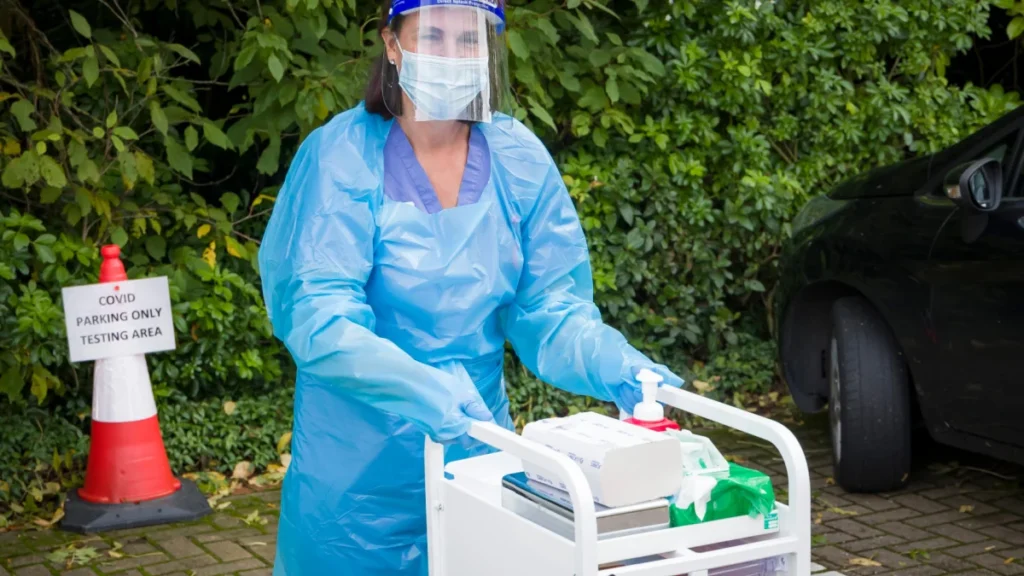
The United Kingdom entered the Covid-19 pandemic with its critical stockpile of personal protective equipment (PPE) in a “perilous condition,” leaving frontline health and social care workers dangerously exposed and ultimately leading to an estimated £10 billion of taxpayers’ money being squandered on inadequate or unusable supplies. This damning indictment comes from the UK Covid-19 Inquiry, which, in its latest report, has condemned the scale of procurement failures under the Boris Johnson-led government, highlighting severe damage to public trust and undermining the diligent efforts of many officials.
The Module 5 report, chaired by Baroness Hallett, meticulously details how systemic flaws, inadequate planning, and a desperate scramble for vital equipment resulted in unnecessary delays and a profound lack of protection for those at the forefront of the crisis. From the initial recognition of the impending pandemic in late 2019 to the peak of the first wave in spring 2020, the nation’s readiness was found to be woefully insufficient, despite prior warnings and exercises that should have informed better strategic planning.
The Alarming State of Preparedness
Even before the novel coronavirus began its global spread, the UK’s pandemic preparedness strategy had known vulnerabilities, particularly concerning critical medical supplies. Reports and exercises, such as ‘Operation Cygnus’ in 2016, had identified significant gaps in the nation’s ability to cope with a severe influenza pandemic, including the potential for shortages of PPE and ventilators. Despite these findings, the recommendations for bolstering stockpiles and supply chain resilience appear to have been inadequately addressed.
When Covid-19 struck, the consequences of this neglect became starkly apparent. The National Audit Office (NAO) and parliamentary committees had previously raised concerns about the maintenance and quality of the national PPE stockpile. By early 2020, as the virus took hold, the existing reserves were not only insufficient in quantity but often comprised outdated or expired items, making them unsuitable for the unprecedented demands of a highly contagious respiratory pathogen. This left hospitals, care homes, and other essential services facing acute shortages, forcing staff to reuse equipment, wear inadequate protection, or work entirely unprotected, placing both themselves and their patients at grave risk.
The Procurement Scramble and the ‘VIP Lane’ Controversy
As the scale of the pandemic became clear, the government initiated an emergency procurement drive of unparalleled magnitude. With global supply chains stretched to breaking point and intense competition for limited resources, the UK sought to rapidly acquire billions of items of PPE, ventilators, and testing equipment. This urgent need, however, opened the door to significant vulnerabilities and controversies.
Central to the Inquiry’s criticism was the establishment and operation of the ‘High Priority Lane,’ infamously dubbed the ‘VIP Lane.’ This mechanism allowed companies with connections to government ministers, MPs, or senior officials to have their bids fast-tracked for contracts, bypassing standard due diligence procedures. While the Inquiry acknowledged that it did not identify specific cronyism or corruption on the part of ministers or officials in final contracting decisions, Baroness Hallett unequivocally concluded that the ‘High Priority Lane’ was a “misguided attempt at prioritisation that embedded unfairness in emergency procurement.”
The existence of this lane fundamentally eroded public trust at a moment when national unity and confidence in government action were paramount. It created a perception, and often a reality, that political connections held more sway than expertise or value for money. Numerous reports from the National Audit Office and parliamentary committees have since detailed how this accelerated process led to contracts being awarded to firms with little to no prior experience in medical supplies, often at inflated prices and for equipment that later proved to be defective, substandard, or entirely unusable. For instance, the government faced significant criticism for contracts awarded to firms recommended by political figures, many of which failed to deliver appropriate goods, or delivered them too late.
Staggering Financial Waste and its Breakdown
The financial implications of these procurement failures are staggering. Of the approximately £14.9 billion spent specifically on PPE, nearly two-thirds – almost £10 billion – was ultimately wasted. This colossal sum represents more than just a fiscal misstep; it signifies a failure to protect public funds and a missed opportunity to invest in other vital services. The waste was multifaceted:
- Unusable or Substandard PPE: A significant portion of the wasted funds went towards PPE that failed to meet safety standards, was defective, or was not fit for purpose. This included masks that did not offer adequate filtration, gowns that were not fluid-resistant, or gloves that tore easily. Such equipment could not be distributed to frontline staff and often had to be stored, destroyed, or sold off at a fraction of its original cost.
- Inflated Prices: The desperate scramble and lack of competitive bidding, exacerbated by the ‘VIP Lane,’ meant that contracts were frequently awarded at prices far exceeding market rates. Suppliers, many of them opportunistic newcomers, were able to command exorbitant fees for critical items, knowing the government was under immense pressure to secure supplies at any cost.
- Late Deliveries and Storage Costs: Delays in delivery meant that by the time some PPE arrived, the immediate crisis had passed, or the items were no longer needed in such vast quantities. This led to immense storage costs for mountains of surplus equipment, much of which eventually expired or deteriorated.
- Cancellation Fees: Some contracts were eventually cancelled due to non-delivery or quality issues, but often not without incurring significant cancellation penalties or legal costs.
The Inquiry’s report revealed that the total expenditure across the UK government and devolved administrations on PPE, ventilators, and testing equipment between January 2020 and June 2022 exceeded a staggering £42 billion. This figure underscores the immense financial strain placed on the public purse due to the pandemic, and the £10 billion waste represents a substantial proportion of this emergency spending, a sum that could have funded numerous hospitals, schools, or other critical infrastructure projects.

Human Cost and Impact on Frontline Workers
Beyond the financial waste, the human cost of these procurement failures was immense. The Inquiry heard harrowing testimonies from doctors, nurses, and care sector staff who described working in fear, feeling abandoned and unprotected. Many resorted to makeshift solutions, such as wearing bin bags as protective gear, or faced impossible choices between their own safety and the care of their patients.
This chronic lack of adequate PPE contributed to higher rates of infection and mortality among healthcare workers, particularly during the first wave. It also had a profound and lasting psychological impact, leading to burnout, moral injury, and a deep sense of betrayal among those who put their lives on the line. Health unions and professional bodies, such as the Royal College of Nursing and the British Medical Association, repeatedly raised alarms about the dangers faced by their members and have consistently called for accountability and guarantees that such a situation will never be repeated. The feeling among many frontline staff was that their well-being was secondary to the speed of procurement, a perception that severely damaged morale.
Inquiry’s Condemnation and Recommendations
Baroness Hallett’s report unequivocally states that the "waste of taxpayers’ money was vast" and significantly damaged public trust. She emphasised that while the urgency of the situation was undeniable, it did not excuse the systemic failures in planning and execution. The Inquiry’s findings reinforce the necessity of transparent, equitable, and robust procurement processes, even – and especially – during emergencies.
For future pandemic preparedness, the Inquiry has put forward a series of key recommendations aimed at building greater resilience and ensuring better stewardship of public funds. While the full list of these recommendations was not detailed in the original brief, they are expected to cover areas such as:
- Strengthening National Stockpiles: Implementing rigorous auditing and regular replenishment of PPE and other critical medical supplies.
- Diversifying Supply Chains: Reducing reliance on single manufacturers or geographical regions to mitigate risks during global crises.
- Enhancing Procurement Transparency: Establishing clearer guidelines for emergency procurement, eliminating fast-track lanes based on political connections, and ensuring robust due diligence for all suppliers.
- Investing in Domestic Manufacturing: Exploring opportunities to boost domestic production capabilities for essential medical equipment.
- Improving Data Management: Implementing better systems for tracking supplies, demand, and distribution to prevent shortages and overstocking.
- Clearer Command and Control Structures: Defining roles and responsibilities more effectively during a national emergency.
- Regular Drills and Exercises: Conducting more frequent and realistic pandemic preparedness exercises, with lessons learned rigorously implemented.
Baroness Hallett underscored the importance of these proposed changes, stating, “The changes I recommend are an an investment in the resilience and preparedness of the UK. They are a small price to pay to ensure that, next time, the public can be confident in the crucial spending decisions that will have to be made and that key healthcare equipment gets to those who need it at the right time. A better prepared emergency procurement system will reduce the cost of obtaining essential supplies and save lives.”
Broader Implications for Governance and Public Trust
The findings of Module 5 of the UK Covid-19 Inquiry extend far beyond mere financial mismanagement. They raise fundamental questions about governance, accountability, and the integrity of public service during a crisis. The erosion of public trust, caused by the perception of unfairness and waste, has long-term implications for the government’s ability to garner public support and compliance during future emergencies.
The report also highlights the tension between the urgent need for action in a crisis and the imperative to maintain ethical standards and financial prudence. While the government of the time consistently argued that speed was of the essence to save lives, critics contend that this should not have come at the expense of basic safeguards against waste and cronyism. This balance will be a critical consideration for future administrations in crisis management.
Looking Ahead: Future Preparedness and Accountability
As the UK Covid-19 Inquiry continues its exhaustive investigations across 10 modules, the Module 5 report serves as a stark reminder of the profound challenges faced during the pandemic and the critical lessons that must be learned. The focus now shifts to how effectively the government will implement these recommendations and whether genuine systemic reforms will be enacted.
There is a clear public expectation for accountability, not just for the colossal financial waste but also for the failures that left frontline workers vulnerable. While the Inquiry’s mandate is not to assign criminal liability, its findings will undoubtedly inform future policy, legislative changes, and potentially ongoing civil actions. The legacy of the pandemic, particularly regarding PPE procurement, will serve as a crucial test of the UK’s commitment to learning from its mistakes and building a more resilient, equitable, and trustworthy system for facing future national emergencies. The ultimate goal is to ensure that never again will those who protect the nation be left unprotected themselves, and that taxpayers’ money is spent wisely, even under the most extreme pressure.








