
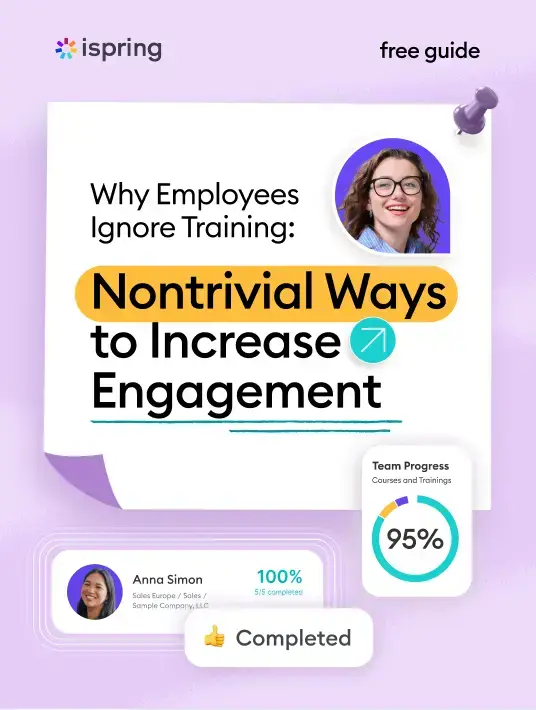
In an era where corporate digital transformation has reached its peak, the challenge of maintaining employee attention during professional development has become a primary concern for Human Resources and Learning and Development (L&D) departments globally. On July 14, 2026, iSpring Solutions, a global leader in the creation of eLearning software and content development tools, officially announced the release of its latest strategic guide, "Why Employees Ignore Training: Nontrivial Ways To Increase Engagement." This comprehensive publication aims to dismantle the long-standing assumption that low engagement is merely a symptom of poorly designed or unappealing course content, instead pointing toward deeper structural and psychological friction points within the modern workplace.
The launch comes at a critical juncture for the global workforce. As organizations navigate the complexities of hybrid work environments and the rapid integration of artificial intelligence into daily operations, the necessity for continuous upskilling has never been higher. However, industry data suggests a growing "engagement paradox": while companies are spending more than ever on sophisticated training platforms, the actual retention and participation rates among staff have stagnated or declined. The iSpring guide seeks to provide a roadmap for L&D professionals to navigate this paradox by focusing on "nontrivial" techniques—strategies that go beyond simple gamification or aesthetic improvements to address the root causes of learner apathy.
The Evolution of the Engagement Gap: A Chronology
To understand the significance of this new guide, one must examine the timeline of corporate training over the last two decades. In the early 2010s, the primary hurdle was accessibility; the transition from classroom-based seminars to Learning Management Systems (LMS) was the "innovation" of the day. By 2018, the industry shifted its focus toward "mobile-first" and "microlearning" strategies, attempting to capture the attention of employees who were increasingly distracted by smartphone technology.
The global events of 2020 to 2023 accelerated digital adoption to unprecedented levels, but they also introduced "Zoom fatigue" and digital burnout. By 2025, it became clear that simply making training shorter or more accessible was not enough. Employees were not ignoring training because they lacked the time or the tools; they were ignoring it because the training failed to compete with the cognitive load of their primary job functions. The 2026 release of the iSpring guide represents the latest phase in this evolution: the move toward "Purpose-Driven Learning," where engagement is treated as a byproduct of relevance rather than a feature of the software.
Analyzing the Friction Points in Modern L&D
According to the insights provided in the iSpring Solutions guide, the most significant barrier to engagement is the disconnect between the training environment and the "flow of work." For many employees, training is perceived as an interruption—a mandatory task that takes them away from meeting their KPIs or clearing their inboxes.
![Why Employees Ignore Training: Nontrivial Ways To Increase Engagement [eBook Launch]](https://cdn.elearningindustry.com/wp-content/uploads/2026/07/Why-Employees-Ignore-Training-Nontrivial-Ways-To-Increase-Engagement-eBook-Launch.webp)
The guide identifies three primary friction points that lead to learner disengagement:
- Lack of Immediate Utility: Many corporate courses are designed around compliance or broad theoretical concepts that do not translate into the employee’s immediate daily tasks. When a learner cannot see how a module will help them solve a problem they are facing that very afternoon, their brain deprioritizes the information.
- Cognitive Overload and Poor Timing: Training is often pushed to employees during high-stress periods, such as quarter-end or during major project launches. The iSpring guide suggests that "nontrivial" engagement requires a sophisticated understanding of "learning readiness"—the psychological state where an employee is actually capable of absorbing new information.
- The "Interactivity" Fallacy: A core argument of the new guide is that adding "click-to-reveal" buttons or basic quizzes does not constitute true engagement. These are often seen by employees as "busy work" that slows down their progress toward completing a mandatory task. True engagement, according to iSpring, is intellectual and emotional, not just mechanical.
Supporting Data: The Cost of Disengagement
The release of this guide is supported by alarming statistics regarding the cost of ineffective training. Recent industry reports from late 2025 indicate that the average mid-sized corporation loses approximately $1.5 million annually in "wasted" training hours—time spent by employees clicking through modules without actually retaining the information. Furthermore, a 2026 survey of over 5,000 corporate learners revealed that 68% of respondents admitted to "multitasking" or "skimming" during mandatory online training, with only 12% stating they felt the training was directly applicable to their career growth.
The iSpring Solutions guide addresses these figures by proposing a shift in how ROI (Return on Investment) is measured. Instead of focusing on completion rates—which can be easily faked or rushed—the guide encourages L&D teams to measure "application rates" or the frequency with which learned skills are utilized in the workplace following the training intervention.
Industry Reactions and Expert Perspectives
The L&D community has responded with keen interest to the "nontrivial" approach. Analysts suggest that the focus on "learner buy-in" before the training even begins is the guide’s most valuable contribution.
"For years, we have treated training like a pill that employees must swallow," says Sarah Jenkins, a senior analyst in corporate education who reviewed the guide’s early drafts. "iSpring is suggesting that we need to stop focusing on the pill and start focusing on why the patient doesn’t want to take it in the first place. The shift from ‘mandatory compliance’ to ‘strategic relevance’ is not just a change in wording; it’s a change in organizational culture."
Internally, iSpring Solutions has emphasized that this guide is part of a broader initiative to humanize digital learning. By providing these resources for free, the company aims to position itself not just as a software provider, but as a thought leader in the psychology of education. The guide includes practical templates and checklists that allow managers to audit their current training programs for "engagement leaks."
![Why Employees Ignore Training: Nontrivial Ways To Increase Engagement [eBook Launch]](https://cdn.elearningindustry.com/wp-content/uploads/2026/07/Why-Employees-Ignore-Training-Nontrivial-Ways-To-Increase-Engagement-eBook-Launch-768x432.webp)
Broader Implications for the Future of Work
The implications of the strategies outlined in "Why Employees Ignore Training" extend beyond the L&D department. As the "Great Reskilling" continues to dominate the economic landscape of the mid-2020s, the ability to effectively train and retain talent has become a competitive advantage. Organizations that can successfully engage their workforce in learning are seeing higher retention rates. Employees who feel that their company invests in their growth in a meaningful, non-intrusive way are 40% more likely to stay with the firm long-term, according to 2026 workforce analytics.
Moreover, the guide touches upon the role of AI in personalization. It suggests that nontrivial engagement can be achieved by using AI to tailor training paths to an individual’s specific skill gaps, rather than forcing an entire department through a one-size-fits-all program. This level of personalization reduces the "noise" that employees have to filter through, making every minute spent in training feel valuable.
Strategic Recommendations for L&D Teams
As organizations begin to download and implement the findings from the iSpring guide, several key strategic shifts are expected to take place across the industry:
- Pre-Training Marketing: L&D teams will need to act more like internal marketing agencies, "selling" the benefits of a course to employees before it is launched to ensure buy-in.
- Contextual Integration: Training will move away from isolated LMS platforms and into the tools employees use every day, such as Slack, Microsoft Teams, or specialized project management software.
- Feedback Loops: The guide emphasizes the importance of "after-action reviews," where learners provide feedback not just on the course quality, but on how the course helped them (or failed to help them) in their actual job.
Conclusion and Availability
The release of "Why Employees Ignore Training: Nontrivial Ways To Increase Engagement" marks a pivotal moment in the professional development sector. It challenges the status quo and demands that organizations look deeper into the relationship between their employees and the digital tools they provide. By focusing on relevance, purpose, and the elimination of friction, iSpring Solutions is offering a new blueprint for corporate success in an increasingly distracted world.
The guide is currently available for free download via the eLearning Industry platform. It is intended for Chief Learning Officers, HR Directors, Instructional Designers, and any business leader interested in improving the efficacy of their human capital development. As the corporate world moves into the latter half of the decade, the insights found within this guide may well become the standard for how we define and achieve true learner engagement.






