
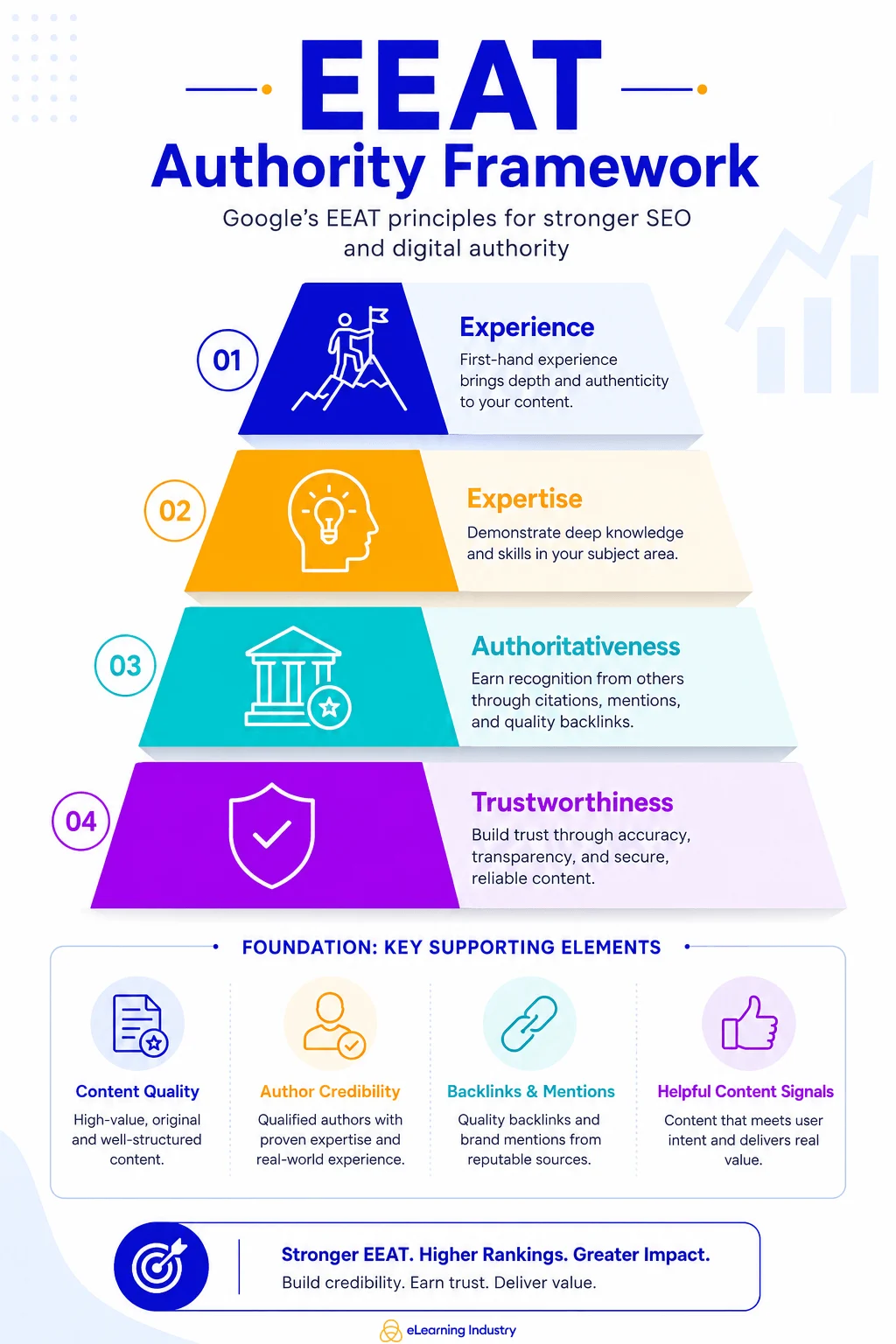
In the rapidly shifting landscape of digital marketing and information retrieval, the concept of E-E-A-T—standing for Experience, Expertise, Authoritativeness, and Trustworthiness—has emerged as the definitive framework by which Google evaluates the caliber of online content. While traditional search engine optimization (SEO) historically prioritized technical indicators such as keyword density and backlink volume, the modern era of search is defined by a sophisticated algorithmic preference for human-centric, reliable information. This paradigm shift reflects Google’s ongoing mission to filter out low-value, AI-generated "slop" and prioritize content that offers genuine utility to the end user.
The Historical Context and Chronological Development of Search Quality
To understand the current significance of E-E-A-T, one must look at the timeline of Google’s search quality initiatives. The journey began in earnest in 2013 when Google first publicly released its Search Quality Evaluator Guidelines, a document used by thousands of human raters to provide feedback on search results. In 2014, the acronym E-A-T (Expertise, Authoritativeness, Trustworthiness) was officially introduced into these guidelines, signaling a move away from purely automated metrics toward a more nuanced understanding of source credibility.
A pivotal moment occurred in August 2018 with the "Medic Update," which disproportionately affected websites in the "Your Money or Your Life" (YMYL) categories—specifically health, finance, and legal advice. This update proved that for topics capable of impacting a person’s future happiness, health, financial stability, or safety, Google would hold content to a significantly higher standard of expertise.
The most recent major evolution occurred in December 2022, when Google added a second “E” to the acronym: Experience. This addition was a direct response to the proliferation of generic content. It sought to reward creators who could demonstrate first-hand involvement or "boots-on-the-ground" knowledge of a subject. By 2024, following several "Helpful Content" and "Core" updates, E-E-A-T has transitioned from a niche SEO concept to a foundational pillar of digital publishing.
Deconstructing the Four Pillars of Search Quality
Google’s evaluation system does not rely on a single "E-E-A-T score," but rather a complex interplay of signals that suggest a page meets the high standards of its users.
Experience
Experience refers to the extent to which the creator of the content has necessary first-hand or life experience for the topic. In the context of a product review, for instance, Google looks for evidence that the author actually used the item. In the Learning and Development (L&D) or HR sectors, this translates to sharing case studies, implementation results, and specific workplace challenges rather than theoretical observations.
Expertise
While experience covers the "how-to," expertise covers the "why" and the technical accuracy. This pillar focuses on the credentials, formal education, or specialized skill set of the author. For a medical article, a doctor provides expertise; for a hobbyist site about gardening, a master gardener provides expertise. Google’s algorithms look for biographical data, professional citations, and a history of publication in a specific niche to verify this signal.
Authoritativeness
Authoritativeness is a measure of reputation. It is not just about the author, but the website as a whole. When other high-authority websites in the same industry link to or mention a source, it signals to Google that the source is a recognized leader. This is the digital equivalent of "word-of-mouth" among professionals.
Trustworthiness
According to Google’s guidelines, Trust is the most important member of the E-E-A-T family. It acts as the umbrella under which the other three pillars sit. Trustworthiness is assessed through transparency—such as clear "About Us" pages, accessible contact information, cited sources, and a secure (HTTPS) browsing environment. If a site is deemed untrustworthy, no amount of expertise or experience can save its rankings.
Algorithmic Mechanics: How Google Processes Quality Signals
E-E-A-T is not a direct ranking factor in the way that page speed or keywords are; instead, it is a framework that informs the algorithm. Google utilizes machine learning models to identify patterns that correlate with high E-E-A-T. These models are trained using data from Search Quality Raters, who manually grade pages based on the E-E-A-T criteria.

When a user performs a search, Google’s systems—such as "SpamBrain" and "Neural Matching"—work to align the query with content that exhibits these signals. For example, if a user searches for "best ways to manage employee burnout," the algorithm will prioritize articles written by HR professionals or psychologists (Expertise), featuring real-world company data (Experience), published on a reputable business journal (Authoritativeness), and including verified citations (Trust).
The Rise of AI and the "Helpful Content" Imperative
The urgency surrounding E-E-A-T has been amplified by the explosion of generative AI. As Large Language Models (LLMs) make it possible to produce vast quantities of grammatically correct but often shallow content, Google has recalibrated its systems to favor "people-first" content.
Data from recent SEO industry studies suggests that websites relying solely on AI-generated text without human oversight or original insights have seen significant volatility in search visibility. In contrast, "Thought Leadership" content—characterized by original data, expert interviews, and unique perspectives—has shown greater resilience. Christopher Pappas, CEO and founder of eLearning Industry, noted that "E-E-A-T is not a tactic you apply to content; it is the discipline you build into how your organization earns trust, proves expertise, and shows up in every search result." This sentiment reflects a broader industry consensus that shortcuts in content creation are no longer viable for long-term growth.
Strategic Implementation: Building an Authoritative Digital Presence
For organizations seeking to align with Google’s quality standards, the focus must shift from quantity to the depth of value. Successful E-E-A-T strategies typically involve the following components:
- Author Identification and Credibility: Every piece of high-stakes content should be attributed to a verifiable human author. Detailed author bios that link to LinkedIn profiles, professional portfolios, and previous publications help Google’s "Knowledge Graph" connect the individual to their area of expertise.
- Topic Clusters and Niche Authority: Rather than publishing broadly on unrelated topics, organizations should build "topic clusters." By covering every facet of a specific subject—such as instructional design or learning analytics—a site demonstrates it is a comprehensive resource, thereby increasing its topical authority.
- Original Research and Data: One of the strongest signals of experience and expertise is the publication of original findings. Surveys, white papers, and proprietary case studies provide unique value that AI cannot replicate, often leading to natural backlinks from other industry players.
- Content Maintenance and Accuracy: Trust is eroded by outdated information. A rigorous editorial process that includes regular updates to old content, fact-checking, and the removal of broken links is essential for maintaining a high "Trust Score" in the eyes of both users and algorithms.
Official Responses and Industry Reactions
Google’s official Search Liaison, Danny Sullivan, has frequently emphasized that there is no "magic button" for E-E-A-T. In various public statements, Google has reiterated that the best way to rank well is to simply "provide the best possible experience for the user." This official stance has forced a reckoning within the SEO community.
Industry analysts have observed a "flight to quality" among major brands. Marketing departments are increasingly hiring subject matter experts (SMEs) to review content before publication, ensuring that technical accuracy is prioritized over SEO keyword stuffing. This shift is particularly evident in the B2B sector, where the sales cycle is long and trust is the primary driver of conversions.
Broader Impact and the Future of AI-Driven Search
The implications of E-E-A-T extend beyond traditional search results into the realm of AI-driven tools, such as Google’s AI Overviews (formerly SGE). These tools synthesize information from across the web to provide direct answers. To be cited as a source within an AI-generated summary, a website must exhibit exceptionally high levels of E-E-A-T.
Furthermore, as search engines evolve into "answer engines," the value of being a trusted source becomes even more critical. If a brand is recognized as an authority, its insights are more likely to be integrated into the Large Language Models themselves, ensuring visibility even in a "zero-click" search environment.
Conclusion: The Long-Term Value of Credibility
The transition to an E-E-A-T-centric search environment represents the maturation of the internet. By moving away from the "wild west" era of keyword manipulation, Google is creating a digital ecosystem where merit, accuracy, and genuine experience are the primary currencies of visibility.
For businesses and content creators, the path forward is clear: success in modern SEO requires thinking like a publisher and acting like an expert. Those who invest in building a reputation for reliability and providing deep, research-backed value will not only survive algorithmic updates but will thrive as the most trusted voices in their respective fields. In the age of information overload, E-E-A-T is the filter that ensures the most helpful voices are the ones that are heard.






