The landscape of professional document creation has undergone a profound transformation over the past two decades, with collaborative platforms like Google Docs and Microsoft Word’s cloud-based versions becoming indispensable tools for teams across industries. These environments allow multiple users to suggest edits, leave comments, track changes, and work simultaneously on a single document, eliminating the chaos of version control and fragmented feedback. Yet, a significant paradox persists within the human resources domain: job descriptions—arguably among the most collaboratively intensive documents in any organization—often remain mired in outdated, inefficient review processes involving emailed Word files, disparate attachments, and competing versions.
This glaring disparity has not gone unnoticed by HR professionals, recruiters, and talent leaders. For years, a consistent request has echoed through discussions with various stakeholders involved in the hiring process: "Can we review job descriptions like we do in Google Docs?" This seemingly simple query highlights a fundamental gap in current job description software offerings, signaling a critical need for more robust, real-time collaborative capabilities beyond mere version history. The demand underscores a broader industry shift towards integrated, efficient, and transparent workflows that mirror the collaborative standards set by general productivity tools.
The Intricate Web of Job Description Authorship
Contrary to popular belief, job descriptions are far from being the sole purview of recruiters. In reality, their creation and refinement involve a diverse array of contributors, each bringing a unique and essential perspective to the table. An enterprise-level job description can pass through the hands of numerous departments and individuals, making it a truly multidisciplinary document.
The primary stakeholders typically include:
- Recruiters: Often initiating the process, recruiters draft initial descriptions, ensure market alignment, and manage candidate attraction strategies.
- Hiring Managers: Providing the core technical and functional requirements, hiring managers define the day-to-day responsibilities and necessary skills for the role.
- HR Business Partners (HRBPs): These individuals bridge the gap between HR strategy and business needs, ensuring the job description aligns with broader organizational goals and talent frameworks.
- Compensation Teams: Crucial for defining salary bands, benefits, and overall remuneration packages, ensuring competitive and equitable compensation.
- Legal Departments: Reviewing for compliance with labor laws, anti-discrimination regulations, and internal policies, mitigating potential legal risks.
- Diversity, Equity, and Inclusion (DEI) Professionals: Ensuring inclusive language, unbiased requirements, and fair representation in the description to attract a diverse talent pool.
- Talent Leaders/Executives: Offering strategic oversight, aligning roles with organizational growth, and ensuring consistency across departments.
- Marketing/Employer Branding Teams: Sometimes involved in refining language to enhance the employer brand and candidate experience.
Each of these contributors brings a distinct lens to the document. Recruiters focus on market attractiveness and keyword optimization, hiring managers on technical accuracy, compensation teams on salary equity, legal on compliance, and DEI professionals on inclusivity. The challenge lies not just in gathering this input, but in effectively managing and synthesizing these diverse edits without plunging the process into disarray. Industry estimates suggest that organizations with fragmented collaboration tools can spend upwards of 15-20% more time on administrative tasks related to document management, leading to significant delays in critical processes like hiring.
The Unspoken Burden of Disconnected Collaboration
For many organizations, the process of reviewing job descriptions remains remarkably antiquated, often resembling workflows from a decade or more ago. The scenario is a familiar one: a recruiter drafts a job description, saves it as a Word document, and emails it to the hiring manager. The hiring manager makes their edits and sends back an updated copy, perhaps with some comments in the email body. Legal then receives this version, makes their own revisions in a separate file, and sends it back. Compensation might work in an entirely different spreadsheet, sending their input separately. Meanwhile, other stakeholders might simply reply to an email chain with their suggestions.
This fragmented approach inevitably leads to what industry analysts term "version control nightmares." The burden typically falls on one individual, often the recruiter or HR partner, to manually merge all these disparate edits, comments, and versions into a single coherent document. This manual aggregation is not only time-consuming but also highly susceptible to errors, omissions, and misunderstandings. The larger the organization and the more complex the role, the more exacerbated this problem becomes, leading to critical questions:
- Which version is the most current?
- Whose changes were accepted, and whose were overlooked?
- Where are the latest comments and feedback?
- Who approved what, and when?
- Did we miss any critical legal or compliance updates?
Such inefficiencies are not trivial. Studies have indicated that poor document collaboration can lead to delays in hiring processes by several days or even weeks, resulting in increased "cost of vacancy." For critical roles, this can translate into substantial financial losses, missed opportunities, and a competitive disadvantage in the talent market. Moreover, the disjointed nature of feedback can lead to job descriptions that are inconsistent, legally vulnerable, or fail to effectively attract the right talent, ultimately impacting the quality of hires and organizational productivity.
Beyond Version History: The Power of Track Changes
Many modern job description platforms do offer "version history," a feature that allows users to restore an earlier iteration of a document. While certainly useful for auditing or reverting unwanted changes, version history primarily answers one question: "What did this document look like at a specific point in the past?" It serves as a historical record, a snapshot in time.
However, true collaborative editing, epitomized by "Track Changes" functionality found in leading productivity suites, addresses a much more dynamic and pressing set of questions fundamental to collective document creation:
- Who made this specific change?
- When was this edit proposed?
- What was the original text before this suggestion?
- Why was this particular change made (through inline comments)?
- Has this suggested edit been reviewed and approved or rejected?
These capabilities represent two fundamentally different paradigms. Version history is about preserving the past, offering a safety net for restoration. Track Changes, on the other hand, is about actively collaborating in the present, fostering real-time discussion, accountability, and collective decision-making. It enables a transparent, iterative process where every contribution is visible, traceable, and subject to direct review and acceptance or rejection without overwriting the original content. This distinction is crucial for documents like job descriptions, where precision, compliance, and multi-stakeholder consensus are paramount.
Envisioning a Modern Job Description Workflow
Imagine extending the seamless, intuitive collaborative experience of Google Docs or Microsoft Word to the realm of job descriptions. In such an environment, users wouldn’t accidentally overwrite each other’s work or struggle to reconcile disparate versions. Instead, the workflow would be characterized by:
- Real-time Co-editing: Multiple stakeholders could view and edit the same document simultaneously, seeing each other’s cursors and changes in real-time.
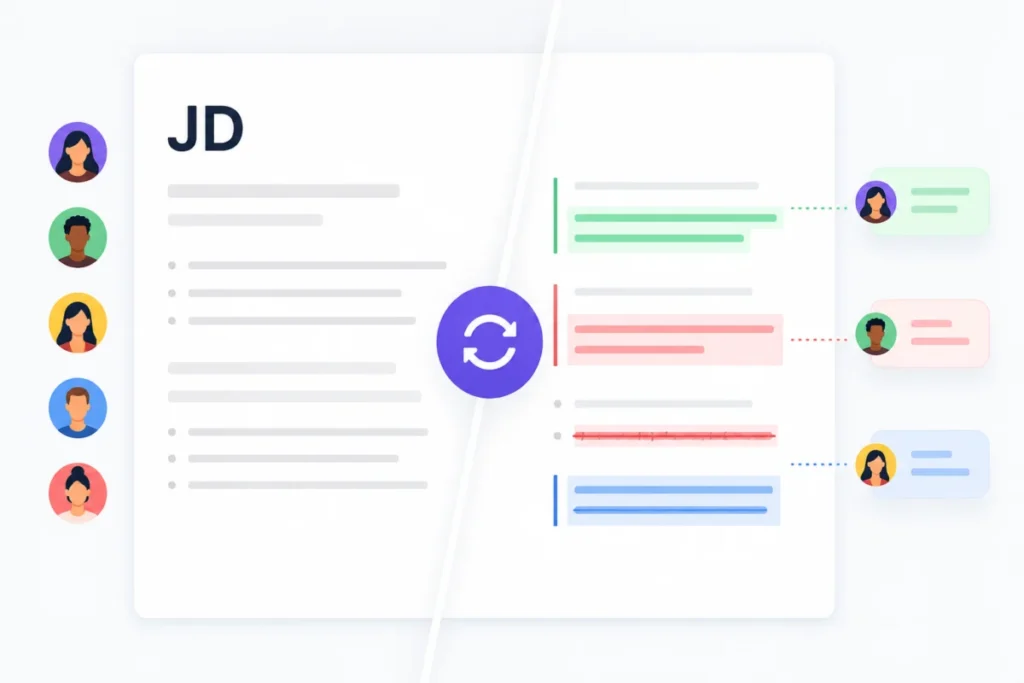
- Granular Change Tracking: Every insertion, deletion, or formatting change would be clearly highlighted, attributed to a specific user, and timestamped.
- Contextual Comments: Reviewers could add inline comments directly to specific words, phrases, or sections, fostering direct dialogue and clarification.
- Accept/Reject Functionality: Individual suggestions could be reviewed, discussed, and either accepted or rejected with a single click, providing clear decision points.
- Centralized Feedback Loop: All feedback, revisions, and discussions would reside within a single, authoritative document, eliminating fragmented email threads and external files.
- Role-Based Permissions: Access and editing rights could be tailored to specific roles, ensuring data security and controlled contributions.
This vision transforms the laborious process of job description creation into a streamlined, efficient, and transparent collaboration. It empowers teams to work smarter, reducing administrative overhead and accelerating time-to-hire.
The Future of HR Workflows: Prioritizing Collaboration
Most organizations have established approval workflows for job descriptions, clearly delineating who reviews first, who signs off next, and who grants final approval. These structured approval paths are undoubtedly vital for governance and accountability. However, the critical observation is that once a document is "opened" for review—the point where the actual content refinement begins—most traditional HR software ceases to provide meaningful support for collaboration. It’s precisely at this juncture, where the iterative process of drafting and refining takes place, that the most significant inefficiencies and frustrations often arise.
Modern workflows must transcend simple approval gates. They need to embed collaborative tools directly into the document editing process, making it easier for all stakeholders to work together inside the same document. The shift in focus is clear: approval is no longer the hardest part; effective collaboration leading up to that approval is. A truly optimized workflow would integrate real-time editing, commenting, and change tracking directly within the approval process, making the journey from draft to finalization fluid and transparent.
Collaborative Editing: The Next Evolution in Job Description Software
The growing consensus among enterprise customers and HR technology experts is that collaborative editing is not merely a desirable feature but the logical next step for job description management software. Companies like Ongig, which specializes in job description optimization, have repeatedly heard this request from their clients. The demand isn’t just for improved version history; it’s for the same intuitive, powerful editing experience that professionals use daily for other critical business documents.
Specifically, organizations are seeking the ability to:
- Track changes: See who changed what, when, and why.
- Leave comments: Engage in contextual discussions directly within the document.
- Accept or reject edits: Have granular control over proposed revisions.
- Work simultaneously: Avoid version conflicts and merge headaches.
- Maintain a single source of truth: Ensure everyone is always working on the latest, most accurate version.
- Improve accountability: Clearly see who contributed and approved specific content.
- Streamline communication: Reduce reliance on external email chains for feedback.
This persistent feedback signals that collaborative editing is not a "nice-to-have" but a fundamental requirement for modern HR operations. Just as cloud-based productivity suites revolutionized how teams collaborate on reports, presentations, and spreadsheets, a similar revolution is poised to transform how job descriptions are created, reviewed, and managed. This evolution promises to significantly enhance efficiency, improve compliance, reduce time-to-hire, and ultimately, elevate the quality of talent acquisition across organizations. The integration of such capabilities represents a significant leap forward in HR technology, making the entire hiring ecosystem more agile, transparent, and effective.
Background and Implications
The move towards highly collaborative job description software is part of a broader trend in HR technology, where specialized solutions are increasingly integrating features that enhance user experience and operational efficiency. The initial wave of HR tech focused on automating basic tasks and centralizing data (e.g., Applicant Tracking Systems, HRIS). The current wave emphasizes intelligence, analytics, and seamless collaboration.
The implications of this shift are profound:
- Enhanced Compliance: With legal and DEI teams able to provide real-time, traceable feedback, job descriptions can be meticulously crafted to adhere to all regulatory requirements and promote inclusive language, significantly reducing legal risks.
- Improved Candidate Experience: Clearer, more accurate, and well-vetted job descriptions lead to better-informed candidates, reducing application abandonment rates and improving the overall candidate journey.
- Faster Time-to-Hire: Streamlined review processes eliminate bottlenecks, allowing organizations to post roles faster and secure top talent ahead of competitors. Industry data often links faster hiring cycles to reduced operational costs and improved market responsiveness.
- Better Quality of Hire: Collaborative input from hiring managers, recruiters, and compensation teams ensures the job description accurately reflects the role’s demands and compensation, attracting candidates with the right skills and expectations.
- Strategic HR Focus: By automating and simplifying the administrative burden of job description management, HR professionals and recruiters can dedicate more time to strategic initiatives like talent pipelining, employer branding, and candidate engagement.
- Data-Driven Refinement: Over time, tracking changes and comments can provide valuable data on which sections of job descriptions frequently require revisions, allowing for continuous improvement in templates and guidelines.
The introduction of robust collaborative editing tools for job descriptions, as championed by companies like Ongig, represents a pivotal moment in the evolution of HR technology. It acknowledges that human resources, at its core, is a highly collaborative function, and its tools should reflect that reality. By embracing the same collaborative standards found in general productivity software, HR departments can unlock new levels of efficiency, accuracy, and strategic impact, moving beyond outdated practices and into a future of truly integrated and intelligent talent management. This development, highlighted on July 9, 2026, by industry voices like Heather Barbour Fenty, underscores a commitment to helping hiring teams work smarter, not harder, by modernizing workflows that have long been overlooked.