
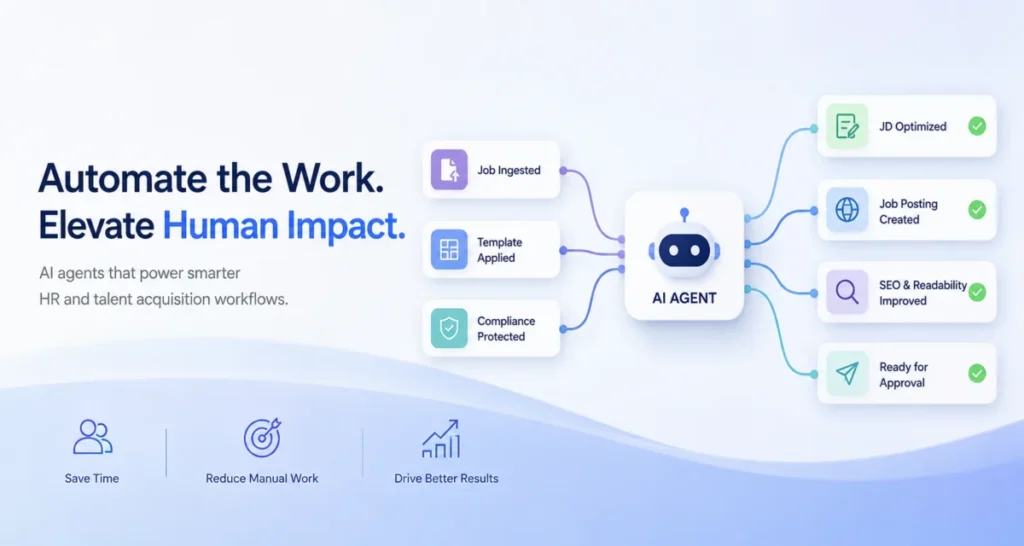
In an era increasingly defined by technological acceleration, the conversation surrounding Artificial Intelligence (AI) in human resources, particularly within recruitment, has often been framed around replacement. Can AI write job descriptions? Can it summarize resumes? Can it generate interview questions? While these are valid inquiries into AI’s capabilities, a more profound and ultimately more impactful question is emerging: What work are recruitment professionals doing every single day that no person should have to do? This reframing shifts the focus from AI as a substitute for human effort to AI as a strategic tool for eliminating the mundane, repetitive tasks that consume valuable time and detract from the human-centric aspects of talent acquisition. The true revolution of AI in recruitment is not in displacing people, but in liberating them from busywork, allowing them to focus on the nuanced, empathetic, and strategic elements that truly drive successful hiring.
The Unseen Burden of Recruitment Busywork
Recruitment teams, across organizations of all sizes, are often burdened by a multitude of administrative tasks that, while seemingly minor individually, accumulate into significant time sinks. These tasks are frequently so ingrained in daily operations that their necessity is rarely questioned. Consider the typical journey of a job description: it’s copied from an Applicant Tracking System (ATS), pasted into another internal system, formatted according to specific guidelines, checked against legal and compliance requirements, potentially rewritten for clarity or SEO, and then finally published across various platforms. Each step, taking "just a few minutes," multiplies exponentially across hundreds or even thousands of job postings annually. This seemingly innocuous administrative overhead can quietly consume the equivalent of a full-time employee’s entire work year, diverting resources from critical activities such as candidate engagement, strategic sourcing, and building relationships with hiring managers.
According to various industry reports, administrative tasks can account for up to 60% of a recruiter’s day. This substantial chunk of time spent on data entry, formatting, cross-referencing, and compliance checks directly impacts productivity, slows down time-to-hire, and contributes to recruiter burnout. This inefficiency is not a singular, massive problem but rather a mosaic of hundreds of tiny, repetitive actions that collectively create a significant drag on an organization’s talent acquisition engine. The insidious nature of these tasks lies in their apparent simplicity, making them easy to overlook as prime candidates for automation. Yet, it is precisely this repetitive, rules-based nature that makes them ideal targets for AI intervention.
A Paradigm Shift: From Tasks to End-to-End Workflows
For too long, the discourse around AI in HR has focused on isolated tasks, treating AI as a feature that can assist with a specific function. While helpful, this perspective misses the larger opportunity. The more impactful application of AI lies in automating entire workflows, seamlessly connecting disparate steps into a coherent, self-executing process. This represents a significant evolution in how organizations view and implement AI technologies, moving beyond mere augmentation to true operational transformation.
The chronology of AI adoption in HR has seen a gradual progression. Initially, AI tools focused on basic data processing, such as keyword matching in resumes or simple chatbot interactions for FAQs. The next phase brought more sophisticated content generation capabilities, allowing AI to draft initial versions of job descriptions or email templates. However, the current frontier, and arguably the most transformative, is the development of AI agents capable of orchestrating complex, multi-step workflows. This transition signifies a shift from "AI helping with a task" to "AI completing a series of connected tasks autonomously." This evolution is crucial because the real bottleneck in many recruitment processes isn’t a single difficult task, but the handoffs, checks, and manual manipulations required between numerous simple tasks.
Deconstructing the Job Description Workflow: Manual vs. Automated
To illustrate this paradigm shift, let’s consider the creation and publication of a job posting, a cornerstone activity in recruitment.
The Traditional Manual Workflow:
- Request Initiation: A hiring manager submits a request for a new role.
- Drafting: A recruiter or HR specialist manually drafts the job description, often starting from a previous template or a blank slate.
- ATS Entry: The description is manually entered into the Applicant Tracking System (ATS).
- Template Application: The recruiter searches for and applies the correct company template, ensuring brand consistency.
- Legal and Compliance Review: The text is manually checked for mandatory legal disclaimers, diversity and inclusion language, and compliance with local regulations.
- Content Optimization: The recruiter manually rewrites sections for clarity, SEO, and candidate appeal.
- Internal Review: The draft is sent to the hiring manager for review and approval.
- External System Posting: The approved description is manually copied and pasted into various job boards, career sites, and social media platforms.
- Tracking: Manual tracking of where and when the job was posted.
- Updates: Any subsequent updates or revisions require repeating several of these manual steps.
This entire sequence is prone to human error, inconsistency, and significant delays. Each "touch" point introduces potential for mistakes and adds to the overall time-to-hire.
The AI-Driven Automated Workflow:
- Automated Request Intake: A hiring manager submits a request through a simplified interface, which an AI agent instantly processes.
- Smart Draft Generation: The AI agent automatically pulls relevant information from a skills library, company templates, and historical data to generate a compliant, optimized first draft.
- Seamless ATS Integration: The AI agent automatically populates the ATS with the draft, ensuring data consistency and accuracy.
- Dynamic Template & Compliance Application: AI automatically applies the correct branding templates, embeds necessary legal clauses, and flags potential compliance issues based on predefined rules and real-time regulatory updates.
- Content Optimization: AI continuously optimizes the content for readability, inclusivity, and search engine visibility across all platforms, suggesting improvements or making direct edits.
- Automated Review & Approval Workflow: The AI system routes the draft to the hiring manager for review, highlighting changes and simplifying the approval process.
- Multi-Platform Publication: Upon approval, the AI agent automatically publishes the job posting across all designated job boards, social media channels, and the company career site, tailoring the format for each platform.
- Real-time Tracking & Analytics: The AI system automatically tracks posting performance and provides analytics, identifying optimal channels and times for future postings.
- Proactive Updates: If a regulatory change occurs or an internal policy is updated, the AI agent can proactively suggest or implement updates across all active job postings.
In this automated scenario, the recruiter’s role shifts dramatically. Instead of meticulously building the job posting from scratch and managing each manual step, they become the strategic reviewer, the content editor, and the human connection point. Their expertise is utilized for critical judgment, refining nuances, and engaging with candidates and hiring managers, rather than for repetitive data entry or formatting.
The Rise of AI Agents: Beyond Simple Automation
The distinction between an "AI feature" and an "AI agent" is critical to understanding the future of recruitment automation. An AI feature typically assists a human in completing a single task – for example, an AI writing assistant that helps draft an email. An AI agent, however, is designed to complete an entire task or a series of interconnected tasks autonomously, often making decisions within a predefined workflow.
Consider the potential of AI agents in recruitment:
- Automated Candidate Nurturing: An AI agent could identify suitable candidates from a talent pool, personalize outreach emails based on their profiles, schedule initial screening calls (integrating with calendars), and even send follow-up communications, all without direct human intervention until a qualified candidate expresses interest.
- Intelligent Interview Scheduling: An AI agent could coordinate availability between multiple interviewers and candidates, managing time zones, sending invitations, and providing pre-interview materials, automatically rescheduling if conflicts arise.
- Dynamic Compliance Monitoring: An AI agent could continuously monitor job postings and candidate communications for compliance with evolving labor laws, internal policies, and diversity guidelines, flagging issues or even making real-time corrections.
- Automated Background Checks & Onboarding Prep: Once an offer is accepted, an AI agent could initiate background checks, prepare necessary onboarding documents, and trigger IT provisioning requests, streamlining the transition from candidate to employee.
In these scenarios, no one has to remember the next step; the workflow simply happens. This level of automation not only saves time but also significantly reduces errors, improves consistency, and accelerates the entire recruitment lifecycle.
Strategic Implementation: Starting Small for Big Gains
The concept of "AI automation" can often conjure images of sweeping departmental overhauls and widespread job displacement, leading to resistance or paralysis. However, the most effective approach to integrating AI into recruitment is to start small and iterate. The crucial first step is to identify the "most annoying five-minute task your team repeats hundreds of times every month." This could be anything from applying specific formatting to every job description, checking for mandatory legal disclaimers, or manually transferring candidate data between systems.
Automating these small, high-frequency, low-value tasks first yields immediate and tangible benefits, building confidence and demonstrating the value of AI without overwhelming the team. Once one such task is automated, the next one becomes apparent, and gradually, these individual automations coalesce into automated processes, then entire workflows. This incremental approach allows organizations to learn, adapt, and refine their AI strategy, minimizing risk while maximizing impact.
To identify these opportunities, recruitment leaders should engage their teams with specific questions:
- What’s the most annoying task you do repeatedly every day?
- What’s a task that takes "just a few minutes" but adds up to hours each week?
- What data do you manually copy and paste between systems?
- What part of your job feels like "busywork" that doesn’t utilize your unique skills?
- Where do you find yourself constantly correcting minor errors?
- What manual checks do you perform to ensure compliance or consistency?
The answers to these questions often uncover a treasure trove of automation opportunities that, when addressed, can dramatically improve efficiency and job satisfaction.
Broader Implications for the Future of Recruitment
The widespread adoption of AI agents and workflow automation carries significant implications for the future of recruitment.
Upskilling Recruiters: The role of the recruiter will undoubtedly evolve. Instead of focusing on administrative execution, recruiters will need to develop skills in AI management, strategic thinking, data interpretation, and high-level candidate and hiring manager engagement. They will become curators and strategists, leveraging AI tools to enhance their capabilities rather than being replaced by them. This shift necessitates investment in training and professional development to equip the workforce with the competencies required for an AI-augmented environment.
Enhanced Candidate Experience: By freeing up recruiters from mundane tasks, AI enables them to dedicate more time to meaningful interactions with candidates. This means more personalized communication, faster feedback loops, and a more human-centric experience, ultimately improving candidate satisfaction and employer brand perception. In a competitive talent market, a superior candidate experience can be a critical differentiator.
Data-Driven Decisions: AI systems can process and analyze vast amounts of recruitment data far more efficiently than humans, providing insights into sourcing effectiveness, candidate funnel performance, and diversity metrics. This allows recruitment leaders to make more informed, data-backed decisions, optimizing their strategies and resource allocation for better outcomes.
Expert Perspectives: Industry analysts and HR technology experts largely concur with this vision. Dr. Elena Rodriguez, a leading HR Tech strategist, recently remarked, "The fear of AI replacing recruiters is largely misplaced. What AI is truly poised to replace is the drudgery that makes recruiting less appealing. By offloading repetitive tasks, AI elevates the recruiter’s role, allowing them to act as true strategic partners and talent advisors, something no algorithm can fully replicate." Similarly, Mark Jensen, CEO of a prominent recruitment consulting firm, added, "Organizations that embrace AI for workflow automation will not only see significant cost savings and efficiency gains but will also foster a more engaged and empowered recruitment team, ultimately leading to better hires and stronger organizational growth."
Addressing Common Concerns: AI and Job Displacement
A persistent concern surrounding AI is its potential for job displacement. In recruitment, while specific tasks will undoubtedly be automated, the nuanced, human-centric aspects of the role remain irreplaceable. Tasks requiring judgment, empathy, negotiation, relationship-building, and cultural fit assessment still demand human intelligence and emotional quotient. AI is far more likely to reduce administrative overhead, allowing recruiters to dedicate more time to these high-value activities, thereby enhancing their strategic impact rather than rendering them obsolete. This augmentation empowers recruiters to be more efficient, effective, and ultimately, more human in their approach.
The Ongig Perspective: Pioneering Smarter Automation
Companies like Ongig are at the forefront of this evolution, having spent years helping HR and talent acquisition teams simplify job description management and job posting workflows. Their current focus is on an even bigger question: What repetitive recruiting work could disappear altogether through smart automation? Whether it’s automatically applying templates, safeguarding compliance language, optimizing content for maximum reach and inclusivity, or transforming raw job descriptions into polished, multi-platform job postings, the overarching goal remains consistent: to free up recruiters to spend more time hiring people and less time managing the process. By continuously evolving their platforms to support smarter automation, Ongig and similar innovators are actively shaping a future where recruitment is more strategic, more human, and significantly more efficient.
In conclusion, the journey of AI in recruitment is moving beyond simple features to intelligent agents that can manage entire workflows, eliminating the widespread burden of busywork. This strategic shift empowers recruiters to leverage their unique human skills for genuine candidate engagement, strategic sourcing, and relationship building, ultimately leading to a more effective, humane, and future-ready talent acquisition function. The questions recruitment teams should be asking are not about what AI can do, but what repetitive tasks AI should do, liberating human talent to thrive.
FAQs
Can AI completely automate HR processes?
Not entirely. While AI can automate many repetitive, rules-based workflows, tasks requiring complex judgment, empathy, coaching, negotiation, and relationship-building still necessitate human involvement. AI’s role is primarily to augment human capabilities, not to replace them in their entirety.
What’s the difference between AI automation and AI agents?
AI automation generally refers to tools that follow predefined rules to complete specific tasks, often with human initiation or oversight. AI agents, on the other hand, are more sophisticated. They can make decisions within a workflow, autonomously initiating and completing multiple connected tasks with minimal human intervention, effectively managing an entire process segment.
What’s the best HR process to automate first?
The most effective starting point is to identify repetitive, high-frequency, low-value tasks that consume significant human time. Examples include formatting job descriptions, applying standard templates, checking for compliance language, or transferring data between different HR systems. Automating these small, annoying tasks first can yield quick wins and build momentum for broader automation initiatives.
Will AI replace recruiters?
No, AI is highly unlikely to replace recruiters entirely. Instead, AI is poised to transform the recruiter’s role by automating administrative and repetitive tasks. This allows recruiters to focus more on strategic activities such as building relationships with candidates and hiring managers, conducting in-depth interviews, negotiating offers, and assessing cultural fit—aspects that require uniquely human skills.
How can Ongig help automate recruiting workflows?
Ongig assists in automating many repetitive steps involved in creating, optimizing, managing, and publishing job descriptions. This includes automatically applying templates, ensuring compliance language, enhancing content for readability and SEO, and streamlining the publication process across multiple platforms. The goal is to make recruiting teams faster, more consistent, and more focused on human interaction.
July 8, 2026 by Heather Barbour Fenty in AI Recruitment






