
The Australian property market is presenting a complex narrative, with robust price growth in key regions standing in stark contrast to the prevailing cautionary headlines predicting a market correction. While cities like Perth have experienced nearly 13 percent price increases this year, with Brisbane and Darwin following closely, the broader commentary often focuses on speculative fears and potential downturns. This divergence between market performance and public sentiment highlights a critical disconnect, leaving many prospective buyers, builders, and property holders navigating a landscape of conflicting signals, from interest rate speculation to record-breaking price appreciation. This analysis aims to cut through the noise, identifying the genuine sources of strength within the current property market and underscoring why the foundational elements underpinning it are more resilient than often portrayed.
The National Property Landscape: A Stronger Picture Than Often Painted
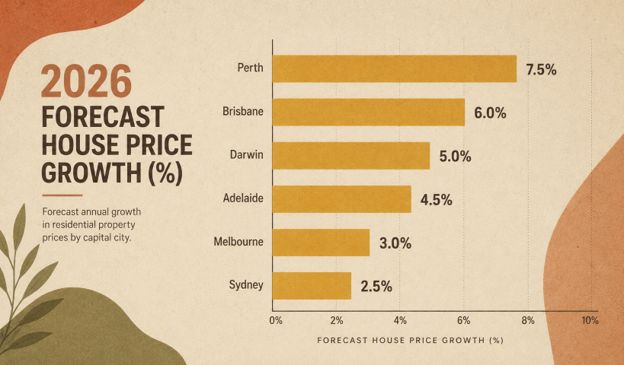
A closer examination of the data, rather than succumbing to prevailing sentiment, reveals a national property market that is performing more robustly than the often-pessimistic commentary suggests. KPMG’s latest residential outlook, for instance, forecasts a national house price increase of 7.7 percent across 2026, with unit prices projected to rise by a close 7.1 percent. This projection is not an isolated assessment; several major banks and independent research houses have published similar figures, even after revising down their initially more optimistic forecasts from earlier in the year.
This sustained growth is not being driven by speculative frenzy, but rather by a confluence of three powerful underlying forces:

- Robust Population Growth: Australia continues to experience significant population expansion, driven by both international migration and natural birth rates. This demographic surge creates sustained demand for housing, a fundamental driver that underpins property values over the long term. As of the latest available data, net overseas migration has been a significant contributor to population increases, putting upward pressure on housing stock.
- Persistent Housing Undersupply: Despite ongoing construction efforts, the pace of new housing supply has struggled to keep up with demand across many parts of the country. Decades of underbuilding, coupled with complex planning regulations and the time it takes to bring new developments to market, have created a structural deficit in housing stock. This scarcity is a critical factor in maintaining upward pressure on prices. For example, reports from the Australian Bureau of Statistics consistently show a gap between the number of new dwellings approved and the actual number completed, indicating a lag effect that exacerbates undersupply.
- Rising Household Wealth: While economic conditions can fluctuate, aggregate household wealth in Australia has shown resilience over the medium to long term. This accumulated wealth, often tied to superannuation funds and property equity, provides a buffer and a source of capital for property investment and purchasing, even amidst rising interest rates. Factors such as consistent superannuation contributions and the long-term appreciation of existing property assets contribute to this underlying financial strength.
It is crucial to acknowledge that this national picture does not translate to uniform growth across all cities. Sydney and Melbourne, for instance, are currently experiencing more modest growth trajectories. However, this is not necessarily an indicator of weakness, but rather a sign of a more balanced market. Perth, Brisbane, Adelaide, and Darwin are currently shouldering the majority of the national growth. This diffusion of capital growth across multiple markets is a healthier pattern than a localized, single-city bubble, suggesting that capital is flowing into areas with greater capacity to absorb it, fostering more sustainable expansion.
The Engine of Growth: Australia’s Expanding Corridors
Delving deeper into the state-level data reveals a more nuanced and compelling story. Western Australia and Queensland, in particular, are at the forefront of composite growth forecasts for the coming year. This trend is not confined to capital city centers but is prominently observed in the outer growth corridors of Australia’s larger metropolitan areas. These are precisely the regions where new land is being released and developed to meet the burgeoning demand that established, inner-city suburbs simply cannot accommodate due to space constraints and existing infrastructure limitations.
Sydney’s northwest offers a prime illustration of this phenomenon. The Hills Shire, for example, has been actively absorbing the kind of undersupply pressures that organizations like KPMG and major banks have consistently flagged at a national level. This absorption has been facilitated by significant investment in new infrastructure, including schools, public transport links, and retail precincts, which are being developed concurrently with new housing. Developments like the Box Hill master plan exemplify the practical manifestation of this growth strategy. These projects typically involve staged land releases, the creation of a central town center designed to foster community, and the proactive integration of transport links, rather than a reactive, decade-long retrofit. Buyers who invested in the earlier stages of these master-planned communities have, for the most part, experienced capital growth that reflects genuine, structural demand rather than ephemeral market sentiment or short-term speculation.
This observation forms the bedrock of the "positive view" argument within the property market. It is not to suggest that every postcode in Australia is a guaranteed investment success. Rather, it emphasizes that growth corridors with confirmed infrastructure development and a demonstrable need for new housing are where the most fundamental strengths are currently concentrated. These areas are actively responding to demographic pressures and economic realities by creating new living environments, demonstrating a proactive approach to meeting demand.
Rental Yields Rebound: A New Calculus for Investors
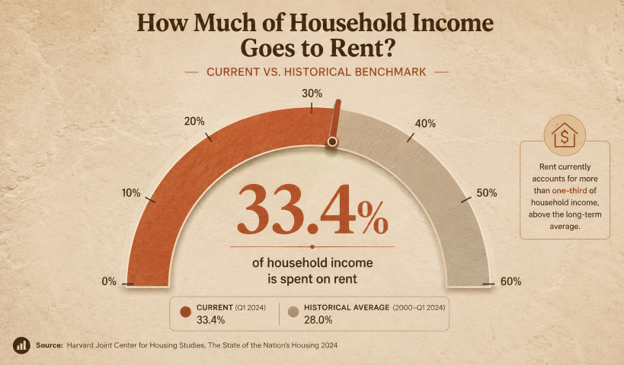
The rental sector of the Australian property market is also presenting a compelling narrative, offering factors that have not been seen in years. While annual rental inflation has eased from its peak in 2023, it remains elevated, consistently tracking above the long-term historical average. Analysis from Cotality indicates that the average Australian household’s expenditure on rent, as a proportion of pre-tax income, has reached a record high of 33.4 percent. While this presents a significant affordability challenge for tenants, it has fundamentally reshaped the investment calculus for landlords. Rental yields have firmed considerably, a trend that has not been widely observed for most of the past decade. This improvement in rental returns is helping to partially offset the drag created by higher borrowing costs associated with increased interest rates.
For investors contemplating the allocation of capital across various asset classes, this dual scenario – moderate yet broad-based capital growth coupled with improving rental returns – presents a meaningfully different investment proposition compared to the market conditions experienced even just three years ago. The historical pattern of declining rental yields, which characterized much of the 2010s, has been reversed, making property a more attractive income-generating asset once more. This shift is particularly significant for those seeking a combination of capital appreciation and passive income.
Skepticism Acknowledged: Understanding the Headwinds and Overreach
It would be disingenuous to ignore the genuine headwinds facing the property market. The Reserve Bank of Australia’s (RBA) future interest rate path remains the most significant wildcard for 2026. Cities like Sydney and Melbourne, with their higher property values and greater reliance on mortgage finance, are inherently more sensitive to interest rate movements. Indeed, some forecasters are now projecting outright price softness in these two specific markets. Furthermore, building costs continue to remain elevated, and housing affordability is a pressing concern, particularly at the higher end of the market, where price growth has been most pronounced.
However, a slower rate of growth in two specific cities does not equate to a nationwide structural downturn. The underlying drivers of the market – sustained population growth, the persistent and widespread issue of housing undersupply, and the ongoing accumulation of household wealth – remain firmly in place. These are the fundamental factors that dictate property values over a five- to ten-year horizon, far more so than the immediate impact of quarterly interest rate decisions or short-term economic fluctuations. While the RBA’s monetary policy decisions will undoubtedly influence short-term market sentiment and activity, they are unlikely to dismantle the deep-seated structural forces that support property values in the long run.
The Definitive Takeaway: Navigating Towards Cautious Optimism
The Australian property market is not experiencing a uniform surge in heat, and any assertion to the contrary likely overlooks the granular details and has not delved beyond national averages. Nevertheless, the case for cautious optimism is substantial and grounded in tangible data. The issue of housing undersupply has not abated; population growth continues its upward trajectory, and the corridors of development that are absorbing this pressure are demonstrating the most coherent alignment of fundamental market drivers. This includes the master-planned communities in Sydney’s growth areas and their equivalents in Perth and Brisbane.
For individuals and investors contemplating property purchases in 2026, the most pertinent question is not a blanket inquiry of "Is now a good time to buy in Australia?" Instead, the more insightful and answerable question is: "Which growth corridors are effectively absorbing genuine, structural demand, as opposed to merely riding a wave of short-term market sentiment?" The answer to this question requires a deeper dive into local market dynamics, infrastructure investment, and demographic trends. Ultimately, the decision hinges on whether one sees the strongest case for long-term growth residing within the established, often saturated, capital cities, or within the burgeoning new corridors being meticulously developed to alleviate housing pressures and accommodate future population growth. The latter, with their proactive planning and direct response to demand, present a compelling argument for sustained value appreciation.