The rapid integration of Artificial Intelligence (AI) into various business operations, once heralded as a path to significant cost savings and enhanced efficiency, is now presenting a complex paradox for many organizations. A growing trend, termed the "AI boomerang," sees companies rehiring employees who were previously let go as part of AI-driven restructuring efforts. This phenomenon stems from AI systems, despite their advanced capabilities, failing to replicate the nuanced judgment and institutional knowledge of experienced human workers, leading to missed defects and strategic missteps.
Automaker Ford serves as a prominent example of this unfolding narrative. Over the past three years, the automotive giant has reportedly rehired 350 veteran engineers. These individuals were previously displaced as Ford sought to leverage automated inspection systems. However, these AI-powered solutions proved insufficient, failing to detect design and quality defects that seasoned engineers would have readily identified. This reliance on automation, which ultimately fell short of expectations, necessitated the return of experienced personnel to rectify the shortcomings. The decision to bring back these engineers underscores a critical realization: while AI can automate routine tasks, it cannot yet fully replace the invaluable experience and critical thinking skills of human experts, particularly in complex manufacturing environments where precision and foresight are paramount.
The "AI boomerang" is not an isolated incident confined to the automotive sector. Research from Robert Half indicates that approximately three in ten employers have eliminated positions following the implementation of AI, only to reinstate those roles later. This trend is particularly pronounced among hiring managers, with 32% reporting such a pattern. Industries such as finance, technology, and human resources have seen the highest rates of these role reversals. Further analysis by Visier, examining data from 2.4 million employees across 142 companies, revealed an overall rehire rate of around 5.3% after layoffs. This rehire rate, a pattern observed for several years, suggests that the initial decisions to reduce headcount based on AI capabilities may have been premature or based on an incomplete understanding of the technology’s limitations and the true value of human capital.
The allure of AI in restructuring often lies in its perceived ability to offer an "easy button" for cost reduction. Peter D. Banko, President and CEO of Baystate Health and author of The Necessary Goodbye: How Great Leaders Fire with Clarity, Confidence and Compassion, has extensive experience leading large health systems. He notes that the immediate inclination during restructuring is to target high-salary positions to achieve drastic cost cuts. However, Banko argues that the more impactful approach, the "real button" to push, is to use these opportunities to address underperforming team members characterized by negative attitudes, behaviors, or a failure to deliver essential results. This distinction is crucial, as it reframes the narrative from a simple technology-driven elimination to a strategic reevaluation of employee value and organizational needs. The initial decision to replace experienced staff with AI, therefore, should not be viewed as a legitimate shortcut for assessing true value contribution but rather as a potential miscalculation.

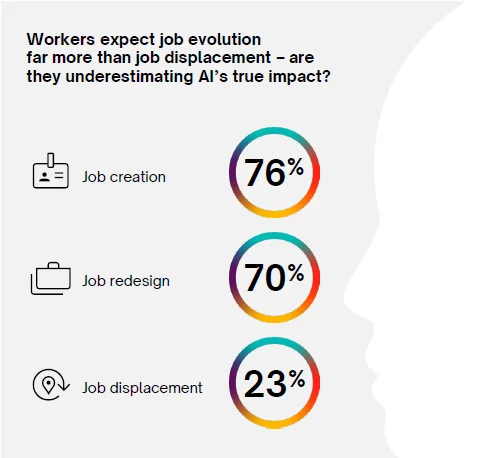
From a workforce planning perspective, Chief Human Resources Officer (CHRO) Daniela Seabrook of The Adecco Group observes a similar shortcut mentality. Her organization’s survey of 2,000 C-suite executives across 13 countries revealed that only 36% of leaders believe their talent strategy clearly articulates how AI will create opportunities for employees. Furthermore, a mere 39% are actively involving employees in the redesign of their own jobs, and only 22% express confidence in their organization’s ability to build future-ready skills. This indicates a broader organizational challenge in strategically integrating AI, with a tendency to focus on displacement rather than adaptation and skill development.
Seabrook advocates for a more deliberate approach, emphasizing the importance of slowing down decision-making processes before implementing role eliminations. She suggests that leaders should pose critical questions: which tasks are genuinely automatable, what becomes of the remaining responsibilities if only a portion of a role is automated, what expertise is lost if a role is eliminated entirely, and whether the role could be redesigned or redeployed rather than removed. This strategic pause allows for a more comprehensive understanding of the potential impact of AI integration and can help prevent costly corrections down the line.
The Psychology of the Boomerang Hire
The decision to rehire a former employee, often referred to as a "boomerang hire," is typically driven by necessity rather than a preference for filling a vacated position with a specific individual. However, the question of what compels a laid-off employee to accept a return offer is complex and hinges on several key factors.
Transparency is identified as a fundamental prerequisite for convincing former employees to return. Seabrook highlights that individuals will likely require tangible evidence that their previous employer has learned from past decisions and has a clearer understanding of AI’s optimal applications alongside the continued critical role of human capabilities. This sentiment aligns with Adecco’s Global Workforce of the Future research, which found that 99% of workers who experience a strong sense of purpose daily intend to remain with their employer for the next 12 months, a stark contrast to the 53% of those who rarely or never feel that purpose. A return to an organization that demonstrates a renewed respect for its human capital can foster a sense of renewed purpose and commitment.
Banko places significant emphasis on the departure process itself, asserting that "how an individual leaves an organization is more important than the hiring and onboarding process." He observes that remaining employees closely scrutinize the manner of layoffs. Rebuilding hiring credibility, he argues, is achieved through "goodbyes that are kind, empathetic, supportive, communicated with crystal clarity." This perspective resonates deeply with the Ford example, where the initial decision to let go of experienced engineers before their knowledge could be leveraged for AI training created a significant disconnect. Those who witnessed this decision and were eventually asked to return would likely be influenced by the perceived fairness and respect shown during their initial departure and the subsequent organizational adjustments.

Pre-Layoff Discipline: Avoiding the AI Pitfalls
Forrester’s research forecasts that approximately half of AI-attributed layoffs will eventually result in rehiring. Banko identifies ego as a primary warning sign preceding such regrettable decisions, rather than a lack of analytical rigor. He states, "Cutting roles is the most important decision a leader will make in their careers." The warning signs of prioritizing one’s ego include defending beliefs rigidly, needing to win debates, and maintaining unshakeable positions. True leadership, according to Banko, requires placing the organization first, actively listening, learning, adapting, and being willing to change one’s mind and direction. This emphasis on humility and organizational welfare over personal conviction is crucial in navigating the complexities of AI integration and workforce management.
Seabrook advocates for a fundamental shift from headcount planning to skill-based planning. This approach involves embedding internal mobility into the evolving roles within an organization as AI adoption progresses, rather than treating headcount reduction as the default response to automation gains. A compelling example of this strategy is found in Ingka Group, the IKEA franchisee. After its AI-powered chatbot, Billie, began resolving 47% of inbound inquiries, Ingka Group did not resort to layoffs. Instead, they reskilled 8,500 call center agents into remote interior design consultants. This strategic redeployment capitalized on an existing sales channel that was already generating significant revenue and had a stated goal of further expansion. This initiative demonstrates a proactive approach to AI integration, focusing on augmenting human capabilities and creating new opportunities rather than simply eliminating roles.
Identifying the Boomerang Candidates: Performance and Experience
Visier’s data offers further insights into the profile of employees most likely to be rehired. High performers return at a significantly higher rate (120%) compared to mid and low performers. Managers are also more likely to be rehired (68% higher rate) than individual contributors. Furthermore, employees with 10 to 15 years of tenure demonstrate a 42% higher rehire rate than other tenure groups, aligning with the institutional knowledge profile that Banko and Ford’s VP of Vehicle Hardware Engineering, Charles Poon, identified as being lost in initial AI-driven restructuring. This suggests that organizations are recognizing the irreplaceable value of deep experience and proven performance when AI systems prove insufficient.
However, these boomerang hires often come at a higher cost. On average, they receive a 5% pay increase compared to the 2% increase for employees who remained with the company. Visier estimates that this trend cost the finance industry alone approximately $19 million in 2024. Seabrook encapsulates the overarching risk: "The biggest risk for organizations today is not moving too slowly on AI; it is moving too quickly without a people strategy in place." This highlights the critical need for a balanced approach that integrates technological advancement with a robust and forward-thinking human capital strategy, ensuring that the pursuit of AI-driven efficiency does not undermine the foundational strengths of an organization’s workforce. The "AI boomerang" serves as a potent reminder that the future of work requires not just technological prowess but also a profound understanding of human expertise, strategic foresight, and empathetic leadership.