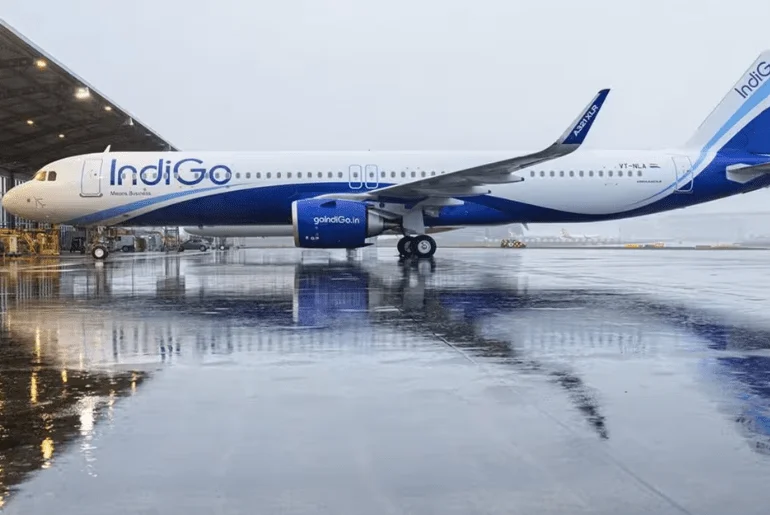
IndiGo, India’s largest airline by market share, has announced the deferment of salary increments for its senior management employees, a strategic decision following the carrier’s reported net loss in the first quarter of fiscal year 2027 (FY27). This move underscores the ongoing challenges faced by the aviation sector, primarily driven by persistently high fuel costs and an unpredictable operating environment that continues to exert significant pressure on airline profitability. The announcement, made during the airline’s post-earnings call, signals a cautious approach to cost management as the carrier navigates a complex economic landscape.
Gaurav Negi, IndiGo’s Chief Financial Officer (CFO), conveyed that the planned salary revisions for senior-level personnel have been put on hold. This decision is not permanent but rather a temporary measure, with the situation slated for review in approximately six months. This deferment reflects a broader industry trend where airlines, despite a robust recovery in passenger demand, are struggling to translate increased revenue into sustainable profits due to elevated operational expenses.
A Deep Dive into Q1 FY27 Financial Performance
The decision to pause senior management salary hikes comes on the heels of parent company InterGlobe Aviation reporting a consolidated net loss of Rs 238 crore for the quarter ending June 30, FY27. This figure stands in stark contrast to the healthy profit of Rs 2,176 crore recorded in the corresponding year-ago period, FY26. The significant swing from profit to loss highlights the dramatic shift in the airline’s financial fortunes within a single year, largely attributable to escalating input costs.
Despite this downturn in net profitability, IndiGo did experience a notable increase in its top-line revenue. The airline reported a nearly 20 percent year-on-year increase in revenue from operations, reaching Rs 24,584 crore for the quarter. This robust revenue growth suggests a strong underlying demand for air travel, indicative of the continued post-pandemic recovery and the inherent growth potential of the Indian aviation market. However, the impressive revenue figures were overshadowed by an even sharper rise in operating expenses, which ultimately weighed heavily on the airline’s earnings.
Fuel costs emerged as the single most formidable challenge during the quarter. Aviation turbine fuel (ATF) expenses witnessed a sharp and substantial increase, primarily exacerbated by persistent geopolitical tensions, particularly in the Middle East. These global events have consistently driven up international crude oil prices, which directly translate into higher fuel costs for airlines. For Indian carriers, this challenge is further compounded by the specific taxation structure on ATF within the country and the depreciation of the Indian Rupee against the US Dollar, making imported fuel even more expensive.
The impact of these rising costs was clearly visible in other key financial metrics. IndiGo’s Earnings Before Interest, Taxes, Depreciation, and Amortisation (EBITDA) declined by a significant 37 percent year-on-year, settling at Rs 3,267 crore. Concurrently, EBITDA margins experienced a sharp contraction, narrowing to 13.3 percent from a more robust 25.5 percent recorded in the year-ago period. These figures collectively paint a picture of an airline grappling with an unprecedented squeeze on its operational margins, despite strong demand-side performance.
Chronology of Economic Headwinds and Industry Response
The current scenario for IndiGo and the broader Indian aviation sector is a culmination of several factors that have evolved over the past few years:
- Post-Pandemic Recovery (FY22-FY24): Following the severe disruptions caused by the COVID-19 pandemic, the aviation industry, including IndiGo, experienced a strong rebound in passenger traffic. Pent-up demand, coupled with capacity rationalization, led to improved load factors and a period of initial profitability for many carriers. FY26, as evidenced by IndiGo’s profit of Rs 2,176 crore, was a period of strong recovery and optimism.
- Emergence of Geopolitical Tensions (Early FY26 onwards): Global events, particularly the conflict in Ukraine and subsequent geopolitical shifts, began to exert upward pressure on crude oil prices. This was further exacerbated by supply chain disruptions and OPEC+ production decisions.
- Inflationary Pressures (FY26-FY27): A global inflationary environment led to increased costs across the board, affecting everything from aircraft maintenance parts to ground handling services and employee wages. Central banks worldwide responded with interest rate hikes, impacting borrowing costs for airlines.
- Intense Domestic Competition (Ongoing): The Indian aviation market remains one of the most competitive globally, characterized by aggressive pricing strategies and the entry of new players like Akasa Air. This intense competition often limits airlines’ ability to fully pass on increased costs to consumers through higher fares.
- FY27 Q1 Challenges: The latest quarter demonstrates the full impact of these combined pressures, where high fuel costs, exacerbated by Middle Eastern geopolitical tensions, coupled with other operational expenses, eroded profitability despite healthy revenue growth. The deferment of salary increments is a direct response to these immediate financial pressures.
IndiGo’s Strategic Responses to Cost Pressures
In response to the escalating cost pressures, IndiGo has outlined several strategic measures aimed at optimizing operations and safeguarding its financial health. These initiatives include:
- Optimizing Aircraft Deployment: This involves strategically deploying aircraft on routes that promise higher yields and better load factors, potentially adjusting flight schedules, and rationalizing less profitable routes. It also encompasses maximizing aircraft utilization to spread fixed costs over more revenue-generating hours.
- Controlling Discretionary Spending: The airline is focusing on identifying and curtailing non-essential expenditures across various departments. This could range from marketing budgets to administrative overheads and non-critical capital expenditures. The deferment of senior management salary increments falls squarely within this category, targeting a significant operational cost.
- Maintaining Pricing Discipline: In a highly price-sensitive market like India, balancing competitive pricing with profitability is crucial. IndiGo aims to maintain a disciplined approach to fare setting, avoiding unsustainable price wars while remaining attractive to passengers.
- Evaluating Fare Increases: Critically, the airline plans to continue evaluating opportunities for fare increases to partially offset the higher operating costs. This is a delicate balance, as overly aggressive fare hikes could deter passengers, especially in a market where alternatives exist. However, given the sustained increase in input costs, some level of fare adjustment is often inevitable for airlines to remain viable.
Furthermore, industry analysis suggests that airlines like IndiGo are also exploring other avenues, such as enhancing ancillary revenue streams (e.g., baggage fees, seat selection, in-flight meals), investing in fuel-efficient aircraft to reduce long-term operational costs, and leveraging technology to improve operational efficiency and customer experience.
Broader Industry Context and Supporting Data
The challenges faced by IndiGo are not isolated; they mirror a broader trend within the global and Indian aviation sectors.
- Global Fuel Price Volatility: According to data from the International Air Transport Association (IATA), aviation fuel typically accounts for 25-30% of an airline’s operating costs. With global crude oil prices experiencing significant volatility, often spiking due to geopolitical events, this percentage can climb even higher, severely impacting bottom lines. For instance, Brent crude futures have seen fluctuations between $75 and $95 per barrel in recent periods, directly influencing ATF prices.
- Rupee Depreciation: The Indian Rupee’s consistent depreciation against the US Dollar has a direct impact on Indian carriers. A significant portion of airline expenses, including aircraft leases, maintenance, spare parts, and fuel purchases, are dollar-denominated. A weaker Rupee means airlines have to spend more rupees to cover these dollar costs, further eroding profitability.
- Capacity Expansion vs. Profitability: The Indian aviation market is projected to be one of the fastest-growing globally. Airlines, including IndiGo, have placed substantial aircraft orders (e.g., IndiGo’s massive Airbus orders). While this signifies long-term growth ambitions, it also means increasing fixed costs (lease payments, depreciation) and the need to fill more seats, often leading to competitive pricing.
- Analyst Perspectives: Aviation analysts widely acknowledge the current headwinds. "The Indian aviation sector is in a phase of robust demand recovery, but profitability remains elusive for many carriers due to an adverse cost environment," noted an independent aviation consultant. "Airlines are caught between strong passenger traffic and spiraling operational costs, particularly fuel. IndiGo’s decision is a prudent, albeit difficult, measure to protect its balance sheet in such times." Another analyst from a leading financial institution commented, "While revenue growth is encouraging, the sharp decline in EBITDA margins indicates severe pressure. Cost optimization, including measures like deferring salary hikes, becomes critical for survival and sustained operations in this highly dynamic market."
Implications and Future Outlook
While postponing salary hikes for senior management, IndiGo has reiterated its commitment to long-term growth. The airline expressed confidence in the resilience of passenger demand, expecting it to remain robust despite the near-term industry challenges. This optimistic outlook on demand is crucial for the airline’s future strategy, as it underpins its large-scale expansion plans.
Impact on Employee Morale and Talent Retention:
The deferment of salary increments, even if temporary and limited to senior management, can have implications for employee morale. In a competitive industry where skilled professionals are highly sought after, such decisions, though financially prudent, can create unease. While the immediate impact on junior and mid-level employees is not specified, a general atmosphere of cost-cutting can ripple through an organization. Airlines constantly battle to attract and retain talent, from pilots and cabin crew to engineers and ground staff. Any prolonged freeze or reduction in compensation could potentially lead to increased attrition, especially if competitors offer more attractive packages.
Market Perception and Investor Confidence:
From an investor’s perspective, the decision to defer salary increments is likely to be viewed as a necessary, responsible step to manage costs and protect shareholder value during a challenging period. It demonstrates the management’s commitment to financial discipline. However, the reported loss and shrinking margins will undoubtedly be scrutinized. Investors will be looking for clear signs that these cost-cutting measures, combined with strategic fare adjustments and operational efficiencies, are sufficient to steer the airline back to profitability in the coming quarters.
Broader Industry Impact:
IndiGo’s actions might serve as a bellwether for other airlines in India and potentially globally. If a market leader like IndiGo, known for its efficiency and strong market presence, is struggling with profitability due to macro factors, it signals significant headwinds for the entire sector. Other carriers might also consider similar cost-saving measures, leading to a period of consolidation or more cautious expansion plans across the industry.
Government and Regulatory Role:
The persistent issue of high ATF costs often brings the role of government into focus. Airlines have consistently lobbied for the inclusion of ATF under the Goods and Services Tax (GST) regime, which would allow them to claim input tax credits and potentially reduce their overall tax burden on fuel. The current state-level taxes on ATF vary significantly and add a substantial premium to the cost. Any policy intervention to rationalize ATF taxation could provide much-needed relief to the beleaguered aviation sector.
Conclusion:
IndiGo’s decision to defer senior management salary increments is a clear indicator of the severe financial pressures confronting the Indian aviation industry. While passenger demand remains strong, the soaring cost of aviation fuel, exacerbated by global geopolitical instability and domestic taxation structures, is significantly eroding airline profitability. The airline’s strategic responses—optimizing operations, controlling spending, and evaluating fare increases—are crucial steps to navigate this challenging environment. The coming quarters will reveal whether these measures, coupled with an anticipated resilient demand, will be sufficient to restore IndiGo to its previous levels of profitability and ensure its sustained leadership in the highly dynamic Indian aviation market. The industry as a whole will be closely watching for signs of easing cost pressures or significant policy interventions that could provide a more stable operating landscape.