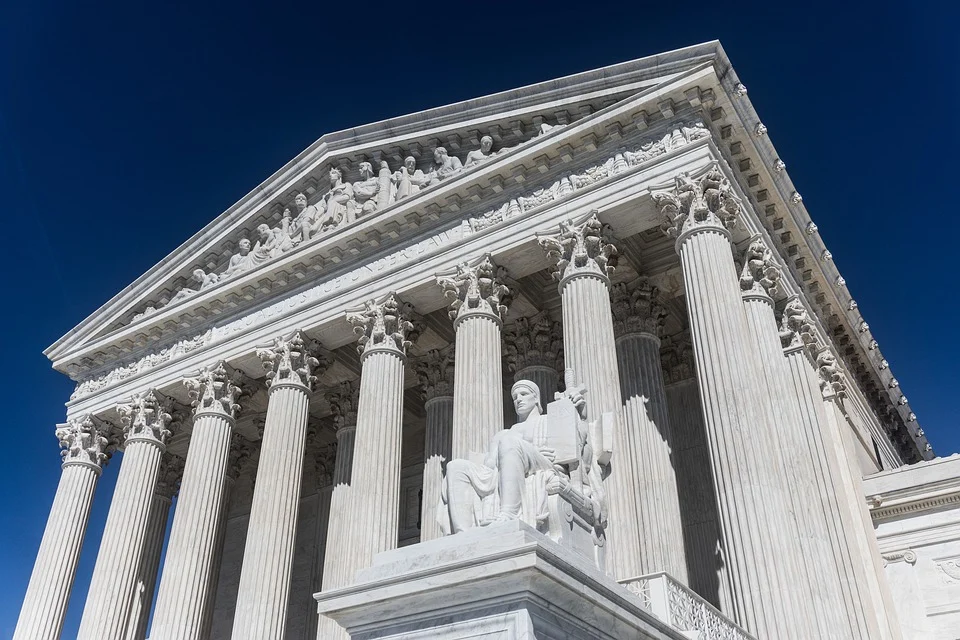
The United States Supreme Court has unexpectedly altered its course in a high-stakes legal battle that promised to redefine the landscape of class action litigation across the country. In a per curiam decision issued on June 5, 2025, the Court dismissed the writ of certiorari in Laboratory Corporation of America Holdings v. Davis, No. 24-304, declaring it "improvidently granted." By choosing not to issue a definitive ruling, the nation’s highest court has bypassed a critical opportunity to resolve a mounting circuit split regarding whether federal courts may certify a class for damages under Federal Rule of Civil Procedure 23 when the class includes members who have not suffered a concrete Article III injury.
This procedural retreat leaves in place a Ninth Circuit ruling that remains highly controversial among corporate defendants and legal scholars. The case, which centered on the accessibility of self-service kiosks at Labcorp facilities, had been viewed as a potential vehicle for the Supreme Court to tighten the requirements for class certification. For employers and large-scale service providers, the dismissal represents a temporary setback in the effort to curb "overinflated" class actions that leverage statutory damages to force massive settlements.
The Origins of the Dispute: Accessibility and the Unruh Act
The litigation began when Luke Davis and Julian Vargas, both of whom are legally blind, filed a class action lawsuit against Laboratory Corporation of America Holdings (Labcorp). The crux of the complaint involved the deployment of touchscreen kiosks at Labcorp’s patient service centers. These kiosks were designed to streamline the check-in process for medical appointments, but they lacked the necessary software or hardware interfaces—such as screen readers or tactile buttons—to be used independently by visually impaired patients.
Labcorp argued that it had not denied access to its services because it maintained a multi-layered check-in system. In addition to the kiosks, patients could check in online before arrival or speak directly with a staff member at a front desk. Labcorp maintained that its employees were trained to assist patients who could not use the kiosks, thereby providing "full and equal access" as required by law.
However, the plaintiffs sought relief under Title III of the Americans with Disabilities Act (ADA) and the California Unruh Civil Rights Act. The Unruh Act is particularly potent for plaintiffs because it stipulates that any violation of the ADA also constitutes a violation of California state law. Crucially, the Unruh Act provides for a minimum of $4,000 in statutory damages for each offense, regardless of whether the plaintiff can prove actual monetary loss or physical harm.
Class Certification and the "Uninjured" Member Controversy
The central legal friction arose when the district court certified a class that potentially encompassed more than 100,000 blind individuals who had visited Labcorp locations in California. Based on the statutory damage minimums of the Unruh Act, Labcorp faced a potential liability exceeding $500 million per year.
During the discovery phase, evidence suggested that a significant portion of the proposed class members might not have been "injured" in a traditional sense. For example, many visually impaired patients reported that they preferred checking in at the front desk or using the online portal and had no intention of using the kiosks, regardless of their accessibility features. Labcorp argued that including these individuals in a damages class violated the principles of Article III standing and the requirements of Rule 23(b)(3).
Rule 23(b)(3) requires that "questions of law or fact common to class members predominate over any questions affecting only individual members." Labcorp contended that if a class includes both people who were frustrated by the kiosks and people who never intended to use them, the question of "injury" becomes an individualized inquiry that should defeat class certification.
Chronology of the Litigation
The timeline of the case reflects a complex procedural journey through the federal court system:
- Initial Filing: Davis and Vargas initiated the lawsuit in a California federal district court, alleging systemic barriers to access at Labcorp facilities.
- District Court Certification: Despite Labcorp’s objections regarding the composition of the class, the district court certified the class under Rule 23(b)(3), focusing on the shared experience of being presented with an inaccessible interface.
- Interlocutory Appeal: Labcorp sought an interlocutory appeal to the Ninth Circuit Court of Appeals. While this was pending, the district court issued a "clarification" of its class definition, though it did not fundamentally alter the scope of the class.
- Ninth Circuit Affirmation: The Ninth Circuit affirmed the certification, aligning with its previous precedents that allow classes to proceed even if they contain some members who may ultimately be found to lack standing at the judgment phase.
- Supreme Court Petition: Labcorp filed a petition for a writ of certiorari, highlighting a circuit split between the Ninth Circuit and other more conservative circuits, such as the Eleventh and Second, which have applied stricter standards to the inclusion of uninjured members.
- Grant of Certiorari: The Supreme Court initially agreed to hear the case, signaling a potential landmark ruling on the intersection of Article III standing and Rule 23.
- The Dismissal: On June 5, 2025, the Court issued its one-sentence dismissal, effectively ending the high-level review of the Labcorp case without a decision on the merits.
Justice Kavanaugh’s Dissenting Opinion
The dismissal was not unanimous in spirit. Justice Brett Kavanaugh issued a lone, stinging dissent, expressing frustration with the Court’s decision to walk away from the issue. Kavanaugh argued that the case was "straightforward" and that the Court should have used it to clarify that federal courts cannot certify a damages class containing uninjured members.
Kavanaugh rejected the plaintiffs’ argument that the case had become moot due to the district court’s minor clarification of the class definition. He characterized this as a technicality that did not change the underlying legal question. On the merits, Kavanaugh sided with the arguments presented by Labcorp and the United States government, which had filed an amicus curiae brief.
In his dissent, Kavanaugh warned of the "real-world consequences" of the Ninth Circuit’s approach. He noted that "overinflated" classes force defendants into "blackmail settlements," where the risk of a massive, aggregate judgment—even if based on the claims of uninjured people—is too great to litigate to a conclusion. He argued that these costs are eventually passed down to consumers in the form of higher prices and to workers in the form of lower wages.
Supporting Data: The Rising Tide of ADA Class Actions
The Labcorp case is part of a broader trend in federal litigation. According to data tracked by legal analysts and the Seyfarth ADA Title III blog, federal ADA Title III lawsuits have reached record highs in recent years, often exceeding 10,000 filings annually.
California remains the primary epicenter for this litigation due to the lucrative nature of the Unruh Act. In 2023 and 2024, nearly 50% of all federal ADA Title III filings occurred in California. The combination of federal accessibility standards and state-mandated statutory damages has created a high-volume litigation environment that frequently targets retail, healthcare, and hospitality sectors.
Industry data suggests that the average cost of defending a class action through the certification stage can range from $500,000 to several million dollars, depending on the complexity of the discovery. When potential liabilities reach the hundreds of millions, as in the Labcorp case, the pressure to settle becomes an overwhelming business necessity, regardless of the merits of the individual claims.
Broader Implications for Employers and Corporate Defendants
The Supreme Court’s refusal to rule in Labcorp v. Davis leaves the "uninjured member" issue in a state of legal limbo. For employers, the implications are multifaceted:
- Continued Circuit Split: Because the Supreme Court did not resolve the issue, the rules for class certification will continue to vary significantly depending on the geography of the lawsuit. Plaintiffs are likely to continue "forum shopping," steering class actions toward the Ninth Circuit and other jurisdictions with more lenient certification standards.
- Strategic Defense Tactics: Defendants must now rely on building a record during the discovery phase that highlights the individualized nature of "injury." By proving that many class members were not actually harmed or did not even attempt to use the service in question, defendants can argue that individual issues predominate over common ones, thereby failing the Rule 23(b)(3) test.
- The Shadow of TransUnion: While the Court dismissed Labcorp, the precedent set in TransUnion LLC v. Ramirez (2021) remains active. In that case, the Court held that every class member must have Article III standing to recover individual damages at the final judgment stage. The tension now lies in whether that standing must be proven at the time of certification or only at the time of recovery.
- Impact on Employment Law: Beyond ADA cases, this issue is critical for wage-and-hour disputes and Fair Credit Reporting Act (FCRA) class actions. In these contexts, plaintiffs often seek to certify classes based on technical payroll errors or notice violations that may not have caused actual financial loss to every employee in the class.
Future Outlook
While the Supreme Court "passed" on this specific opportunity, legal experts anticipate that the issue will return to the docket in the near future. The "improvidently granted" dismissal is often a sign that the Court found a procedural flaw in the specific case, not that it lacks interest in the underlying legal question.
For now, the dismissal serves as a reminder of the volatility of class action jurisprudence. Corporate entities must remain vigilant in their compliance with accessibility standards and proactive in their litigation strategies. The battle over the definition of a "class" and the requirement of "injury" remains one of the most consequential frontiers in American civil law, with hundreds of millions of dollars hanging in the balance.