Frontline workers, comprising over 70% of the workforce, are the backbone of industries such as retail, hospitality, transportation, and service sectors. Their compensation is a critical factor in their employment decisions, often leading to high turnover as individuals seek marginal hourly wage increases. This dynamic is further complicated by the increasing influence of automated application systems and the evolving regulatory environment surrounding tips, particularly the recent IRS guidance on tip credits.
The High-Stakes Game of Hourly Wages
The fundamental nature of many frontline roles, often requiring minimal specialized pre-requisite skills (categorized as Type 1 and Type 2 in frontline worker models), creates a highly competitive labor market. Employers typically receive a high volume of applications for these positions. The speed at which an employer can process these applications – from screening and background checks to extending an offer – is paramount. In this environment, the hourly wage offered often becomes the deciding factor for candidates who are simultaneously applying for numerous similar roles.
The recruitment cycle can be remarkably swift. A candidate might accept a job offer on a Friday, only to fail to report for their scheduled Monday start. This occurs when they secure a position offering a slightly higher hourly rate, perhaps just a few dollars more, at a competing establishment over the weekend. This phenomenon is not isolated to the initial hiring process; it can persist throughout an employee’s tenure.

The proliferation of AI-powered job application tools and "apply-bots" exacerbates this churn. Websites and platforms designed to automate job applications enable workers to simultaneously apply to dozens, if not hundreds, of openings. When an automated system alerts a worker to a position offering a significantly higher wage – even an additional $5 or $10 per hour – the immediate incentive to switch employers becomes overwhelmingly strong.
While factors like company culture, job satisfaction, work-life balance, and working conditions are undoubtedly important, the data suggests that for these lower-skilled roles, hourly pay serves as a foundational, non-negotiable element.
The Emergence of the Tip Credit Advantage
A significant shift in the compensation landscape is emerging from the treatment of tips, particularly in light of new federal regulations. Companies can broadly be categorized into those that collect tips and those that do not. The recent IRS guidance has, in effect, created a substantial financial advantage for companies that incorporate tips into their compensation structure.
Historically, tips were often viewed as direct compensation to employees. However, companies that actively collect tips, whether through cash or digital payment systems, are now accounting for these as employee liabilities rather than direct revenue or expense line items. This accounting treatment means tips do not directly impact a company’s reported profit, revenue, or capital requirements. Consequently, for employers, tips can be seen as a cost-neutral or even cost-reducing element of compensation. This structure can incentivize employees to provide excellent service, as their earnings are directly tied to customer satisfaction.
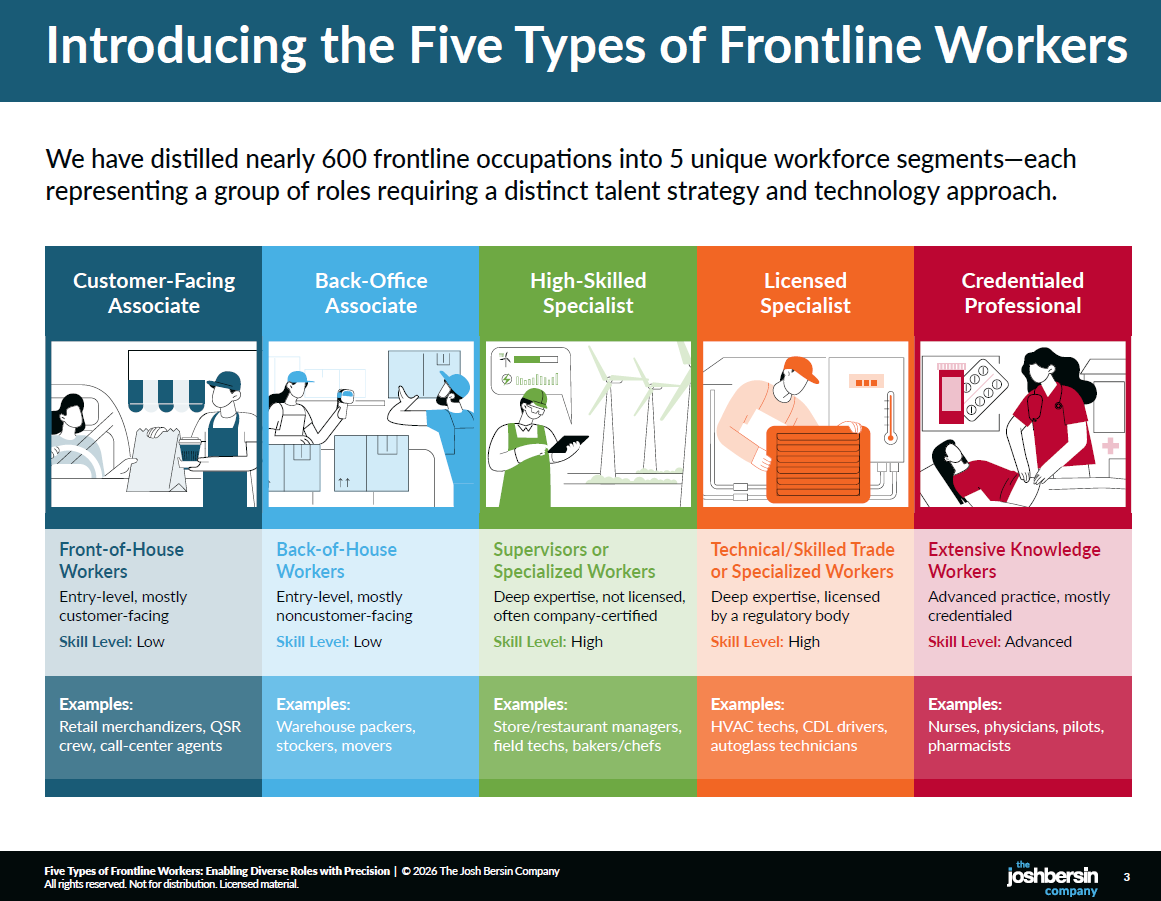
This distinction creates two primary types of companies: "tipping" companies, such as many restaurants, ride-sharing services, and delivery platforms (e.g., Starbucks, Uber, DoorDash), and "non-tipping" companies, which include large retailers, grocery stores, and logistics providers (e.g., Target, Walmart, Costco, FedEx).
Decoding the IRS Tip Credit: A Financial Windfall
The implications of the IRS’s stance on tip credits are profound and are beginning to reshape the competitive dynamics within the frontline labor market. The new rules, in essence, allow employers to utilize a portion of an employee’s tips to meet their minimum wage obligations. This mechanism has created a significant, albeit often indirect, subsidy for companies that benefit from tipped employees.
According to the IRS, in the first half of 2026, the "no tax on tip" bill resulted in 3.5 million filings with an average tax refund or reduction of $1,300 per individual. This translates to a staggering total subsidy by the IRS estimated at $4.5 billion within a partial year. While this benefit is formally directed at employees through reduced tax burdens, its ultimate impact on employer costs is a subject of considerable analysis.
If the IRS figures are accurate, approximately 2.1% of all U.S. workers filed for these tip-related benefits. The average tax refund suggests these tipped workers received an additional $7 to $11 per hour in tip income, after accounting for tax implications. For context, the Bureau of Labor Statistics (BLS) indicates the average hourly wage for non-managerial hourly work in the U.S. is around $32 per hour. This means tips, when factored in with the tax benefit, could potentially add nearly a third or more to an employee’s effective hourly earnings in certain sectors.

The calculation supporting this figure involves understanding average U.S. tax rates. While the overall average federal tax rate is around 14.5%, a significant portion of hourly workers fall into lower tax brackets. Assuming an average federal tax contribution of 8-10% for these workers, a $1,300 annual tax benefit implies an annual tip income of $13,000 to $16,000. When considering the average annual hours worked by hourly employees, which is around 1,700, this translates to an hourly tip income of approximately $6 to $10. Adding the $1,300 tax return, the total tip benefit per hour effectively ranges from $7 to $11.
This financial advantage creates a substantial disparity in labor costs between tipping and non-tipping employers. For instance, if a non-tipping employer must offer $20 per hour to attract talent, a tipping employer might be able to offer a base wage closer to $10-$13 per hour, knowing that tips will supplement the employee’s earnings to a comparable or even higher level, while the employer benefits from a lower direct wage cost. This can represent a difference of up to 35% in labor costs for the employer.
Implications of the Tip Credit Shift
The evolving role of tips and the IRS’s regulatory stance present several critical implications for employers, consumers, and the broader economy.
Employer Strategy and Competitive Advantage
The most immediate implication is how employers can leverage this new financial reality. Companies that do not rely on tips are now at a competitive disadvantage when seeking to attract and retain lower-skilled hourly workers. They must offer higher base wages to match the effective earnings potential of tipped positions. Conversely, companies that collect tips can operate with a lower direct wage expense, potentially increasing their profitability. This suggests that the federal benefit, while intended to support workers, may inadvertently subsidize employers, allowing them to maintain lower wage structures and potentially limiting overall wage growth for tipped employees if tips do not keep pace.
For businesses in service-oriented sectors, the question arises: should they implement or expand tipping policies to remain competitive? Many restaurant and fast-food companies are reportedly reassessing their compensation strategies in light of these developments, with some expressing concern about the necessity of adopting tipping models.
Consumer Experience and Tipping Culture
The proliferation of tipping prompts a broader societal discussion. It is increasingly common to see tip prompts on every transaction, from coffee orders to online purchases, and even in contexts where service is not traditionally tip-based. Ride-sharing and delivery apps, for example, have largely removed the option to skip tipping, and drivers report that their base pay has been declining, making tips an even more crucial component of their income.
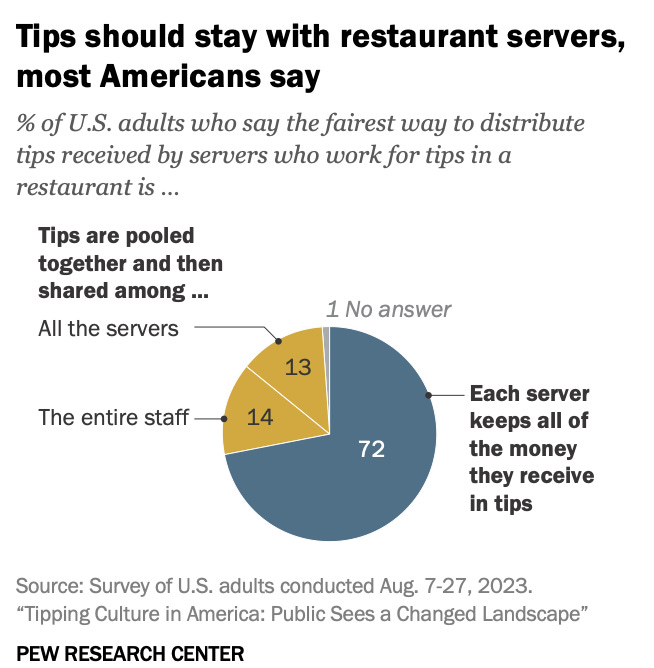
This widespread expectation of tipping can create discomfort and guilt for consumers, who may feel pressured to tip even when the service quality does not warrant it. Surveys indicate a growing sentiment among a significant portion of the American public that tipping culture has become excessive. Concerns also exist about the equitable distribution of tips. While digital collection has improved transparency, questions remain about how effectively tips are shared among all staff who contribute to the customer experience, not just front-line servers. Many consumers express a preference for tips to directly benefit the individual providing the service, rather than being pooled or distributed to management.
Income Inequality and Government Policy
The $4.5 billion subsidy channeled through the IRS tip credit system raises questions about the most effective allocation of government funds. While the political intent may have been to support hourly workers, the mechanism appears to disproportionately benefit employers in the tipping sector by reducing their labor costs. This raises concerns about whether the ultimate financial gains are trickling down to the workers as intended or primarily enhancing corporate bottom lines. The significant figures publicized by the IRS highlight a substantial fiscal impact, prompting a need for non-partisan analysis on the long-term consequences of such policies.
Societal Shift Towards a "Work for Hire" Model
The increasing reliance on tips and the associated tax benefits further accelerate a trend towards a "work for hire" model, decoupling the direct employer-employee relationship. This model, where a significant portion of compensation is derived from customer gratuities rather than a fixed employer wage, can encourage a strong focus on customer service. However, it also means that employers may benefit from this customer-driven compensation system without bearing the full cost of ensuring a stable and adequate wage for their employees. This shift could have long-term implications for worker stability, benefits, and the overall employer-employee social contract.
The Unfolding Future of Compensation
As tipping continues its expansion across various sectors, it is plausible that tip prompts will become ubiquitous in consumer transactions. The long-term societal and economic impacts of these evolving compensation structures are still being assessed. While the intention behind supporting hourly workers is commendable, the practical outcomes of the IRS tip credit and the broader trend of increasing tipping necessitate ongoing scrutiny and analysis to ensure fair compensation and sustainable business practices. The current landscape suggests a future where the distinction between traditional wages and tip-based income will continue to blur, fundamentally altering how frontline work is valued and compensated.