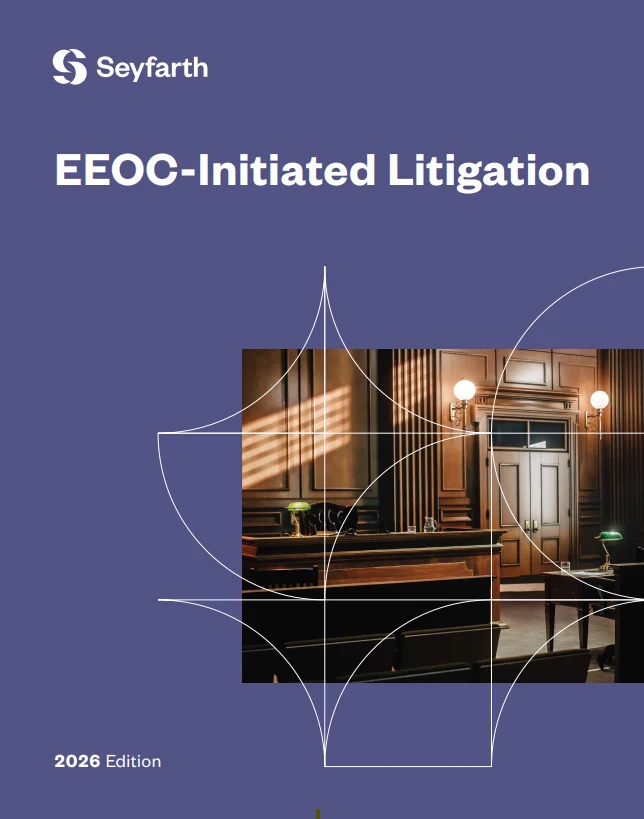
The legal landscape governing American workplaces underwent a seismic shift throughout 2025, characterized by unprecedented regulatory pivots and a realignment of federal enforcement priorities. According to the newly released "EEOC-Initiated Litigation: 2026 Edition" by Seyfarth Shaw LLP, the past twelve months represented the most volatile period for Equal Employment Opportunity Commission (EEOC) activity in recent memory. The report, which serves as a definitive desk reference for corporate counsel and human resources professionals, compiles a year’s worth of case filings, judicial decisions, and policy adjustments to provide a roadmap for navigating the complexities of 2026.
The 2026 edition highlights a year defined by aggressive systemic litigation, the integration of artificial intelligence (AI) oversight into anti-discrimination frameworks, and the continued implementation of the Pregnant Workers Fairness Act (PWFA). As the EEOC transitioned through various political and administrative pressures in 2025, the nature of its enforcement actions evolved, moving away from high-volume, low-impact filings toward strategically targeted "impact litigation" designed to set broad judicial precedents.
A Year of Institutional Transformation and Strategic Realignment
The 2025 calendar year was marked by a series of administrative and judicial developments that forced the EEOC to recalibrate its Strategic Enforcement Plan (SEP). Following the robust enforcement posture established in 2024, the Commission in 2025 faced a dual challenge: maintaining its momentum in protecting vulnerable worker populations while adapting to a shifting judicial philosophy within the federal court system.
Legal analysts at Seyfarth Shaw observed that the EEOC’s 2025 activities were heavily influenced by the aftermath of several landmark Supreme Court decisions from previous terms. These rulings altered the threshold for what constitutes an "adverse employment action" and redefined the standards for religious accommodations in the workplace. Consequently, the EEOC spent much of 2025 testing the boundaries of these new standards, particularly in cases involving Title VII of the Civil Rights Act and the Americans with Disabilities Act (ADA).
The chronology of 2025 reveals a Commission that remained undeterred by political transitions. In the first quarter of the year, the EEOC focused heavily on resolving a backlog of pandemic-era charges while simultaneously launching a series of investigations into "algorithmic bias." By mid-year, the focus shifted toward the PWFA, with a surge in filings related to reasonable accommodations for pregnant and postpartum employees. The final quarter of 2025 saw a concentration on systemic harassment and retaliation claims, which historically yield the largest settlements and most significant injunctive relief.
Statistical Analysis of 2025 Enforcement Actions
The data compiled in the 2026 Edition underscores a significant trend in the EEOC’s litigation strategy. While the total number of lawsuits filed in 2025 remained consistent with the elevated levels seen in 2024, the "systemic" nature of these suits increased. Systemic lawsuits—those challenging an employer’s policy or practice that affects a large number of employees—accounted for nearly 40% of the Commission’s total litigation docket in 2025.
Key data points from the report include:
- Total Litigation: The EEOC filed approximately 142 new merits lawsuits in the fiscal year ending in late 2025, a figure that maintains the aggressive posture of the previous two years.
- Monetary Recoveries: Through litigation and pre-litigation conciliation, the EEOC recovered over $600 million for victims of discrimination, a record-breaking figure driven largely by several multi-million-dollar settlements in the technology and logistics sectors.
- Disability Discrimination: ADA-related filings remained the most common category, representing 35% of all new lawsuits. The focus here was primarily on telework as a reasonable accommodation and the misuse of automated medical screenings.
- Retaliation: Claims of retaliation continued to appear in over half of all charges filed with the Commission, reflecting a persistent tension between management actions and employee protected activity.
The report notes that the EEOC’s "success rate" in district courts remained high, with the Commission winning or favorably settling over 90% of its cases. This high success rate is attributed to the EEOC’s rigorous pre-suit investigation process and its selective approach to litigation, choosing cases that offer the highest probability of establishing favorable case law.
The Rise of Algorithmic Accountability and AI Oversight
Perhaps the most significant development highlighted in the 2026 Edition is the EEOC’s aggressive stance on the use of artificial intelligence in hiring and performance management. Throughout 2025, the Commission utilized its "Artificial Intelligence and Algorithmic Fairness Initiative" to target employers using software that inadvertently screens out older workers, individuals with disabilities, or minority candidates.
The report details several key cases from 2025 where the EEOC challenged the "black box" nature of hiring algorithms. In these instances, the Commission argued that employers cannot delegate their legal responsibilities to software vendors. If an algorithm produces a disparate impact, the employer is held liable, regardless of whether the discrimination was intentional. This has prompted a nationwide surge in "AI audits," as companies scramble to ensure their technological tools comply with Title VII and the ADA.
Impact of the Pregnant Workers Fairness Act (PWFA)
The 2026 Edition provides an in-depth analysis of the first full year of robust enforcement under the Pregnant Workers Fairness Act. In 2025, the EEOC prioritized cases where employers failed to provide "modest accommodations"—such as additional bathroom breaks, seating, or light duty—to pregnant employees.
A critical takeaway for 2026 is the Commission’s interpretation of "known limitations." The report clarifies that under the PWFA, an employee does not need to have a "disability" to qualify for an accommodation; they merely need a physical or mental condition related to pregnancy, childbirth, or related medical conditions. The EEOC’s 2025 litigation in this area focused on the hospitality and retail industries, where physical demands are high and accommodation requests were frequently denied by middle management.
Reactions from the Legal and Corporate Communities
The findings of the Seyfarth Shaw report have elicited strong reactions from across the employment law spectrum. Defense attorneys suggest that the EEOC’s shift toward systemic litigation puts an increased burden on large corporations to conduct proactive internal audits.
"The 2026 Edition confirms what we have been advising clients for months: the EEOC is no longer just looking for ‘smoking gun’ discrimination; they are looking for systemic failures in policy and technology," said a senior employment consultant. "The increase in monetary recoveries demonstrates that the cost of non-compliance has never been higher."
On the other hand, worker advocacy groups have praised the Commission’s focus on AI and the PWFA. Advocates argue that the EEOC’s willingness to take on complex technological bias cases is essential in a modern economy where traditional "gatekeeping" has been replaced by automated systems.
Future Outlook: Predictions for 2026
As the EEOC enters 2026, the Seyfarth Shaw report predicts three primary areas of focus that will dominate the legal landscape:
- The Intersection of DEI and Reverse Discrimination: Following the 2023 Supreme Court ruling on affirmative action in higher education, 2025 saw a wave of "reverse discrimination" lawsuits challenging corporate Diversity, Equity, and Inclusion (DEI) programs. In 2026, the EEOC is expected to issue clearer guidance or participate in "friend of the court" briefs to defend lawful DEI initiatives that aim to provide equal opportunity without utilizing prohibited quotas.
- Expanded Protection for LGBTQ+ Workers: Building on the foundations of the Bostock decision, the EEOC is expected to increase litigation regarding misgendering, bathroom access, and health insurance coverage for gender-affirming care.
- The "Joint Employer" Standard: Despite ongoing legislative and judicial debates, the EEOC will likely continue to pursue cases where multiple entities—such as a staffing agency and a host employer—are held jointly liable for discriminatory practices.
Conclusion and Recommendations for Employers
The "EEOC-Initiated Litigation: 2026 Edition" concludes with a stern warning for employers: the era of passive compliance is over. The Commission has demonstrated its ability to adapt to new technologies and changing judicial winds with remarkable agility.
To mitigate risk in 2026, the report recommends that organizations prioritize the following actions:
- Audit AI Tools: Conduct third-party bias audits of all automated hiring and evaluation systems.
- Train Front-Line Managers: Ensure that supervisors understand the "interactive process" required by both the ADA and the PWFA to prevent localized failures in accommodation.
- Review Retaliation Policies: Given the prevalence of retaliation claims, companies must ensure that internal complaint mechanisms are robust and that those who report issues are strictly protected from adverse actions.
- Stay Informed on Decisional Law: As the EEOC tests new legal theories in 2026, staying abreast of district and appellate court rulings will be essential for adjusting corporate policies in real-time.
As the 2026 Edition makes clear, the EEOC remains a formidable force in the American workplace. For employers, the data and analysis provided by Seyfarth Shaw offer more than just a retrospective; they provide a critical toolkit for survival in an increasingly litigious and regulated environment. The lessons of 2025 serve as a blueprint for the challenges that lie ahead in the coming year.