The American Federation of Government Employees (AFGE), representing more than 820,000 workers across federal agencies and in Washington D.C., has initiated a significant legal challenge against the very agency tasked with safeguarding workplace civil rights. The lawsuit, filed on July 28, 2026, alleges that the U.S. Equal Employment Opportunity Commission (EEOC) has unlawfully instructed its administrative judges to suspend all class complaint proceedings against federal employers, thereby preventing hearings and decisions on properly filed discrimination claims. This unprecedented move, according to AFGE and the co-plaintiffs, constitutes a clear abandonment of the EEOC’s statutory mission and a direct blow to the rights of federal employees.
The Heart of the Allegation: An Agency-Wide Halt
At the core of the lawsuit is the claim that the EEOC, along with its chair, Andrea R. Lucas—appointed to the commission in 2025 by President Donald Trump and designated chair that year—issued an agency-wide directive on or before December 10, 2025. This instruction mandated an immediate halt to all federal-sector class case processing. The legal filing highlights a specific notification issued in one of the pending cases, which explicitly stated: "Effective immediately, all case processing in the above-captioned matter must be paused until further notice. All scheduled deadlines and appearances are also cancelled. This notification applies to all class cases in the federal sector, including those alleging disparate impact."
This directive effectively freezes a crucial mechanism for federal employees to collectively challenge systemic discrimination. Class actions in the U.S. are legal proceedings brought on behalf of a group of individuals who share similar traits and grievances, allowing for a more efficient and impactful resolution of widespread issues than individual complaints alone. By halting these proceedings, the lawsuit contends, the EEOC is actively obstructing justice and denying federal workers their legal right to redress.
The Plaintiffs and Their Case
The lawsuit is being brought by AFGE alongside two federal employees, Deanna Chelette and Alexzandria Boyd, who serve as correctional officers at the Federal Correctional Complex (FCC) in Pollock, Louisiana. Their case exemplifies the type of systemic issue that class complaints are designed to address. Chelette and Boyd filed a certified class complaint against the Federal Bureau of Prisons, alleging severe and pervasive sexual harassment against female employees at FCC Pollock. Their claim details a failure by the Bureau to prevent and correct widespread sexual harassment by inmates against female workers, creating a hostile work environment. This specific class action, like others across the federal sector, has now been caught in the EEOC’s blanket suspension.
AFGE is represented in this action by the Democracy Defenders Fund and two prominent law firms, Cohen Milstein and Burkiewicz & DePriest. Joseph Sellers, founder and co-chair of Cohen Milstein’s civil rights and employment practice, underscored the severity of the EEOC’s actions: "The EEOC’s suspension of class discrimination claims brought by federal employees is an abdication of its obligation, required by law, to adjudicate these claims expeditiously." He further stated, "This unannounced and unexplained suspension of these important class discrimination cases is the latest chapter in the EEOC’s retreat from enforcing the civil rights laws mandated by Congress. Federal employees are entitled to have their class discrimination claims processed promptly, not delayed indefinitely."
The EEOC’s Mandate and the Importance of Class Actions
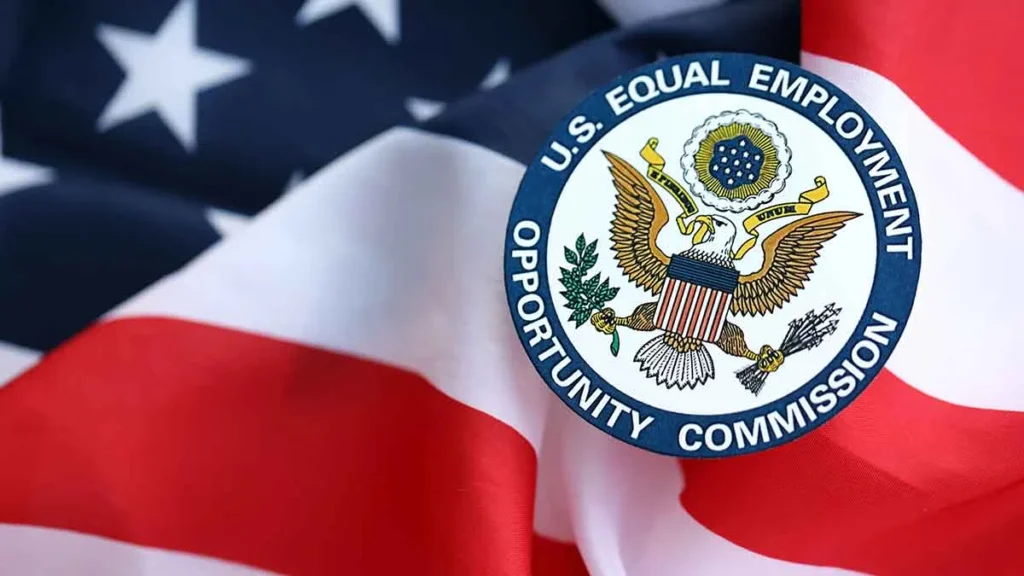
The Equal Employment Opportunity Commission was established by Congress as part of the landmark Civil Rights Act of 1964. Its primary mission is to protect workers from discrimination based on race, color, religion, sex (including pregnancy, sexual orientation, and gender identity), national origin, age, disability, or genetic information. The EEOC is charged with investigating job complaints, leading federal civil rights enforcement in the workplace, and ensuring that employers, including federal agencies, comply with anti-discrimination laws.
For federal employees, the EEOC provides the administrative process through which discrimination complaints are heard and adjudicated before potentially moving to federal court. Class complaints are particularly vital within this framework because they allow groups of employees to challenge systemic patterns or practices of discrimination that affect multiple individuals. This mechanism is crucial for addressing issues like widespread pay disparities, discriminatory hiring or promotion practices, or, as in the Chelette and Boyd case, pervasive harassment that creates a hostile work environment for an entire demographic within an agency. Without the ability to process class complaints, individual employees might face insurmountable hurdles in proving systemic issues, and agencies could avoid accountability for widespread discriminatory practices.

A Timeline of Disputed Actions
The chronology of events leading to this lawsuit highlights a rapid shift in EEOC policy concerning federal-sector class complaints:
- 1964: The Civil Rights Act is enacted, establishing the EEOC to enforce federal laws prohibiting employment discrimination.
- 2025: Andrea R. Lucas is appointed as a commissioner and subsequently designated Chair of the EEOC by President Donald Trump. Such appointments often signal potential shifts in an agency’s enforcement priorities and administrative procedures.
- On or Before December 10, 2025: EEOC leadership, allegedly under Chair Lucas’s direction, issues an internal instruction to administrative judges to halt all class complaint proceedings in the federal sector. This marks a significant departure from standard operating procedures and regulatory requirements for prompt complaint resolution.
- July 28, 2026: The American Federation of Government Employees (AFGE), along with federal employees Deanna Chelette and Alexzandria Boyd, files a lawsuit against the EEOC and Chair Lucas, challenging the legality of the class complaint suspension. The lawsuit argues that this action violates existing regulations requiring the EEOC to handle complaints promptly and efficiently.
This timeline indicates a swift and impactful change in EEOC’s operational stance regarding a critical aspect of its enforcement responsibilities.
Statements from Concerned Parties
The plaintiffs and their legal representatives have voiced strong condemnation of the EEOC’s actions. Everett Kelley, AFGE national president, articulated the union’s deep concern: "Justice delayed is justice denied, and the EEOC’s refusal to act on these class-action complaints is causing direct harm and personal injury to our members." He continued, "The EEOC has a legal responsibility and obligation to keep our federal workplaces free from discrimination and retaliation, and the agency’s refusal to process these cases is a clear abandonment of its mission."
Taryn Wilgus Null, senior counsel at the Democracy Defenders Fund, echoed these sentiments, emphasizing the broader implications for employee rights: "The EEOC’s decision to suspend federal-sector class complaints undermines the fundamental right of employees to seek justice. By failing to process these cases, the commission is abandoning workers and disregarding its mandate to uphold the rule of law. We are bringing this lawsuit to ensure the EEOC fulfills its duty and restores the accountability process for all federal employees." These statements collectively paint a picture of an agency perceived to be derelict in its duties, forcing aggrieved employees and their advocates to resort to litigation to compel it to act.
Broader Impact and Implications
The lawsuit carries significant implications for various stakeholders:
- For Federal Employees: The most immediate impact is on the federal employees whose class complaints are now in limbo. Many of these cases involve serious allegations of discrimination, harassment, or retaliation, and the indefinite delay prolongs their suffering and denies them timely redress. It also sends a chilling message to other employees who might be considering filing complaints, potentially eroding trust in the very system designed to protect them. The ability to bring class actions is often the only realistic way to address deeply entrenched, systemic issues that individual complaints might fail to capture or rectify.
- For the EEOC: This lawsuit directly challenges the EEOC’s operational integrity and its adherence to its foundational mandate. A court ruling against the EEOC could significantly damage its credibility, call into question its leadership’s decision-making, and potentially force a re-evaluation of its internal policies. It could also set a precedent regarding the limits of an administrative agency’s discretion to unilaterally halt statutorily mandated processes. The lawsuit places the agency in the awkward position of being sued for allegedly failing to perform its core function of ensuring equal employment opportunity.
- For Federal Agencies: If class complaints remain stalled, federal agencies that are currently facing such allegations might experience a temporary reprieve from accountability. However, in the long term, this lack of oversight could foster environments where discriminatory practices are allowed to persist or even proliferate, potentially leading to greater legal exposure and a deterioration of workplace morale once the cases are eventually reactivated. It undermines efforts to create a fair and equitable federal workforce, as systemic issues go unaddressed.
- Legal and Administrative Precedent: The outcome of this lawsuit could establish important legal precedents regarding administrative law and the oversight of federal agencies. It will scrutinize the extent to which an agency can unilaterally modify its complaint processing procedures, especially when those procedures are tied to specific regulations and a congressional mandate. It also highlights the role of unions and public interest law firms in holding government entities accountable.
The Path Forward
As of the filing date, the EEOC has not issued a public statement in response to the lawsuit, which is common practice for agencies involved in ongoing litigation. The legal process will now unfold, with the courts tasked with determining whether the EEOC’s actions were lawful and whether it has indeed abandoned its regulatory obligations. The lawsuit seeks to compel the EEOC to resume processing federal-sector class complaints promptly, ensuring that federal employees have access to the full range of protections afforded by civil rights laws. The battle between AFGE and the EEOC is not merely a procedural dispute; it is a fundamental challenge to the enforcement of civil rights within the federal government, with profound implications for the hundreds of thousands of individuals who serve the nation. The outcome will undoubtedly shape the landscape of federal employment discrimination law for years to come.