ServiceNow has launched a comprehensive suite of announcements designed to solidify its position as the central nervous system for enterprise artificial intelligence, aiming to double its revenue to $30 billion within the next four years. The company’s strategy centers on becoming the indispensable platform for managing, securing, and providing the primary interface for all AI agents operating within an organization. This aggressive push signals a significant evolution in the Software-as-a-Service (SaaS) landscape, potentially marking the end of a period of market uncertainty.
The move places ServiceNow in direct competition with tech giants like Microsoft and Workday, both of which are pursuing similar strategies to control the burgeoning AI agent ecosystem. ServiceNow’s core message, "We are turning enterprise AI chaos into control," directly confronts the potential fragmentation and lack of governance associated with widespread AI adoption. Similarly, Workday emphasizes that "AI agents without enterprise governance are lawless by design," underscoring the critical need for robust management frameworks.
While such pronouncements resonate with Chief Information Officers (CIOs) concerned with security and compliance, the practical challenge for many businesses lies not in managing "chaos" but in "building scalable ROI use cases." The success of ServiceNow’s ambitious plans hinges on whether its proposed control mechanisms can accelerate the adoption and demonstrable value of AI within enterprises. This initiative is part of a broader vision for "Agentic HR," detailed in upcoming industry analyses.
The "Action Fabric": ServiceNow’s Monitoring and Monetization Layer
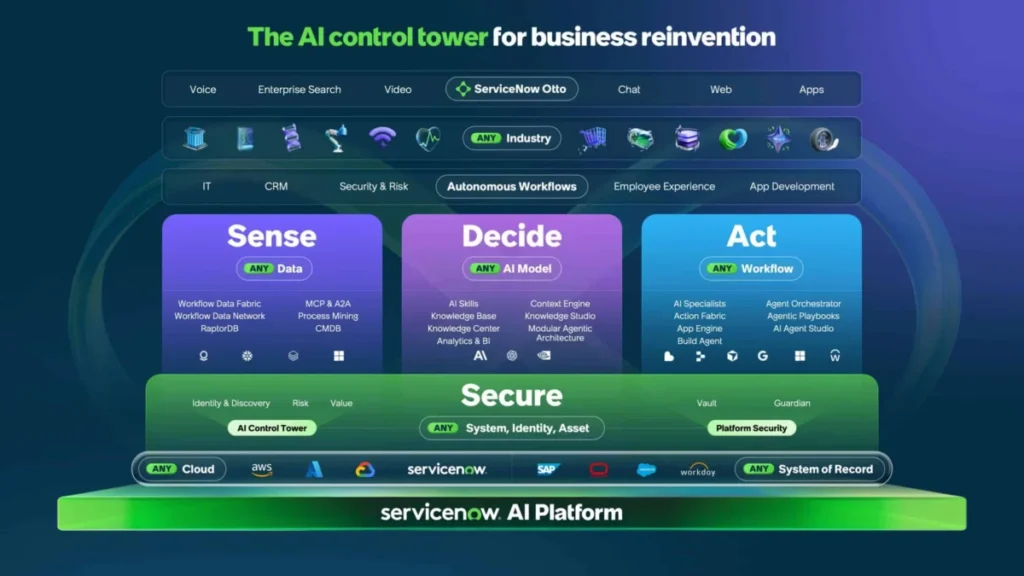
At the heart of ServiceNow’s strategy is its "Action Fabric," a system designed to act as a central traffic controller for all AI agent activities. This mirrors the ambitions of Microsoft’s Agent 365 and Workday’s Agent System of Record, both aiming to establish a comprehensive monitoring and management layer for AI agents.
ServiceNow’s Action Fabric, powered by its proprietary MCP server, is built on an "any agent, any model" principle. This means that any AI agent, regardless of its origin or vendor, can connect to the ServiceNow Fabric for execution. The platform emphasizes an open ecosystem, allowing management tools to be invoked by agents, thereby automating management scenarios and facilitating integration with third-party frameworks.
Key features highlighted by ServiceNow include:
- Universal Connectivity: Agents and models from any provider can integrate seamlessly.
- Openness to All AI: Management tools are accessible by agents, enabling automation.
- Comprehensive Control and Trust: All agents undergo authentication, permission scoping, auditing, and monitoring, ensuring full enterprise compliance and security. The enforcement of specific business rules from vendors like Workday or SAP within this framework remains a point of clarification.
This approach leverages ServiceNow’s two decades of investment in its core platform, including its Configuration Management Database (CMDB), Workflow Data Network, established business rules, Security Center, and identity and access controls. This robust foundation is positioned as a complete IT management system, now reimagined for the era of AI agents.
Competitors are making parallel moves. Workday is opening its platform via its Agent System of Record and Agent Gateway, allowing external agents to interact on a per-call basis. SAP is also mandating that agents utilize its Business Accelerator Hub for accessing business rules, with usage-based metering. The choice between these platforms will likely depend on existing investments in specific vendor ecosystems, such as Workday or SAP business rules, and the perceived usability of their respective development environments, like Microsoft’s Joule or Sana.
Otto: The "Front Door" to Enterprise AI
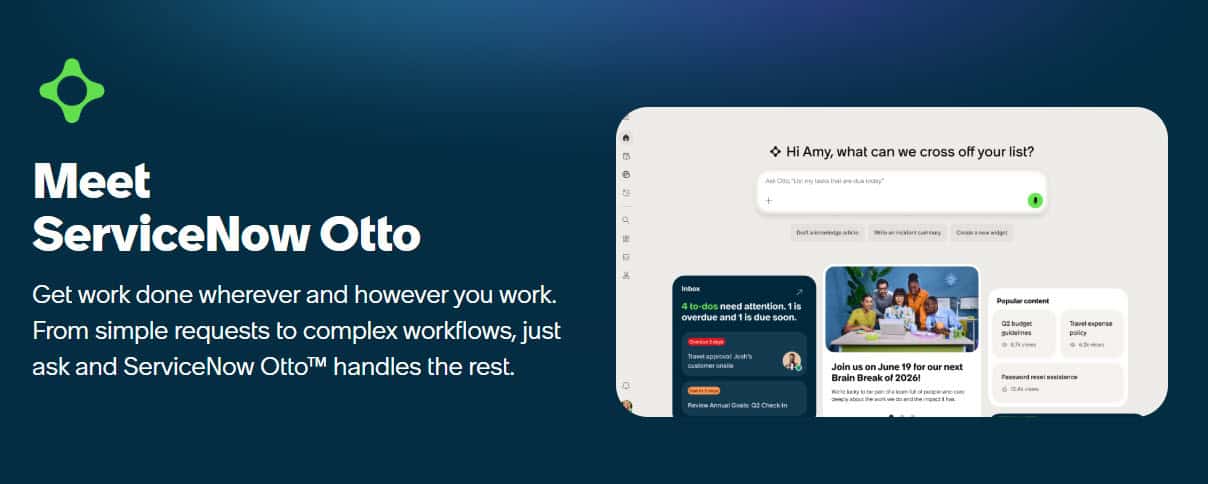
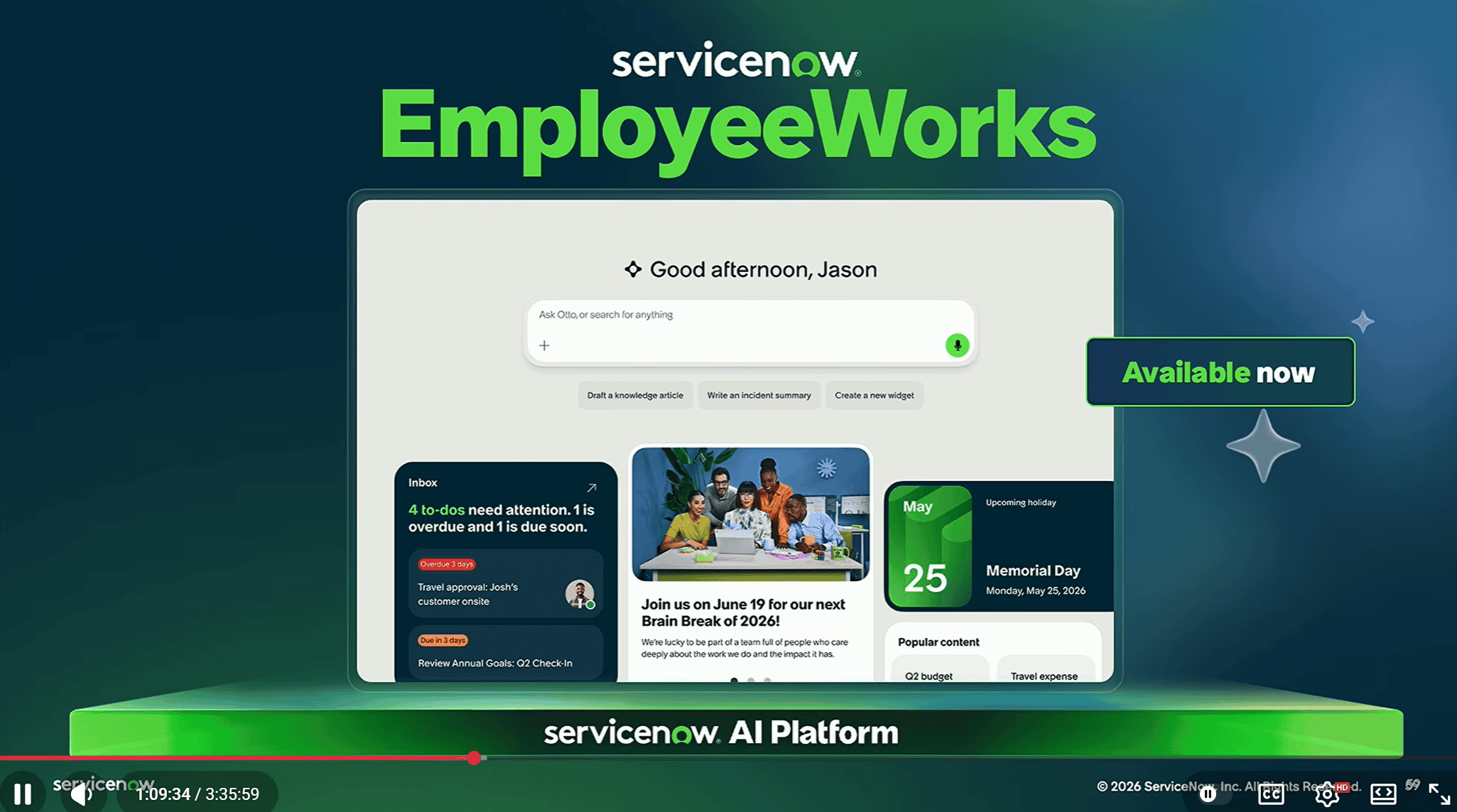
ServiceNow is rebranding and expanding its Now Assist capabilities into "Otto," a persona designed to serve as the primary interface – the "Front Door" – for employees interacting with any enterprise AI agent. This initiative mirrors Workday’s introduction of Sana as its enterprise front door.
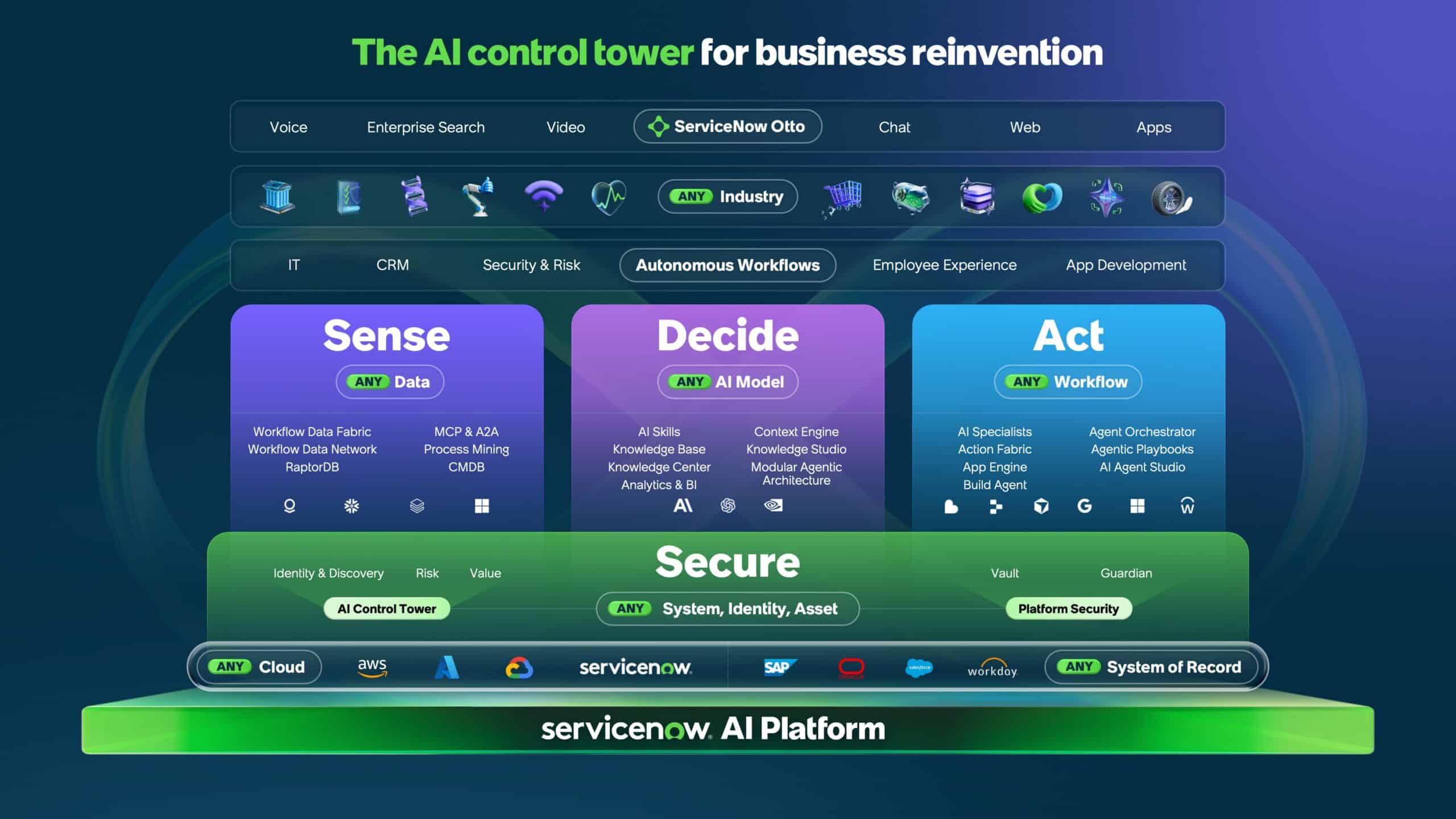
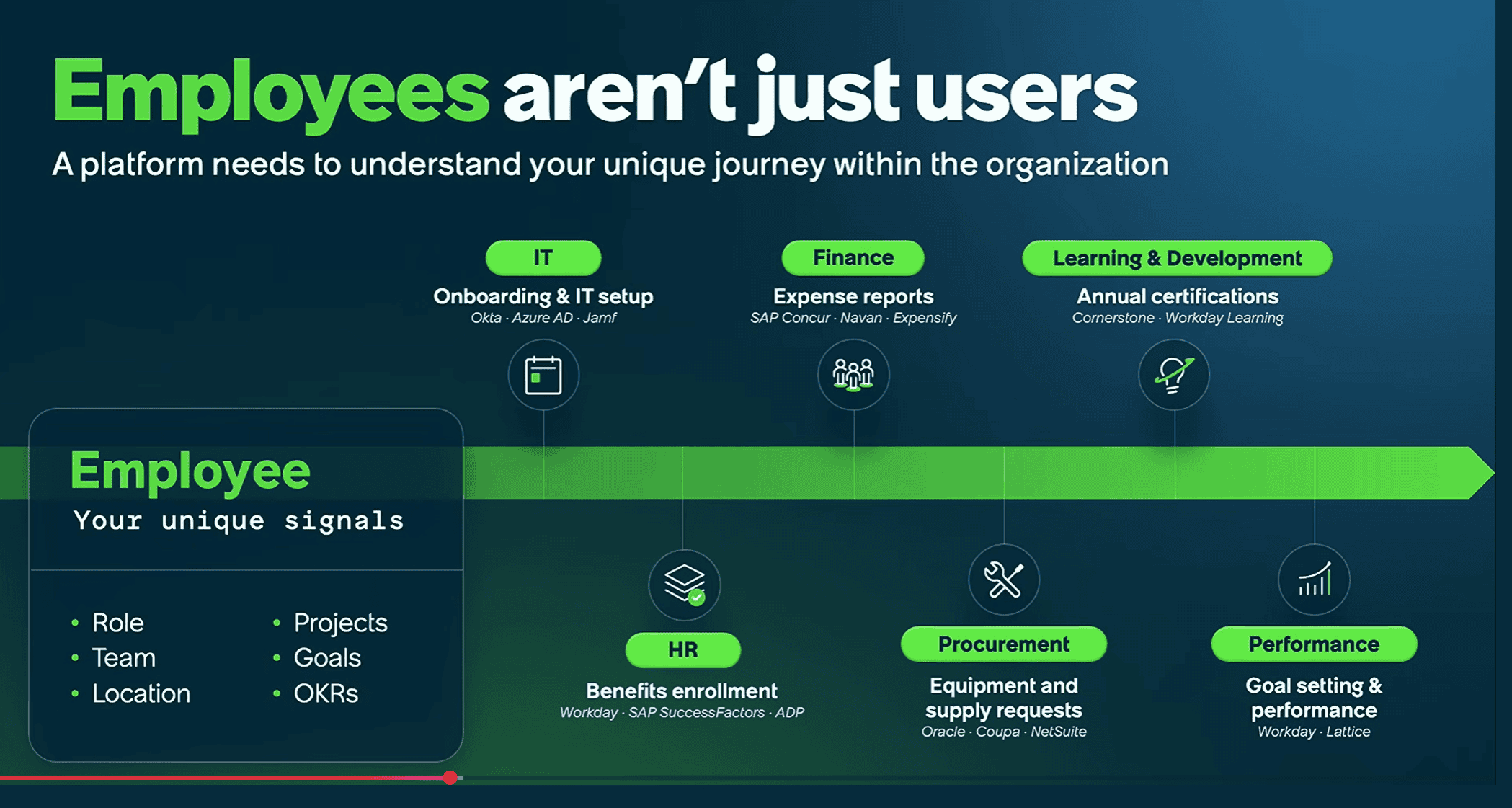
Otto aims to unify employee needs for search, knowledge management, and other support functions under a friendly, accessible AI persona. While Sana is noted for its advanced learning capabilities, Otto’s integration with Moveworks positions it as a comprehensive employee experience tool. ServiceNow explicitly frames Otto as the future of Employee Experience (EX), moving beyond the traditional "Employee Self-Service" model to a more interactive and supportive agent.
Bhavin Shah, founder of Moveworks, now leads the Otto initiative, which is being branded as "EmployeeWorks" to emphasize its open and inclusive nature. This strategic rebranding signifies a shift towards a more human-centric approach to AI interaction, where agents are designed to be helpful companions rather than mere tools.
The challenge for platforms like Otto lies in the inherent complexity of employee needs. A single agent must be capable of addressing a wide spectrum of inquiries, extending beyond simple policy questions to encompass intricate support scenarios. For example, custom agents developed for crisis management must handle diverse issues like personal trauma, logistical disruptions, and evolving geopolitical events, requiring deep integration with various data sources and functional areas. The competitive landscape for these employee-facing AI solutions is intense, with major players like Microsoft and Zoom actively investing in this space.
The AI Control Tower: Governance and ROI Measurement
ServiceNow’s AI Control Tower offers an expansive vision for managing AI within the enterprise. It goes beyond simple monitoring and provisioning to include the calculation of AI agent Return on Investment (ROI). This feature aims to identify agents that are underperforming or exhibiting excessive resource consumption, such as high token usage.
The concept echoes historical IT management systems, such as IBM’s SystemView, which sought to provide a unified view and control over complex computing environments. ServiceNow’s vision, as articulated by CEO Bill McDermott, is to manage the entirety of enterprise operations – agents, workflows, and human identities – to combat what he describes as a "sprawl of conflicting workflows and business rules."
However, this focus on absolute control raises questions about the balance between IT governance and employee autonomy. The Ritz Carlton’s renowned customer service model, for instance, emphasizes empowering employees to use their "best judgment" in addressing customer needs. The potential for an overemphasis on monitoring and managing every AI-driven decision warrants careful consideration, ensuring that such tools augment rather than stifle human initiative.
The ServiceNow Autonomous Workforce: Predefined AI Specialists
Further expanding its AI capabilities, ServiceNow has introduced "The ServiceNow Autonomous Workforce," a collection of pre-defined "AI Specialists" designed for autonomous work. This initiative aligns with industry trends that envision AI agents taking on specific roles within organizations.
ServiceNow is actively defining potential job roles for these AI Specialists, including:
- Site Reliability AI Specialist
- AI Operations Specialist
- Level 1 Service Desk Specialist
- HR Service Delivery AI Specialist
- Case Management Specialist
- Third-party Screening Specialist
- Enterprise Architecture Specialist
- Vulnerability Exposure Specialist
This approach categorizes agents based on their function, mirroring industry frameworks that classify agents as those that "take action," "set rules," or "observe and monitor." The potential for AI agents to centralize functions previously handled by human teams is significant, leading to potential organizational restructuring and the creation of new roles focused on AI oversight and strategy. The company’s integrated add-on feature, Galileo, which acts as a "digital HR consultant," is now integrated into Otto, further solidifying this vision.
Context Engine: Unifying Enterprise Operations
The introduction of the ServiceNow Context Engine aims to provide a crucial layer of understanding for enterprise operations. This engine identifies and locates existing system business rules and metadata, creating a unified view of organizational structure, privacy policies, and business workflows, often originating from ERP and other core systems.
The Context Engine is described as a "graph of graphs," integrating ServiceNow’s workflow data network with knowledge, action, asset, and decision graphs. This aims to create a dynamic, self-learning system that grows more intelligent with each interaction. The introduction of an "AI Analyst Specialist" for autonomous data analytics further supports the goal of maintaining data integrity and insight.
This domain is highly competitive, with Microsoft’s WorkIQ and Copilot offering similar graph-based contextual understanding through connectors to the Microsoft Graph. Gloat’s recent introduction of Loomra for human capital applications also highlights the intense focus on creating comprehensive contextual layers for enterprise AI.
Business Case and Revenue Implications
ServiceNow’s expansive vision is underpinned by a significant revenue objective: to double its revenue to $30 billion in four years. This strategy hinges on monetizing the management and governance of AI agents, shifting from traditional per-seat licensing models to usage-based fees tied to AI agent activity.
The economic viability of this model is a subject of ongoing analysis. While AI is projected to replace labor costs, the expense of AI token fees and the necessary infrastructure for management and security must be offset by demonstrable productivity gains. Recent reports, such as Uber’s decision to scale back on software agents due to the cost-effectiveness of human labor, underscore the need for a clear ROI justification.
The company’s strategic announcements, including a demonstration of the AI Control Tower detecting and neutralizing a sophisticated prompt injection attack, highlight the tangible security benefits. Such capabilities are designed to alleviate the fear of data breaches and uncontrolled AI behavior, appealing strongly to IT departments.
However, the practical implementation requires careful consideration. Investing heavily in management and security infrastructure before applications are fully developed and their value is proven could lead to underutilized licenses. Furthermore, the ease of development within competing platforms like Microsoft Copilot or Workday could influence vendor choice for both agent development and subsequent management tools. The total cost of AI transformation must encompass not only governance but also the entire lifecycle of development, maintenance, and business rule integration.
A New Revenue Paradigm for Software
The enterprise AI market is poised to become a trillion-dollar opportunity for software companies, with revenue models increasingly centered on agent usage rather than traditional licensing. ServiceNow, alongside Workday, Oracle, and SAP, is strategically positioned to capitalize on this shift.
This trend is further exemplified by significant investments in AI services. Anthropic’s partnership with Blackstone to form an enterprise AI services company and OpenAI’s launch of a joint venture with private equity firms for AI deployment underscore the growing demand for integrated AI solutions.
The prevailing model is "software is a service," with fee-driven services replacing a substantial portion of human labor. However, the enduring principle of empowering individuals to exercise judgment, as exemplified by The Ritz Carlton, remains a crucial consideration. The ultimate trajectory of AI agents may well involve augmenting human capabilities, enabling clearer thinking and more ambitious innovation, rather than simply automating tasks.
The future of enterprise AI is still unfolding, with ServiceNow making a bold statement about its role in shaping that future. As the industry navigates this transformative period, the interplay between advanced technology, robust governance, and human ingenuity will define the next era of business operations.