Understanding the Core Concepts: Diversity, Inclusion, and Equity
Before delving into specific job titles, it is crucial to establish a common vocabulary. In the realm of workplace DEI, the terms "diversity," "inclusion," and "equity" (or "equality") are frequently used, sometimes interchangeably, but each carries distinct implications.
- Diversity fundamentally refers to the "what"—the myriad characteristics that make individuals unique. This encompasses a broad spectrum of attributes, including but not limited to gender, ethnicity, age, sexual orientation, disability status, socioeconomic background, education, veteran status, and even thought styles. A diverse workforce is one rich in varied perspectives and experiences.
- Inclusion represents the "how"—the deliberate actions, behaviors, and social norms that ensure all individuals feel valued, respected, supported, and have a sense of belonging within an organization. It’s about creating an environment where diverse individuals not only exist but can thrive, contribute their full potential, and participate equitably in decision-making processes. An inclusive culture ensures that differences are celebrated and leveraged, not merely tolerated.
- Equity (and sometimes "Equality") addresses fairness in access, opportunity, and treatment. While "equality" might imply treating everyone the same, which can disadvantage those starting from a different position, "equity" focuses on providing individuals with what they need to succeed, acknowledging historical and systemic barriers. Companies like Slack use "equity," emphasizing tailored support to achieve fair outcomes, while Salesforce employs "equality," often encompassing a broader commitment to fairness across all demographics. In most organizational contexts, both terms are used to underscore the commitment to unbiased systems and processes that foster a level playing field for all employees.
These foundational distinctions are paramount because they directly influence the scope and focus of DEI roles and, consequently, their corresponding job titles.
The Dynamic Evolution of DEI Roles: A Post-2020 Chronology
The corporate commitment to DEI witnessed an unprecedented surge following the social justice movements of 2020, particularly the global reckoning sparked by the Black Lives Matter movement. This period saw a rapid expansion of dedicated DEI teams and the proliferation of new roles across industries. Companies, responding to both internal and external pressures, began investing significantly in initiatives aimed at diversifying their workforces and fostering more inclusive cultures.
- The Rise (Post-2020): In the immediate aftermath of 2020, DEI roles became one of the fastest-growing functions in corporate America. Organizations, eager to demonstrate their commitment, established new departments, appointed Chief Diversity Officers, and launched numerous programs. This period was characterized by a strong demand for professionals who could design and implement broad-reaching DEI strategies, conduct training, and manage employee resource groups (ERGs).
- The Peak (Mid-2022): Demand for DEI roles reached its zenith around August 2022. During this time, the emphasis was on establishing comprehensive DEI frameworks, collecting demographic data, and integrating DEI principles into various aspects of human resources, from recruitment to talent development. The prominence of Chief Diversity Officers, often reporting directly to CEOs, signaled the strategic importance placed on these functions.
- The Contraction and Evolution (2023-2024): Beginning in late 2022 and accelerating through 2023 and 2024, the landscape shifted. Data from ESG Dive indicates a significant 43% decline in DEI job postings from their August 2022 peak through July 2024. This contraction has been attributed to several factors, including broader economic uncertainties, a changing political climate that has led to increased scrutiny of DEI initiatives, and, in some cases, a perception that initial DEI goals had been met or integrated. Major tech companies like Google, Meta, and Zoom were among those reported to have reduced or restructured their DEI teams since 2023.
Despite these reductions, a Resume Templates survey in 2025 revealed that only a small fraction (5%) of companies had eliminated DEI programs entirely. A substantial 65% indicated no change in their DEI budget, while 22% planned to increase funding. This suggests a strategic recalibration rather than an abandonment of DEI. The implications of rolling back DEI efforts have also become apparent; for example, Target reportedly experienced a 6% average fall in foot traffic over eight weeks after announcing DEI adjustments, contrasting sharply with Costco, which maintained its DEI stance and saw foot traffic grow.
Revelio Labs further reported that of DEI professionals who left their roles, 55% transitioned into non-DEI positions at new organizations, while 37% moved into different functions within the same company. This highlights a crucial trend: DEI work is evolving and being integrated into broader organizational functions rather than disappearing. Many companies are now embedding DEI responsibilities within roles with broader titles such as "People and Culture" or "Employee Experience," signaling a shift from standalone DEI departments to a more integrated approach.
The Hierarchical Structure of DEI Teams
DEI functions, particularly in larger organizations, often follow a structured hierarchy, reflecting varying levels of strategic oversight, operational management, and implementation.
- Leadership (C-Suite & VP Levels): At the apex of the DEI hierarchy is typically the Chief Diversity Officer (CDO) or Chief Inclusion Officer. This role is a strategic leadership position, often reporting directly to the CEO, COO, Chief Human Resources Officer (CHRO), or General Counsel. The CDO is responsible for setting the overall DEI vision, strategy, and goals for the entire organization. Given that diversity extends beyond internal employees to suppliers, customers, and communities, the CDO frequently collaborates across multiple departments.
- Examples: Chief Diversity Officer, Chief Inclusion Officer, Chief Diversity & Inclusion Officer, Chief Equity Officer, Chief Equality Officer, Chief People & Diversity Officer, VP, Global Head of Diversity & Inclusion, VP, Diversity, Equity & Inclusion, VP, Culture & Belonging, VP, Workforce Diversity.
- VP-level roles often oversee specific regional or functional aspects of the DEI strategy, translating the CDO’s vision into actionable plans across different business units or geographies.
- Director Level: Directors of Diversity play a pivotal role in operationalizing the strategic vision set by leadership. They are responsible for developing, implementing, and managing specific DEI programs and initiatives.
- Examples: Director of Diversity & Inclusion, Director of Culture, Director, Global Head of Diversity, Director, DEI Talent Acquisition, Director of Equity Programs, Director, Employee Experience & DEI. A Director of Culture, for instance, leads strategies to enhance employee engagement and foster an inclusive workplace, often creating innovative DEI programs to attract and retain talent.
- Manager Level: Managers of Diversity typically oversee the day-to-day execution of DEI programs and manage specific projects or initiatives. They work closely with various departments to ensure the integration of DEI principles into daily operations.
- Examples: Diversity & Inclusion Manager, DEI Program Manager, Global Diversity Program Manager, Supplier Diversity Manager, Diversity Recruiter, Diversity Business Partner. A Supplier Diversity Manager, for instance, focuses on developing strategies to ensure a diverse supply chain, researching and engaging businesses owned by diverse groups.
- Individual Contributors: This is often the largest group within a DEI team, responsible for specialized tasks, program support, and direct implementation of initiatives.
- Examples: Diversity & Inclusion Specialist, DEI Consultant, Diversity Trainer, Human Rights Officer, Diversity Event Producer, Diversity Communications Specialist. A Diversity Consultant, whether internal or external, reviews existing processes, develops new goals, and conducts training, while a Diversity Recruiter crafts inclusive job descriptions and networks with underrepresented groups to build diverse talent pipelines.
- Entry-Level Roles: These positions provide essential administrative and logistical support, facilitating the smooth operation of DEI initiatives.
- Examples: Diversity & Inclusion Coordinator, DEI Assistant, Program Coordinator, Executive Assistant, Diversity & Inclusion. A Diversity Coordinator supports managers or directors, handling administrative aspects, coordinating events, tracking metrics, and communicating initiatives.
Candidate Perspectives: What Job Seekers Prioritize
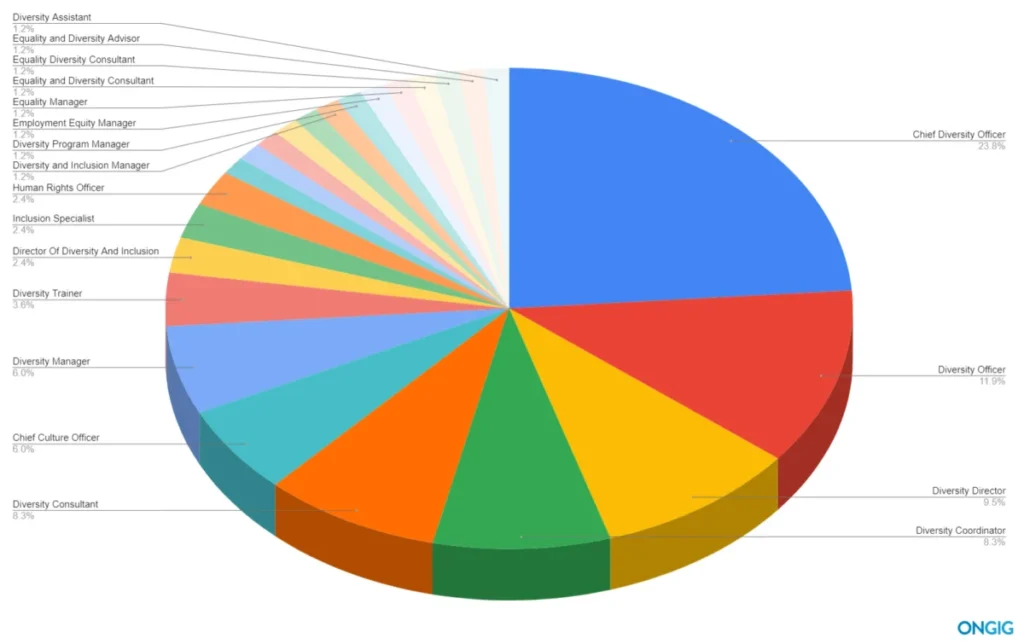
Understanding what job seekers search for on platforms like Google is crucial for organizations looking to attract top talent in the DEI space. While specific data points illustrate the relative share of candidate search interest, common themes emerge. Candidates are often looking for roles that clearly articulate responsibility for "Diversity & Inclusion" or "DEI," often with a managerial or specialist title. The highest search interest often gravitates towards established titles like "Diversity and Inclusion Manager" or "DEI Specialist," indicating a preference for roles with clear responsibilities and career pathways. This also reflects a candidate pool seeking direct involvement in program development and implementation.
In-Depth Look at Key Diversity Titles and Their Functions
To further illustrate the breadth of DEI roles, here are detailed summaries of twelve common diversity titles:
- Chief Diversity Officer (CDO): The CDO is a senior executive responsible for defining, developing, and overseeing the organization’s overarching diversity, equity, and inclusion strategy. This includes developing policies for diverse candidate recruitment, fostering an inclusive workplace culture, setting measurable DEI goals, and ensuring accountability across all departments. They often lead executive diversity councils and represent the organization externally on DEI matters.
- Director of Culture: This role focuses on enhancing employee engagement and shaping the organizational environment to be more inclusive. A Director of Culture develops and implements strategies and programs that foster a positive, equitable, and psychologically safe workplace. They collaborate with HR and leadership to embed cultural values, launch innovative DEI programs, and strengthen internal partnerships to ensure a cohesive and supportive employee experience.
- Supplier Diversity Manager: This manager is dedicated to diversifying the organization’s supply chain. They develop business strategies to identify, engage, and integrate businesses owned by diverse groups (e.g., women, minorities, veterans, LGBTQ+ individuals, people with disabilities) into procurement processes. Responsibilities include researching potential suppliers, establishing partnerships, tracking diversity spending, and ensuring compliance with supplier diversity targets.
- Human Rights Officer (HRO): Often a government or large institutional role, an HRO monitors, investigates, and reports on violations of civil, social, cultural, and political rights within a specific jurisdiction or organization. They receive complaints related to discrimination, harassment, and inequitable treatment, working to resolve these issues through mediation, policy recommendations, or legal action. This role ensures adherence to human rights standards and legal frameworks.
- Diversity Consultant: A Diversity Consultant, often an external expert, is brought in to assess an organization’s current DEI landscape. They review data, audit existing processes, identify gaps, and provide strategic recommendations for developing and implementing new DEI goals, strategies, and policies. They may also design and deliver customized diversity training for various employee levels and monitor emerging DEI trends to suggest program adjustments.
- Diversity Trainer: This role focuses on educating employees at all levels about DEI principles, unconscious bias, cultural competence, and inclusive behaviors. Diversity Trainers design and deliver engaging workshops and development programs based on data-driven research and organizational objectives. They empower managers and employees with the knowledge and skills necessary to foster a more inclusive and equitable work environment.
- Diversity Recruiter: A Diversity Recruiter specializes in attracting, sourcing, and hiring candidates from underrepresented groups. They develop inclusive recruitment strategies, build diverse talent pipelines through partnerships with community organizations and targeted job boards, and work with hiring managers to ensure fair and bias-free hiring processes. Their ultimate goal is to enhance workforce diversity and ensure equitable access to opportunities.
- Diversity Business Partner: This role acts as a strategic advisor, embedding DEI principles directly within specific business units or departments. Diversity Business Partners collaborate with leaders and teams to identify DEI best practices relevant to their unique operational contexts, distribute DEI resources, and inspire cross-functional teamwork. They assist senior management in developing measurable, innovative solutions tailored to their specific business challenges.
- Diversity Event Producer: This professional is responsible for planning, organizing, and executing events that promote diversity, equity, and inclusion. This includes internal workshops, awareness campaigns, cultural celebrations, and external recruitment events targeting underrepresented groups. They manage logistics, promotions, budgeting, and coordination with stakeholders to ensure successful and impactful events that align with DEI objectives.
- Diversity and Inclusion Program Manager, University: Within an academic setting, this role develops, implements, and monitors DEI goals and programs across various university departments. They create and lead training sessions for students, staff, and faculty to foster an open and inclusive campus environment. They also build relationships with internal and external stakeholders to support the university’s overarching diversity plan.
- Chief People Officer (CPO): While not exclusively a DEI role, the CPO often oversees all human resources functions, including DEI. This executive leader implements HR strategies aligned with company objectives, provides strategic HR advice to senior management, and develops workforce planning programs. The CPO drives organizational change, champions an inclusive workplace, and manages HR systems, technology, and data analytics to support business needs, thereby integrating DEI into the core people strategy.
- Diversity Coordinator: This is an essential support role, assisting Diversity Managers or Directors in the execution of DEI initiatives. They handle administrative tasks, coordinate diversity-related events and training sessions, track and report on DEI metrics to monitor progress, and maintain documentation. They also serve as a primary point of contact for employees regarding DEI initiatives and facilitate communication across internal teams.
Emerging Trends: Top 10 Diversity Titles for 2026
As DEI evolves from a standalone function to an integrated aspect of organizational strategy, new specialized roles are emerging. These roles reflect a deeper commitment to data-driven approaches, technological integration, holistic employee well-being, and inclusive leadership.
- Head of Diversity Analytics: This role leads the collection, analysis, and interpretation of diversity data to inform inclusive hiring, promotion, and retention processes. They monitor key DEI metrics, evaluate the effectiveness of strategies, and work with HR leaders to design data-driven programs. They provide insights into workforce diversity trends, including demographic analysis, pay equity, and promotional parity, while ensuring data integrity and confidentiality.
- Inclusive Culture Manager: Responsible for developing programs that embed inclusivity into the workplace fabric. This manager collaborates with HR and senior leadership to ensure policies and practices are equitable, supports Employee Resource Groups (ERGs), and advises departments on DEI best practices. They act as a subject matter expert, ensuring all employees feel heard and valued.
- DEI Technology Specialist: This specialist implements and manages software solutions supporting DEI activities, such as diversity hiring tools, analytics dashboards, and employee engagement platforms. They partner with HR, DEI, and IT to evaluate systems, provide training, and recommend technological improvements aligned with DEI goals, using data analytics to assess program effectiveness.
- Diversity Recruitment Manager: This manager crafts and executes strategies specifically designed to attract and hire diverse candidates. They build robust talent pipelines by collaborating with universities and leveraging specialized job boards. They also work closely with hiring managers to ensure an inclusive, bias-free recruitment process, tracking and reporting on diversity metrics to refine strategies.
- DEI Learning and Development Manager: This role develops and delivers comprehensive DEI educational programs to foster a more inclusive workplace. They collaborate with HR and leadership to integrate DEI principles into all employee development programs, from onboarding to leadership training, continuously assessing and improving training effectiveness based on feedback and outcomes.
- Equity Program Manager: This manager designs and implements programs focused specifically on equity. They conduct pay equity audits, collaborate with HR to address disparities, and work with department heads to ensure equal opportunities for promotions and career development. They monitor and report on equity-related issues, recommending improvements and staying updated on legal and industry standards.
- DEI Program Specialist: This specialist assists in the creation and implementation of various DEI programs and activities. They manage logistics for workshops, trainings, and events, provide support for ERGs, and serve as a primary contact for employee feedback or questions regarding DEI initiatives.
- Diversity Data Analyst: This role focuses on collecting and analyzing diversity-related data across recruitment, pay equity, employee engagement, and retention. They perform statistical analysis to identify DEI trends, opportunities, and areas for improvement, providing actionable insights to guide the company’s DEI efforts. They also build and maintain DEI dashboards and reports, ensuring data collection adheres to ethical and legal standards.
- DEI Communications Manager: This manager develops and executes internal and external communication strategies for the company’s DEI activities. They collaborate with marketing and HR to ensure consistent DEI messaging across all channels, including internal announcements, social media, press releases, and CSR reports. They also work closely with ERGs to amplify their initiatives through effective communication.
- DEI Employee Experience Manager: This manager develops and implements strategies to enhance the overall employee experience for individuals from all backgrounds. They partner with HR and leadership to ensure inclusive onboarding, performance reviews, and career development. They collaborate with ERGs, use engagement surveys to measure inclusivity, and analyze retention data to address DEI-related gaps.
Diversity, Equity, and Inclusion Updates as of 2026: A Strategic Shift
The journey of corporate DEI has been marked by rapid growth and subsequent recalibration. While the initial surge post-2020 led to the proliferation of dedicated DEI teams, the period from 2023-2024 saw a significant decline in specific DEI job postings. This contraction, however, does not signify the demise of DEI but rather its strategic evolution.
Organizations are increasingly integrating DEI principles into core business functions, leading to a shift in how these roles are structured and titled. The move towards broader titles like "People and Culture" or "Employee Experience" indicates that DEI is becoming less of a siloed department and more of an embedded responsibility across human resources and organizational development. This integration reflects a maturation of DEI efforts, aiming to weave inclusive practices into the very fabric of the company culture rather than treating them as separate initiatives.
The business consequences of rolling back DEI commitments have also become clearer, with companies like Target experiencing tangible negative impacts on customer engagement when perceived to waver on their DEI stance. Conversely, companies like Costco, which maintained their commitment, saw continued growth. This underscores that DEI is not merely a social responsibility but a critical business imperative affecting brand reputation, customer loyalty, and employee retention.
The future of DEI roles in 2026 and beyond emphasizes data-driven strategies, technological integration, and a holistic approach to employee well-being. Professionals in this field are increasingly expected to possess strong analytical skills, be adept at program management, facilitate organizational change, and understand how to leverage AI ethically to ensure fair outcomes in hiring and talent management. The focus is shifting towards measurable outcomes, accountability, and a sustainable integration of DEI into every aspect of an organization’s operations.
Frequently Asked Questions About Diversity Titles
1. What is the highest diversity job title?
The highest diversity job title is typically the Chief Diversity Officer (CDO) or Chief Inclusion Officer. This role sits at the top of most DEI organizational charts and is a strategic leadership position. In some progressive organizations, the CDO reports directly to the CEO, signaling a strong organizational commitment and direct influence on executive decision-making. In other structures, the CDO may report to the Chief Human Resources Officer (CHRO), which still signifies significant influence but potentially within the broader HR framework. The reporting line often serves as a key indicator of the strategic weight and organizational priority assigned to the DEI function.
2. What is the difference between a Diversity Manager and a Diversity Business Partner?
A Diversity Manager typically holds a more centralized, organizational-level responsibility. They are generally tasked with overseeing the development, implementation, and reporting of DEI programs and initiatives across the entire company or a significant division. Their focus is often on strategic program management, policy development, and tracking overall DEI metrics. In contrast, a Diversity Business Partner is usually embedded within a specific business unit or department. Their role is to work directly with the leaders and teams of that particular unit to implement tailored DEI practices in areas such as hiring, talent retention, team culture development, and specific business-related initiatives. They act as a dedicated advisor, ensuring DEI principles are integrated into the daily operations and strategic goals of their assigned unit.
3. What skills do you need for a DEI job title?
Core skills essential for a DEI job title include robust data analysis capabilities to measure representation, track pay equity, and assess program effectiveness. Strong program management skills are crucial for designing, launching, and overseeing DEI initiatives. Excellent facilitation skills are needed for leading workshops, training sessions, and engaging discussions. Furthermore, change management expertise is vital for navigating organizational shifts and fostering adoption of new inclusive practices. In 2026, an increasingly critical skill set is AI fluency. DEI professionals are now expected to audit AI-powered hiring tools for inherent biases, ensure ethical implementation of new technologies, and guarantee fair and equitable outcomes in sourcing, screening, and talent development processes that utilize artificial intelligence.