
The burgeoning field of enterprise Artificial Intelligence (AI), while commanding immense valuations for leading companies like Anthropic and OpenAI, is demonstrating that its true return on investment (ROI) is increasingly being derived not from the foundational models themselves, but from the sophisticated applications and the unique data sets they leverage. This paradigm shift mirrors a historical trajectory observed in the technology sector, most notably the relational database market’s evolution in the 1990s, where the underlying technology became commoditized, and value accrued to the applications built upon it. As the landscape of AI development expands with both proprietary "frontier" models from tech giants and a growing array of open-source alternatives, businesses are being compelled to re-evaluate their AI strategies, moving beyond the allure of cutting-edge technology towards tangible business solutions.
This transition is gaining significant traction, underscored by recent pronouncements from industry leaders. Satya Nadella, CEO of Microsoft, articulated a similar perspective in a recent Wall Street Journal op-ed, titled "We Can’t Let AI Giants Eat the Economy." His piece echoed the sentiment that the focus must shift from the mere consumption of AI capabilities to their strategic integration into business processes for sustainable economic benefit. This viewpoint aligns with findings from extensive research into enterprise AI adoption, which indicates that a significant portion of companies are still in the exploratory phase, rather than actively developing and deploying robust AI-powered applications.
The Maturation of AI: From Novelty to Utility
The current AI ecosystem is characterized by the availability of powerful, large-scale language models (LLMs) from major players such as OpenAI, Anthropic, Google, and Microsoft (often referred to as MAI). Simultaneously, a robust open-source community is contributing significantly, offering models like GLM, Deepseek, Kimi, Mistral, and IBM’s Granite. This proliferation of advanced AI capabilities raises a critical question for enterprises: should they continue to "buy AI" simply for its novelty, or should it be integrated as a fundamental tool within a broader strategy for building solutions? The prevailing consensus suggests the latter.

Research, including an upcoming report titled "Enterprise AI Playbook," indicates that only a small fraction of companies, approximately 8%, are actively building real enterprise applications powered by AI. A common, albeit often ineffective, approach observed is the procurement of AI tools with the expectation that individual employees will independently discover their utility. This "employee benefit" model, where companies purchase AI access and hope for organic innovation, has proven inefficient. For instance, utilizing AI tools like Galileo, which can interface with various models including Claude, has shown that without a defined domain and a specific problem to solve, significant time can be lost in aimless experimentation. This mirrors the diminishing "inflated expectations" among economists regarding the immediate, broad-based economic impact of AI without focused application.
The "Normal" Technology Adoption Cycle
In a typical enterprise technology adoption scenario, the process is far more structured. Organizations identify a specific business problem, develop a detailed business case, collaborate with IT departments to ensure security and data integration, and then procure systems with clear, measurable ROI objectives. This methodical approach is evident when companies invest in AI-driven applications such as those offered by Paradox, Eightfold, or Radancy, which are designed to address specific business needs. However, this structured approach is often bypassed when organizations simply acquire access to foundational models like Claude and allow employees to "play around" with them.
The inherent capabilities of generative AI – its prowess in coding, image generation, data analysis, and question answering – are undeniably impressive. Yet, the "fun and interesting" nature of these abilities does not automatically translate into business value, especially when the cost of consumption is high. The true payoff of AI in the corporate realm is contingent upon the application of these models to an organization’s proprietary data, within its specific operational context, and to solve defined problems.
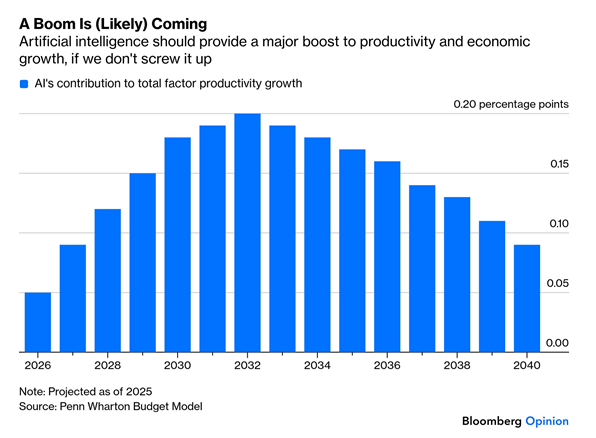
The significant investments made in AI development, estimated at $1.5 trillion by forward-looking investors, have funded not only the engineers and data centers but also the essential hardware like NVIDIA processors and the underlying power infrastructure. As this massive investment seeks tangible returns, the era of freely available AI experimentation is gradually concluding. The cost of using these advanced tools is becoming more apparent, as exemplified by recent price increases for AI services, such as a reported 20% hike by Apple.
The Onset of a Commodity Market: Price Wars and Commoditization
The recent emergence of AI "price wars," as reported by The Wall Street Journal, is a strong indicator of this market maturation. The competitive pressure among frontier AI vendors, coupled with their strategic decisions to lower prices, is characteristic of commodity markets where switching costs are low and differentiation becomes increasingly challenging. Microsoft’s strategy with its MAI models, aiming for significantly lower costs compared to frontier offerings, exemplifies this trend. This signals a move towards a "normal technology market," where pricing and value are aligned with the specific problems addressed and the demonstrable ROI generated.
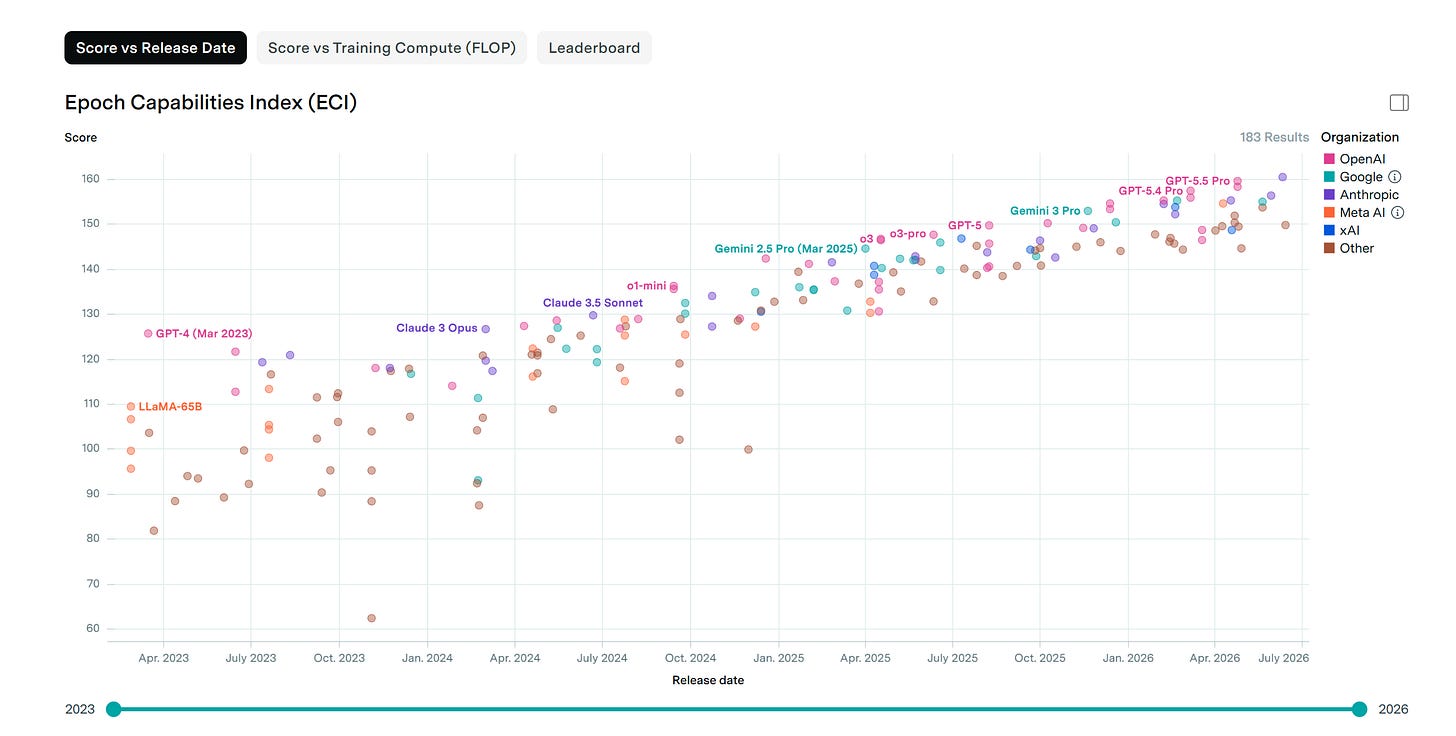
This commoditization trend is also reflected in the slowing pace of model improvement. While innovation remains rapid, the rate at which fundamental capabilities are advancing is beginning to stabilize. This allows organizations to focus on leveraging existing, highly capable models to solve specific business challenges, rather than chasing the latest, unproven technological advancements.
The Reengineering Imperative: AI as a Solution Integrator
The true value proposition of enterprise AI lies not in the LLM itself, but in the reengineering of business processes and workflows that it enables. This is particularly evident in areas like Human Resources (HR). The HR 2030 model, a blueprint for high-value AI solutions in HR, highlights that achieving significant ROI requires strategic investment beyond just procuring AI tools.
For instance, transforming the hiring process involves not only acquiring AI-powered recruitment agents but also collaborating with IT, redesigning talent acquisition workflows, and potentially altering existing roles. Similarly, enhancing employee service centers necessitates consolidating policies, establishing robust data governance, and fostering cross-functional teamwork, often leveraging platforms like Microsoft Copilot, Workday, or ServiceNow. Building effective onboarding programs, as demonstrated by companies like Rolls Royce and Lockheed Martin, requires consensus-building, the development of role-specific use cases, and a governance model to integrate tactical and strategic content. In these scenarios, the LLM is a component, often a small one, within a much larger solution.

The identification and prioritization of high-value problems are paramount. Companies are increasingly focused on applying AI to solve these issues, rather than simply "implementing AI." This involves working closely with IT, preparing teams for new roles and skill sets, and optimizing workflows. The development of specialized "agents" and "superagents" within these solutions, as outlined in the HR 2030 blueprint, demonstrates the shift towards application-specific AI capabilities.
Lessons from the Relational Database Era
The current evolution of the AI market bears striking similarities to the relational database market of the late 1990s. At that time, vendors like Oracle, Sybase, Informix, and Ingres competed intensely on technical features such as stored procedures and indexing. Over time, however, the underlying database technology became largely commoditized. The critical factor for business success shifted from the choice of RDBMS to the development of robust applications that leveraged the database’s capabilities.
A similar trajectory is now unfolding in the AI space. While the underlying LLMs are becoming increasingly sophisticated and accessible, their transformative impact on businesses is contingent on their integration into specific applications and workflows. The "magic" of the LLM itself is becoming less of a differentiator as companies invest in the painstaking effort of training models, designing workflows, and customizing solutions to address unique business problems.
For example, the development of Galileo, an AI modeling organization and problem-solving platform in areas like reorganization, pay structures, and skill analytics, took nearly four years of dedicated effort. This involved not only leveraging LLM features but also extensive training, workflow design, and meticulous data integration. This illustrates that enterprise AI is fundamentally a reengineering process, not a magical outcome from a standalone LLM.
The Path Forward: From Experimentation to Engineering
The substantial $1.5 trillion investment in AI necessitates a demonstrable return. This economic imperative is driving a crucial shift from broad experimentation to focused architectural and engineering efforts. As AI moves from a novelty to a standard enterprise technology, the focus will intensify on building, buying, or customizing solutions that deliver tangible business value.
The implications of this shift are profound. Companies that embrace this reengineering approach, by identifying critical problems and strategically applying AI, are poised to unlock enormous payoffs. The "magic" is no longer in the AI model itself, but in the human ingenuity and strategic application that transforms raw AI capabilities into powerful business solutions. The future of enterprise AI lies in its thoughtful integration, its ability to augment human expertise, and its capacity to drive measurable improvements across all facets of business operations. This transition from pure experimentation to strategic engineering is not just a trend; it is the necessary evolution for realizing the full potential of artificial intelligence in the enterprise.