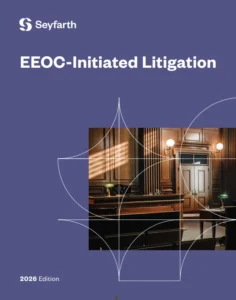
The legal landscape surrounding employment law has undergone a seismic shift over the past twelve months, culminating in the release of Seyfarth Shaw LLP’s highly anticipated annual report, EEOC-Initiated Litigation: 2026 Edition. This comprehensive desk reference, published on January 28, 2026, serves as a definitive guide for corporate counsel, human resources professionals, and operations teams navigating the increasingly complex waters of federal employment regulation. The 2026 edition provides a granular analysis of the Equal Employment Opportunity Commission’s (EEOC) activities throughout 2025, a year characterized by unprecedented policy pivots, high-stakes litigation, and a reimagining of workplace equity in the digital age.
The report arrives at a critical juncture for American employers. As the EEOC continues to implement its Strategic Enforcement Plan (SEP) for the fiscal years 2024 through 2028, the 2026 analysis highlights how the commission has balanced traditional enforcement with emerging workplace challenges. According to the report’s authors, the changes witnessed in 2025 represent some of the most dramatic shifts in the EEOC’s enforcement posture in decades, driven by a combination of technological advancements, evolving social expectations, and significant judicial rulings that have redefined the boundaries of Title VII of the Civil Rights Act of 1964 and the Americans with Disabilities Act (ADA).
Executive Summary of 2025 Enforcement Activity
Throughout 2025, the EEOC maintained a robust litigation profile, focusing heavily on systemic cases that impact large numbers of employees across various industries. The Seyfarth Shaw report indicates that the commission’s filing activity in 2025 remained high, mirroring the aggressive stance seen in the latter half of the previous administration’s term. Key data points from the report suggest that the EEOC prioritized "impact litigation"—cases designed to send a broad message to specific industries or regarding specific practices.
Statistical highlights from the 2026 edition reveal that disability discrimination (ADA) and retaliation claims remained the most frequently cited bases for litigation. However, there was a notable surge in filings related to the Pregnant Workers Fairness Act (PWFA) and the Providing Urgent Maternal Protections for Nursing Mothers Act (PUMP Act), reflecting the commission’s dedication to enforcing these relatively new statutory protections. Furthermore, the report notes a significant uptick in cases involving algorithmic bias and the use of artificial intelligence (AI) in hiring, a trend that legal experts predicted would become a primary focus of the EEOC’s "Artificial Intelligence and Algorithmic Fairness Initiative."
Chronology of Major Developments in 2025
To understand the current state of EEOC enforcement, the Seyfarth Shaw report outlines a timeline of pivotal events that shaped the commission’s 2025 agenda:
- January – March 2025: The EEOC began the year by issuing updated guidance on the use of automated systems in employee performance monitoring. This period saw the first wave of settlements involving companies that utilized AI tools that inadvertently screened out candidates with disabilities or older applicants.
- April – June 2025: The commission focused on the implementation of the PWFA, filing several high-profile lawsuits against major retailers and healthcare providers for failing to provide "reasonable accommodations" for pregnant employees. This quarter also saw a series of "listening sessions" hosted by the EEOC to gather data on the experiences of workers in the "gig economy."
- July – September 2025: As the fiscal year drew to a close, the EEOC engaged in its traditional end-of-year filing surge. September 2025 saw a record number of new lawsuits filed, many of which targeted systemic harassment and discriminatory "culture" issues within the tech and manufacturing sectors.
- October – December 2025: Following the start of the new fiscal year, the EEOC released preliminary data showing a significant increase in monetary recoveries for victims of discrimination. This period was also marked by the commission’s response to various Supreme Court rulings that impacted the interpretation of "adverse employment actions."
Data-Driven Insights: Litigation by the Numbers
The Seyfarth Shaw analysis categorizes EEOC filings into several key buckets, providing a roadmap for where employers are most vulnerable. In 2025, systemic lawsuits—those involving 20 or more victims—accounted for approximately 35% of all merits filings. This is a substantial portion, indicating that the EEOC is leveraging its limited resources to maximize the scope of its enforcement.
Geographically, the report finds that the EEOC’s Chicago and Philadelphia district offices were among the most active, particularly in cases involving Title VII and the ADA. In terms of monetary relief, the EEOC reportedly secured over $600 million for workers in 2025 through both litigation and administrative settlements. This figure represents one of the highest recovery totals in the commission’s history, underscoring the financial risks associated with non-compliance.
The report also breaks down litigation by industry. The hospitality and retail sectors faced the highest volume of sexual harassment and retaliation claims, while the technology and financial services sectors were more frequently targeted for age discrimination and pay equity violations. The 2026 edition highlights that "pattern or practice" lawsuits, which allege a widespread policy of discrimination, are becoming more sophisticated, often utilizing complex statistical modeling to prove disparate impact.
Emerging Legal Frontiers: AI and Remote Work
One of the most significant sections of the 2026 report involves the EEOC’s focus on the digital workplace. As remote and hybrid work models become permanent fixtures of the American economy, the commission has turned its attention to how these models affect different demographic groups. In 2025, the EEOC initiated several investigations into whether remote work policies were being applied inconsistently, particularly to the detriment of caregivers and employees with disabilities.
Simultaneously, the EEOC’s scrutiny of AI-driven recruitment tools reached a fever pitch. The Seyfarth Shaw report details several cases where the EEOC challenged the "black box" algorithms used by large-scale employers to rank candidates. The commission’s stance is clear: employers are responsible for the outcomes of the tools they use, even if those tools are developed by third-party vendors. This has led to a call for "algorithmic auditing" as a standard component of corporate compliance programs.
Reactions from Legal and Corporate Stakeholders
The release of the 2026 edition has prompted reactions from across the legal spectrum. Management-side attorneys emphasize that the EEOC’s aggressive posture necessitates a more proactive approach to internal audits and policy reviews. "The 2026 report confirms what we have been seeing on the ground: the EEOC is no longer just reacting to charges; they are actively seeking out systemic issues through commissioner-led charges and directed investigations," said a senior partner at a leading employment firm.
Human resources professionals have also noted the challenges posed by the EEOC’s shifting priorities. The emphasis on the PWFA and AI fairness requires HR teams to update their training modules and technological infrastructure rapidly. Advocacy groups for workers’ rights, conversely, have praised the EEOC’s 2025 efforts, citing the record monetary recoveries as evidence that the commission is fulfilling its mission to protect vulnerable populations.
Strategic Implications for Employers in 2026
Looking ahead, the Seyfarth Shaw report offers several predictions for the remainder of 2026. First, the authors anticipate a continued focus on "intersectionality"—claims that involve multiple protected characteristics, such as race and gender combined. Second, the report suggests that the EEOC will likely increase its scrutiny of Diversity, Equity, and Inclusion (DEI) programs, ensuring that these initiatives do not inadvertently lead to "reverse discrimination" claims while still promoting a diverse workforce.
The report also warns of the "Conciliation Conundrum." Before the EEOC can file a lawsuit, it is legally required to attempt to resolve the matter through a process known as conciliation. In 2025, the commission was noted for its "take-it-or-leave-it" approach in some instances, leading to more cases heading to federal court rather than being settled privately. Employers are advised to document their good-faith efforts during the conciliation phase to protect themselves in subsequent litigation.
Conclusion
The EEOC-Initiated Litigation: 2026 Edition stands as a vital resource for understanding the current trajectory of federal employment enforcement. By analyzing the successes and failures of the EEOC’s 2025 litigation strategy, Seyfarth Shaw provides employers with the tools necessary to mitigate risk and foster a more equitable workplace. As the commission continues to adapt to the complexities of the modern workforce, the lessons contained within this report will undoubtedly shape the defensive strategies of corporations and the compliance initiatives of HR departments for years to come. The overarching message of the 2026 analysis is one of vigilance: in an era of rapid social and technological change, the cost of complacency has never been higher.