The role of a leader has never been more complex. In an era defined by the rapid acceleration of artificial intelligence, seismic shifts in global politics, and a profound erosion of public trust in institutions, the fundamental principles of leadership are undergoing a dramatic transformation. This evolution necessitates a re-examination of what it means to lead effectively in the 21st century, moving beyond historical paradigms to embrace new behaviors and strategies.
For decades, the study and practice of leadership have been characterized by a constant pursuit of the next influential model. From the foundational management philosophies of Peter Drucker, who emphasized effectiveness and managerial responsibility, to the command-and-control doctrines championed by Jack Welch during his tenure at General Electric, the business world has consistently sought to identify and emulate successful leaders. More recently, the concept of servant leadership, as espoused by figures like Howard Schultz of Starbucks, gained prominence, highlighting the importance of prioritizing employee well-being. The emergence of first-principles thinking, exemplified by Elon Musk’s approach to innovation, has further diversified the leadership playbook. However, in today’s dynamic environment, the question of "What is the model for today?" becomes paramount. While core leadership functions—setting direction, defining mission, and aligning people—remain constant, the behavioral expectations and the tools available to achieve these objectives have irrevocably changed. This analysis, informed by recent research, including insights into the "Supermanager" phenomenon, seeks to delineate these critical shifts.
The Rise of the "Voluntary Army": From Command to Commitment
Perhaps the most significant alteration in the leadership landscape over the past half-century is the "decoupling" of the employee from the traditional organizational structure. Historically, particularly during the industrial age, leadership operated on a clear boss-subordinate dynamic. Directives were issued, and compliance was largely expected. This hierarchical model, deeply ingrained in corporate culture and HR practices, is rapidly becoming obsolete.
Today’s workforce, encompassing full-time employees, contingent workers, and increasingly, AI-powered collaborators, operates under a different set of motivations and expectations. Individuals no longer simply accept assignments; they actively "opt in" to their roles and the organization’s objectives on a daily basis. This fundamental shift transforms the nature of authority. The traditional levers of power—formal authority and hierarchical position—are proving insufficient. They are being supplanted by a more nuanced and often more fragile currency: trust.
Building and maintaining this trust is now a cornerstone of effective leadership. It requires a deliberate focus on clarity of mission, genuine empowerment of individuals, and a commitment to their professional development. Crucially, it demands an openness to novel ideas and perspectives, even those that challenge existing norms. In a knowledge economy characterized by highly specialized skills, it is increasingly common for individuals at all levels to possess expertise that surpasses that of their immediate superiors. To ignore or suppress such insights is not only a missed opportunity but a strategic liability. Leaders must cultivate environments where diverse viewpoints are not only heard but actively sought and integrated, recognizing that a single innovative idea from an engineer or a savvy professional could fundamentally reshape the business. This principle is amplified by the pervasive influence of AI, which is democratizing access to information and analytical capabilities, further empowering individuals to contribute at a strategic level.
The Imperative of Iteration: Embracing Imperfection in the AI Age
A second, equally profound, shift is the transition from a philosophy of "do it well" to a mandate of "do it now." The rapid integration of artificial intelligence into business operations presents a unique challenge. AI technologies are characterized by their novelty, immense power, and inherent non-determinism—meaning their outputs can be unpredictable. Leaders are acutely aware that failing to engage with AI risks obsolescence for both their roles and their organizations. This awareness can foster a desire to achieve perfect implementation before deployment.

However, as observed in engagements with leading organizations such as IBM, Standard Chartered, and Mastercard, the pursuit of a flawless, "version 1.0" solution is often a path to stagnation. In the industrial era, the expectation was that products and systems would be perfected before launch. This approach is no longer viable in the AI age. Leaders must cultivate a tolerance for imperfection and embrace a culture of rapid iteration.
Companies like IBM, for instance, successfully transitioned from Workday to SuccessFactors within an aggressive 18-month timeframe, acknowledging that the new system would not be perfect from day one. Microsoft’s proactive deployment of Copilot agents across its HR functions globally, even as new use cases and potential refinements are continuously discovered, exemplifies this iterative approach. The notion of "waiting until it’s done" is a relic of a bygone era; it introduces unacceptable levels of risk in a fast-moving technological landscape.
The journey from concept to successful implementation is rarely a straight line. Instead, it is a dynamic process characterized by a series of iterations, learning from mistakes, and incremental improvements. The leader’s role is to maintain organizational focus on the overarching problem or customer need while simultaneously creating a safe space for teams to experiment, fail, and learn. This agile mindset is critical for navigating the complexities of AI adoption and for staying ahead in a competitive global market.
The Resurgence of Values: Trust, Ethics, and Inclusion as Leadership Pillars
The third critical shift involves a renewed emphasis on core values, ethics, and morality. In an era where public discourse is increasingly fragmented and susceptible to manipulation, often amplified by AI-generated misinformation, the ability to discern truth has become a significant challenge. The proliferation of "alternative facts" and the erosion of a shared understanding of reality place an immense burden on leaders to uphold integrity and ethical conduct.
This is not merely an abstract moral imperative; it is a fundamental requirement for organizational success. The vast majority of individuals possess an innate ethical compass and seek to align themselves with organizations that reflect their values. When leaders compromise their integrity, bend rules, or engage in unfair practices, the consequences extend far beyond legal or financial repercussions. Such actions inflict deep damage on the human spirit, undermining morale, loyalty, and engagement.
As explored in research on "Irresistible" organizations, the unquenchable power of the human spirit is, in fact, the most potent, yet often overlooked, asset in business. Leaders who foster environments of trust, fairness, and ethical behavior tap into this intrinsic motivation, creating a more resilient and adaptable organization.
The Deepening Crisis of Institutional Trust
The current sociopolitical climate is marked by a significant decline in public trust across various institutions. In the United States, for example, trust in government has plummeted from approximately 80% in the 1960s to a mere 17% today, according to Pew Research Center data. This widespread erosion of confidence creates a void that leaders are increasingly expected to fill.
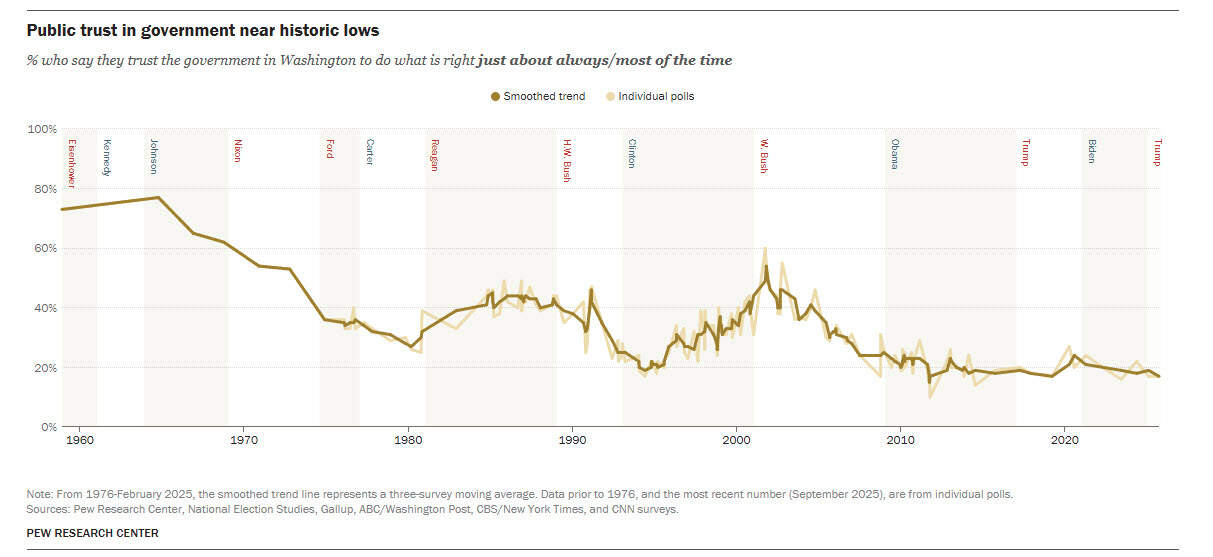
The implications of this trust deficit are far-reaching. It impacts employee loyalty, customer relationships, and the overall stability of organizations. In this context, leaders must actively work to rebuild and maintain trust through transparent communication, consistent ethical conduct, and a demonstrable commitment to the well-being of their stakeholders.
The path forward involves a deliberate refocus on listening to employees, upholding core values, and applying common sense in decision-making. In an increasingly polarized world, leaders are called upon to speak truth to power, take principled stances on important issues, and engage in respectful dialogue with those who hold different views. These actions, even in the face of politically charged debates surrounding topics like Diversity, Equity, and Inclusion (DEI), are essential for fostering a trustworthy and inclusive organizational culture.
Developing Leaders: An Ever-Growing Priority
The overarching conclusion is that a fundamental reevaluation of leadership models is not merely advisable but essential. An organization’s capacity to adapt and thrive in this complex environment is directly proportional to the quality of its leadership. Leaders who can effectively drive change, energize their teams, and steadfastly uphold core values are the most invaluable assets any organization can possess.
The development of such leaders is therefore more critical than ever. This requires investing in robust leadership development programs that equip individuals with the skills and mindset needed to navigate the challenges of the AI age and a turbulent global landscape. Initiatives focused on fostering trust, promoting ethical decision-making, and cultivating adaptability are paramount.
For organizations seeking to enhance their leadership capabilities, resources such as research on "The Rise of the Supermanager" offer valuable insights. AI-powered platforms, like Galileo, are emerging as tools to assess and develop leadership competencies, drawing upon extensive datasets of research and real-world case studies to provide personalized guidance. Galileo’s AI leadership academy is designed to train current and future leaders in the art of leading effectively in the age of AI.
Furthermore, the upcoming annual research conference, Irresistible 2026, scheduled for June 8-10 at USC, promises the launch of significant new offerings in leadership development, underscoring the ongoing commitment to advancing the field. As the business world continues to evolve at an unprecedented pace, the ability to cultivate agile, ethical, and trust-based leadership will be the defining factor for enduring success.
Additional Information:
- Galileo for Managers: Leadership Coach at your Fingertips: This resource highlights the availability of AI-driven tools to provide on-demand leadership coaching and development.
- The Definitive Guide to Leadership Development: Irresistible Leadership: This guide explores the core principles and strategies for building highly effective and resilient leadership teams.
- Irresistible: The Seven Secrets of the World’s Most Enduring, Employee-Focused Organizations: This seminal work delves into the practices that foster long-term organizational success through a strong focus on employee engagement and ethical leadership.