In an era where generative artificial intelligence and automated systems are rapidly redefining the landscape of professional labor, global organizations are shifting their investment focus toward the one domain technology has yet to master: the human psyche. Emotional intelligence (EI) training has transitioned from a peripheral "soft skill" to a core strategic requirement for organizations operating in high-tech, high-pressure environments. As automation increasingly absorbs technical and routine tasks, the competitive advantage of a firm is becoming inextricably linked to human-centric competencies such as leadership, adaptability, and nuanced judgment. Learning and Development (L&D) and Human Resources leaders are now prioritizing structured emotional intelligence programs as a primary vehicle for enhancing business performance, fostering resilience, and navigating the complexities of the modern workforce.
The Evolution of the Corporate Skill Set: A Historical Context
The conceptualization of emotional intelligence in the workplace has undergone a significant transformation over the last three decades. In the 1990s, the term gained mainstream traction through the work of psychologists who argued that IQ alone was an insufficient predictor of professional success. For years, however, EI remained a secondary consideration in corporate training, often overshadowed by technical certifications and hard-skill development.
The chronology of this shift accelerated during the global pandemic of 2020, which forced a sudden transition to remote work and highlighted the critical need for empathy and self-regulation. By 2023, the explosion of large language models and AI tools provided the final catalyst. As technical roles become more automated, the value of human-to-human interaction has appreciated. According to recent industry data, including reports from the World Economic Forum, social and emotional skills are projected to be among the most in-demand competencies by 2030. This shift represents a fundamental realignment of what it means to be a "high-performing" professional in the 21st century.
Defining the Five Pillars of Emotional Intelligence Training
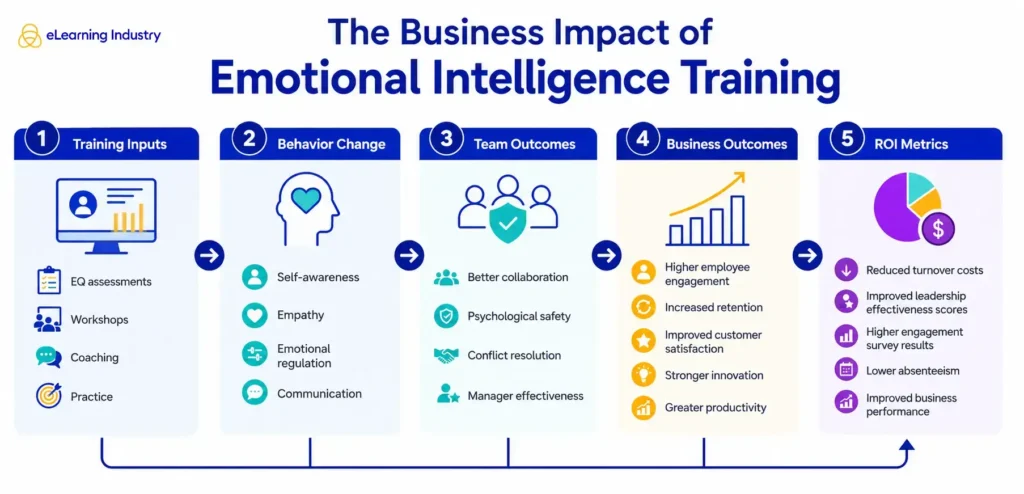
Effective emotional intelligence training is not merely theoretical; it is a structured approach designed to help individuals recognize, understand, and manage their own emotions while navigating the emotional landscapes of others. Modern programs are typically built upon the five core components popularized by industry researchers:
- Self-Awareness: The foundational ability to recognize one’s own emotions, triggers, and impact on others. This includes understanding personal strengths and limitations.
- Self-Regulation: The capacity to manage impulsive feelings and behaviors, take initiative, follow through on commitments, and adapt to changing circumstances.
- Motivation: A passion to work for reasons that go beyond money or status, characterized by a strong drive to achieve and a propensity to remain optimistic even in the face of failure.
- Empathy: The skill of understanding the emotional makeup of other people and treating them according to their emotional reactions.
- Social Skills: Proficiency in managing relationships and building networks, often manifesting as effective communication, conflict management, and the ability to lead change.
By focusing on these areas, organizations move beyond the "what" of technical output and into the "how" of interpersonal efficacy.
Navigating the Dual Challenges of Hybrid Work and AI Integration
The contemporary workplace presents two specific challenges that make emotional intelligence training indispensable: the rise of hybrid work models and the integration of AI.
The Hybrid Communication Gap
In hybrid and remote settings, the loss of non-verbal cues—such as body language and tone—creates a vacuum often filled by misunderstanding and digital fatigue. Managers today must possess the "emotional radar" to detect when team members are feeling isolated or burnt out, even through a screen. EI training provides these leaders with the tools to build trust and maintain psychological safety without the benefit of physical proximity.
The AI Complement
As AI takes over data processing and routine decision-making, the human role is being elevated to high-level strategy and relationship management. Human skills such as active listening and building rapport are now the "last mile" of business value that technology cannot replicate. For example, while an AI can provide a data-driven sales forecast, it cannot navigate the emotional nuances of a tense negotiation or build the long-term trust required for client retention.
The ROI of Empathy: Data-Driven Performance
The push for emotional intelligence is supported by compelling data regarding organizational health. Research indicates that leaders with high EQ scores are significantly more likely to meet or exceed their business targets. Furthermore, organizations that prioritize psychological safety—a direct outcome of emotionally intelligent leadership—report higher levels of innovation. When employees feel safe to share ideas and admit mistakes without fear of retribution, the rate of creative problem-solving increases.
In customer-facing roles, the impact is even more quantifiable. Sales teams trained in emotional intelligence often see a marked increase in conversion rates because they are better equipped to identify customer pain points and respond with genuine empathy rather than scripted pitches. Customer success teams utilize EQ to de-escalate conflicts, transforming potentially negative experiences into opportunities for brand loyalty.
Identifying Key Beneficiaries Across the Organizational Chart
While emotional intelligence is universally beneficial, its application varies significantly across different levels of the hierarchy.
Emerging Leaders and New Managers
The transition from individual contributor to manager is often fraught with difficulty. Technical excellence does not naturally translate into the ability to motivate a team. EQ training helps new leaders establish credibility and learn the delicate balance of providing constructive feedback while maintaining morale.

Executive Leadership
Senior executives set the "emotional tone" of the entire organization. In times of corporate restructuring or market volatility, an emotionally intelligent executive team can stabilize the company culture, communicating with transparency and leading with a resilience that prevents organizational panic.
HR and Talent Professionals
Human Resources and L&D leaders serve as the architects of culture. By mastering emotional intelligence, they can better design recruitment processes, conflict resolution protocols, and employee engagement initiatives that align with the human needs of the workforce.
Designing a High-Impact Training Program
A common pitfall for organizations is treating emotional intelligence as a one-time seminar. Experts agree that lasting behavioral change requires a multi-dimensional approach.
Assessment and Baseline Measurement
The process must begin with objective data. Tools such as 360-degree feedback and standardized EQ assessments allow participants to see the gap between their self-perception and how they are perceived by their peers and subordinates. This baseline is essential for measuring the long-term return on investment (ROI) of the training.
Practical Skill Development and Coaching
Training must move beyond PowerPoint presentations into active practice. This includes role-playing difficult conversations, journaling for self-reflection, and peer coaching. The "pause and reflect" technique—encouraging employees to pause before reacting to an emotional trigger—is one of the most effective tools taught in these programs.
Sustained Application
For EI to become part of the company’s DNA, it must be integrated into daily operations. This involves manager support, regular check-ins, and the inclusion of emotional intelligence metrics in performance reviews.
Delivery Formats and Strategic Implementation
Organizations have several options for delivering EI training, each with its own set of advantages. Instructor-led workshops are ideal for leadership cohorts who benefit from deep-dive discussions. Virtual instructor-led training (VILT) offers a scalable solution for distributed teams, while self-paced digital courses provide flexibility for large-scale rollouts.
The most successful implementations follow a five-step strategic roadmap:
- Business Alignment: Identifying specific problems (e.g., high turnover, low engagement) that EQ can address.
- Capability Assessment: Benchmarking current emotional skill levels across the company.
- Leadership Buy-In: Ensuring that senior management models the behaviors being taught.
- Active Practice: Creating "safe-to-fail" environments where employees can practice new interpersonal skills.
- Continuous Measurement: Tracking the correlation between EQ training and business outcomes such as retention and productivity.
Official Perspectives and the Path Forward
Christopher Pappas, CEO and founder of eLearning Industry, emphasizes the gravity of this shift: "Technical expertise may get people into leadership roles, but emotional intelligence determines whether they earn trust, inspire teams, and sustain high performance. Organizations that invest in emotional intelligence training aren’t just developing better leaders but building more resilient businesses."
The sentiment is echoed across the HR landscape. As we look toward the 2030s, the distinction between "hard" and "soft" skills is blurring. In a world of silicon and code, the most valuable asset remains the human heart and the ability to connect.
Implications for the Future Workforce
The broader implication of this trend is a move toward a more "humanized" workplace. As emotional intelligence becomes a standard part of professional development, we can expect to see a decrease in toxic work environments and an increase in employee well-being. This is not merely a matter of workplace happiness; it is a matter of economic survival. In the talent wars of the future, the organizations that offer the highest degree of psychological safety and emotional support will be the ones that attract and retain the best minds.
In conclusion, emotional intelligence training has matured into a sophisticated business capability. It is the bridge between technical potential and realized performance. For L&D leaders, the mission is clear: to equip the workforce with the emotional tools necessary to navigate an increasingly automated world with grace, empathy, and unshakeable resilience. When emotional intelligence is woven into the fabric of daily development, it creates a culture where both the business and its people can thrive.