
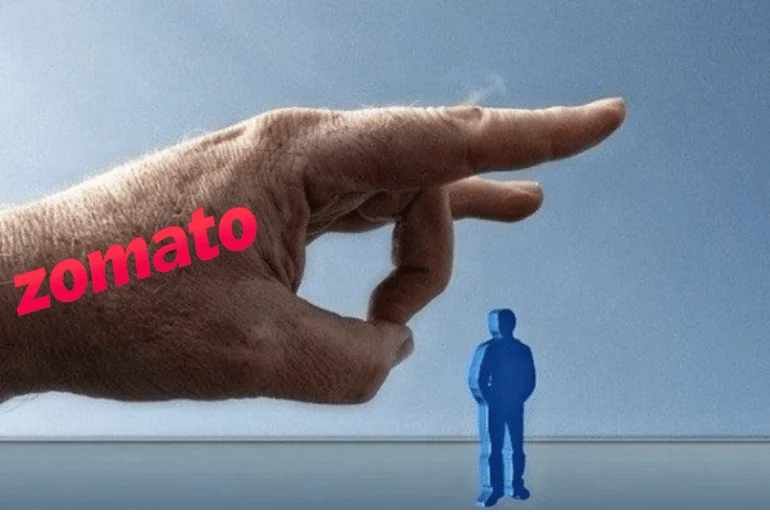
Zomato, India’s leading food delivery platform, has reportedly initiated the layoff of approximately 240 employees following the complete shutdown of its customer-support operations in Hyderabad. This significant operational restructuring comes as the company re-evaluates the architecture of its customer support framework, making a strategic decision to transition a substantial portion of this function to external partners. The remaining in-house support capabilities will now be consolidated in Gurugram, a move designed to co-locate these critical teams closer to Zomato’s core product, technology, and analytics departments, fostering enhanced synergy and operational efficiency.
A Strategic Pivot: Zomato’s Restructuring Rationale
This recent wave of layoffs in Hyderabad is not an isolated incident but rather a continuation of a broader, year-long strategic realignment in Zomato’s approach to customer service. The company has been increasingly investing in and integrating artificial intelligence (AI) and advanced automation technologies across its operations. This technological embrace has demonstrably reduced the imperative for large, in-house human support teams, enabling Zomato to process customer queries and resolve issues with greater speed and consistency, albeit with a smaller direct workforce. The strategic imperative behind this shift is multi-faceted: it aims to optimize operational costs, enhance scalability during peak demand, and leverage data analytics to predict and preempt customer issues, thereby improving the overall customer experience through technological intervention rather than sheer human volume.
The Indian food delivery market is fiercely competitive, dominated primarily by Zomato and Swiggy. Both companies operate on thin margins, constantly seeking avenues to improve profitability and efficiency while maintaining service quality and expanding market share. In such an environment, cost optimization through automation and outsourcing becomes a critical lever. Zomato’s decision reflects a growing trend among tech-enabled service providers globally, where AI-powered chatbots, automated complaint resolution systems, and self-help portals are progressively taking over tasks traditionally handled by human agents. This not only promises cost savings but also offers the potential for 24/7 availability and faster response times, which are crucial in a fast-paced industry like food delivery.
A Timeline of Operational Shifts and Workforce Adjustments
The current layoffs in Hyderabad represent a pivotal moment in Zomato’s ongoing transformation of its customer support division, building upon previous strategic adjustments. The timeline of these operational shifts underscores a consistent direction towards lean operations and technological integration:
- April Last Year (Approx. 12-18 months prior to current event): Zomato undertook a significant workforce reduction, cutting approximately 600 customer-support jobs. These layoffs were distributed across its operational hubs in Gurugram and Hyderabad. This initial phase signaled the company’s commitment to streamlining its support functions and exploring alternatives to traditional, large-scale in-house teams. It was a precursor to the deeper restructuring witnessed recently.
- Present Day (Recent Announcement): The complete closure of customer-support operations in Hyderabad has led to the latest round of approximately 240 layoffs. This move signifies the completion of the regional consolidation strategy, centralizing remaining in-house support in Gurugram.
- Ongoing Strategy: The company’s future trajectory indicates a continued reliance on external partners for specific support functions and a deepening integration of AI and automation to handle routine queries and scale operations. The Gurugram team is envisioned to focus on more complex, escalated issues requiring human judgment and strategic oversight, working in close collaboration with product and technology development teams.
This chronological progression illustrates a deliberate, phased approach by Zomato to overhaul its customer service model, adapting to technological advancements and market demands.
The Rise of AI and Automation in Customer Service
The transformation at Zomato is emblematic of a broader, global shift towards integrating artificial intelligence and automation into customer service functions. Industry reports consistently highlight the increasing adoption rates of AI in customer experience (CX) platforms. For instance, Gartner predicts that by 2027, generative AI will be a key component in 80% of contact centers, up from less than 10% in 2023. Similarly, projections from Statista indicate the global AI in customer service market size is expected to grow significantly, reflecting companies’ drive to enhance efficiency and customer satisfaction simultaneously.
AI-powered chatbots and virtual assistants can handle a vast volume of common queries, process orders, track deliveries, and even resolve basic complaints without human intervention. This not only frees up human agents to focus on more complex, nuanced, or high-value interactions but also ensures consistent service quality and immediate responses, often outside regular business hours. For a company like Zomato, which handles millions of transactions daily, the scalability offered by AI is immense. During peak demand, automated systems can manage spikes in query volume without the need for proportional increases in human staff, thereby maintaining service levels without incurring prohibitive labor costs. This technological shift, while offering undeniable business advantages, inevitably reshapes the employment landscape for customer support professionals.
Financial Context: Driving Efficiency and Profitability
Zomato’s strategic decisions, including these operational realignments, are deeply intertwined with its broader financial objectives and market pressures. After years of significant investment and expansion, Zomato has been under increasing pressure from investors to demonstrate a clear path to sustainable profitability. The company recently announced its first-ever profitable quarter, a landmark achievement that has been largely attributed to stringent cost controls, improved unit economics, and increased operational efficiencies.
Cost centers like customer support, while essential, represent a significant overhead. By transitioning to an AI-first approach and leveraging outsourcing, Zomato can significantly reduce its fixed costs associated with salaries, benefits, infrastructure, and training for large in-house teams. Outsourcing partners often operate on a variable cost model, allowing Zomato to pay for services based on demand rather than maintaining a large, permanent workforce irrespective of query volume. This agility is crucial for managing profitability in a dynamic market.
Moreover, the company’s investor calls and financial reports often emphasize the importance of leveraging technology to drive growth and efficiency. Analysts frequently scrutinize operational expenditure (OpEx) and highlight areas for optimization. The move to consolidate operations and automate tasks aligns perfectly with this narrative of prudent financial management and a relentless pursuit of improved bottom-line performance, reassuring shareholders about the company’s long-term viability and growth prospects.
The Human Cost: Severance and Support for Affected Employees
While the strategic rationale for Zomato’s restructuring is clear from a business perspective, the human impact of such decisions is profound. The closure of the Hyderabad center means not just job loss for 240 individuals but also the disruption of livelihoods, the dissolution of workplace communities, and the emotional toll associated with career uncertainty. The affected employees, many of whom may have dedicated years to the company, face the immediate challenge of finding new employment in a competitive job market.
Recognizing the severity of this impact, Zomato has announced a comprehensive severance package for the affected employees. This package includes:
- Four months’ pay: Providing a financial cushion to help employees bridge the gap between jobs.
- Medical insurance coverage until March 2027: A significant benefit, offering continued healthcare security for an extended period, which is crucial during times of transition.
- Counselling services until March 2027: Acknowledging the psychological stress of job loss, this provision offers mental health support to help employees cope with the changes and plan their future.
- Ownership of company-issued laptops and earphones: A practical benefit that allows employees to retain essential tools that could be valuable for job searching or future employment.
- Outplacement assistance: This critical service aims to help employees with resume building, interview preparation, job search strategies, and connecting with potential employers, thereby facilitating their transition into new roles.
These measures reflect an attempt by Zomato to mitigate the adverse effects of the layoffs and demonstrate a degree of corporate responsibility towards its departing workforce. However, even with such support, the transition period can be challenging, particularly for those who may need to reskill or relocate.
Industry Implications: A Precedent for the Food Delivery Sector?
Zomato’s move to significantly scale down its in-house customer support, driven by AI and outsourcing, could set a precedent for the broader food delivery industry in India and beyond. Competitors like Swiggy, which also operates on similar business models and faces comparable cost pressures, are likely to observe Zomato’s strategy closely. If Zomato successfully demonstrates enhanced efficiency and customer satisfaction through this model, it could prompt other players to accelerate their own automation and outsourcing initiatives.
The shift signals an evolving paradigm for customer service roles within the sector. It suggests a future where entry-level customer support positions might diminish, replaced by more specialized roles focused on managing AI systems, handling complex escalations, or managing vendor relationships with outsourcing partners. This could lead to a leaner, more tech-driven workforce across the industry, further emphasizing the need for digital literacy and adaptability among job seekers. The move also highlights the increasing trend of companies focusing on their core competencies (e.g., technology, logistics, marketing) and offloading non-core functions to specialized third-party providers.
Broader Economic and Societal Ramifications
The layoffs at Zomato, while specific to one company, are indicative of larger economic and societal shifts driven by technological advancement. The increasing sophistication of AI and automation presents a double-edged sword: it offers unprecedented opportunities for efficiency, productivity, and innovation, but simultaneously poses challenges to traditional employment models, particularly in sectors prone to automation.
From a broader economic perspective, the continuous automation of jobs raises questions about job creation versus job displacement. While new jobs in AI development, data science, and automation management are emerging, they often require different skill sets than the jobs being displaced. This creates a skills gap and necessitates significant investment in reskilling and upskilling programs to ensure the workforce remains adaptable and employable.
Socially, the implications extend to the stability of the middle class, income inequality, and the psychological well-being of workers. The closure of a workplace center, as seen in Hyderabad, also impacts local economies, potentially affecting ancillary businesses and services that relied on the presence of a large employee base. Governments and policymakers face the complex task of fostering technological progress while implementing social safety nets and educational reforms to mitigate the negative impacts on employment and ensure a just transition for affected workers.
The Evolving Landscape of Customer Trust and Compliance
These layoffs and the broader shift towards automation also come at a critical juncture for food-delivery platforms, which are facing growing scrutiny over food safety, hygiene standards, and ethical practices. The reliance on AI and outsourced support introduces new layers of complexity in maintaining customer trust and ensuring compliance with regulatory standards.
While AI can efficiently process information, concerns may arise regarding its ability to handle highly sensitive or nuanced customer complaints, particularly those related to health and safety, with the same empathy and judgment as a human agent. The outsourcing model also necessitates robust oversight to ensure that third-party providers adhere to Zomato’s service quality standards and regulatory obligations. Any lapses in these areas, exacerbated by reduced direct oversight, could erode customer trust and attract further regulatory scrutiny.
The balance between leveraging technology for cost control and maintaining a high standard of customer care, especially in critical areas like food safety, will be a crucial tightrope for Zomato and its competitors to walk. The perception of customer support moving from a human-centric service to a largely automated process could, for some segments of the customer base, diminish the personal connection and sense of accountability.
Conclusion: Navigating the Future of Work
Zomato’s decision to shut down its Hyderabad customer support operations and lay off 240 employees marks a significant moment in its strategic evolution, underscoring a determined pivot towards an AI-driven, outsourced customer service model. This move, while aimed at enhancing efficiency, optimizing costs, and aligning with global technological trends, carries substantial implications for its workforce and the broader industry.
As companies increasingly integrate advanced technologies into their core operations, the future of work is undeniably being reshaped. The challenge for corporate entities like Zomato lies not only in harnessing these technologies for competitive advantage but also in navigating the ethical and social responsibilities that accompany such transformations. For the affected employees, the comprehensive severance package offers a measure of support, yet the journey to new employment highlights the urgent need for continuous learning and adaptability in an ever-changing economic landscape. The broader food delivery industry, and indeed the entire service sector, will undoubtedly continue to grapple with the profound shifts brought about by automation and artificial intelligence, seeking to balance the pursuit of profitability with the imperative of human welfare and a robust, adaptable workforce.








