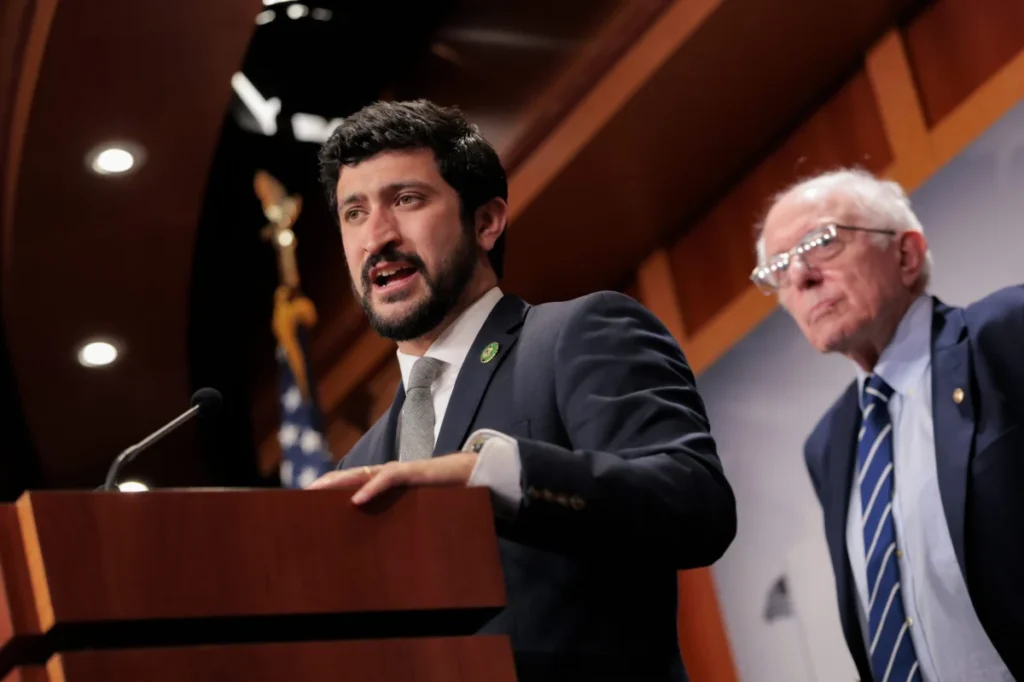
A new legislative proposal in the U.S. House of Representatives aims to address the growing concerns surrounding Artificial Intelligence (AI) and its potential impact on the American workforce. Spearheaded by Representatives Sara Jacobs, Greg Casar, and Valerie Foushee, the bill introduces a novel excise tax on major AI companies, with the tax rate dynamically adjusting based on national unemployment figures. The revenue generated from this tax would be earmarked for initiatives designed to create jobs in critical sectors such as housing construction, infrastructure development, and essential services like child and elder care. This proactive approach reflects a broader legislative trend in Congress to anticipate and mitigate the disruptive economic consequences of AI advancements.
The proposed legislation, introduced earlier this month, outlines a dual-pronged taxation mechanism. Companies could face a tax levied on the value of "tokens"—the fundamental data units that AI models utilize to process and interpret information—or a tax on revenue derived from AI services and specific transactions with affiliated entities. The bill mandates that whichever of these two calculations yields a higher tax sum will be applied. The initial tax rates are set at 2% for token valuation and 3% for revenue, commencing when the national unemployment rate is at or below 5%. Crucially, these rates are designed to escalate as unemployment rises, creating a direct financial incentive for AI companies to contribute to workforce stability.
"If Congress does nothing, the rise of AI could create the biggest wealth transfer in history from the bottom to the top," stated Representative Sara Jacobs in a joint press release announcing the bill. She further emphasized the ethical imperative behind the proposal: "If AI profits off human work, workers deserve job security and a share of those profits." This sentiment underscores the core philosophy driving the bill: that the economic benefits derived from AI-driven automation should be shared, particularly with those whose labor is being augmented or potentially replaced by the technology.
A Wave of Congressional Action on AI and Employment
This new House proposal is not an isolated effort but rather the latest in a series of legislative attempts by Congress to proactively address the potential for AI-driven job displacement. Lawmakers across both chambers have been actively exploring various strategies to understand, prepare for, and mitigate the economic fallout of widespread AI adoption.
Prior to this bill, Representatives Foushee and Casar had introduced legislation directing the Government Accountability Office (GAO) to conduct a comprehensive study examining the net effect of AI on American jobs, differentiating between positions created, eliminated, or significantly altered. Concurrently, Representative Jacobs co-introduced separate legislation that would mandate large employers and federal agencies to publicly disclose AI-related layoffs to the Department of Labor. These initiatives highlight a growing consensus on the need for better data and transparency regarding AI’s impact on the labor market.
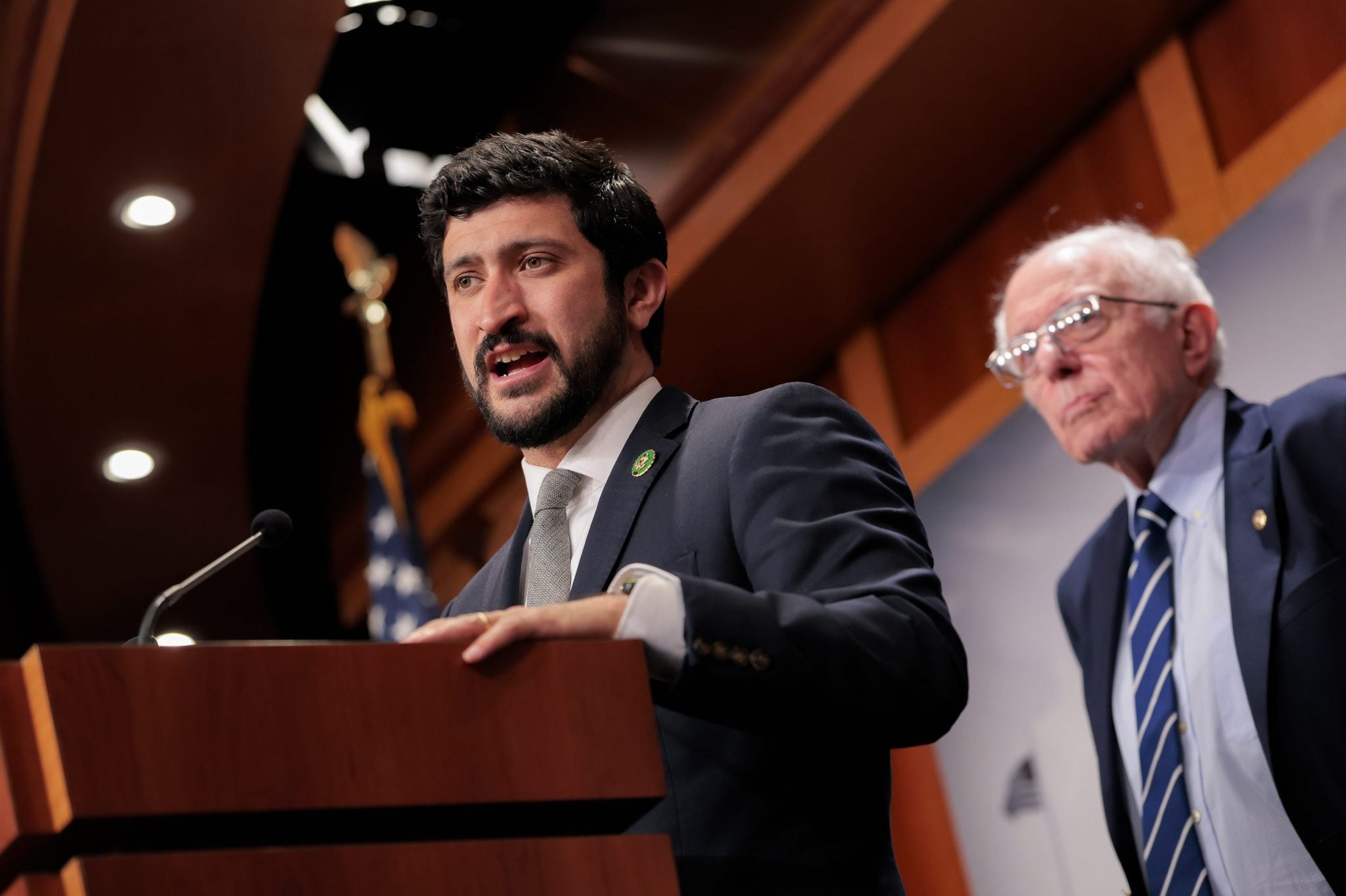
In the Senate, similar concerns are being voiced and addressed through various legislative proposals. Senator Ron Wyden has put forth a plan that would alter the tax treatment of AI data centers and introduce a new excise tax. A portion of the revenue from this proposed tax would be allocated to support workers displaced by AI technologies. Senator Elizabeth Warren has also advocated for taxing AI companies, suggesting a tax structure partly based on the energy consumption of their data centers, with the proceeds reinvested in worker support programs.
Perhaps the most ambitious proposal comes from Senator Bernie Sanders, who has warned of the potential for AI to eliminate tens of millions of jobs. His "American AI Sovereign Wealth Fund Act" proposes a significant one-time tax of 50% on major AI developers like OpenAI, Anthropic, and xAI. The revenue from this tax would be used to establish a sovereign wealth fund, granting Americans a stake in these companies through shared ownership. This proposal directly addresses the concentration of wealth and power that could arise from AI development, aiming to democratize the benefits.
Even lawmakers not directly advocating for AI company taxation are acknowledging the impending labor disruptions. Senators Jim Banks, Maggie Hassan, John Hickenlooper, and Jon Husted have jointly introduced the bipartisan "AI Workforce PREPARE Act." This legislation aims to enhance federal tracking of layoffs where AI plays a substantial role, improve the Bureau of Labor Statistics’ forecasting of automation-related occupations, and explore the feasibility of rapid retraining programs for workers displaced by AI.
Another avenue being explored involves incentivizing AI companies to invest in their workforce. Representatives Josh Gottheimer and Mike Lawler have proposed the "AI Workforce Training Act," which would offer a tax credit equivalent to 30% of qualified AI-training expenses, capped at $2,500 per employee annually. This credit would be available to companies that invest in retraining their employees in areas such as machine learning, prompt engineering, and AI ethics.
Despite these varied legislative approaches, many of the key figures involved, including Representatives Casar, Foushee, and Jacobs, along with Senators Wyden, Warren, and Sanders, did not respond to requests for comment from Fortune regarding their specific legislative efforts. Similarly, major AI companies like OpenAI and Anthropic have not commented on their stance regarding these proposed taxes or public ownership mechanisms.
Tech Leaders Echo Concerns on AI’s Workforce Impact
The apprehension surrounding AI’s potential to displace human workers is not confined to legislative halls; it is a sentiment increasingly echoed by leaders within the technology sector itself. This shared concern suggests that the challenges posed by AI are recognized even by those at the forefront of its development.

Prominent figures like Bill Gates have publicly called for a re-evaluation of the tax system in light of AI and robotics. Gates has advocated for a tax on AI tokens and robots, arguing that the current system inadvertently "nudges you toward replacing people with machines." He has also warned that "many jobs will disappear forever" and stressed the necessity for the federal government to find new revenue streams as fewer individuals are employed and contribute to income taxes. This perspective aligns with the idea that technological advancements should not solely benefit capital at the expense of labor.
Gabriel Weinberg, the founder of search company DuckDuckGo, which is actively integrating AI features, has expressed a willingness to support a tax on AI token usage. His company proposed a 10% tax on AI token usage, suggesting it could offset the approximately 10% payroll taxes that employers currently bear. This proposal highlights a potential market-based approach to rebalancing the economic equation as AI becomes more integrated into business operations.
Even executives from companies actively developing AI systems have acknowledged the significant potential for large-scale job displacement. This recognition has led some to consider mechanisms for distributing the economic gains generated by AI. Dario Amodei, CEO of Anthropic, has stated that AI-driven unemployment could necessitate new tax revenue sources and equity-sharing mechanisms. He has even suggested that a federal tax of approximately 3% on revenue generated from model usage, which could be "redistributed in some way," is a "reasonable solution to the problem," despite it not being in his company’s immediate economic interest.
Furthermore, Sam Altman, CEO of OpenAI, has engaged in discussions with Senator Bernie Sanders regarding the possibility of a public stake in his company to ensure that Americans benefit from the financial windfalls of the AI boom. Altman has publicly agreed with Sanders that the public should indeed have a stake in AI companies, indicating a potential convergence of thought between tech leaders and policymakers on the issue of AI’s economic distribution.
Analyzing the Implications and Broader Context
The legislative proposals and industry acknowledgments surrounding AI and job displacement point to a critical juncture in economic policy. The core concern is that the productivity gains from AI could exacerbate existing wealth inequalities if not managed effectively. The proposed taxes, whether on tokens, revenue, or data center energy, are essentially attempts to internalize the societal costs of AI-driven automation and redistribute the generated wealth.
The varying approaches—from direct taxation to incentivized retraining and public ownership—reflect the complexity of the challenge. A direct excise tax on AI companies, as proposed in the House bill, directly links the revenue generation to the entities benefiting most from AI’s advancement. The dynamic rate tied to unemployment is a particularly innovative feature, ensuring that the burden on companies increases precisely when the need for job creation and worker support is most acute.

The historical context for such interventions can be seen in past technological shifts, though the speed and scale of AI advancement present unprecedented challenges. Debates around automation and its impact on employment have been ongoing for decades, but AI’s ability to perform cognitive tasks previously exclusive to humans marks a significant departure.
The proposed job creation initiatives, focusing on housing, infrastructure, and care work, are strategically chosen. These sectors are often labor-intensive, can absorb a significant number of displaced workers, and address critical societal needs. Investing in infrastructure, for instance, can lead to long-term economic growth and create a multiplier effect of jobs. Similarly, expanding child and elder care services addresses demographic trends and supports workforce participation.
The fact that tech leaders are engaging in these discussions and even proposing solutions suggests a dawning realization within the industry of the need for a more equitable distribution of AI’s economic benefits. Their willingness to consider taxes or public ownership, even if driven by potential regulatory pressures or a sense of social responsibility, is a significant development.
However, the implementation of such policies will undoubtedly face considerable debate and potential opposition. Questions regarding the precise definition of taxable AI activity, the fairness of tax rates, the administrative feasibility of dynamic adjustments, and the ultimate effectiveness of job creation programs will need to be thoroughly addressed. Furthermore, the global nature of AI development means that international cooperation and regulatory alignment may become crucial to prevent companies from relocating to jurisdictions with less stringent policies.
Ultimately, the legislative push to tax AI companies for job creation represents a forward-looking attempt to shape the future of work in an era of rapid technological transformation. It acknowledges that innovation must be balanced with social well-being and that the immense wealth generated by AI should contribute to the prosperity of all segments of society, not just a select few. The coming months and years will likely see further evolution of these proposals as policymakers, industry leaders, and the public grapple with the profound implications of artificial intelligence on the global economy and workforce.