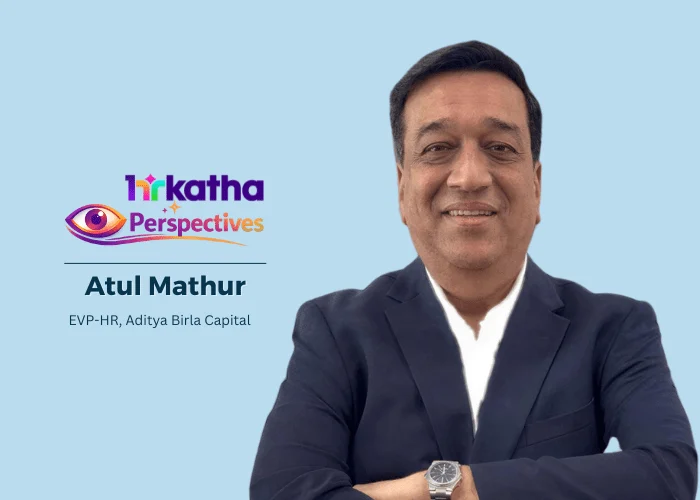
In an increasingly complex and competitive global landscape, the role of Human Resources (HR) is undergoing a profound transformation, evolving from a traditional administrative function to an indispensable strategic partner. This paradigm shift is particularly critical for diversified conglomerates like Aditya Birla Capital (ABCL), which operates across a broad spectrum of financial services – from asset management and life insurance to lending and wealth management. The inherent diversity of these businesses, each serving distinct customer segments with unique capabilities and performance expectations, presents a singular challenge to HR: how to foster a unified organizational identity while accommodating disparate operational realities. Atul Mathur, a seasoned HR leader at Aditya Birla Capital, offers a compelling vision for this evolution, emphasizing that HR’s strategic relevance begins at the reasoning stage of business strategy, not merely at its execution. His insights underscore the imperative for a holistic understanding of the business, a redefinition of managerial effectiveness, and a democratized approach to talent development that extends far beyond traditional high-potential pools.
Aditya Birla Capital: Navigating Diversity in Financial Services
Aditya Birla Capital, a significant player in India’s dynamic financial services sector, manages assets worth trillions of rupees and serves millions of customers through its myriad businesses. This vast footprint necessitates an agile and adaptable HR framework capable of supporting varied business models under one overarching corporate umbrella. The Indian financial services industry itself is characterized by rapid technological advancements, intense competition, evolving regulatory frameworks, and a relentless demand for specialized talent. In such an environment, the ability to attract, develop, and retain human capital is not just a support function but a critical determinant of competitive advantage and sustainable growth. Mathur’s perspective aligns ABCL’s HR strategy with these macro-economic and industry-specific realities, positioning HR as a proactive force in shaping the organization’s future.
HR’s Ascendance to Strategic Co-Creator: Beyond the Executive Briefing
Mathur contends that for HR to genuinely influence business strategy, its involvement must commence at the ideation and formulation stages. "When we say HR has a seat at the table, it starts at the reasoning stage," he explains, advocating for HR professionals to possess a deep understanding of organizational objectives and how these translate into actionable strategies. This is a significant departure from the historical model where HR was often brought in post-strategy development, primarily tasked with executing talent mandates.
This shift reflects a global trend. Reports from leading consulting firms like Gartner and Deloitte have consistently highlighted the need for HR to transcend operational efficiency and become a strategic advisor. Gartner’s 2023 Future of HR report, for instance, emphasizes that top-performing HR functions are those that proactively shape business strategy, leveraging data and insights to inform critical decisions. This includes not only traditional areas like talent acquisition and development but also organizational design, cultural transformation, and the integration of values into the corporate ethos. For ABCL, a "responsible corporate," values are paramount. Mathur stresses HR’s role in ensuring that every new hire embodies these values and that all organizational decisions reflect them, thereby safeguarding the company’s ethical compass in a sector where trust and integrity are non-negotiable.
The functional scope of HR has expanded dramatically. Today, it encompasses enabling organizational productivity and effectiveness through a myriad of mechanisms: progressive policies, streamlined processes, innovative incentive structures, and robust digital tools. While digital transformation empowers HR to manage diverse responsibilities more efficiently, Mathur argues that the fundamental mindset shift must precede technological adoption. HR professionals must cultivate a holistic business perspective, moving beyond their functional silos to understand how all people-related decisions contribute directly to the organization’s overarching goals. This means viewing talent as a collective responsibility, not solely an HR mandate, fostering a culture where every leader and team member actively contributes to the development and well-being of their colleagues.
The Manager: The Unsung Architect of Organizational Success
In any organization, the direct manager serves as the "moment of truth" for an employee. Mathur profoundly asserts that a manager’s competence directly translates into team performance, making investment in managerial capability paramount. This perspective challenges conventional performance metrics that often focus solely on aggregate team targets, overlooking the individual contributions and development within the team.
Consider a frontline sales manager. Traditional metrics might laud a manager whose team hits its revenue target. However, Mathur provocatively asks, "But that target could have been achieved through the efforts of only two people." This highlights a critical flaw: a team target achieved by a few star performers masks underlying issues of underperformance, disengagement, and untapped potential within the rest of the team. Mathur advocates for "performance spread," where managers are tasked with enabling every individual in their team to perform optimally. When this happens, productivity doesn’t just add up; it multiplies significantly.
This emphasis on individual enablement resonates with extensive research on leadership. Gallup’s State of the Global Workplace report consistently finds that managers account for at least 70% of the variance in employee engagement scores. Highly engaged employees are more productive, innovative, and loyal. Progressive organizations are therefore shifting their managerial assessment frameworks to include not just what outcomes are achieved, but how they are achieved. This involves evaluating leadership behaviors, coaching abilities, and the manager’s impact on employee satisfaction and development. Mathur underscores the human element: "When we say human resource, human comes first and resource comes later. The people working with you are not simply resources. They are human beings." This human-centric approach, embedded in an organization’s cultural DNA, fosters a strong connection between leaders and team members, which is crucial for both performance and well-being.
Managerial potential is typically assessed through a combination of HR-led evaluations, assessment centers, and direct manager input. However, Mathur points to "softer indicators" like employee satisfaction scores associated with a manager as invaluable insights into their true effectiveness. These qualitative measures, when combined with quantitative performance data and behavioral assessments, provide a comprehensive view of a manager’s impact, ensuring that leadership development programs are targeted and effective. Investing in managers through diverse exposures, continuous learning, and robust coaching and mentoring programs is, therefore, a strategic imperative for organizations like ABCL, empowering them to unlock the full potential of their entire workforce.
Democratizing Development: Beyond the Elite High-Potential Pool
While classical talent management systems with their focus on clearly defined high-potential (HiPo) pools serve a purpose, Mathur argues for a broader, more inclusive approach to capability building. "Progressive organizations are also investing significantly in capability-building across the wider employee base," he states. This shift acknowledges that talent and potential are not exclusive to a select few, and limiting investment to a small group can lead to missed opportunities and a less resilient workforce.
A prime example of this democratized development is the advent of Generative AI. As a relatively new and rapidly evolving technology, its implications for various roles are still being understood. Mathur proposes that the first step is universal familiarity, ensuring all employees understand what AI means for their work. This moves beyond theoretical learning to practical application, giving employees projects that allow them to explore how AI can enhance their daily tasks. This hands-on approach not only upskills the workforce but also helps surface unexpected capabilities and innovative solutions from across the organization that might never emerge from formal HiPo programs.
The "skills gap" is a global challenge, with the World Economic Forum’s Future of Jobs Report frequently highlighting the urgency of reskilling and upskilling large segments of the workforce to keep pace with technological advancements. By investing in broad-based learning, organizations like ABCL can foster a culture of continuous learning and adaptability. Moreover, in a conglomerate structure like the Aditya Birla Group, lateral movement across group companies offers a unique advantage. Exposure to different industries, business models, and corporate cultures can significantly accelerate an individual’s development, providing invaluable experience that might be difficult to acquire within a single business unit. This structural advantage, Mathur suggests, should be leveraged more deliberately to nurture a versatile and resilient talent pipeline that extends beyond the traditionally identified high-potential individuals, recognizing that "the broader employee base is what runs the organization."
Learning & Development: A Business-Centric Transformation
The effectiveness of Learning & Development (L&D) has historically been measured by passive metrics like participation rates and program completion. Mathur forcefully argues that this approach is outdated and insufficient. The starting point for L&D, he insists, must be the business opportunity or problem that needs to be addressed, not what the L&D function wants to do. "Start with the problem. Let the solution follow," he advises.
This means L&D initiatives – whether creating programs, introducing digital tools, or designing on-the-job interventions – must originate from a clear understanding of specific business challenges. This shift aligns with modern L&D philosophies that emphasize performance consulting and demonstrable impact. The Kirkpatrick Model of training evaluation, for instance, moves beyond mere "reaction" and "learning" to assess "behavior" change and, critically, "results" directly linked to business objectives. Organizations today cannot afford to measure L&D purely through attendance; the focus must be on whether learning has actually translated into changed capability and improved business performance.
Digital interventions play a crucial role in this transformation, enabling "learning in the flow of work." For a multi-location organization like ABCL, this means providing self-paced tools and accessible information at the point of need, rather than relying solely on scheduled, often disruptive, training programs. The modern learner expects personalized, on-demand content that directly addresses their immediate challenges. This approach not only enhances efficiency but also ensures that learning is directly relevant and immediately applicable, thereby maximizing its impact on business outcomes. The future of L&D, as envisioned by Mathur, is not about fulfilling mandates but about strategically contributing to the business’s objectives through targeted, impactful learning solutions.
Cultivating a Culture of "Failing Forward" and Holistic Well-being
The perceived tension between employee well-being and organizational performance is a persistent debate in corporate circles. Mathur challenges this notion, arguing that the two are less in tension than often assumed. While amenities like yoga sessions or gym access have their place, he emphasizes that the most significant impact on well-being occurs at the workplace itself, specifically through the manager and the immediate team.
A manager who approaches their team with the right attitude, fosters psychological safety, and demonstrates a genuine commitment to developing people can significantly enhance both well-being and performance. Conversely, a stressful or fear-driven workplace inevitably undermines both. Research by Amy Edmondson on psychological safety highlights its critical role in fostering environments where employees feel comfortable taking risks, speaking up, and learning from mistakes without fear of retribution. This, in turn, fuels innovation and problem-solving.
Mathur introduces the powerful concept of "failing forward." He argues that in an environment of constant change and innovation, things cannot always be perfect. When people try new initiatives and encounter setbacks, the organizational culture must enable them to learn rigorously from these experiences, make improvements, and try again. He draws an analogy to rocket launches: "A rocket does not always launch successfully on the first attempt. Scientists identify what went wrong, work on those areas and try again until the rocket takes off." This "fail fast, learn faster" mentality, while rigorous in its pursuit of lessons, is far from "soft." It requires clear processes for post-mortems, constructive feedback, and a commitment to iterative improvement.
Employees who feel wanted, included, and motivated are far more likely to exert discretionary effort, contributing beyond their basic job requirements. The impact of the workplace extends into their personal lives, making holistic enablement a critical responsibility for organizations. This encompasses managerial effectiveness, providing appropriate tools and technology, and fostering a supportive work environment. These diverse means, Mathur concludes, ultimately serve the same end: creating an engaged, high-performing workforce that drives business success while simultaneously nurturing individual well-being and growth.
Conclusion: HR as an Indispensable Architect of the Future
Atul Mathur’s insights from Aditya Birla Capital offer a comprehensive blueprint for contemporary HR leadership. His vision transcends traditional operational boundaries, advocating for HR to become an indispensable architect of business strategy, driving performance through a human-centric approach. By emphasizing HR’s role in strategic formulation, empowering managers as key enablers, democratizing talent development, and adopting a business-problem-driven approach to learning, organizations can build resilient, adaptable, and highly engaged workforces. The ultimate objective is to cultivate a culture where innovation thrives, mistakes are seen as learning opportunities, and every individual is empowered to contribute to their fullest potential. In an era defined by continuous disruption, such a strategic and human-centered HR function is not merely an asset but a non-negotiable requirement for sustainable success and competitive advantage, positioning organizations like Aditya Birla Capital to thrive in the complex financial landscape of tomorrow.